
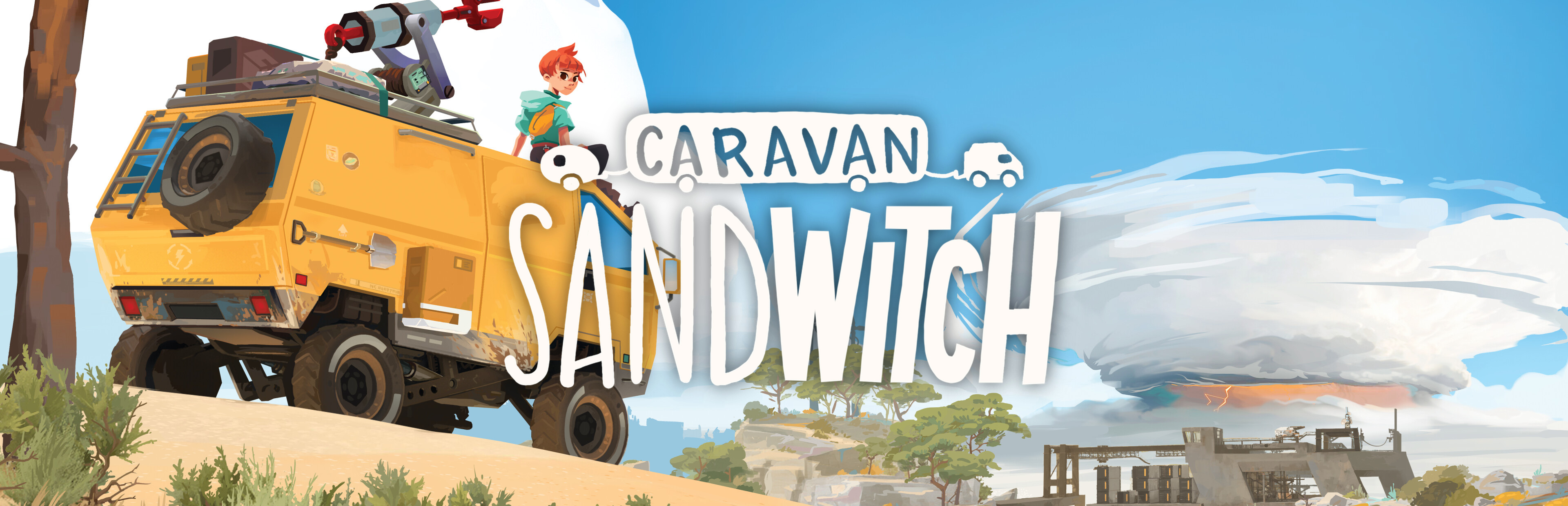
About Caravan SandWitch
Sauge returns to Cigalo after receiving a signal from her missing sister, Garance. In Caravan SandWitch, she drives a battered van across a planet marked by abandoned industry, helping the people and robots who stayed behind. Exploration, community tasks and new van tools open routes through its ruins; there is no combat, death or timer.
Sauge comes back to Cigalo because a message suggests that her long-missing sister Garance may still be there. Cigalo is a planet with a past that can be seen from the road. Industrial structures remain after the work that built them declined, while people who did not leave have made lives among the ruins. The search for Garance gives Sauge a reason to cross the landscape, but it also reconnects her with a place and a community she knows. Caravan SandWitch sets this story in a science-fiction world shaped by the colours and terrain of Provence: pale rock, dry roads, stretches of vegetation and large manufactured forms occupy the same horizon. The player can read both histories at a glance. The natural environment bears the damage of exploitation; machinery and abandoned sites show who used it; the residents show what continuing to live there now requires. Finding one person is the main question, but the route to an answer passes through many others' everyday concerns.
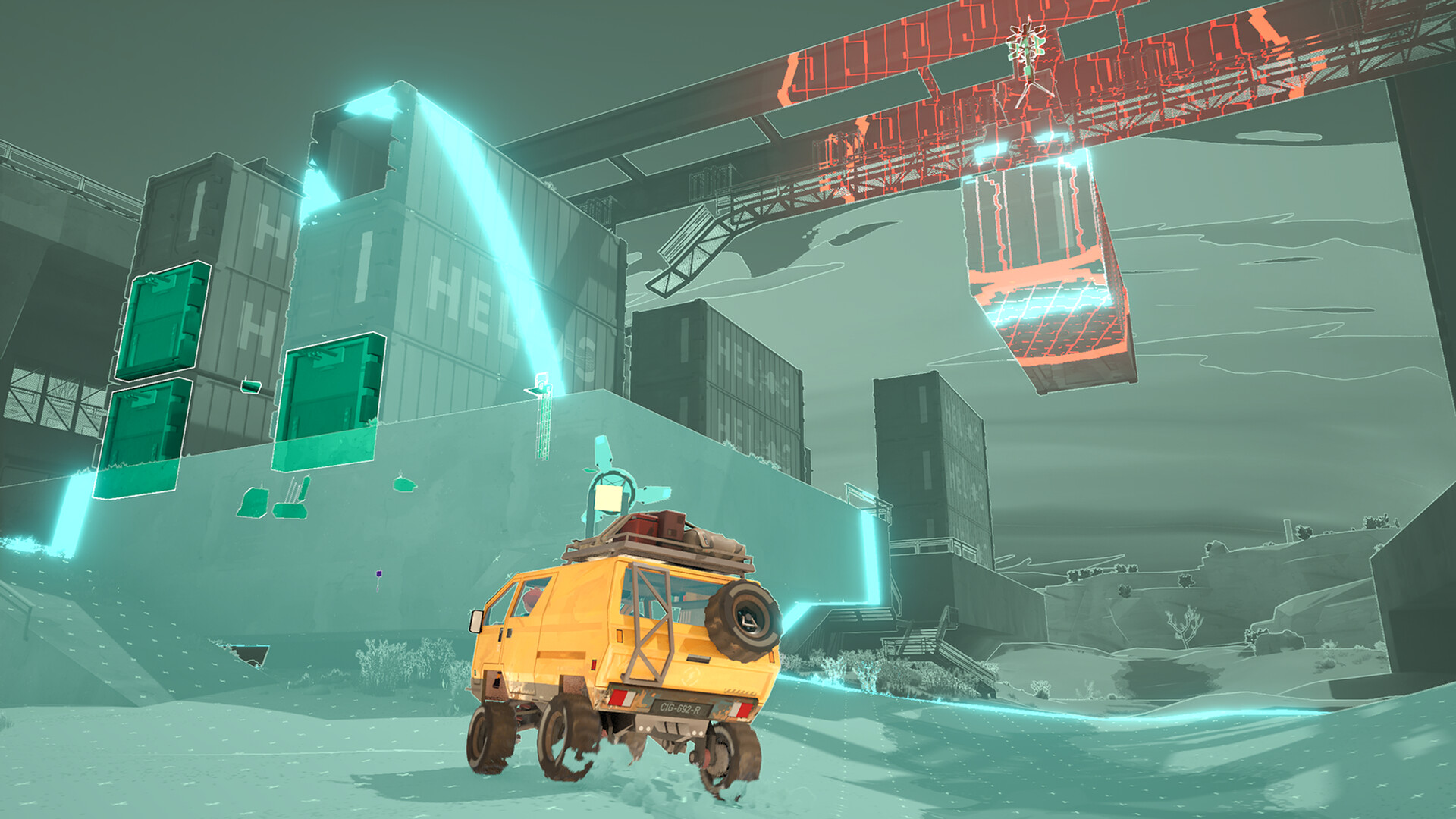
The van is the practical centre of that route. Sauge receives it early and can drive between settlements, ruins and points of interest instead of crossing every distance on foot. Its boxy form and conspicuous colour make it easy to recognise in the game's open spaces, but it is more than transport. New equipment fitted to the vehicle changes which places can be reached. Collecting components and gaining a scanner or grappling tool can turn a road, blocked passage or industrial structure into a route with a purpose. The loop is therefore connected: a conversation or side task leads Sauge into the world; exploration yields components or information; an upgrade lets the van reach another section; that area holds people and clues of its own. The vehicle does not erase walking. Sauge still gets out to enter buildings, examine sites and work through light platforming sections. Driving covers the distance between opportunities, while the search itself often takes place beyond the road. The difference helps the world feel broad without making every objective a long walk back from the nearest settlement.
Cigalo's communities give the journey its shape. Humans who remained after a corporation withdrew share the planet with robots left from its period of exploitation and with the Reinetos, a species with an older connection to this world. The Reinetos, robots and humans share places and help one another despite an environment made difficult by human activity. Sauge's return is therefore not a solitary expedition through an empty wasteland. She meets people who remember or have adapted to the place in different ways, and helping them becomes a route to understanding it. Estello Village provides a social point of return while other characters and tasks draw her outward. An optional request might ask for something found in a cave or a data archive uncovered in a ruin. These errands matter mechanically because they can provide components, but they also bring Sauge into contact with residents who would otherwise be easy to pass on the road. The story of the planet is carried by their needs as well as by abandoned infrastructure.
The game's quest log resembles a social network, with threads for different characters and messages that can arrive as work proceeds. That form suits a journey in which Sauge keeps leaving and returning to people. A request is more than a single marker on a map: there is a person to talk to, an update when something changes, and a wider conversation running alongside the main search. The primary lead concerning Garance stays visible, while optional tasks offer other reasons to explore a region. Resource rewards tie those threads back to the van. Completing a favour can bring Sauge closer to a new tool, and the tool can reveal another path toward both the sister and the community's problems. There is no requirement to interpret every message as a hidden clue to the central mystery. Some are about people trying to keep a place functioning. This gives the narrative room for friendships and practical cooperation without turning the whole planet into one enormous puzzle designed only for Sauge.
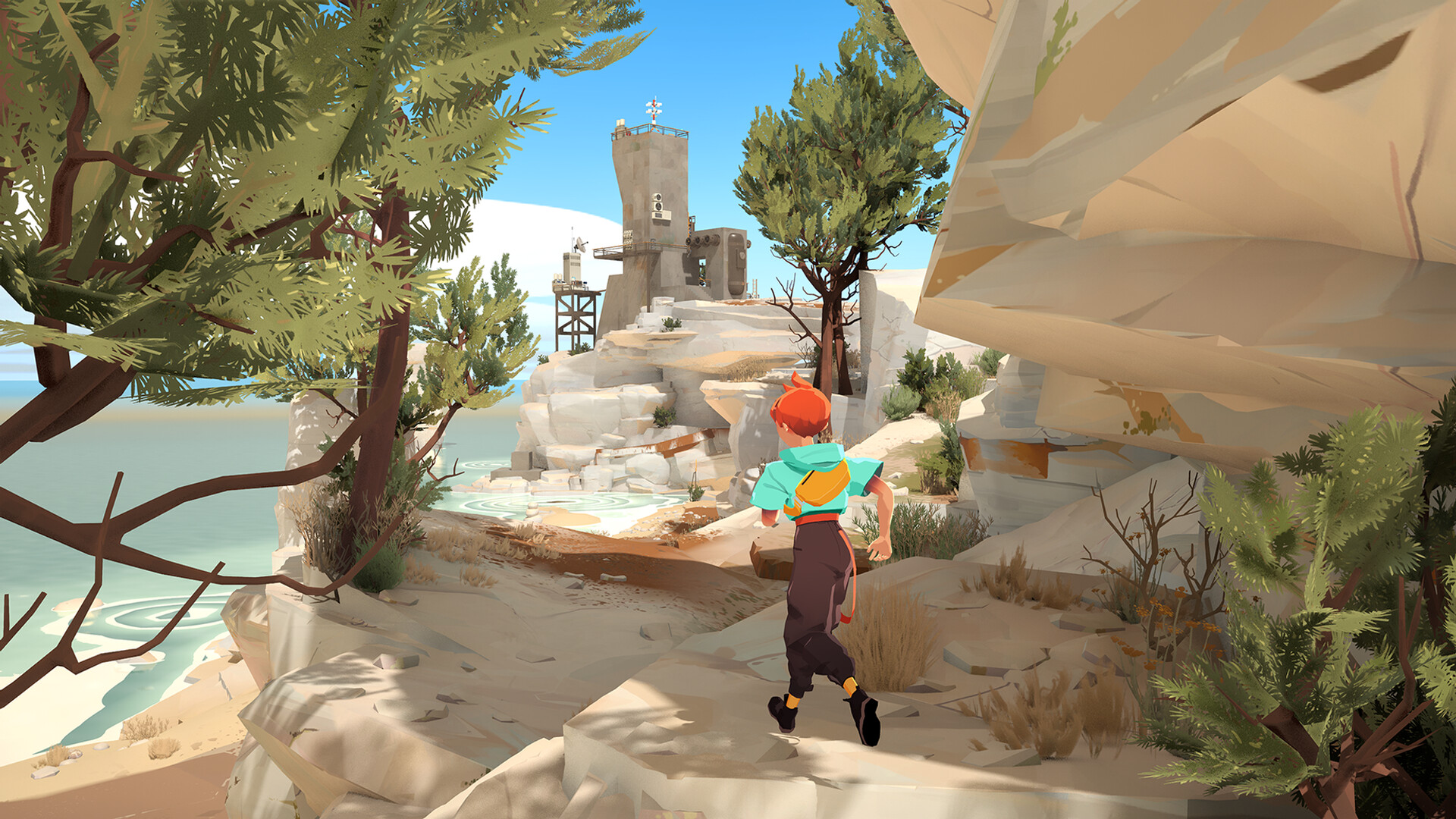
On foot, the world has a different pace. Sauge can look around a ruin, follow a path through rocks or climb to a location that the van cannot enter. Light environmental puzzles ask the player to recognise how a tool, switch or path fits the structure in front of them. Scanning helps identify something useful, while a grappling attachment changes how an obstacle can be crossed. This is exploration gated by what the vehicle can do, rather than a combat test that blocks an area until Sauge becomes strong enough to fight. Cigalo has no combat, death or timer. Those absences are consequential: a wrong turn costs attention, but it does not demand a reload after a fight; a detour to assist a resident does not consume a countdown meant for finding Garance. The player can follow a lead and still stop to inspect a piece of ruined technology or an unexpected view across Cigalo. Progress is measured through new access, conversations and an expanding understanding of the planet. A tool fitted to the van can also make an old road worth revisiting: Sauge knows the way, but now has a means to reach what lay beyond it.
The contrast between recovery and environmental damage runs through the scenery. Once-green parts of Cigalo have become dry after sustained extraction, yet settlements and areas of vegetation remain. A forested approach, dusty road and stark container yard do not tell identical stories about what happened here. Some spaces are recognisably industrial, with equipment that can be scanned or reached using a van upgrade. Others draw attention to the daily lives of people living amid that equipment's aftermath. The visual style favours strong colours and readable silhouettes, so Sauge and her yellow van remain distinct against both pale rock and abandoned structures. Music also changes the tone of a return to the village compared with a trip across more isolated territory. Estello's softer acoustic sound marks it as a place of people, while sparer electronic textures can accompany the road or a ruin. The presentation supports the central idea that the planet has been damaged without presenting every place on it as lifeless.
Studio Plane Toast's 2024 adventure was released on PC, PlayStation 5 and Switch, with Dear Villagers as publisher. Its scope is a complete search across Cigalo, not an endlessly generated driving game or a survival system built around hunger and vehicle fuel. The early gift of the van makes exploration possible; the components and new tools give exploration direction; people encountered along the way explain why the planet is still worth caring for. Sauge's relationship with Garance remains the story's central mystery, and following it draws together the abandoned industry's physical traces and the communities that persist after it. The world can be traversed at the player's pace, so choosing to help a resident is part of the adventure rather than a break from a ticking objective. Its science-fiction premise gives room for robots and old technology, but the practical questions are familiar: who stayed, what they need, and what Sauge can do with the vehicle and knowledge she gradually gains.
- Developer
- Studio Plane Toast
- Genre
- Non-combat exploration adventure