
About Call of Juarez
In the Old West, fugitive Billy Candle is pursued by Reverend Ray McCall after a killing at Billy’s family home. Play their alternating chapters as a stealth-minded fugitive and a former gunslinger, using different weapons and movement abilities while the search for the legendary Gold of Juarez links their paths.
Call of Juarez is a first-person Western shooter built around two men whose accounts of justice pull in opposite directions. Billy Candle returns to Hope after an unsuccessful search for the legendary Gold of Juarez, then finds his mother and stepfather dead. Reverend Ray McCall, the town preacher and Billy’s step-uncle, arrives and sees Billy fleeing the scene; convinced that Billy is responsible, he sets out after him. Their chapters alternate, so the player sees the pursuit from both sides as the story moves through frontier settlements, farms, wilderness and border country. The treasure legend gives the chase a wider history, while the immediate question of what happened at the farm drives the characters forward.
The two campaigns are connected by locations and events, but their moment-to-moment tasks are deliberately different. Billy is the hunted character, and his sections often ask the player to get past armed people without triggering a direct fight. Ray’s chapters put the player in the role of the pursuer, turning encounters into open firefights and confrontations with other gunmen. This alternating structure changes the meaning of a place: a camp that represents a threat to Billy can become ground Ray advances through with weapons ready. Short meetings and shared consequences tie the paths together, while each character’s separate abilities determine how the player crosses the spaces between them.
Billy relies on movement and concealment when he cannot match a group of enemies in a straight gunfight. He can crouch, move quietly, and use dark patches, bushes, crates and other cover to stay out of sight while watching patrols. His HUD includes a stealth indicator, giving feedback about how exposed he is as he crosses an area. The player reads sightlines and waits for openings, then moves between hiding places or uses a limited firearm when a section permits it. Billy can use a bow for quiet, aimed shots, but his chapters are shaped more by evasion than by sustained shooting. The result is a different rhythm from Ray’s levels: observation and route choice matter before a weapon is drawn.
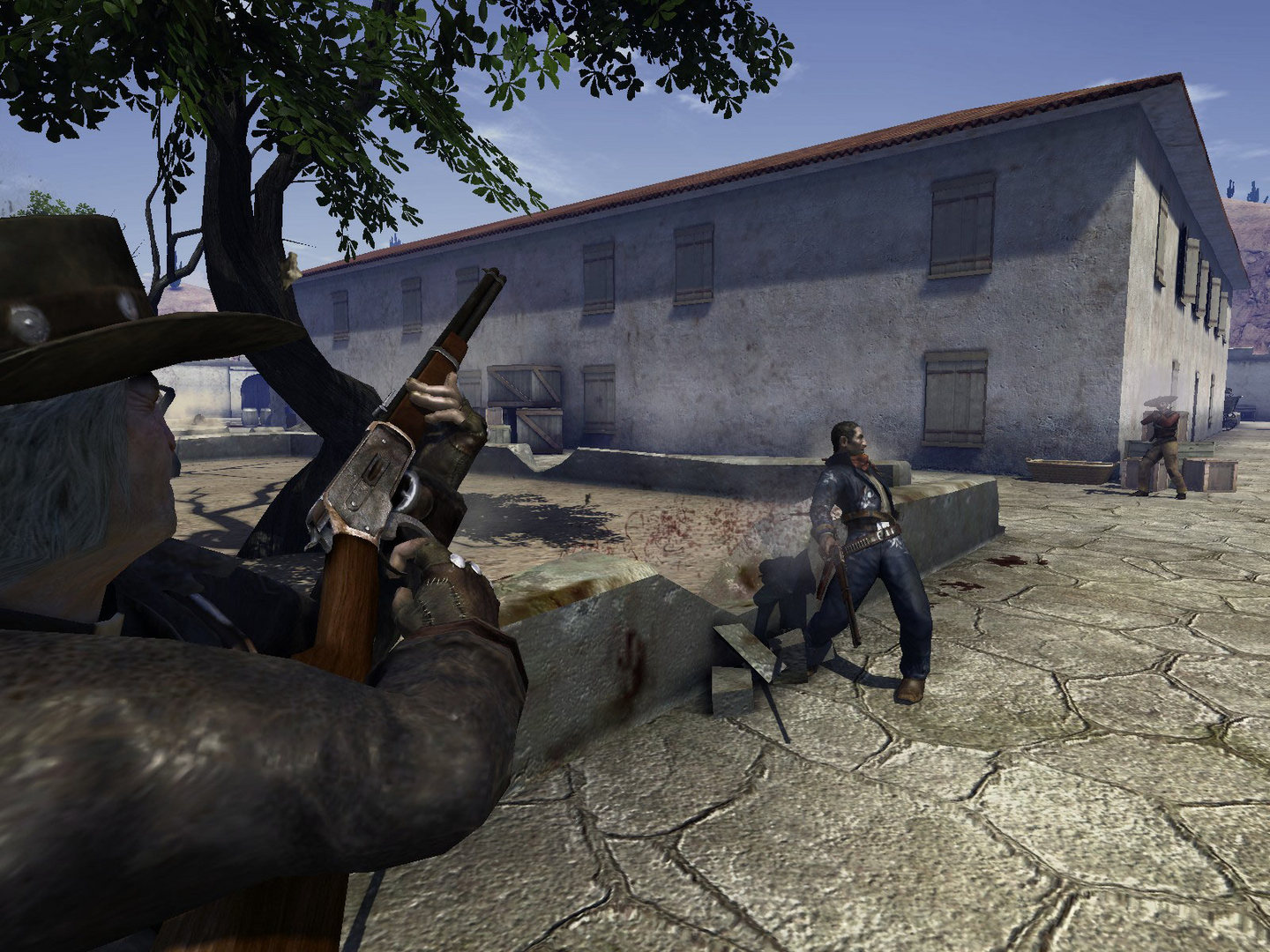
Billy’s agility also turns parts of the environment into routes. He can climb ledges and obstacles, reach elevated ground, and use his whip to catch suitable branches or protrusions and swing across gaps. These actions require judging distance and momentum in first person; a successful swing can connect two otherwise separated shelves or help him reach a higher path. The whip also has practical uses in encounters, including moving objects, while environmental objects such as lamps can be thrown or shot to start fires. Fire, smoke, dust and other physical effects interact with the space, so an object may become more than scenery during a confrontation. Billy’s equipment links traversal and survival instead of supplying a conventional arsenal for every situation.
Ray is built for direct action. His strength lets him kick through doors and handle heavy objects, and he can wear protective armour over his chest. In combat he can carry paired revolvers, use rifles or shotguns, and keep a Bible in hand; reading aloud briefly draws nearby enemies’ attention, creating a moment to attack. Ray’s reputation as a feared gunfighter sits uneasily beside his work as a preacher, and the game makes that tension part of his characterization as well as his combat style. His chapters use the familiar shooter loop of moving through a hostile area, taking cover or aiming down a lane, and clearing the opponents who block his pursuit.
Ray’s concentration mode slows time after he draws his revolvers and lets the player guide targeting marks across nearby enemies before firing. It is useful when several opponents converge, while one-on-one gun duels turn a draw into a separate timing and aiming encounter: keep the rival in view, wait for the signal, draw, then land a shot before he does. Both characters also ride horses, and some sequences combine riding with shooting at pursuers. The game alternates these set pieces with on-foot exploration and combat. Its weapons include revolvers, rifles and shotguns, with period-style firearms rather than modern automatic guns; each chapter’s character determines which tools and tactics are available. The HUD shows health, ammunition and whether concentration is available, keeping track of each character’s combat state.
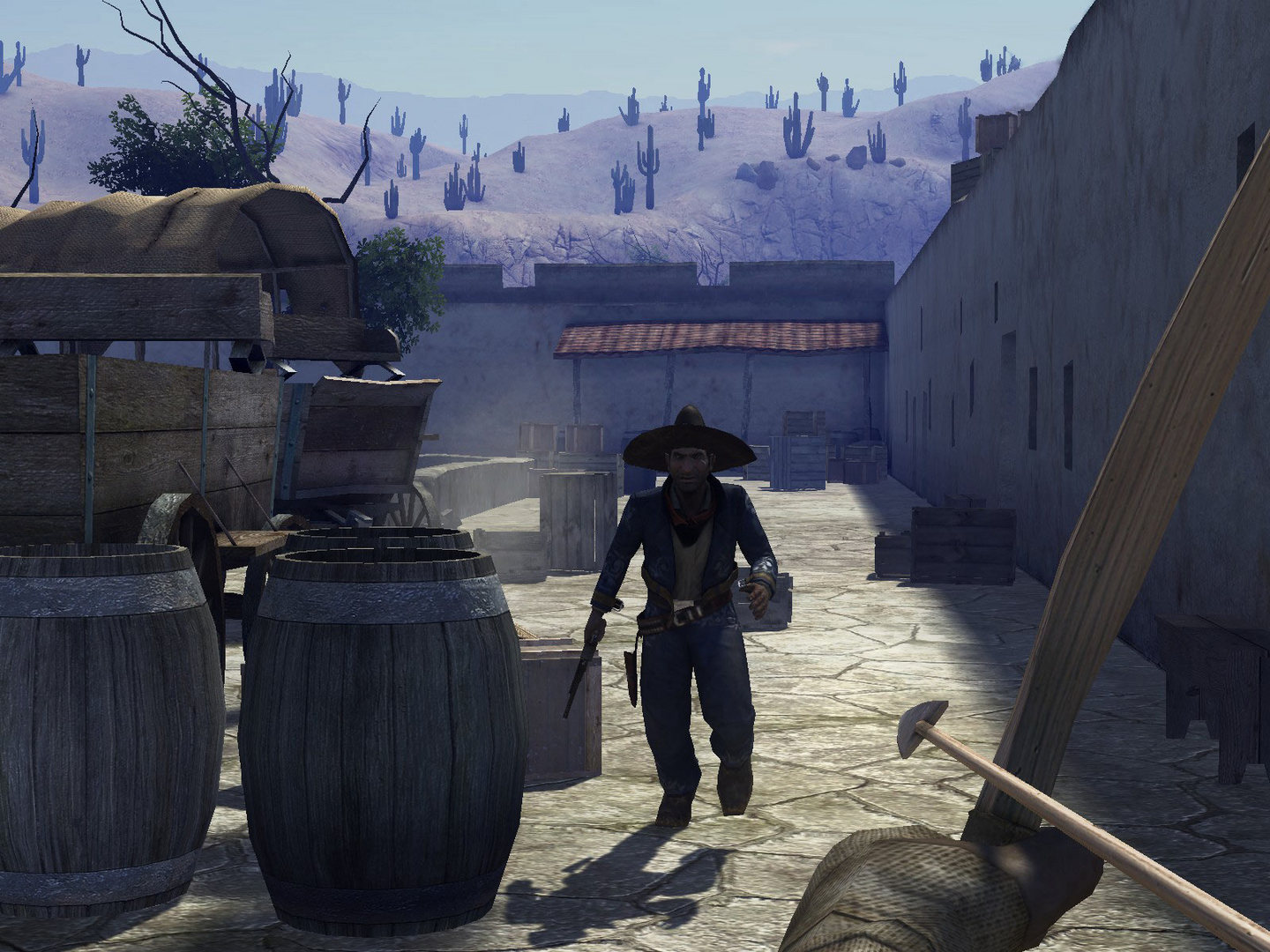
Beyond the main alternating story, the game includes additional non-story missions and standalone duels. These give the player focused gunfighting encounters without continuing Billy and Ray’s pursuit. During the campaign, a compass marks mission objectives, while a separate log keeps recent dialogue and hints available for reference. Reached episodes can be started again from the Load Game menu, and the pause menu can restart either the current episode or its present sub-level. A separate Secrets menu records discovered extras. Online features are no longer supported. When either character rides a horse, the HUD tracks the animal’s condition alongside player health and ammunition, making its survival visible during mounted travel and shooting.
- Developer
- Techland
- Genre
- Western first-person shooter