
About Cairn
Cairn follows climber Aava on an attempt to reach the unclimbed summit of Mount Kami. Its climbing simulation lets her choose a route across the rock face, placing hands and feet while managing balance and effort. Pitons, chalk, tape, food, water and medicine support the long ascent, which also brings encounters and glimpses of the mountain’s history.
Cairn is a climbing and survival adventure about Aava’s attempt to reach the summit of Mount Kami, a peak no one has climbed before. Aava is an experienced climber, and the mountain is the central landscape and challenge of the journey. The goal is clear, but the route is not laid out as a conventional trail. The player reads the rock face, chooses where to go and works upward across ledges, walls and difficult sections. That open route gives the ascent a personal shape: the chosen line reflects what looks reachable, which holds seem secure and how much effort can be spent. The story follows Aava toward a summit that carries both physical and personal meaning. Along the way, she meets unexpected companions and hears from people left on the ground, while the mountain’s history adds context to the present climb. The narrative frames the ascent as a demanding undertaking with consequences for Aava’s priorities.
Climbing is simulated through the placement and movement of Aava’s hands and feet. The player searches for holds, adapts posture and balance, and manages effort as the body moves over the surface. A hold that looks useful may require an awkward reach or leave Aava poorly positioned for the next move. Climbing anywhere creates freedom, but it also means evaluating the rock rather than following a single marked route. Aava can solve problems while on the wall and change direction when a line becomes difficult. Poor balance or careless placement can lead to a fall, so every movement has weight. The controls are designed to make hand and foot placement intuitive, while the underlying simulation asks the player to pay attention to body position. Each section becomes a sequence of small decisions about reach, stability and exertion, and those choices accumulate over the full ascent.
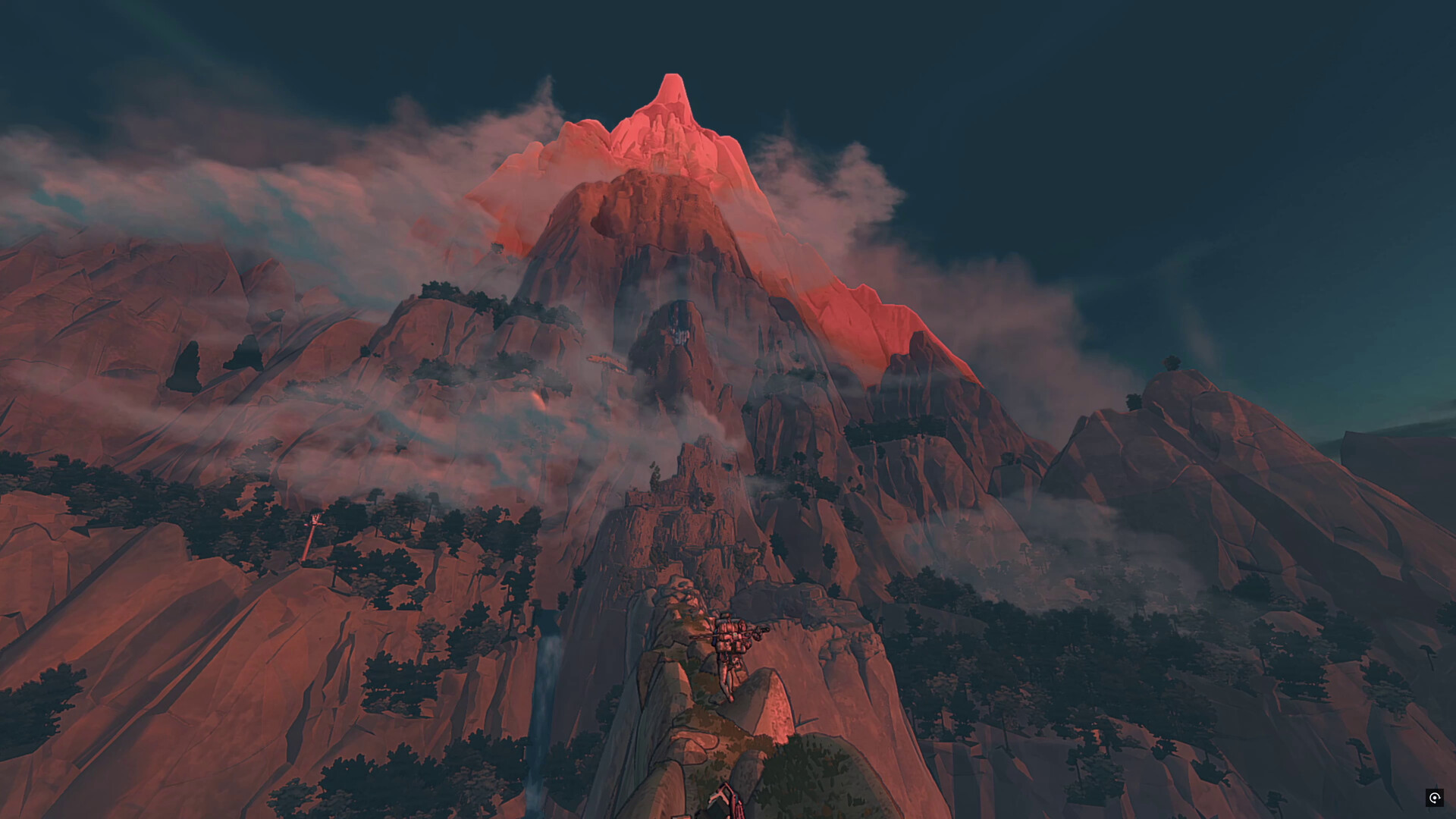
Planning begins before Aava leaves the ground. From below, the player can inspect the mountain and read the rock face for a route that appears manageable. Once climbing, a difficult section may call for a pause, a change in direction or a return to a previously secured position. Pitons can anchor progress and help create a safer stopping point, but they are among the supplies that must be managed across the expedition. Chalk and finger tape support the physical work of climbing; their use is part of the preparation for continuing through demanding terrain. The mountain is not a sequence of isolated climbing challenges detached from one another. The cost of spending resources in one place affects what remains for later, and a route that seems easy at first can require more support than expected. Aava’s upward progress depends on both reading individual surfaces and thinking ahead about the climb as a whole.
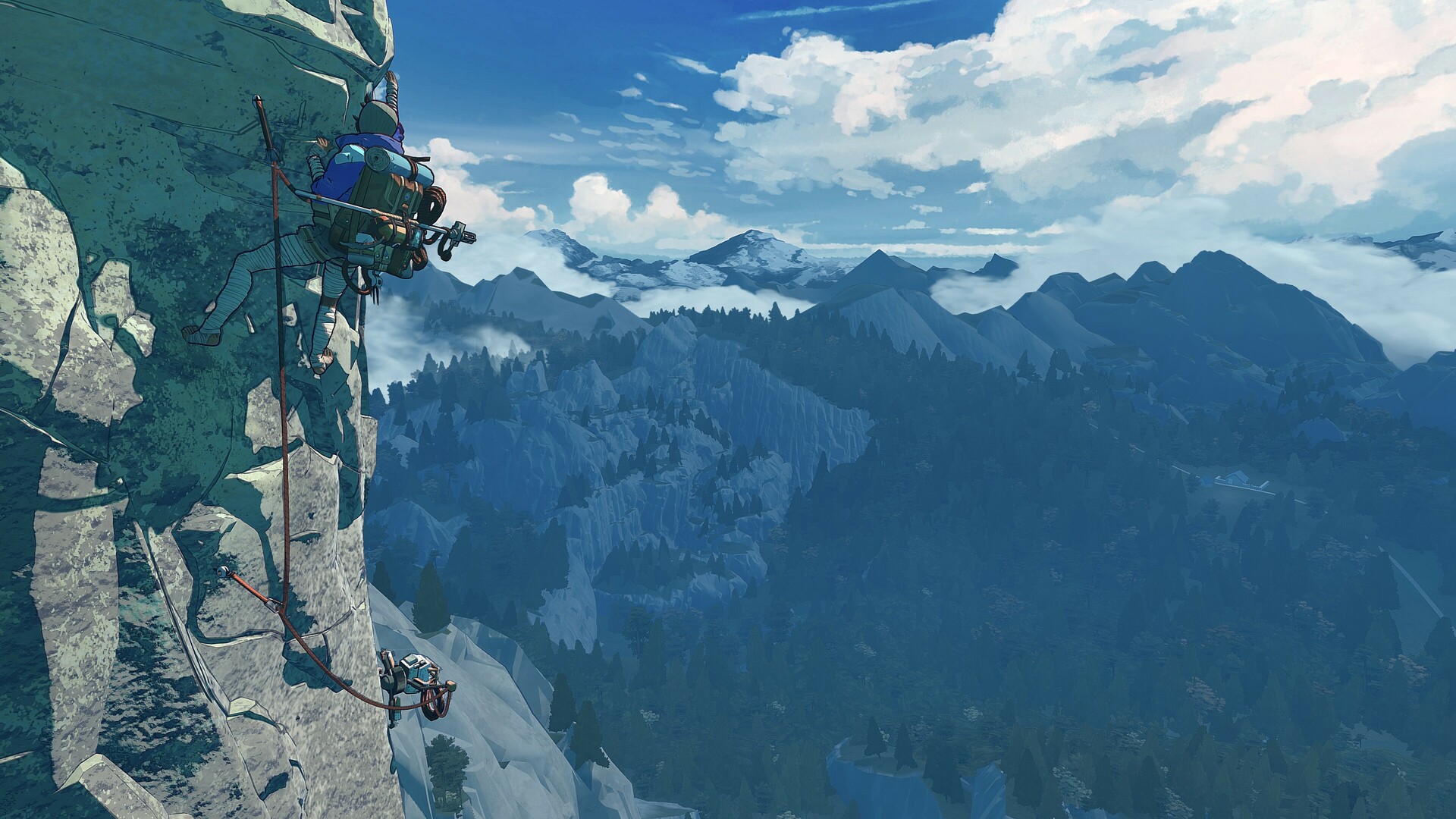
The ascent also depends on ordinary survival supplies. Food, water and medicine sit alongside climbing gear as resources that must last through the journey. The player can explore the mountain to look for supplies, establish bivouacs and decide when to stop for a rest. These pauses make the mountain feel larger than the next wall: a successful climb involves managing time and provisions across a long expedition. A bivouac is a temporary refuge and a place to recover before continuing, while a supply found on the route may alter how far Aava can safely proceed. Carrying capacity and resource choices create a trade-off between preparation and mobility. The game connects bodily effort on the rock with the broader demands of surviving in an unforgiving landscape. Instead of treating the summit as a single final obstacle, it presents the approach as a series of climbs and pauses shaped by what Aava has left in reserve.
Mount Kami contains more than a climbing route. Exploration reveals elements of the mountain’s history, and the story introduces companions as Aava moves through the ascent. Her relationships with people on the ground remain part of the journey through their messages and conversations, creating a connection between the remote climb and the lives outside it. The narrative’s central question concerns what Aava is willing to sacrifice to achieve her ambition. The game keeps that question attached to a concrete physical objective: she is attempting a first ascent, and each difficult section requires a decision about whether and how to continue. The companions and history broaden the context without replacing the mountain as the main challenge. The player advances through a landscape that can be explored freely, with discoveries and encounters adding meaning to the route. The story is carried alongside the climbing rather than separated into a different mode of play.
Cairn’s challenge can be adjusted, and the game supports saving at any time. These options shape how players approach a long ascent: a chosen difficulty can make the physical demands more forgiving or more exacting, while flexible saving makes it possible to pause the expedition. The core simulation remains centered on balance, body placement, route choice and resource management. Players can approach climbing as a problem-solving exercise, searching for a stable sequence of holds, or as a test of careful planning across terrain and supplies. There is no single prescribed path to the summit; the player decides where Aava climbs and must respond to what the rock allows. The result is an adventure organized around one sustained undertaking, with exploration, survival and story all tied to the same mountain. Reaching higher ground depends on the choices made at every scale, from a handhold to the expedition’s overall plan.
- Developer
- The Game Bakers
- Genre
- Climbing survival adventure; action, adventure, simulation and sports elements