
About Button City
Button City is a narrative adventure about Fennel, a shy fox who moves to town and finds friendship at its local arcade. Join the Fluff Squad, compete in Gobabots, explore a pastel diorama town, and help its residents as the group tries to save Button City from closure and redevelopment.
Button City follows Fennel, a shy young fox who has just moved to town and is still finding his place in a new community. The local arcade becomes the point where he meets other young animal characters and joins their circle, the Fluff Squad. The friends bond over Gobabots, a competitive game that has become the arcade’s latest obsession, and their play gives them a shared goal: they want to become champions and earn the mysterious Golden Gobabot. Their plans change when they learn that the arcade is threatened with closure and demolition so that a Big Box Mart can take its place. The group’s efforts to protect the space connect a neighborhood story about friendship and growing up with a more immediate contest among rival teams. The story identifies Peppermint Pepperbottom as the greedy cat behind the threat, while other kids and town residents add their own concerns and ambitions. Button City keeps the stakes rooted in places the characters use every day: the arcade is a competition venue, a meeting point and a community institution worth defending.
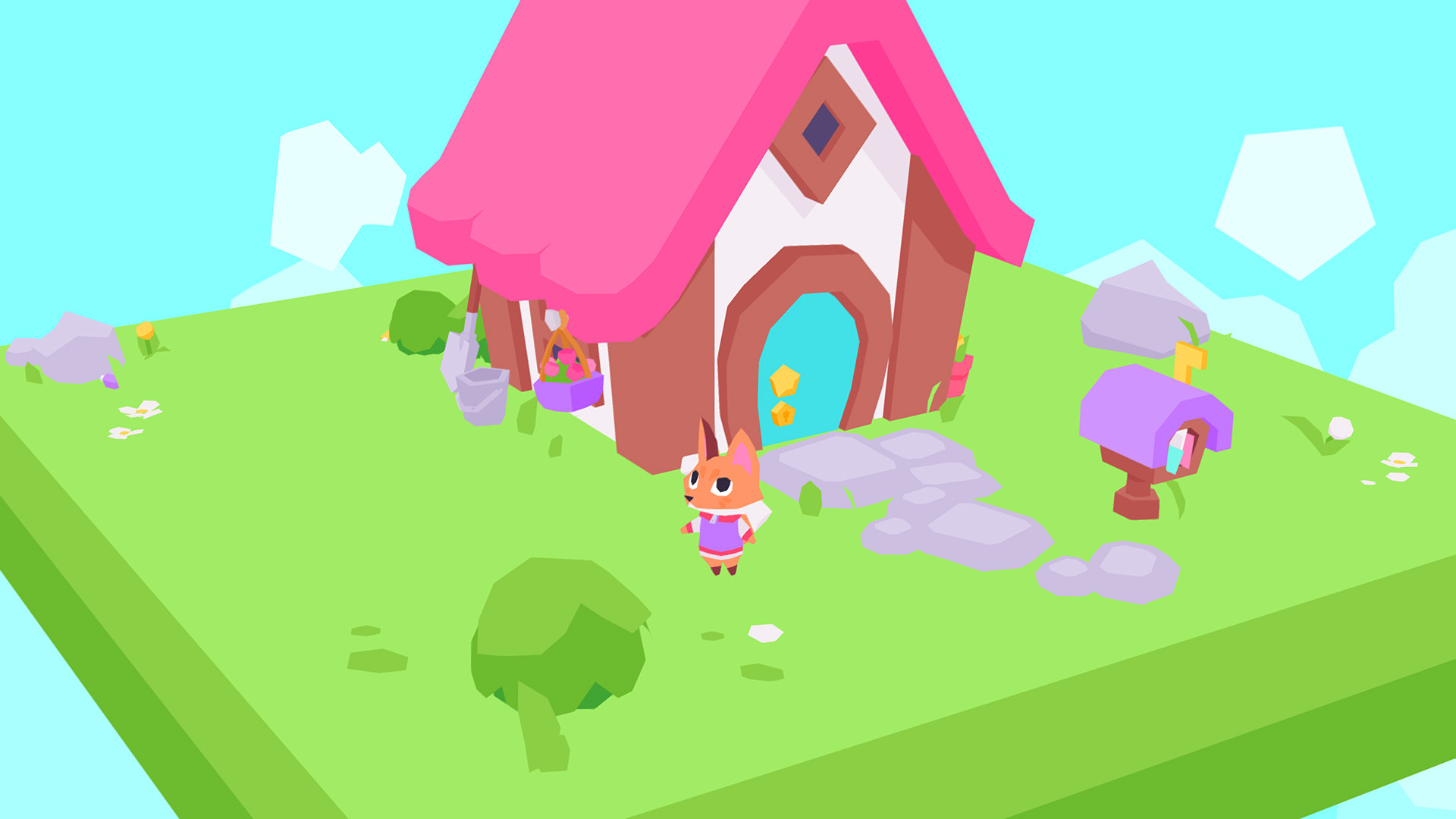
The main adventure takes place in a pastel, low-poly world arranged like a collection of small dioramas. Fennel moves through individual areas, talks with residents and completes quests that help the story progress. The town is not one continuous map: a travel feature called Zoomie lets players select among the locations they have unlocked, viewing them as small square scenes that can be rotated to inspect what is happening. This way of moving makes the town feel like a stack of little stages and turns the locations themselves into part of the visual language. Progress through the story moves time forward and opens more of the town, so returning to familiar places can reveal new characters or activities. The basic loop is conversational and episodic: speak with someone, learn what they need, travel to the relevant place, then return or follow the next lead. Small puzzles and side quests break up those conversations, while the compact spaces encourage players to inspect objects and speak with the animals who inhabit them. Exploration therefore means following relationships and noticing details rather than navigating a large uninterrupted landscape.
At the arcade, Gobabots supplies the central competitive thread. Inside this fictional game, two teams of four fruit-shaped robots gather Gobaberries and try to make the biggest smoothie at the map’s center. Each Gobabot has distinct weapons and attacks, giving team composition a role beyond choosing a favorite character. Players can collect bots at the arcade prize counter, build a lineup and challenge opponents as the Fluff Squad works toward the tournament’s Golden Gobabot. This makes the arcade game part of the story’s social structure: the Fluff Squad has rivals in the Tuff Fluffs, and other teams around town can also be challenged. Gobabots is more than a decorative cabinet that Fennel passes on his way to another quest. The friends’ practice, competition and rivalries give their shared project shape, while the arcade’s threatened future gives those matches a larger context. The on-screen battles provide the game’s most direct arena-style action, but they sit within a narrative adventure built around exploring town, meeting characters and helping the group.
Two other arcade titles provide distinct play styles. In rEVolution Racer, players drive electric cars down Watermelon Mountain, racing against rivals on winding roads. Drifting is central because a successful slide charges the car’s battery, which can then release a burst of speed. The game’s fictional setting includes characters such as Evie, with a custom EV Sprinter, and her rival Spin. Prisma Beats shifts to rhythm play: notes move with the music, and players press the corresponding inputs in time, with challenge modes adding a more competitive layer. The games recur as activities and as parts of character quests, which lets a conversation or favor lead into a self-contained arcade challenge. A developer interview also describes Fluff Buffs, enhancements that alter how arcade games play; these can make a game more powerful or impose a harder variation. Together, the cabinets prevent the arcade’s Gobabots competition from defining every moment spent there. They also give the setting a history and culture of its own: residents have preferred games, rivals, and reasons for gathering at the machines.
Outside the cabinets, quests connect the town’s cast and gradually reward attention to their interests. Fennel befriends the members of the Fluff Squad, including Chive, who is technically minded and plays an important role in the group. A developer interview describes a quest in which Fennel helps Chive modify a racing setup to use hand controls, a story detail tied directly to the rEVolution Racer cabinet and her interest in playing it. Other characters have their own habits and worries: Sorrel practices yoga to metal music, while Lavender enjoys Gobabots cosplay but feels self-conscious about it. These details make the side stories more than errands for generic rewards. Quests can award costume pieces, toys or food, and the items can be used or displayed in the overworld. Some also unlock new arcade modes, so a favor can change what the player can do after returning to a game. A rain-themed costume, for example, can open a rainy racing mode that affects vehicle handling; another reward changes the tempo rules in Prisma Beats. A few collected objects also matter in later quests, linking exploration and character stories across different locations.
Costumes and room decoration give Fennel a visible way to mark progress, while arcade unlocks provide the more mechanical rewards. Mastering the games opens additional modes and prize items, and completing a quest can place a new object in the inventory or make a previously available activity behave differently. This produces a loop in which story exploration feeds arcade play and arcade play sends the player back into the town with new rewards or context. Gobabots’ collectible characters and abilities shape a team, the racer’s boost depends on drifting, and Prisma Beats tests timing against the track. The wider adventure does not present a conventional combat campaign or a deep character-stat system; its progression comes from story chapters, opened locations, relationships, costumes, collectibles and arcade variations. Movement between scenes is handled through Zoomie, and individual locations are explored on foot, with conversations and interaction prompts leading into small tasks. The result is a structure where changing what Fennel owns or what a cabinet can do is a practical sign that the player has engaged with the community, rather than a numerical level increase detached from it.
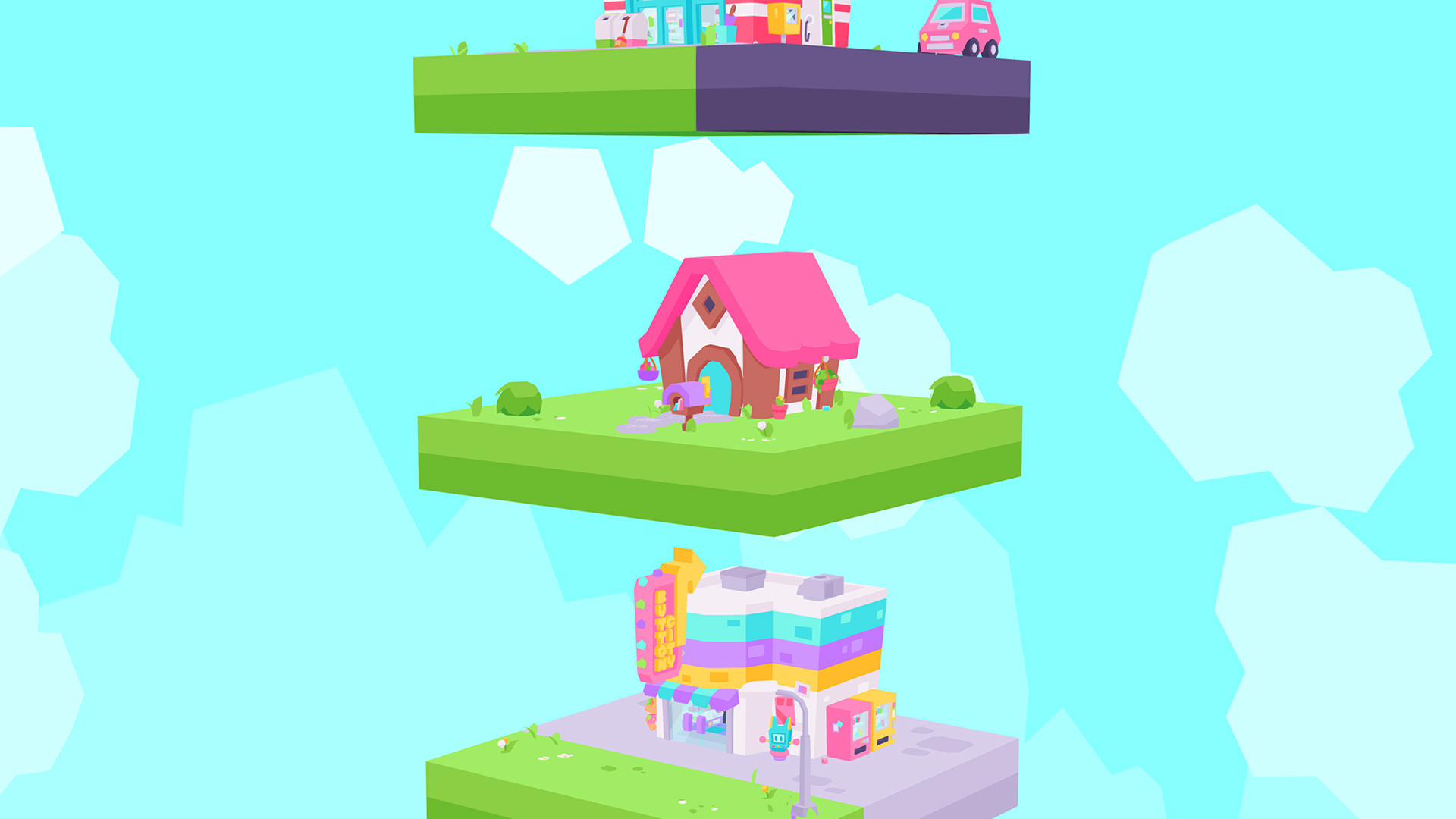
Button City’s presentation uses rounded animal designs, bright colors and miniature architectural compositions to frame a story about a local gathering place under pressure. The low-poly style grew from an early experiment with a fox and a house on a small diorama island, according to the developers; the final town retains that toy-like scale while giving the characters a range of personalities. Dialogue and short scenes move between low-key jokes, social awkwardness and more personal subjects, including family pressures and the need to find a place among new friends. The game’s music changes with the scene, shifting between calmer town passages and more energetic moments, while the arcade cabinets have their own musical identities. The Steam edition is listed as a single-player narrative adventure, despite its fictional games involving teams and rivals; the player guides Fennel and his computer-controlled friends rather than playing a separate online multiplayer mode. Subliminal’s itch.io page lists Windows and macOS builds, and the game also has a Nintendo Switch release. The town and its arcade remain linked throughout the campaign: returning to a cabinet after an errand can reveal a new mode, while the next contest can give Fennel and his friends another reason to venture into the surrounding neighborhood.
- Developer
- Subliminal (Subliminal Gaming)
- Genre
- Narrative adventure with arcade minigames