
About Burnhouse Lane
Burnhouse Lane follows Angie Weather, an agency nurse facing death, through five impossible tasks that might win her life back. Its horror adventure joins conversations and inventory puzzles to light platforming, hiding and sparse-ammunition combat. Choices affect how people and events develop, while a second world keeps pressing into Angie's already difficult ordinary life.
Angie Weather arrives at Burnhouse Lane with little room for ordinary postponement. She is an agency nurse who is seriously ill, and the premise offers her a way to reclaim her life only if she completes five seemingly impossible tasks. Harvester Games does not frame that bargain as a neat quest board detached from who she is. Her work means caring for people whose own health and time may be fragile; her diagnosis means she can no longer keep mortality at the safe professional distance that a nurse might use to get through a shift. The tasks send her into situations that can be violent, absurd or deeply personal, while the question of how to live when time feels scarce remains present. The game moves between recognisable places and another, stranger world, so the threat is not confined to a locked haunted building. Angie has to speak with people, judge what they need, and decide what she is willing to risk. The five-task structure gives the story a direction without making the details of those tasks into a checklist to be known before play.
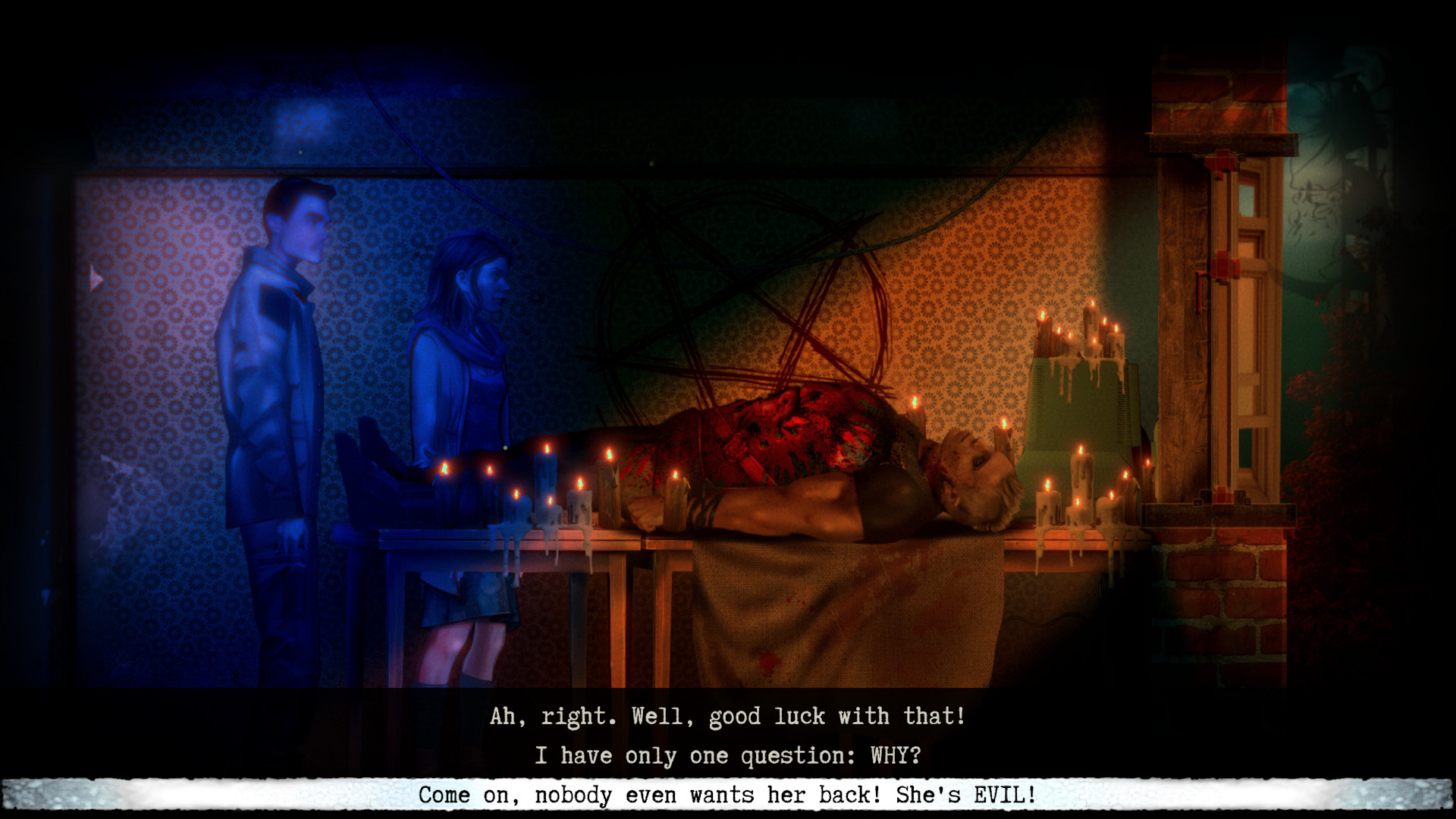
The people around Angie are part of that journey rather than a queue of puzzle dispensers. George and Jenny are among the named characters she meets, and the Burned Cat belongs to the game's more uncanny side. Their conversations can make a scene briefly funny or companionable before it becomes dangerous. Creator Rem Michalski has explained that those changes of tone are deliberate: ordinary exchanges and humour allow relationships to form, which gives the later danger more weight. This is a different rhythm from horror that stays at maximum volume throughout. The game also returns repeatedly to the difficulty of illness, addiction and dependence. Angie can be a professional carer and still need help herself; a person she meets can be capable of kindness without being simple or harmless. Relationships therefore have more than one function. They can tell Angie something about the next task, but they also give her reasons to keep going that are not reducible to the promise of a cure. The adult-content notice includes addiction, domestic abuse, animal cruelty, depression and suicide as well as violent and gory scenes.
Exploration uses a side-on viewpoint and the habits of an adventure game. Angie moves through places where a conversation, an examined object or an item carried from another room can change what is possible. Inventory puzzles ask the player to understand a practical relationship between things, not simply click every object in sight. The room itself often tells a small story before a dialogue choice confirms it: a workplace may suggest how a person spends their day, while an unfamiliar place raises the question of what belongs there and what has intruded. Unlike Harvester's earlier trilogy, Burnhouse Lane adds light platforming and moments when moving at the right time matters. Running or hiding can be a sensible response to danger, and the possibility of a fight changes how a player reads a seemingly quiet approach. It is still important to distinguish these systems from a pure action game. Time spent talking and solving puzzles remains substantial; the movement challenges and threats interrupt that work rather than replace it with continuous shooting.
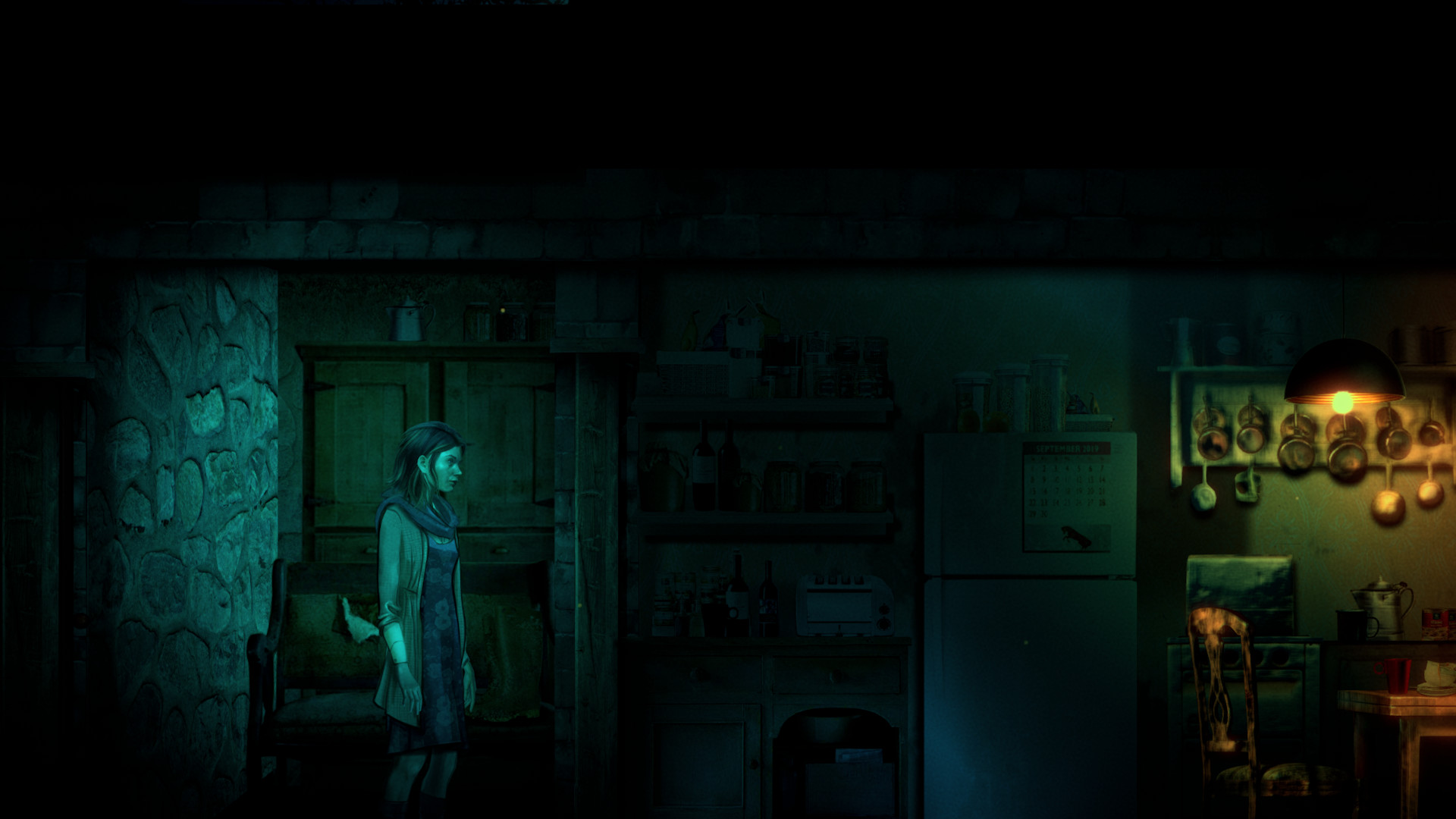
When Angie does fight, ammunition is deliberately scarce and enemies are dangerous. The Steam description draws on survival-horror shooting rather than power-fantasy combat, stressing that a shot has a cost and an opponent can hit hard. Michalski says encounters are relatively rare but can be lethal, which explains why the periods of exploration do not remove tension. Finding a way around danger, hiding, or keeping a limited resource for a later threat may be more useful than firing at the first thing that moves. These choices link back to the adventure puzzles: noticing a route and understanding a space are valuable even when the immediate problem is an enemy rather than a locked door. The light platforming adds another form of vulnerability, asking Angie to navigate a hazardous stretch instead of solve it through dialogue. The game does not promise a vast armoury or a stat-heavy character build. Its combat is a sharper edge on a story about survival, and its scarcity makes a short encounter feel different from a long sequence of safe, repeatable attacks.
The story's branches come through conversations and decisions, not only through whether Angie survives a fight. Harvester Games describes choices that change how events play out; Michalski has also said that the different endings are valid outcomes rather than one mandatory answer to be treated as canon. That gives a player reason to consider how Angie treats someone when she has her own urgent task to complete. The save system turns a small object into part of her characterisation. Ashtrays serve as save points, and Michalski connects that design directly to Angie's smoking and cancer: the act associated with her illness becomes the ritual that lets the player preserve progress. It is a pointed mechanic, not a generic glowing checkpoint painted to fit the scenery. Reaching one after danger can be a relief, while the need to find one keeps a difficult decision from feeling weightless. The device also connects the game's physical survival to a habit Angie cannot simply set aside because a new quest has begun.
Burnhouse Lane's look and sound have the same mixture of the intimate and the grotesque. Michalski worked closely with his brother Michał, whose contribution extended beyond the music to character art, backgrounds, programming and shaping the story. That collaboration helped build environments that can shift from an ordinary human encounter to a hostile, unfamiliar space without asking the player to leave Angie's story behind. The soundtrack is credited to micAmic and guest artists, and the game is fully voiced in English. Elizabeth Nightingale performs Angie, Ian Russell plays George, Madison Mitts plays Jenny and Davey Cadaver voices the Burned Cat. Naming the performers matters here because dialogue is a large part of play: how a person sounds can change the force of an offer, a joke or a threat before the next interactive choice arrives. The violent imagery is also explicit enough that the mature-content notice should be taken seriously. Its subjects include cancer and addiction as well as surreal monsters, so the disturbance does not come from gore alone.
Burnhouse Lane was released for PC in 2022 as a separate game, not a fourth chapter that requires a copy of The Cat Lady, Downfall or Lorelai. Michalski has described its universe as new, even while retaining the interest in troubled people, difficult choices and horror rooted in ordinary relationships that connects his work. That distinction matters when a player sees the earlier titles attached to the studio's name: familiarity may help explain the creative lineage, but Angie has her own premise and cast. The PC edition is sold through Steam and GOG, with GOG offering an offline installer; later console versions also exist, though storefront-specific features should be checked on their own pages. More importantly, this is the Harvester game that brings fights, hiding and light platforming into a formula previously centred on talking and inventory puzzles. It asks the player to care about the person on either side of a choice while also watching the room for a practical way through. The five impossible tasks provide the outer shape, but how Angie deals with a dangerous place and with the people inside it supplies the moment-to-moment substance.
- Developer
- Harvester Games
- Genre
- Psychological horror adventure