
About Bugsnax
A journalist travels to Snaktooth Island after receiving an invitation from explorer Elizabert Megafig, only to find her missing and her expedition scattered. By tracking and trapping the island’s half-bug, half-snack creatures, then helping the Grumpuses who live there, the journalist pieces together what happened to Lizbert and the Bugsnax.
Bugsnax begins with a reporting assignment. The player is a journalist who receives a film from Elizabert “Lizbert” Megafig, an explorer who claims to have found creatures that combine insects with familiar foods. Her invitation brings the journalist to Snaktooth Island, but Lizbert is gone, her camp is in disarray, and the members of her expedition have dispersed. Filbo Fiddlepie, the well-meaning interim mayor of Snaxburg, becomes the first point of contact. The investigation therefore has two connected goals: discover what happened to Lizbert and understand the Bugsnax that drew the expedition to the island. The first-person viewpoint keeps the player in the role of an observer collecting evidence, rather than a hero who arrives with a combat arsenal or special powers. The opening questions are deliberately practical as well as strange: what are these creatures, where do they come from, and what has their presence meant for the people who followed Lizbert? Each new encounter can advance both lines of inquiry, because the journalist learns about the animal by studying it and about the expedition by speaking with those who met it.
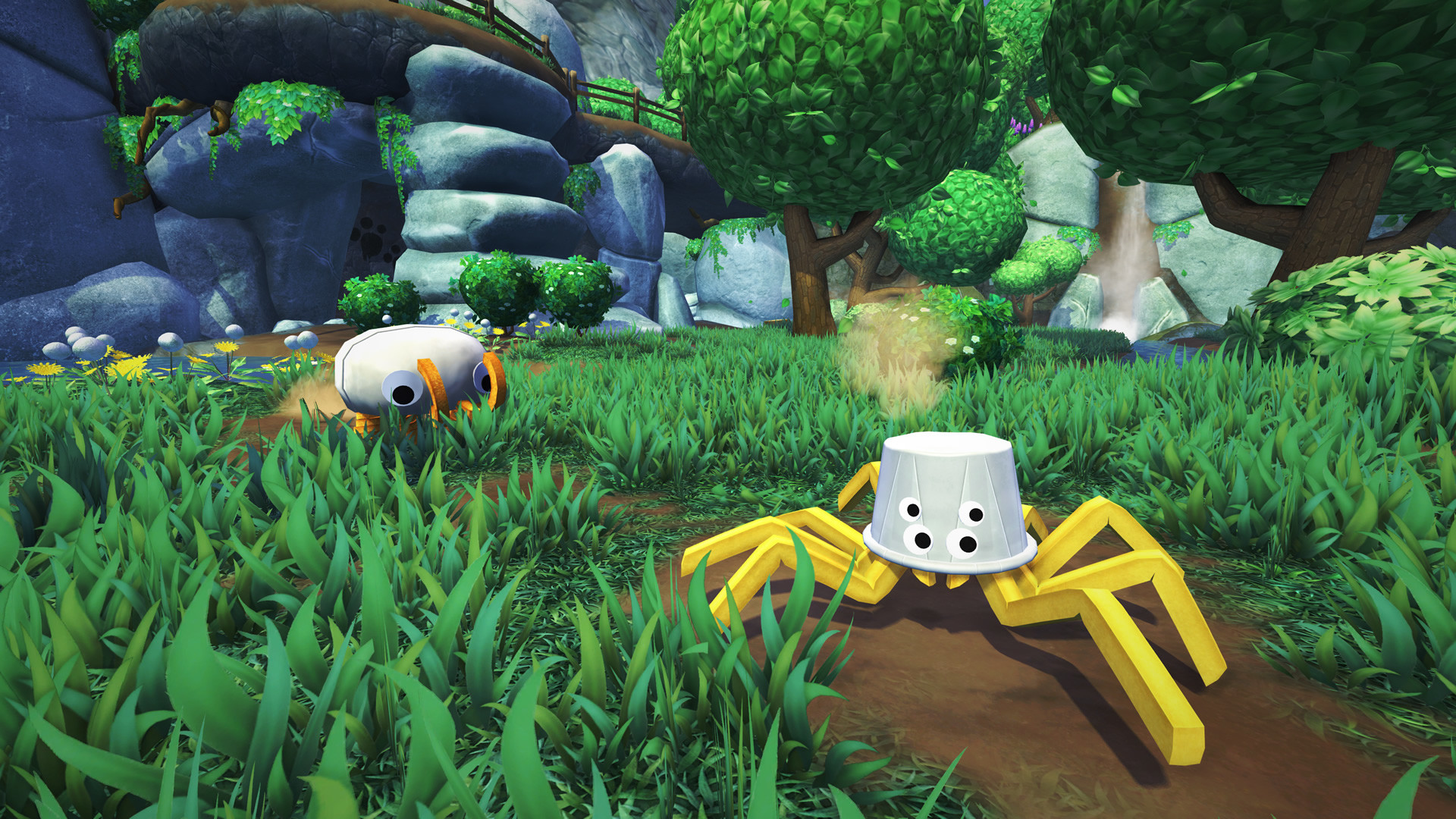
Snaktooth is explored as a set of distinct habitats where Bugsnax have different routines and behaviors. The journalist watches how a creature moves, works out what might lure it, and chooses a suitable trap or other contraption. A capture is not simply a matter of aiming at a moving target: the species’ behavior is part of the puzzle. The developers describe creatures that fly, charge, shoot projectiles, pick up other Bugsnax, or collide with them, combining behavior traits to make different species. This gives observation a practical purpose. A creature’s path, hiding place, or interaction with another animal can suggest where to place a trap and when to activate it. The island’s food-and-insect combinations make each target readable as a characterful creature, while its behavior determines how the hunt unfolds. Since the species share spaces and can disturb each other, watching a group can reveal useful opportunities that are not obvious when concentrating on one target. A charging creature might knock another off its route; a projectile or flame can send nearby animals scattering. The environment therefore acts like part of the equipment, giving the player ways to redirect the hunt instead of only waiting for a creature to approach.
The capture toolkit supports this investigative loop with playful, physical contraptions. Traps can be placed and activated as part of a plan, and bait helps draw Bugsnax toward a chosen spot. The tools are designed around the creatures’ movement and reactions, so the player experiments with positioning and timing instead of relying on a single weapon. Young Horses has described the hunting systems as a smaller, more approachable take on tracking and systemic interactions, with objects and creatures able to affect one another. Fire and ice can change the situation, while Bugsnax themselves may knock one another around or set off a chain of movement. The result is puzzle solving through the environment: identify the target’s behavior, decide what you can manipulate, and use a trap or lure to turn that knowledge into a catch. This design makes a failed setup informative: a trap that is ignored, avoided, or disrupted points back to the animal’s route and temperament. The player can alter the arrangement and try another approach, with the physical comedy of traps and collisions part of the feedback. Capturing all the different species is a long-running collection goal, but the moment-to-moment task is closer to solving a small field problem than filling a checklist.
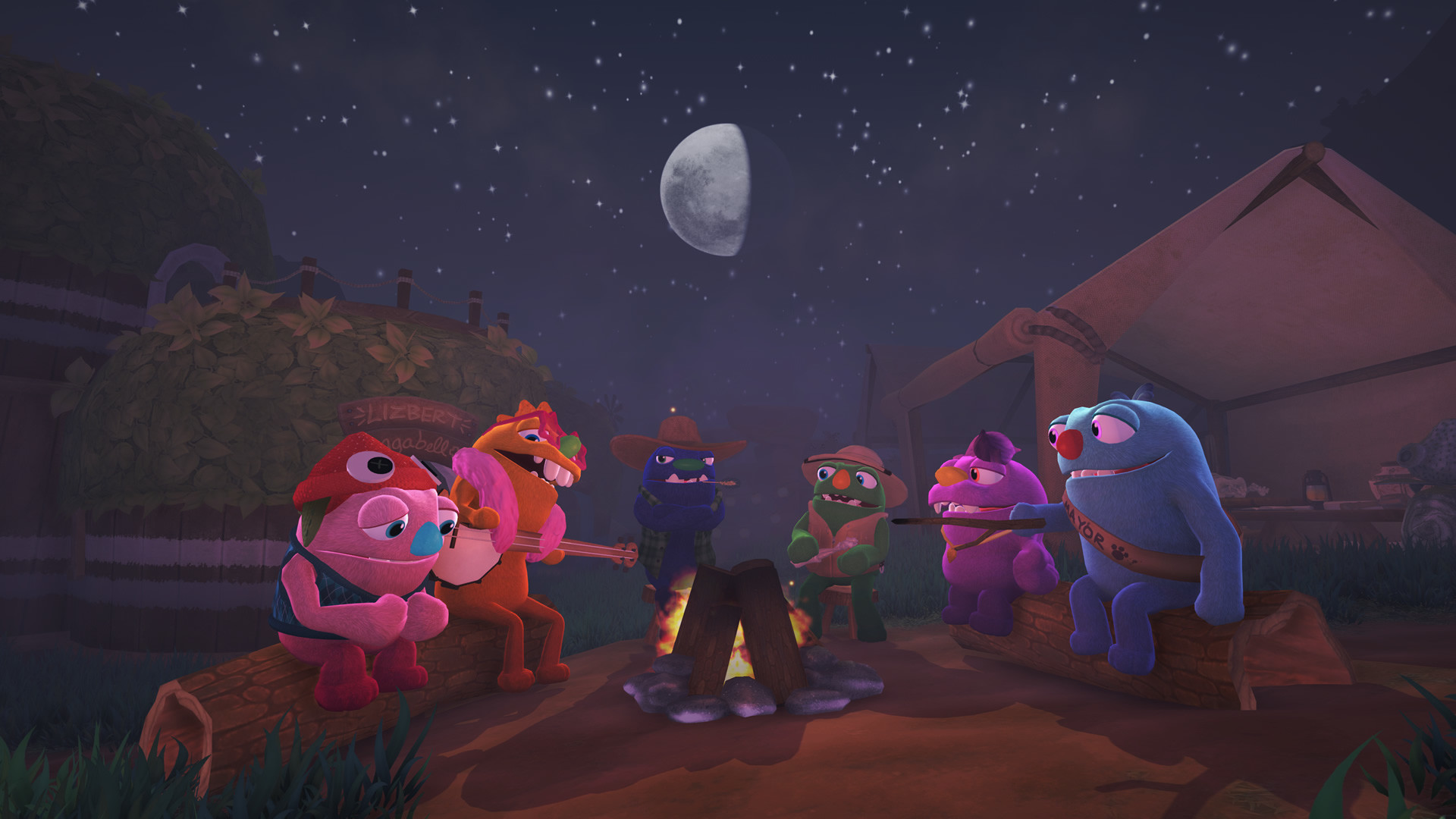
Captures feed directly into the social side of the story. The Grumpuses are the expedition’s scattered members, each with an individual history and a reason for leaving Snaxburg. Filbo asks the journalist to help locate them and bring them back; other characters can be persuaded through requests that involve catching a Bugsnak they favor. Once a Grumpus returns, interviews reveal more about the expedition and the island, and their accounts become clues in the search for Lizbert. This progression links side tasks to the central mystery: catching a creature can satisfy a character’s request, the request can reopen a conversation, and the conversation can provide another lead. Through the scattered cast, the journalist learns why Lizbert’s group came together and why it fell apart. Each character’s preference gives the fieldwork a personal destination, while returning them to town restores conversations and new requests to the hub. The movement between wilderness and settlement keeps the adventure’s two activities in balance: the island supplies creatures and clues, and Snaxburg gives the journalist a place to use discoveries in the company of the people they affect.
Feeding Bugsnax to the Grumpuses changes their bodies, turning parts of them into the food that made up the creature. A strawberry Bugsnak can give a character strawberry-like features, and the broad range of combinations works as a customization system. The transformation is visual and narrative rather than a power set for the player: the journalist does not eat the captured creatures or gain their abilities. That distinction keeps the player’s role focused on witnessing and documenting the group. It also makes the feeding mechanic part of characterization. The Grumpuses choose to eat Bugsnax, and the changing appearances sit alongside their conversations and personal quests as a visible record of the island’s influence. The game’s bright, puppet-like cast and comic premise frame this system, while the mystery around what Bugsnax are gives it a more consequential place in the story. A creature is consequently useful in more than one way: catching it fills out the journalist’s discoveries, giving it to a Grumpus can help bring that person back or encourage them to talk, and feeding it changes that character’s appearance. The same action-based loop connects collection, social progress, and the game’s central oddity without turning the journalist into a combat-focused protagonist.
Progress through the main investigation comes from following leads across the island, meeting the Grumpuses, and using the information they provide to move closer to Lizbert. Creature hunting supplies the evidence and practical skills that make these relationships possible, while interviews add context that cannot be learned from a trap alone. The player also has reasons to explore away from the next immediate objective: side quests and off-path areas offer additional encounters with the island’s species and test how well the available contraptions can be used. The structure keeps its scale centered on a compact adventure rather than an open-ended survival campaign. There is no player combat loop; the challenge comes from reading animal behaviors, solving capture problems, and assembling the social and environmental clues that connect the expedition’s members to the island’s central questions. Different regions introduce new species and surroundings, and the growing set of creatures gives return trips a reason to involve more than a simple repeat of the first capture. The player can follow a specific lead or spend time discovering additional Bugsnax, which supports both forward movement through the story and optional completion. In either case, advancement comes from understanding the place and its inhabitants rather than improving statistics or collecting conventional weapons.
The original island adventure is accompanied by a distinct later expansion in the form of the free Isle of BIGsnax update. Young Horses describes that update as adding a separate island biome, environmental puzzles, oversized Bugsnax that require Shrink Spice before ordinary traps can catch them, and additional Snaxburg activities such as hut decoration and mailbox challenges. Those additions extend the established mix of observation, tool use, character requests, and discovery, but they are update content rather than the premise on which the original investigation begins. Across the core adventure, presentation supports the contrast between an inviting expedition and an increasingly puzzling mystery: colorful creature designs and comic physical traps sit beside the unanswered disappearance of Lizbert and the scattered, complicated lives of the Grumpuses.
- Developer
- Young Horses
- Genre
- First-person adventure / creature-catching puzzle adventure