
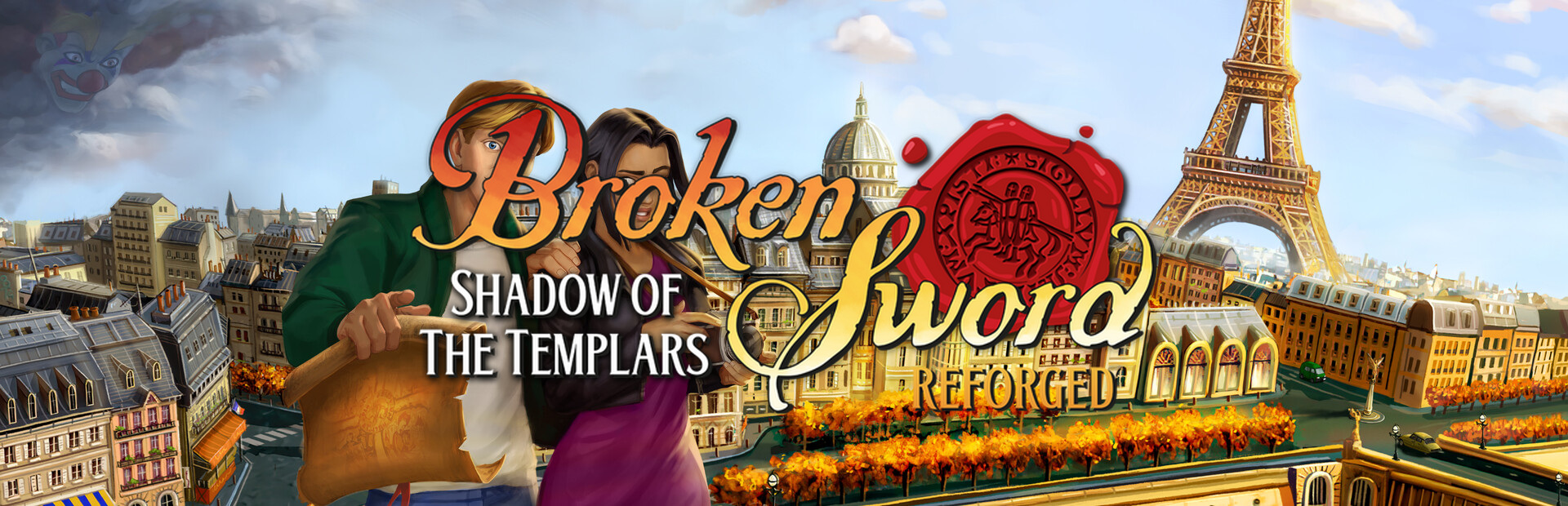
About Broken Sword - Shadow of the Templars: Reforged
When an explosion in a Paris café draws American tourist George Stobbart into an investigation, journalist Nico Collard helps him follow clues toward a conspiracy tied to the Knights Templar. Reforged is the 2024 remaster of the 1996 adventure, with rebuilt 4K art, restored dialogue and configurable modern guidance alongside classic point-and-click play.
The story begins in Paris, where American tourist George Stobbart is caught near a café bombing and becomes involved in discovering who was responsible and why. The investigation leads him into the orbit of journalist Nico Collard, whose reporting and knowledge connect separate clues. What appears to be a criminal case grows into a globe-spanning mystery involving historical artifacts, hidden messages and the Knights Templar. Paris is the starting point, but the trail extends through locations in Europe and the Middle East, with each place supplying a different piece of evidence. The story’s historical conspiracy is presented through present-day investigation: George and Nico meet people, examine sites and follow information that must be interpreted rather than simply collected. Their partnership gives the narrative two complementary perspectives, the tourist drawn into events and the reporter actively pursuing them. The game’s tone balances danger with character-driven exchanges and humor. Reforged revisits the first adventure’s Paris opening and Templar investigation rather than starting a new chapter in George and Nico’s lives.
George is the principal player character, an American visitor whose investigation takes him beyond the immediate crime scene. Nico is a journalist and an important partner in the unfolding case; the two characters’ roles frame the mystery as a collaboration between an observant outsider and someone with professional reasons to pursue the facts. Their route brings them into contact with a colorful cast of locals, witnesses and people whose knowledge can redirect the investigation. Conversation is a central interaction: characters may supply leads, challenge George’s assumptions or withhold information until he has earned the next exchange. The player examines dialogue options and objects to learn what can be asked and what evidence might matter. The relationship between George and Nico provides continuity as the case shifts from city streets to archaeological and historic settings. Character interaction is not a combat or party-management system; it is part of the point-and-click investigation. The official store page describes fully voiced dialogue and a cast of characters, while the game retains the story identity of the 1996 original. The two leads keep the investigation readable even as the case leaves Paris for unfamiliar places and people.
Play uses a classic third-person point-and-click structure: George is guided through hand-drawn scenes, where the player inspects visible details, speaks with people, collects items and decides how evidence can be used. Scene exits and newly established leads connect individual locations into the wider investigation. The game asks the player to read a space as well as its dialogue, since a visual detail may point toward an object, a mechanism or a question to ask. George’s inventory holds items that can be examined, combined or applied to the environment, and conversations can add context that changes the usefulness of a clue. Reforged preserves this adventure structure while offering both a traditional approach and a modern Story Mode. The PlayStation account of the remaster explains that testing prompted interface changes and a choice between the original style and a more guided experience. On the Steam edition, the options include hints on demand, automatic highlights, a story recap and configurable interface aids. These are assistance and usability options around the adventure’s puzzles, not a replacement genre or a new real-time action system.
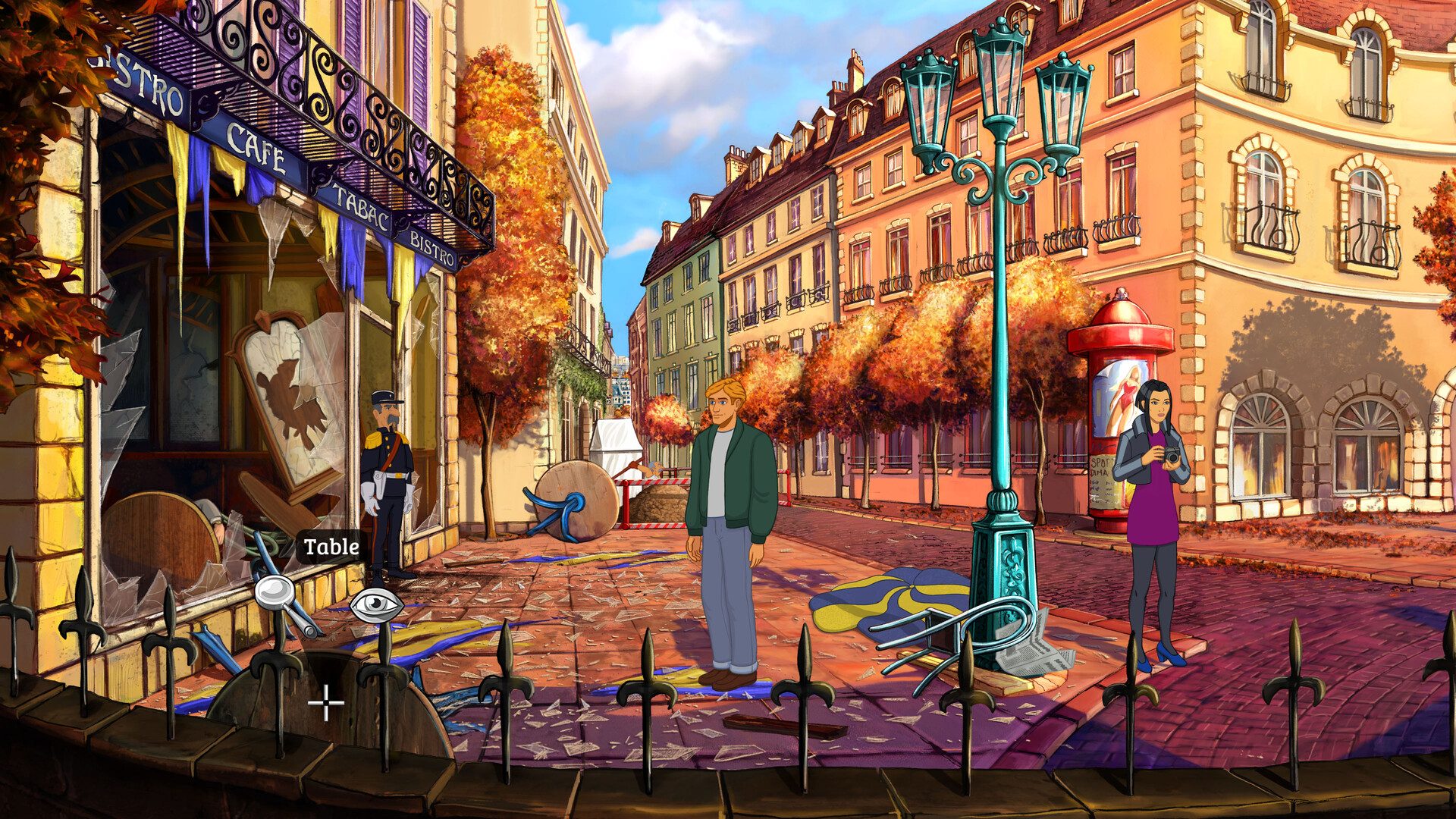
Puzzle progression depends on observation, deduction and creative use of objects. Some challenges ask the player to notice a pattern or decipher information; others require selecting or combining items and applying them in a plausible context. A conversation may explain what a symbol means, while a location supplies the physical object needed to act on that clue. These links make investigation cumulative: the player builds an understanding of the mystery from people, places and artifacts, then uses that understanding to unlock further leads. The Reforged Steam listing explicitly describes code deciphering, object manipulation, clue gathering and interaction with characters. Its optional guidance can help surface relevant points when the player is stuck, while the traditional approach leaves discovery to the player’s own inspection and reasoning. The game is not structured around combat encounters, equipment upgrades or numerical character growth. Progress is measured by the case moving forward, the route to a new location becoming available and the next piece of the Templar mystery being understood. That rhythm links conversation and close inspection to the physical act of using evidence in a new place.
The travel structure broadens the investigation beyond the Paris opening. George follows clues to locations across Europe and the Middle East, where local settings, historical remains and new witnesses change the kind of information available. Each place functions as a chapter in the case rather than a free-roaming region; the player explores a set of authored scenes, solves their immediate problems and carries the resulting evidence onward. The recurring movement between site, conversation and puzzle creates a readable progression: learn what a character knows, inspect the relevant space, then connect the resulting clue to the next part of the trail. This arrangement lets the story move between contemporary crime and older history without making the player manage a large navigable world. The Steam description calls out Paris and the broader European and Middle Eastern journey; the PlayStation feature article establishes that Reforged restores more than one hundred backgrounds and redraws them at high resolution. The sequence of locations and the conspiracy remain the same underlying adventure as the 1996 game. The remaster’s interface and presentation changes support access to that campaign rather than adding a new route or an additional story arc.
Reforged’s visual work rebuilds the original’s illustrated backgrounds and animation for modern displays. Revolution’s PlayStation article describes more than one hundred backgrounds and roughly thirty thousand character animation frames, based on original pencil layouts and character sheets. The team digitally repainted the backgrounds in 4K and redrew sprite animation, including facial movement and expression. This reconstruction matters to play as well as appearance: finer detail can make relevant features in a scene easier to distinguish. The Steam listing adds a graphics toggle that lets the player switch between the original and Reforged artwork during play. Audio has also been remastered, and the product description names Barrington Pheloung’s soundtrack; dialogue is fully voiced. Interface options include a dialogue history, configurable subtitles, autosave and manual saves, plus help features such as story recap and hints. Mouse, controller and touchscreen controls are supported on the Steam listing, with platform-specific availability to be understood from each store. Together these changes define Reforged as a substantial restoration and accessibility-oriented update to a hand-drawn adventure, rather than a new remake with a different plot.
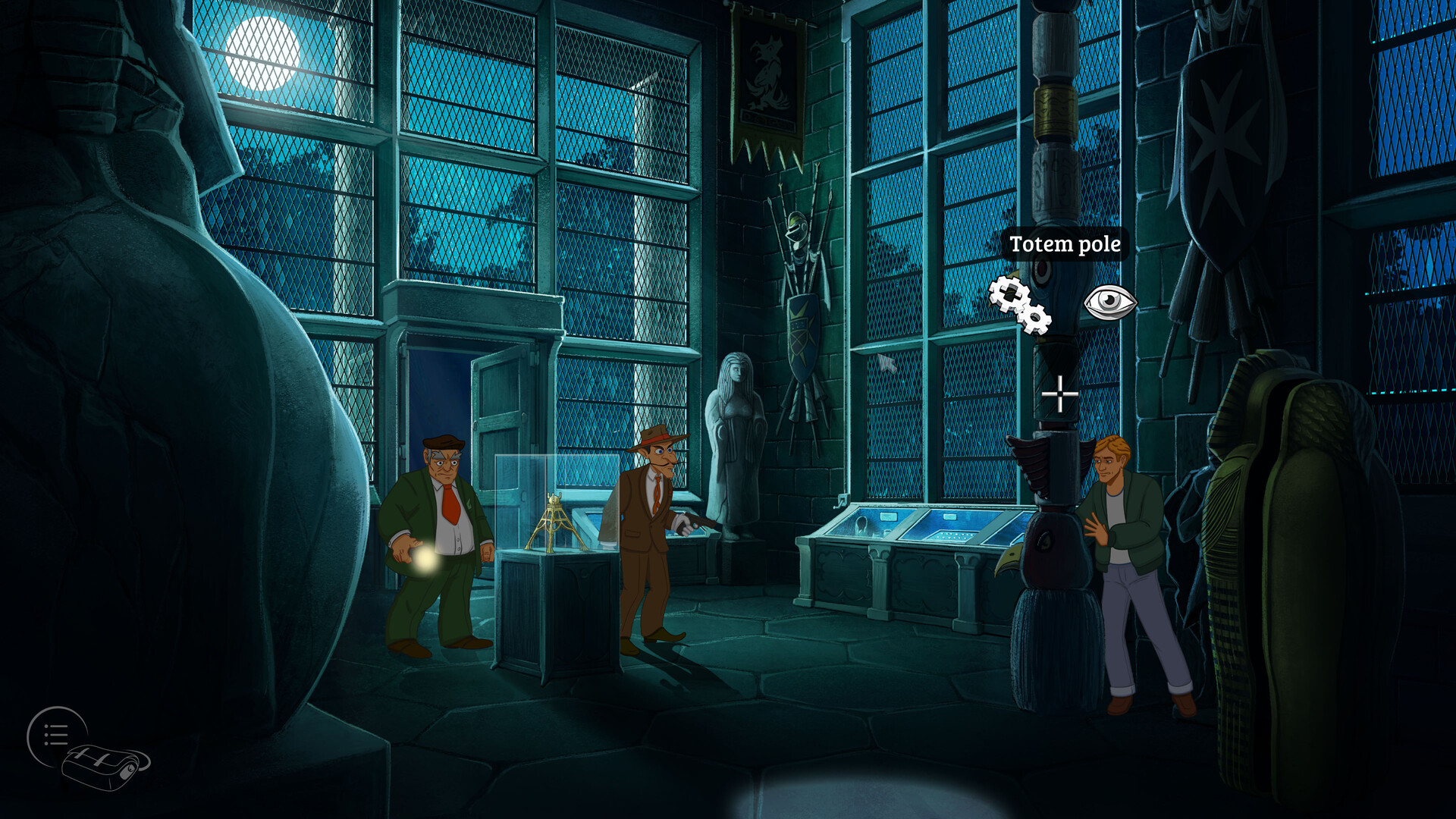
Revolution Software released Shadow of the Templars: Reforged in 2024 as a reconstruction of its 1996 adventure. The older Director’s Cut is a separate version; Reforged keeps George and Nico’s first Templar investigation at its centre while letting players switch between original and rebuilt artwork. Restored dialogue, remastered sound and Barrington Pheloung’s score accompany the repainted backgrounds and redrawn animation. Traditional play is available for people who want to work out each object and conversation themselves, while Story Mode and optional hints offer another way through the same mystery. The dialogue history, save options and configurable subtitles support the work of remembering names and clues across locations. These additions change how the adventure can be approached and seen without replacing its point-and-click puzzle structure. George still has to ask questions in Paris, follow the evidence abroad and work out what a historical artifact has to do with a present-day crime.
- Developer
- Revolution Software
- Genre
- Single-player point-and-click mystery adventure