
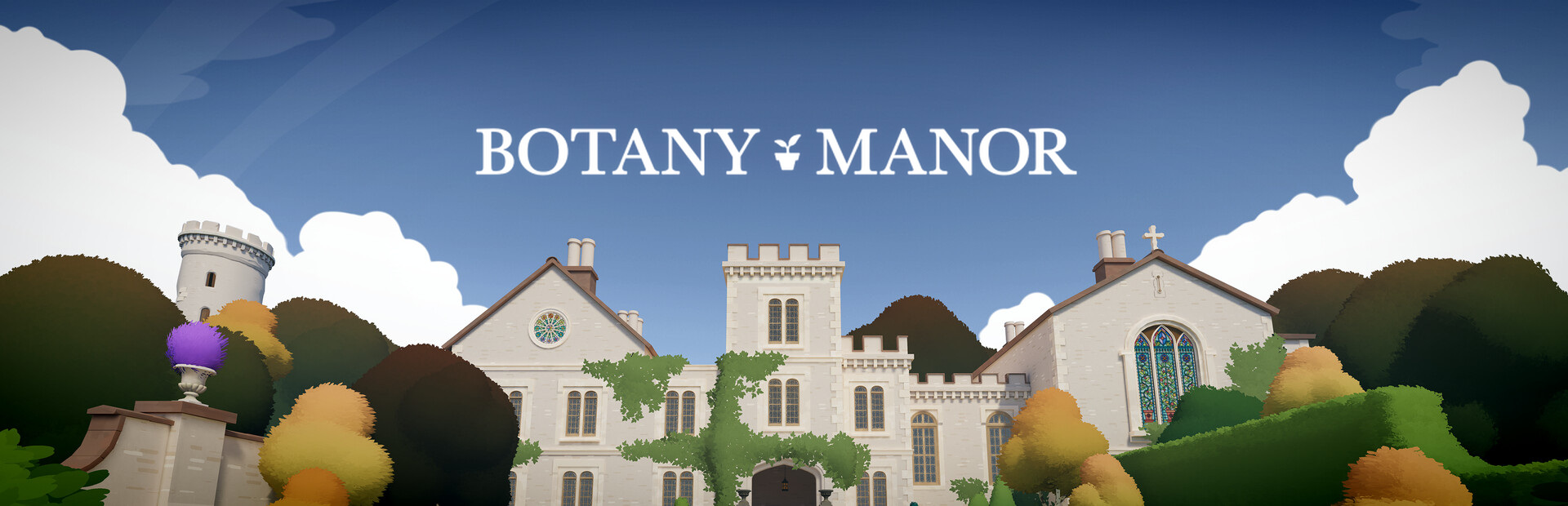
About Botany Manor
In Botany Manor, retired botanist Arabella Greene studies rare plants at her English estate in 1890. Each seed needs particular conditions to grow, and the clues are scattered among letters, books, objects and rooms. Her research for Forgotten Flora also reveals the obstacles she faced pursuing science in a world reluctant to take her seriously.
Botany Manor begins with a deceptively simple question: what does a plant need in order to live? In 1890, retired botanist Arabella Greene has returned to an English manor filled with the papers, possessions and spaces of a long scientific career. She is working on a book called Forgotten Flora, devoted to rare specimens that have been left behind or poorly understood. Their seeds are in her care, but planting one in ordinary soil will not be enough. Each plant has particular requirements, and the information needed to meet them is scattered around her home. The player takes Arabella's place in first person, walking through the house and its grounds, examining objects and building a case for how a specimen might grow. This is a puzzle game shaped like a place someone actually inhabits. The books, posters and household objects are not just a bank of disconnected hints; they are part of the record of Arabella's life. A piece of research can explain a plant while a letter nearby suggests how difficult it was for its discoverer to have her work taken seriously. The house holds both an experiment and the history of the woman conducting it. That gives the peaceful gardening premise a second purpose. When a new flower finally opens, Arabella has made progress on her manuscript, and the player has learned a little more about the career that led her here.
The work starts by looking closely. Notes, botanical posters, newspapers, books, postcards and letters describe pieces of a plant's behavior, while Victorian devices elsewhere in the estate suggest ways to change its surroundings. Some objects can be picked up, rotated or turned over, so a clue might be hidden on the back of something that initially seems decorative. The publisher has shown examples as varied as a cider-apple poster, a bottle of flash powder and a journal about organisms that respond to fire. Their importance is not that they announce a solution in the same format every time. They teach the player to notice evidence in different forms and connect it to a living specimen. The herbarium provides a place to collect discovered information as Arabella works through her research. Rather than treating the house as a straight corridor to a single locked door, the game encourages you to remember where a claim was found, what it actually says and which part of a growing environment it might explain. A poem could be as useful as a scientific note; a postcard might contain the relevant setting, while another object reveals how to reproduce it. The puzzle is an act of interpretation before it becomes an action with a pot and seed. Even a familiar room can gain a new purpose once a later plant gives an earlier clue a clearer meaning.
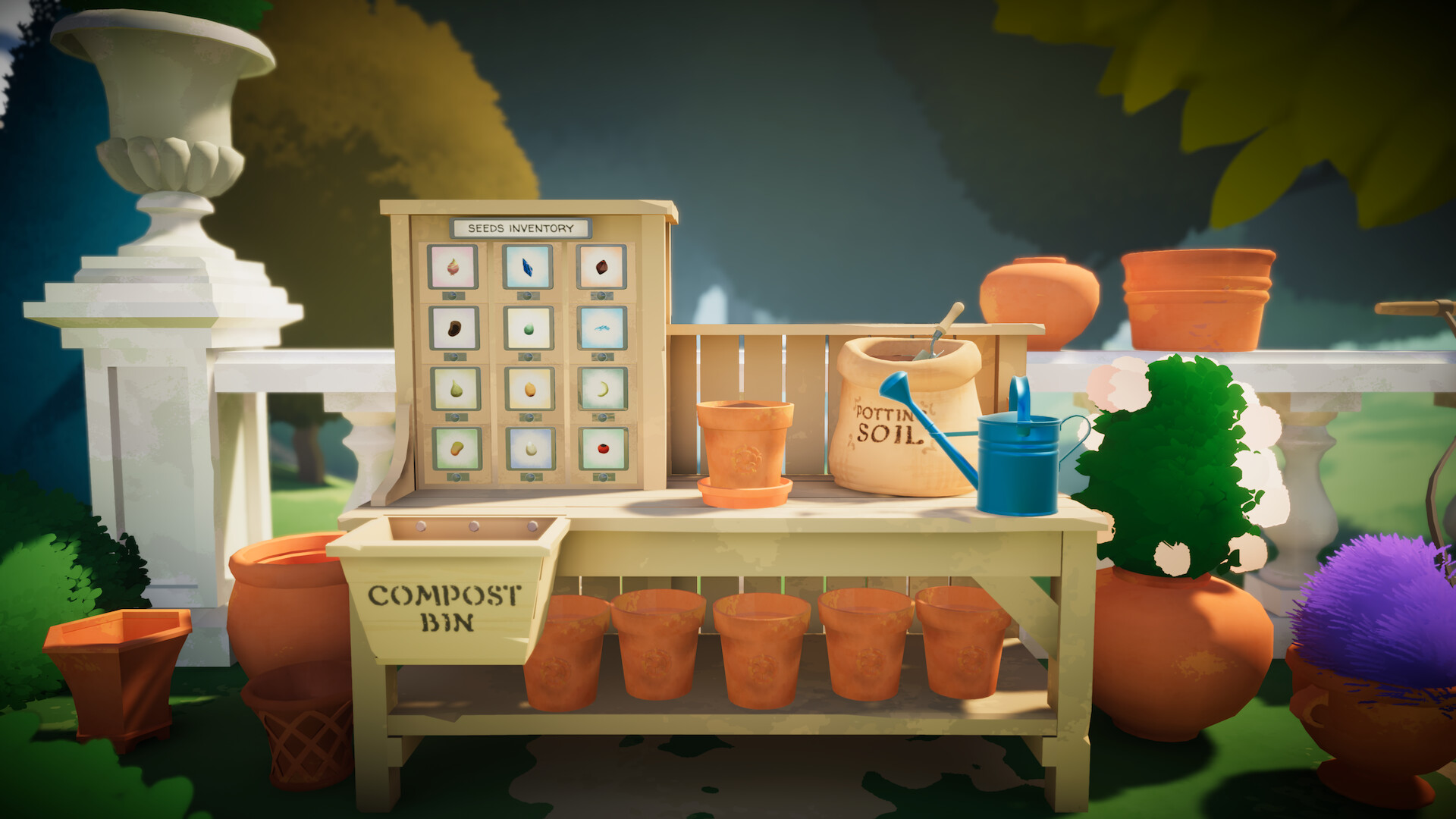
Arabella's specimens are fantastical, but their needs are inspired by phenomena in nature. That distinction is central to the game's approach. It is not asking the player to know a real species in advance or recall a classroom fact under pressure. It gives enough material within the manor to reason from observation toward an answer, then asks for a practical arrangement. You find a seed, pot it and place the seedling where the right conditions can be produced. Light, surroundings and other environmental cues matter in different combinations, so repeating a single procedure will not solve every plant. The estate's many interactive objects become tools for testing a hypothesis rather than mere ornaments. A satisfactory answer is visible: the specimen grows, turning information that was previously spread among documents into a living result. Balloon Studios' creative director Laure De Mey has explained that the team wanted this moment to happen where the player can see it. Plants are placed on saucers, and interactions that affect their environment are positioned near them, keeping an experiment's outcome connected to the action that caused it. This is a small design decision with a large effect on the game's rhythm. Gathering clues can take you across rooms, but the final transformation belongs to the place where Arabella has set down the plant.
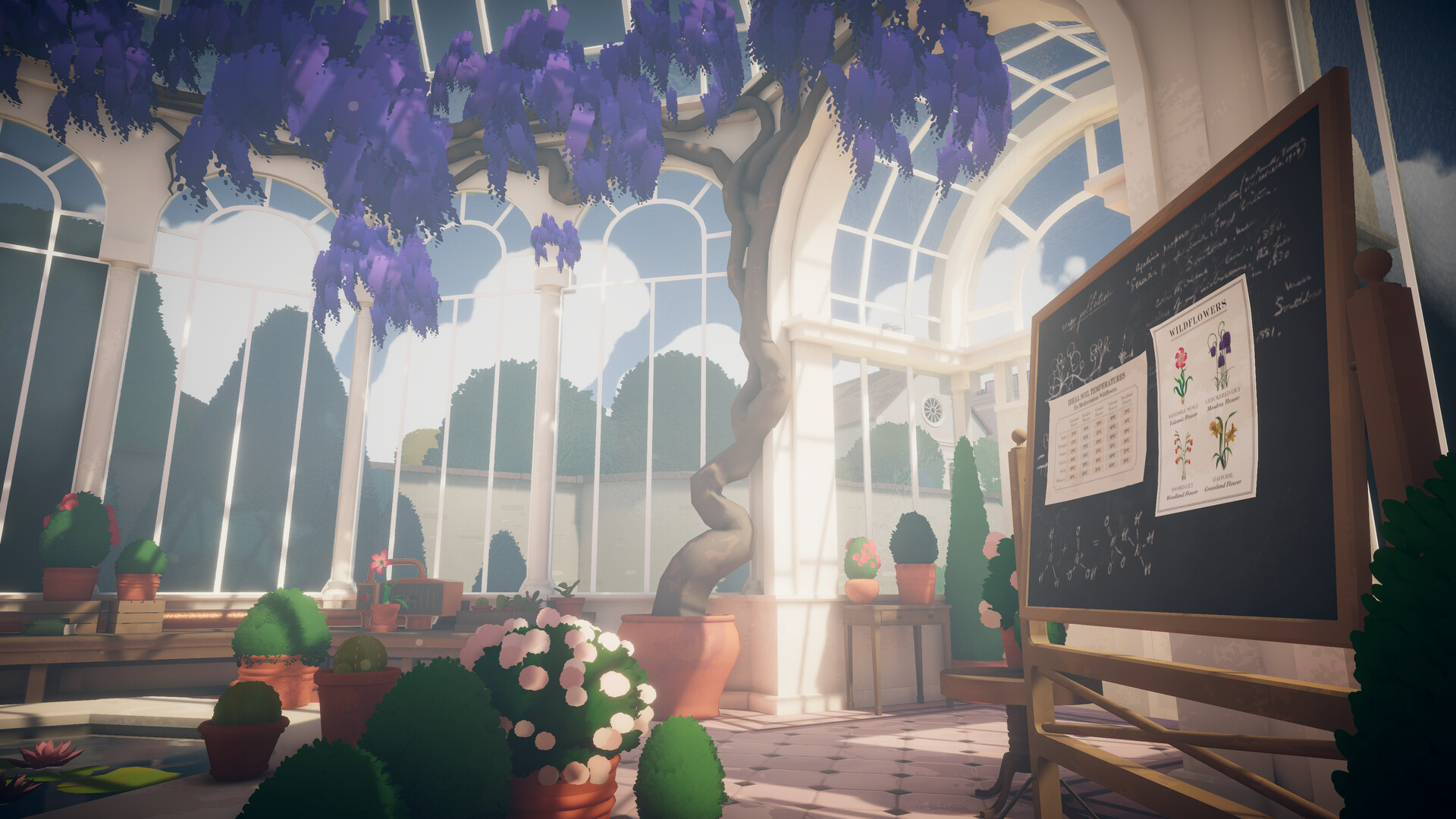
The manor's rooms and gardens make that rhythm feel like an excursion rather than an inventory screen. There is a conservatory, outdoor space and a succession of domestic interiors to inspect, all dressed as parts of a historical English estate. Arabella's botanical work has spread into the architecture: plants occupy the grounds, research material is kept among ordinary belongings and objects made for other purposes can become useful to an experiment. The view is first person, which keeps attention on examining nearby details and moving between the places where clues are stored and plants can be grown. Exploration is measured; the official descriptions focus on observation, investigation and arranging conditions rather than fighting or reflex challenges. De Mey has described two influences on the setting: the pleasure of exploring Croft Manor in childhood, and visiting real historical houses after moving to the United Kingdom. Darwin's Down House, where the garden itself served as a workplace, helped suggest how a scientist's home could also be a site of research. Botany Manor does not reproduce either source as a map. It uses the underlying idea that a building can tell a story through its rooms and through what its occupant has chosen to keep. Looking around is therefore part of understanding Arabella, even when the immediate goal is only to grow the next seed.
As Arabella proceeds, the records of her life become more than background decoration. The story is set in an era of scientific discovery, but it also concerns who was allowed to claim authority within that world. Letters and other traces of her career reveal the criticism she encountered as a woman pursuing botanical research. The narrative does not need to interrupt every experiment with a long scene to make that tension visible. A document can present a fact about a plant and also reveal how its discoverer was treated. The title of Arabella's book, Forgotten Flora, works on both levels: these specimens need attention, and her own labor deserves recognition. De Mey has said the team was interested in what it feels like to be dismissed or not taken seriously. That context changes the purpose of filling the herbarium. It is not merely a checklist of solved specimens; it is a record assembled by someone determined to finish and present her work. The game lets the player discover that history room by room, without requiring advance knowledge of a Victorian botanist's life. The detailed subject of any one letter may be modest, but together the papers explain why this peaceful estate still has an argument to make about whose curiosity and expertise matter.
The tone remains calm even while the work asks for careful thought. Botany Manor's bright gardens, stylized rooms and unusual flowers are an invitation to spend time with a place rather than rush through it. The puzzles are designed to communicate the information necessary for a solution without demanding elaborate controls. De Mey has said the team wanted them to be understandable to players without extensive gaming experience, while still giving every plant a distinct question to answer. That does not mean every clue is immediately obvious: deciding which document matters, testing an environmental idea and tracing the right combination can still require patient attention. The game was developed by Balloon Studios and published by Whitethorn Games, with its original release in 2024. Its botanical premise makes the structure easy to grasp, but the details distinguish it from a generic escape room. Every specimen asks the player to read a small collection of evidence, use the house as a laboratory and witness a new form of life take shape. Every room can also reveal something about Arabella's unfinished book and the person writing it. This overview leaves the exact plant solutions and her final chapter to be found inside the manor.
- Developer
- Balloon Studios
- Genre
- First-person botanical puzzle adventure