
About Botanicula
Five small tree-dwelling friends carry the last seed of their home through a vast, inhabited tree threatened by parasitic creatures. Botanicula is a wordless point-and-click adventure built around exploring branches, testing how plants and animals react, and using each companion’s distinctive abilities to move forward.
Botanicula places its adventure inside a giant tree whose branches contain habitats, villages, creatures, and hidden spaces. The tree is home to five tiny companions who set out to protect its last seed when shadowy parasites begin draining the life from their surroundings. Their journey is not presented through spoken dialogue or a narrated briefing. Instead, the game uses animated actions, reactions, sounds, and visual cues to make the situation understandable. The seed gives the group a tangible responsibility, while the threatened tree connects their progress to the many small lives and places they encounter on the way. The scale shifts between the tiny travelers and the enormous living structure around them. Branches become roads, settlements fill pockets of the tree, and an ordinary plant may become a major landmark because of its size relative to the group. Its population ranges from talking chestnuts and small villages to larger bullies and creepy crawlies, making the tree feel like a lived-in community. The parasites provide a recurring source of danger, but the narrative attention stays with the friends and the strange inhabitants they meet.
The five friends travel together as a small group, but they are not interchangeable. They are Mr. Lantern, Mr. Twig, Mr. Poppy Head, Mr. Feather, and Mrs. Mushroom: a seed carrier, a twig, a poppy-like figure, a feathered flyer, and a mushroom. Their different skills accompany distinct personalities. Each has an ability that can matter when the group meets an obstacle. In certain situations the player chooses which companion to send forward; the response shows whether that character can solve the immediate problem. Other attempts can lead to comic mishaps, making character selection part of the story’s physical humor as well as a way to proceed. The player reads the obstacle, considers which friend might be suited to it, and observes the attempt. For most of the journey the five move and act as one group, while individual selection matters at specific obstacles. Their capabilities are situational rather than a menu of freely swapped tools used for every scene. Even an unsuccessful choice has a visible result, making the companions feel like characters rather than buttons in a menu. Their distinct silhouettes help the player recognize them during the group’s travels.
Play is controlled through point-and-click interaction. The group follows the player’s attention from scene to scene, while clicking plants, animals, objects, or parts of the environment produces reactions. A creature may move, sing, reveal an animation, or alter the scene, even when it is not part of a puzzle. The player tests a click and watches what changes, exploring different parts of the screen instead of following a trail marker. Some interactions are playful diversions; others expose an item, open a route, or indicate what action the group needs next. The cursor can poke at an inhabitant, activate a mechanism, or test whether a detail responds. Sound or motion provides immediate feedback, and a new item may change how a previously visited object behaves. Inventory is limited, so most progress comes from interacting directly with the environment instead of building a large toolkit of collected objects.
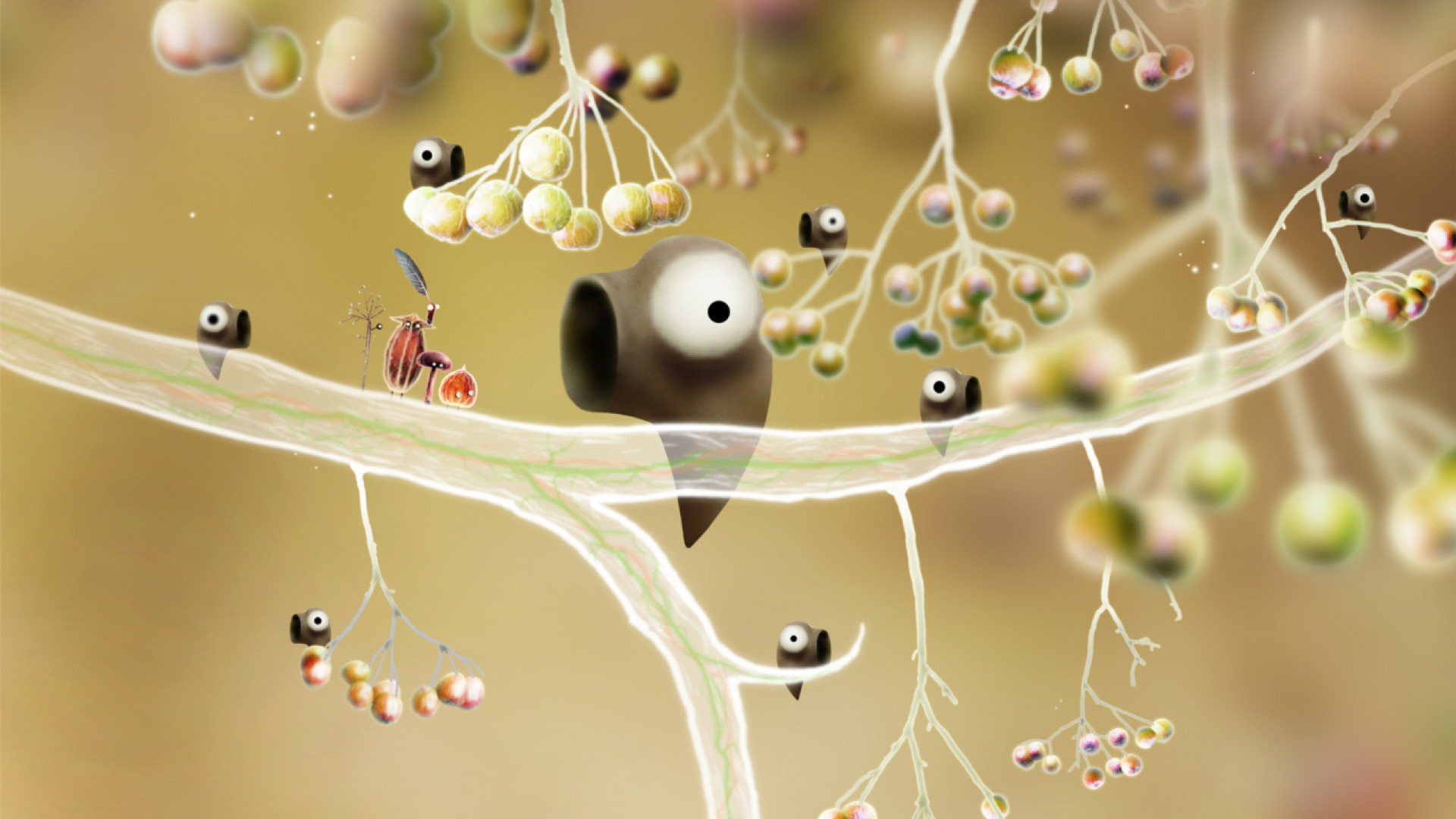
The route through the tree is made from connected locations rather than one continuous open landscape. Many fetch quests begin with an object or person needed elsewhere, requiring a search through connected screens before the next barrier can open. Early objectives include gathering several keys; later situations can involve locating lost young creatures or helping inhabitants. Another task involves opening bean pods, while the seed must keep moving safely through the branches. These errands introduce the tree’s population as part of the journey. Doors, pods, paths, and other barriers turn collected objects and completed tasks into access to the next portion. More than 150 detailed locations range from quiet natural spaces to bustling settlements and stranger pockets in the tree. The journey can pass through a slug’s interior, a space-like setting, or a branch where it is Christmas, while keeping the seed’s route as its thread. Branches can lead to different areas within the same larger tree setting, so choosing a path also determines which local scenes the group encounters. Because tasks can connect screens, the player may need to remember a place already visited and carry a found object onward.
Puzzle-solving combines small item searches with the companions’ different capabilities. When the group faces a gap to rescue a baby or another obstacle, the player may need to choose which friend is suited to try it. Elsewhere, progress depends on finding an object among several scenes or discovering how an element reacts when clicked in a particular order. A failed attempt can produce a quick animation rather than a reset, showing something about the characters or problem. The required object or route can be difficult to spot when a task spans multiple screens, and solutions often grow from the behavior of creatures and the practical needs of moving through the tree. Finding the right companion or item changes the environment and leads into the next scene.
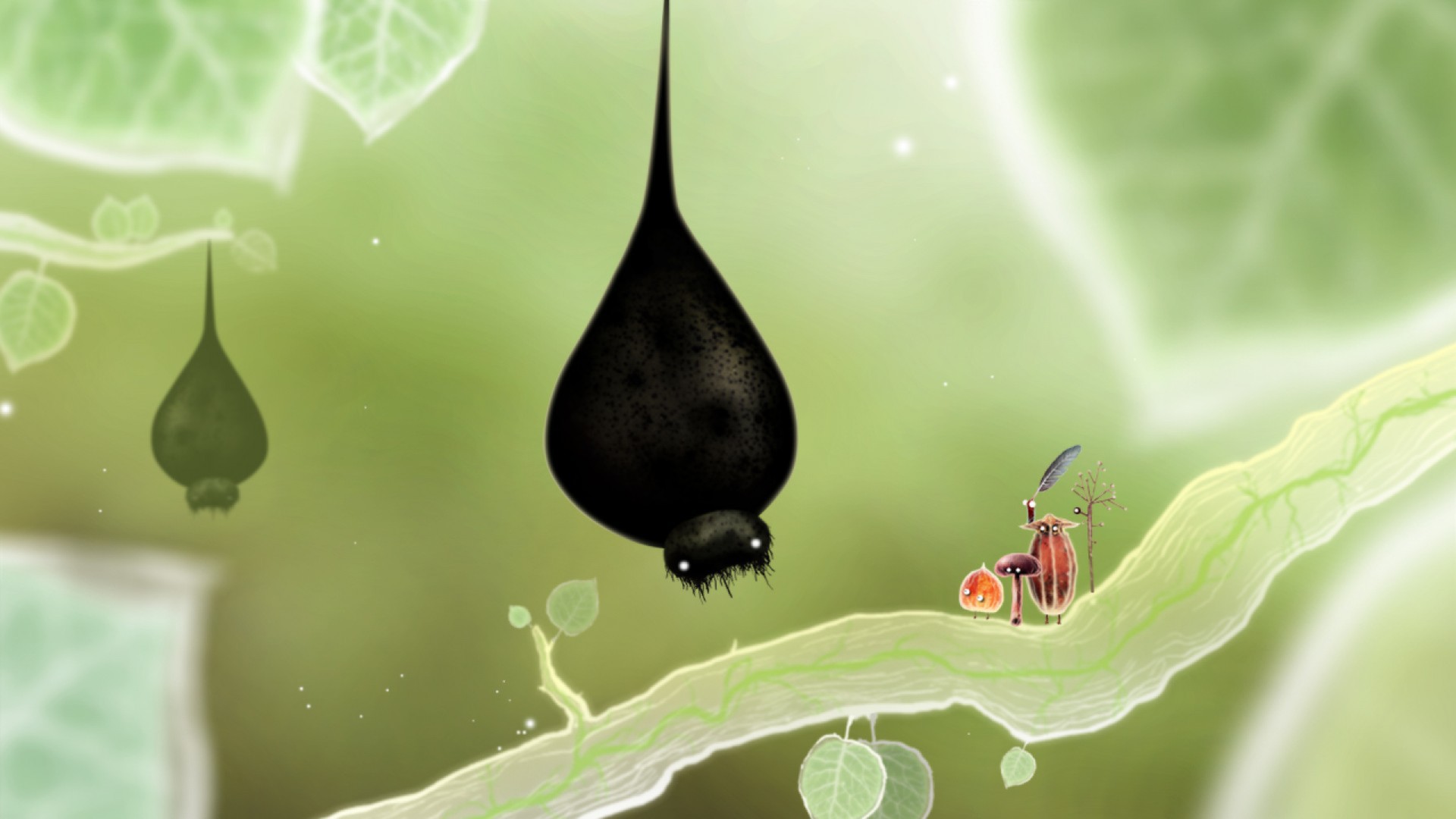
There is no conventional combat system. The parasites create danger and urgency through their presence in the tree, but the player’s main tools are movement, observation, object interaction, and the group’s distinct abilities. Their dark, spider-like forms visibly drain life from the tree, turning green leaves translucent and frightening nearby insects. The five friends respond with expressive gestures and sounds, making the threat readable without turning the adventure into an action game. In between urgent scenes, the player can explore for its own sake. The world contains many plant and animal forms, and discovering a species can add a collectible card. Hidden animations and small environmental jokes give additional reasons to inspect a scene after its main route is open; the game also offers bonuses for observant players at the end. A player focused on carrying the seed onward can concentrate on routes and tasks, while a more thorough visit can uncover extra inhabitants or reactions. Collectible cards make some discoveries persistent, recording unusual species found during the trip.
Botanicula’s presentation is central to how its world communicates. The hand-drawn backgrounds are densely animated, with plant life and insect-sized inhabitants arranged to make each screen feel like a small ecosystem. There is no text or lengthy dialogue; meaning comes through actions, sound effects, and the friends’ reactions. Music and sound by Czech band DVA contribute to the identity of the places and to the comic timing of interactions. Amanita Design developed and published the full single-player adventure, with music by DVA, for Windows and macOS. The Collector’s Edition adds the soundtrack and art book as a separate bundle, while the core journey remains the same tree-wide trip with the five companions and the seed. The soundscape helps separate quiet exploration from a creature’s comic response, and animated gestures clarify what the characters have noticed even when their words are unintelligible. Color and shape also guide attention: the five friends have easy-to-distinguish outlines, while each new population of plants and animals gives a scene a different character. The game includes hidden bonuses and hundreds of animations, details that fit its emphasis on discovering responses by clicking around. The combination of quick reactions and detailed environments makes discovery part of the story's visual language.
- Developer
- Amanita Design
- Genre
- Humor-filled point-and-click adventure