
About Borderlands Game of the Year Enhanced
On Pandora, a chosen Vault Hunter pursues rumours of an alien Vault while fighting bandits, corporate forces and dangerous wildlife. Borderlands Game of the Year Enhanced combines the original campaign and four add-on adventures with updated presentation and interface features, while retaining its four-class shooter-and-loot progression.
Pandora is a dry, sparsely settled world where scraps of civilisation sit among badlands, wreckage and settlements exposed to raiders and hostile creatures. The opening follows a Vault Hunter recruited by the mysterious Guardian Angel, whose guidance points toward an ancient alien Vault said to hold a powerful cache. The search draws four playable characters into conflicts involving local communities, bandit leaders, corporate interests and alien ruins. It moves through connected regions and mission hubs, returning characters such as Claptrap, Dr. Zed, Scooter, Marcus and Tannis to the path. The frontier humour sits alongside the danger of crossing a world where ammunition, transport and safe shelter are practical concerns.
At character creation, the player chooses one of four distinct Vault Hunters. Roland’s Soldier role deploys a Scorpio turret for covering fire; Lilith’s Siren Phasewalk turns her invisible and accelerates movement before a damaging reappearance; Mordecai’s Hunter skill sends Bloodwing against a target; Brick’s Berserk trades firearms for close-range fury. Each character has a signature Action Skill and several skill branches that steer the build toward different bonuses and combat roles. Experience from missions and combat raises level, granting skill points, access to better equipment and more ways to specialise. Investment can strengthen a defining skill, improve weapon handling or support a more durable approach.
Combat is built around first-person aiming, cover, enemy positioning and a changing supply of guns. Pistols, revolvers, combat rifles, shotguns, submachine guns, sniper rifles and launchers arrive with different damage, accuracy, magazine, reload and fire-rate values. Manufacturers give equipment its own tendencies, while generated combinations create weapons that can feel different even within the same category. Elemental effects add another layer: fire is useful against flesh, shock strips shields, and corrosive attacks are suited to armour. Switching loadouts to answer a threat can matter as much as rarity. Ammunition, shields, grenade modifications and class modifications occupy equipment slots, so the character is shaped by a complete kit rather than gun damage alone.
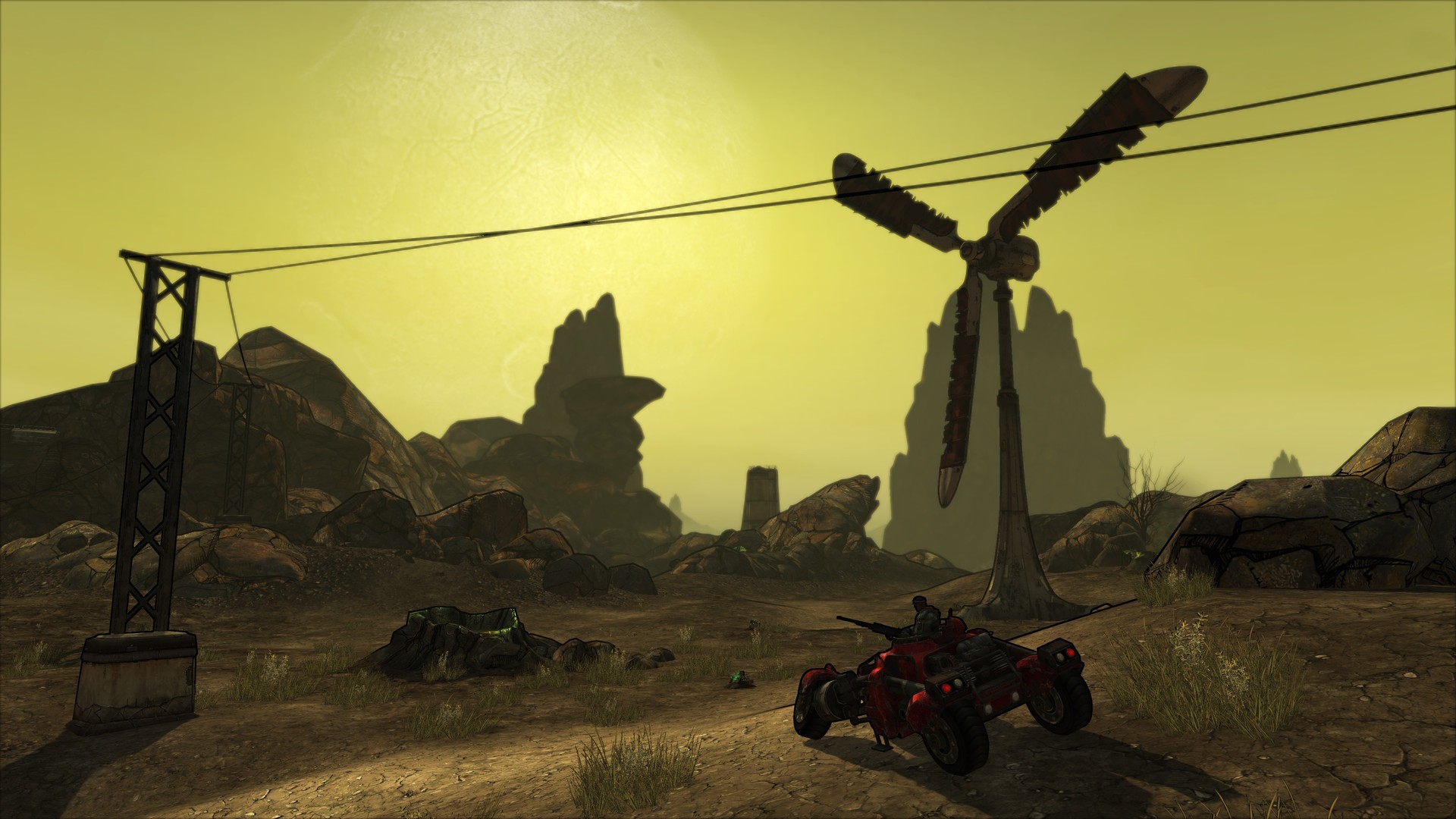
Missions provide the route through Pandora and its characters. Main objectives move the Vault search forward, while optional assignments from hub residents and people encountered on the road add experience, money, equipment and context about local disputes. Combat encounters often mix enemy groups, terrain and loot opportunities, inviting the player to use a turret, Bloodwing, Phasewalk or Berserk as the situation allows. Fallen enemies and containers supply equipment; vending machines offer another way to compare purchases, sell surplus and restock. The loop alternates between accepting work, travelling through hostile ground, completing objectives, sorting the haul and spending earned skill points. In cooperative play, other Vault Hunters can join an expedition and contribute different abilities and weapon roles.
The character’s equipment capacity grows as the campaign progresses, opening additional weapon slots so a player can keep contrasting tools ready instead of committing to one gun. Class and grenade modifications add further choices when they appear, and skill-point investments can turn a basic Action Skill into a more specialised part of the combat routine. This creates a progression loop with several linked rewards: experience raises the Hunter’s level, missions open new places and objectives, and loot changes the immediate build. Enemy level and equipment statistics also shape how effective a weapon feels, so a recently found item is judged by its fit for the current character and threats rather than its colour alone. The cycle of testing gear, improving skills and taking on the next assignment supplies the main campaign’s forward momentum.
The Enhanced edition keeps the original campaign structure but folds four established add-on campaigns into the package: The Zombie Island of Dr. Ned, Mad Moxxi’s Underdome Riot, The Secret Armory of General Knoxx and Claptrap’s New Robot Revolution. These are additional adventures with their own missions and locations, not events that replace or simply expand the main Vault search. They introduce different opposition and activities, from the undead threat around Jakobs Cove to Moxxi’s combat arenas and the military conflict surrounding General Knoxx. The main campaign remains the foundation, while these side campaigns can be entered as separate stretches of play. This edition therefore includes both the original Pandora story and this extra content.
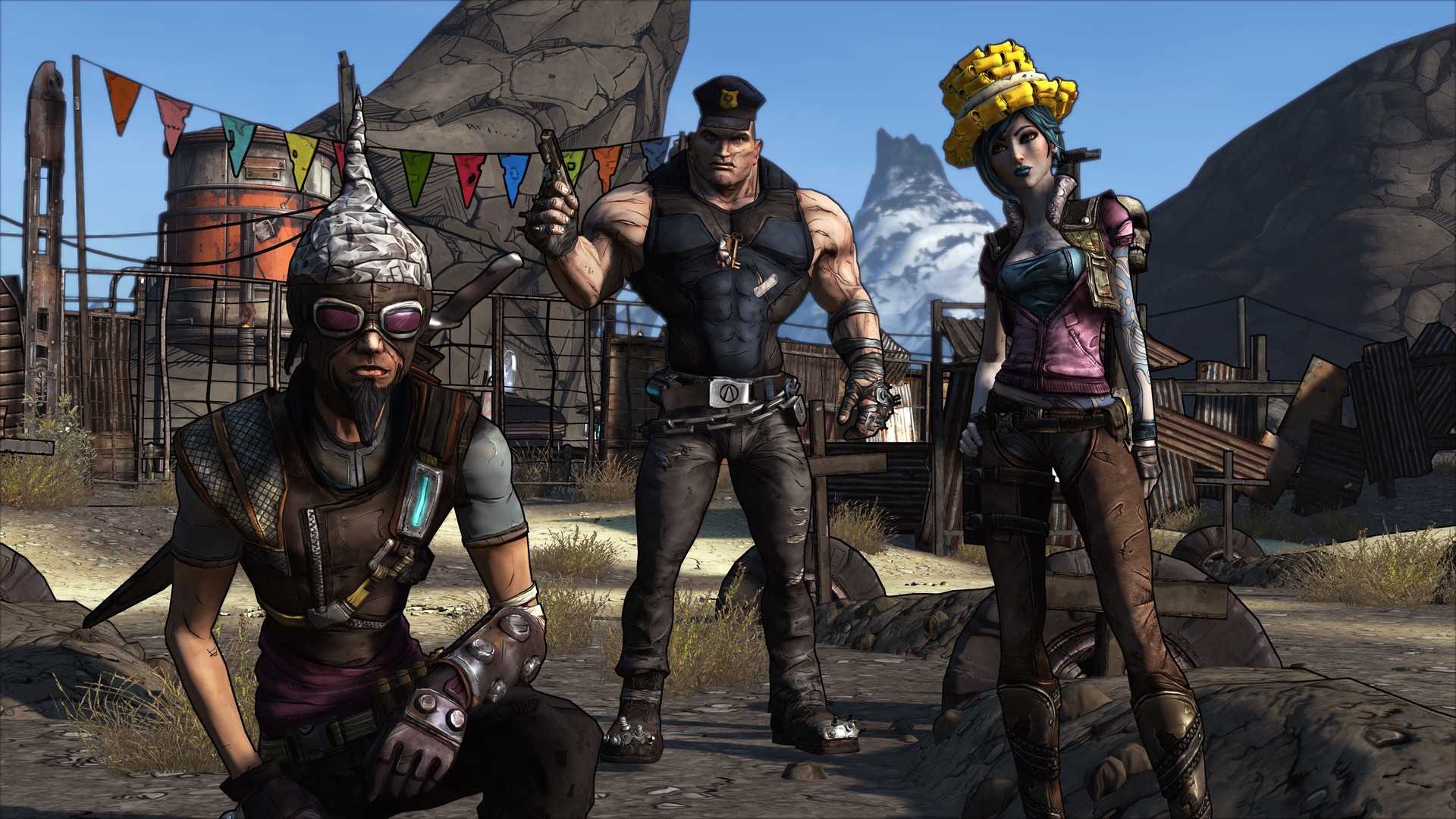
Enhanced also updates how that material is presented and managed. The remaster improves lighting, textures and character models across the base game and add-ons. A toggleable minimap supplements the original compass, while inventory tools let players lock equipment or mark it as junk for easier sorting. Ground pickups for ammunition, money and health are automatic, reducing repeated collection inputs during combat. The edition adds SHiFT rewards and Golden Keys for special items, six named Legendary weapons, and five extra cosmetic heads per Vault Hunter; its campaign finale encounter was also revised. These changes sit alongside the existing levelling, weapon and mission systems rather than creating a separate progression game. Its mission-and-combat rhythm remains the original game’s foundation.
- Developer
- Gearbox Software and Blind Squirrel Games (Enhanced edition)
- Genre
- Action, RPG; first-person shooter with role-playing progression