
About Borderlands 3
In Borderlands 3, a new Vault Hunter joins Lilith and the Crimson Raiders to oppose the Children of the Vault and the Calypso Twins. Travel from Pandora to other planets, take on missions, and build a combat style around a chosen Hunter’s abilities while collecting and comparing an ever-changing supply of guns and gear.
Borderlands 3 begins on Pandora, where the Crimson Raiders are trying to contain the Children of the Vault, a militant bandit cult led by the Calypso Twins, Tyreen and Troy. The player is a newly arrived Vault Hunter recruited by Lilith, the Raiders’ leader, to help recover a stolen Vault Map before the cult can use it to pursue the alien Vaults. That search reaches beyond Pandora: the campaign moves among distinct planets, including Promethea, where the Atlas corporation and its rivals shape the conflict. The Vault Hunters work alongside familiar Raider allies and people encountered in each region, following the map’s trail through local missions, corporate battles and cult strongholds. The main campaign frames treasure hunting as a race over who can reach the Vaults and claim the power they contain, while leaving the player’s chosen Hunter at the centre of each firefight.
At the start, the player chooses Amara, FL4K, Moze or Zane. Amara is a Siren whose Action Skills use supernatural force to slam, grasp or project into enemies; her skill choices can push her toward close combat, elemental effects or control. FL4K fights with a companion beast and can direct it to attack, while skills strengthen either the pet or FL4K’s own hunting and critical-hit approach. Moze deploys Iron Bear, a piloted mech equipped with weapons selected from her skill options, and her upgrades can build around ammunition, shields or explosive attacks. Zane can use gadgets such as a drone, barrier or digital clone; his special class rule lets him equip two Action Skills at once by giving up his grenade slot. These distinct tools change how a Hunter approaches the same encounters, and the chosen character remains fixed for that playthrough.
Each Hunter’s skill trees combine active Action Skills with passive bonuses and augment choices. As the character gains levels, earned points unlock nodes in the trees, allowing a build to emphasise weapon damage, survivability, elemental effects, a pet, a mech or deployed gadgets. Action Skill selections and their available augment options can alter the way an ability works, so a grasp that controls a target, for instance, can be paired with effects that spread control or add damage. Passive nodes continue to influence combat without needing a separate button press. A build therefore takes shape through several connected decisions: which skill to activate, which upgrades to buy, and how those choices interact with the weapons and equipment currently carried. The Quick-Change machines also let players respec their points for a fee, so experimentation does not require starting another character. Equipment remains a separate part of that evolving setup.
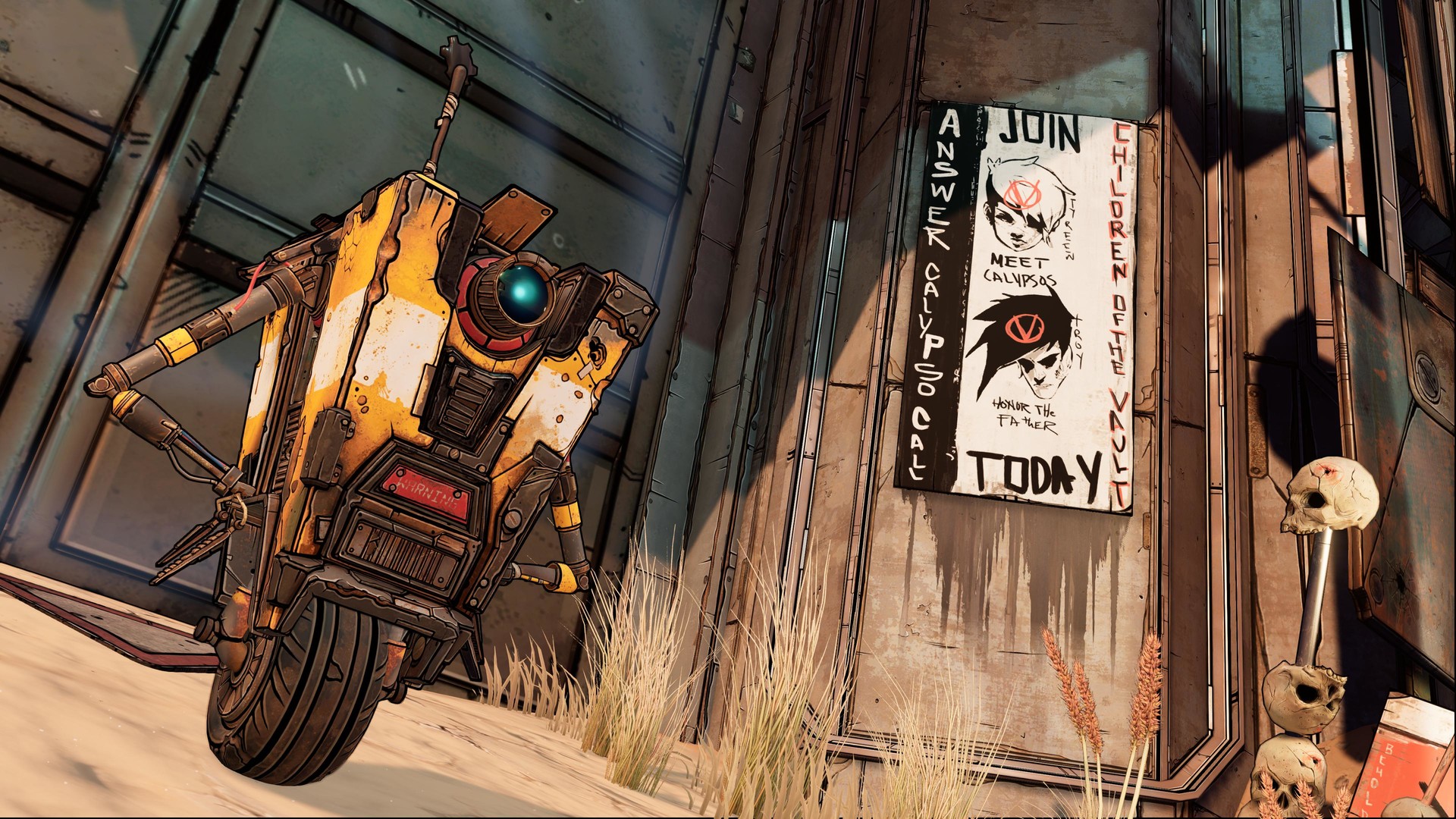
Weapons and equipment are a continuing reward for completing missions, opening containers and defeating enemies. Guns vary in manufacturer, firing pattern, handling, magazine and special behaviour, so the player compares more than a single damage number when deciding what to keep. A gun may fire a spread, burst or sustained stream; others build their identity around an unusual projectile or reload effect. Elemental damage adds another tactical layer: Hunter upgrades can increase elemental effects, extend damage-over-time effects or spread an applied effect to a nearby target. Amara can convert part of her weapon damage to her Action Skill element, and her skills can make those effects support other parts of her build. A shield, grenade mod, class mod or artifact can reinforce another part of a loadout. The inventory’s quick-swap slots support carrying several weapon types and changing the active set during play. New drops frequently replace older gear as the Hunter levels and encounters tougher opponents.
Missions send the Hunter through settlements, industrial sites, wilderness and enemy compounds. Main objectives advance the Vault Map conflict; optional objectives can add rewards when completed, and side missions introduce local characters and smaller problems beyond the critical path. Combat asks the player to move between cover and open ground, manage shields and health, use the Action Skill when its cooldown allows, and respond to enemy groups with the weapons at hand. The ECHO menu map helps locate routes and elevation changes, and custom waypoints can mark a chosen destination. Eridian writings and deposits of Eridium become useful only after the campaign grants the relevant capability, tying some exploration rewards to story progression. Fast travel between discovered locations helps return to missions or vendors, while the wider journey shifts among planetary settings rather than keeping every objective on Pandora.
Borderlands 3 supports solo play and cooperative sessions. Two players can share a local split-screen, while online play supports a four-player group; the official support information also distinguishes Co-operation and Coopetition group modes for matchmaking. In Co-operation, players can tackle the story together while each receives personal loot, so one player’s drop does not remove the item from the other’s reward flow. Mission progress and level differences can be handled flexibly in online play, and a player who joins a friend farther into the main campaign can later use the single-player fast-forward prompt when reaching already-completed critical missions. The mix of shared encounters and individual inventories lets each Hunter pursue a different build while the team faces the same enemy groups. Story progress, equipment choices and Action Skills remain the main tools for adapting from one planet’s mission to the next.
- Developer
- Gearbox Software
- Genre
- First-person shooter; action role-playing looter shooter