
About Bō: Path of the Teal Lotus
Bō: Path of the Teal Lotus is a hand-drawn 2D action platformer set in a world shaped by Japanese folklore. As Bō, a celestial blossom, you explore connected regions, use a staff to chain aerial strikes and jumps, gather ingredients and relics, brew teas that grant abilities, and call Daruma companions into combat.
Bō: Path of the Teal Lotus follows Bō, a small Celestial Blossom, or tentaihana, who grows from a lotus after a blessing from the moon kami. The game places this folkloric figure in a hand-drawn world populated by yokai, spirits and other characters inspired by Japanese cultural archetypes. Bō’s journey moves through unusual settlements and wild places, including haunted bathhouses, a Japanese-inspired metropolis, the Midori Forest region and Uzumaki Cave. The setting draws on folklore without presenting itself as a retelling of one single legend: Bō’s design takes inspiration from stories such as Princess Kaguya and Momotaro, while the game’s monsters also include original interpretations. Exploration, encounters and conversations all belong to the same journey, as inhabitants can offer side quests or simply become part of the local scenery.
The world is arranged as an interconnected 2D landscape, so travel is about more than reaching the next screen. Bō follows paths through areas, meets barriers and hazards, and can later revisit places where new abilities reveal routes that were previously inaccessible. That structure gives movement skills a double purpose: they help cross immediate platforming challenges and also change how familiar spaces can be traversed. The Equinox Staff is central to this rhythm. Bō can strike objects and enemies while airborne to trigger a Bump, which restores the ability to jump again in mid-air. Repeating the strike can renew that jump, allowing a sequence of attacks and leaps to keep Bō aloft when there are targets within reach. The player reads the shape of a room, the placement of objects and enemies, and the timing of each movement to maintain that chain.
A related technique, the Pogo, turns a downward staff strike into a bounce. Pressing down and striking an object during descent sends Bō upward and resets the mid-air jump, opening another chance to leap or hit again. Bump and Pogo therefore connect combat inputs with traversal rather than separating fighting from platforming: an enemy can be a threat, a target for an attack and a temporary step in an aerial route. Later abilities add options for crossing space, including a dash and a forceful downward smash. The press-kit names the Lotus Dash, Mochi Mallet and Grappling Gun among staff forms unlocked through arcane teas. These tools broaden how Bō approaches obstacles and movement challenges, while the underlying staff actions continue to reward attention to spacing and timing. Boss arenas also use airborne movement, with enemies and environmental objects providing opportunities to keep a sequence going.
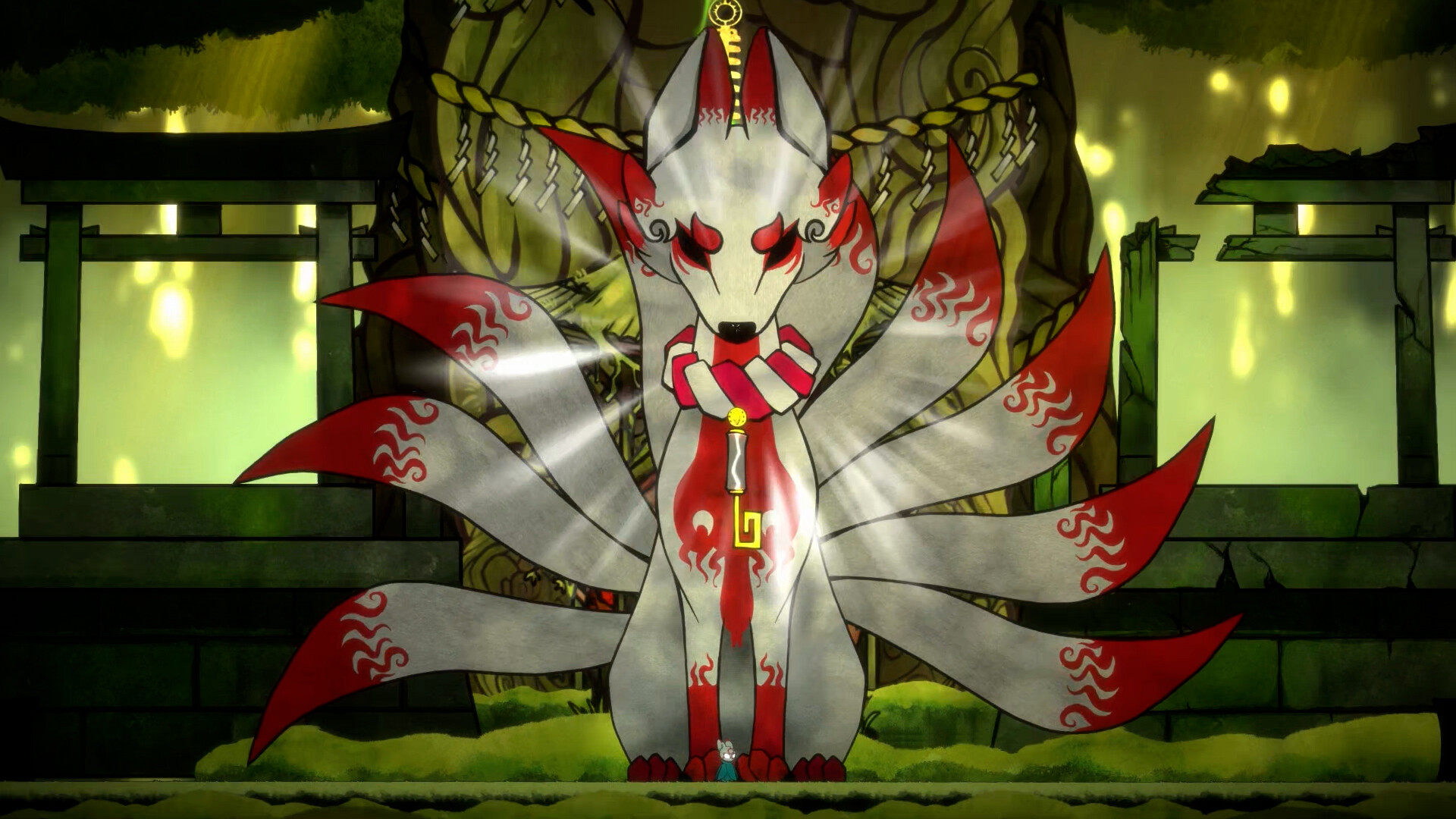
Combat also feeds a resource loop built around a mystic Tea Kettle that Bō receives from Asahi, a rabbit tentaihana central to the journey. Staff hits against enemies siphon energy into the kettle and brew tea; the player can spend that tea to restore health when there is a moment of calm, or summon a collected Daruma Doll to attack. Staying airborne in combat heats the tea, and hotter tea strengthens the Daruma’s attack. This makes the same movement chain serve several purposes at once: it can help avoid danger, keep Bō in position to strike, build heat and prepare a stronger summon. The timing of a recovery or companion attack becomes part of the encounter, because the player weighs immediate survival against saving a resource for a more forceful response. Boss fights and ordinary enemy groups both make room for this connection between mobility and offense.
Daruma Dolls are companions gathered during the adventure, each available to summon in combat. The developer describes their upgrades through an additional eye: Bō finds ink and uses it to draw another eye on a doll, improving its combat ability. The symbol also connects to the real-world association between Daruma figures, completed goals and good fortune. Alongside the dolls, Bō can collect and equip Omamori, amulets that grant bonuses and let players adjust aspects of their setup. Ingredients and relics provide further reasons to inspect side routes and distinct regions. The game identifies Uzumaki Cave as a place to mine valuable resources and Midori Forest as a source of unusual flora. These collectibles sit alongside the main route rather than replacing its platforming focus; they give exploration tangible rewards and help connect the world’s environments to the systems used during encounters.
The journey also includes characters who give the world a social texture beyond combat. Bō can speak with its inhabitants, take on side quests and learn about the places encountered along the way. The folklore influence appears in creatures such as yokai and in named figures including Hashihime, a massive bridge guardian described by the creative director as a confrontation in Bō’s world. These encounters introduce mythic imagery while the game retains its own cast and setting. Hand-drawn, frame-by-frame animation is used for characters and enemies, giving the 2D presentation a consistent visual language as Bō moves between conversations, hazards and battles. The player alternates among navigating the connected map, discovering paths, meeting residents and confronting larger foes; each activity contributes to forward progress without requiring the story’s late revelations to explain the basic premise.
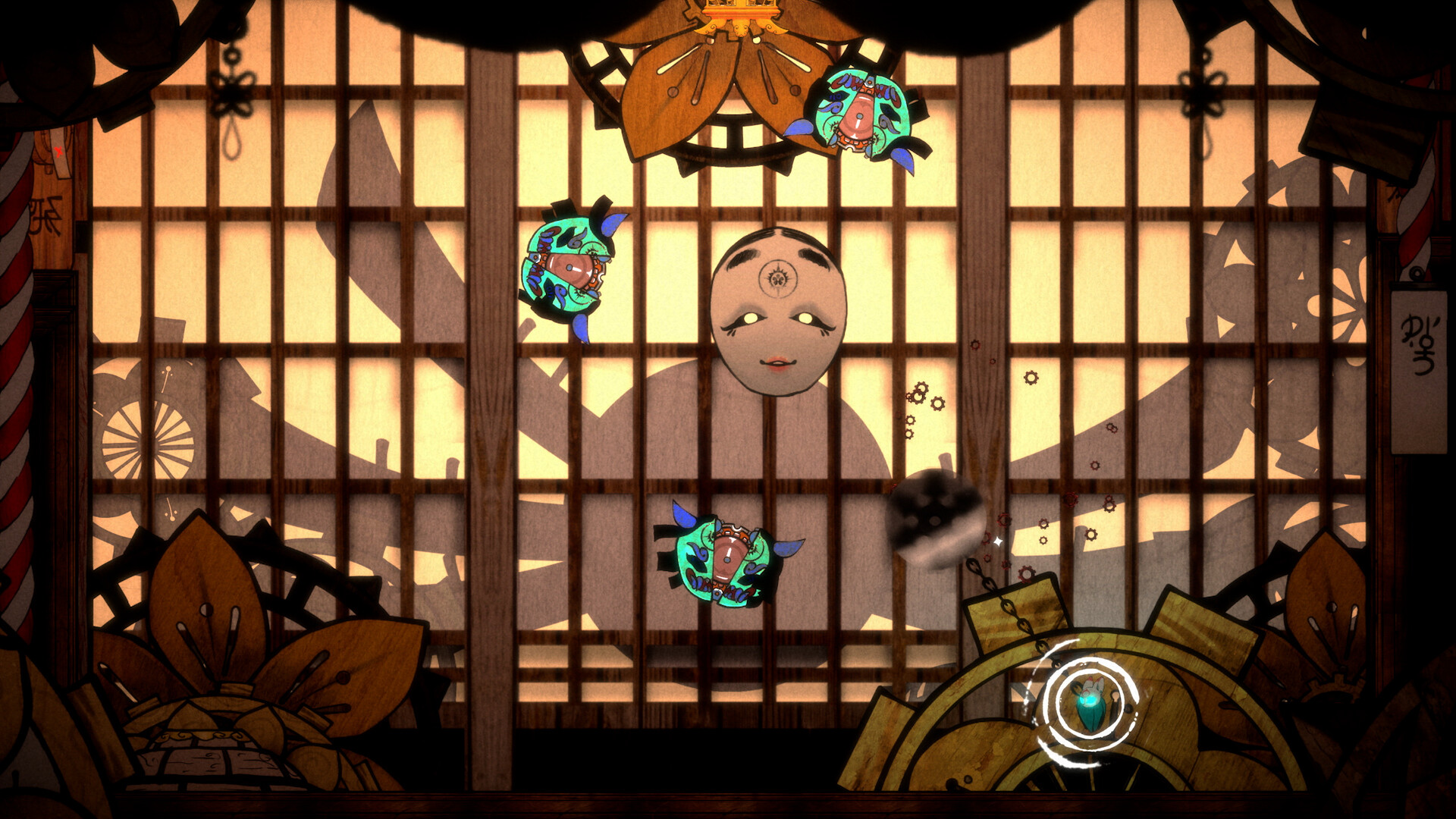
Progress comes from building familiarity with both the map and Bō’s growing set of options. New staff abilities gained through tea open additional movement possibilities, while collected resources, dolls and Omamori support different approaches to exploration and combat. Returning to an earlier region can have a different purpose once a dash, downward strike or other traversal tool is available, and a sequence that once depended on careful jumping may now allow another way through. In the moment-to-moment play, the central task is to combine staff attacks, Bumps, Pogos and later abilities while reading enemy positions and environmental objects. Between those challenges, players can gather materials, pursue character quests and equip found bonuses. The result is a progression loop in which learning the movement system, opening routes and preparing combat resources develop together across Bō’s folkloric adventure.
- Developer
- Squid Shock Studios
- Genre
- Hand-drawn 2D action platformer / Metroidvania