
About BLUE REFLECTION: Second Light
Ao Hoshizaki wakes in an unfamiliar academy beneath a summer-blue sky, where she meets Kokoro, Yuki and other students who have lost their memories. BLUE REFLECTION: Second Light follows their search for a way home through conversations at school, expeditions into shifting Heartscapes, item crafting and battles in which the girls transform into Reflectors.
Ao Hoshizaki arrives at a secluded academy in a world she does not recognize, with no clear account of how she got there. Kokoro Utsubo, Yuki Kinjou and Rena Miyauchi are already living at the school, but they too have lost their memories. Their immediate questions are practical as well as personal: who belongs in this place, what lies beyond the grounds, and how can they return to their own worlds? The answers emerge gradually through the relationships among the students and the Heartscapes, strange regions that appear beyond the academy. The central mystery stays close to the girls’ everyday routine: conversations, requests and shared activities reveal more about their personalities while the search through each Heartscape exposes another part of the world. Translucent character designs by Mel Kishida frame a story about identity and bonding, themes that run through the school scenes and Heartscape journeys. Other named students, including Hinako Shirai, Shiho Kasuga, Kirara Kuno and Hiori Hirahara, join the wider cast. Ao is the player character, and the group’s changing knowledge of one another gives the story its forward motion without turning the academy into a conventional school-life setting.
The academy functions as the group’s base between expeditions, and the school map connects its grounds, characters and destinations. Ao can speak with classmates, check requests, travel to marked locations and use the school menu to reach a Heartscape or the crafting facilities. Character events called dates take place at destinations around the school; completing one awards Talent Points and a Fragment, with the Fragment affected by choices made during that event. These scenes feed back into play because the girls’ relationships unlock Talent types and contribute to their combat development. The tone shifts between quiet conversations and the practical tasks that keep the group moving: delivering an item, finding a character, making a requested object or preparing a facility. FreeSpace! messages add another channel for conversations and reminders as the story progresses. The school is therefore more than a safe point between dungeons: it is where the player advances personal stories, converts expedition materials into usable resources and chooses which relationships to deepen before returning to danger.
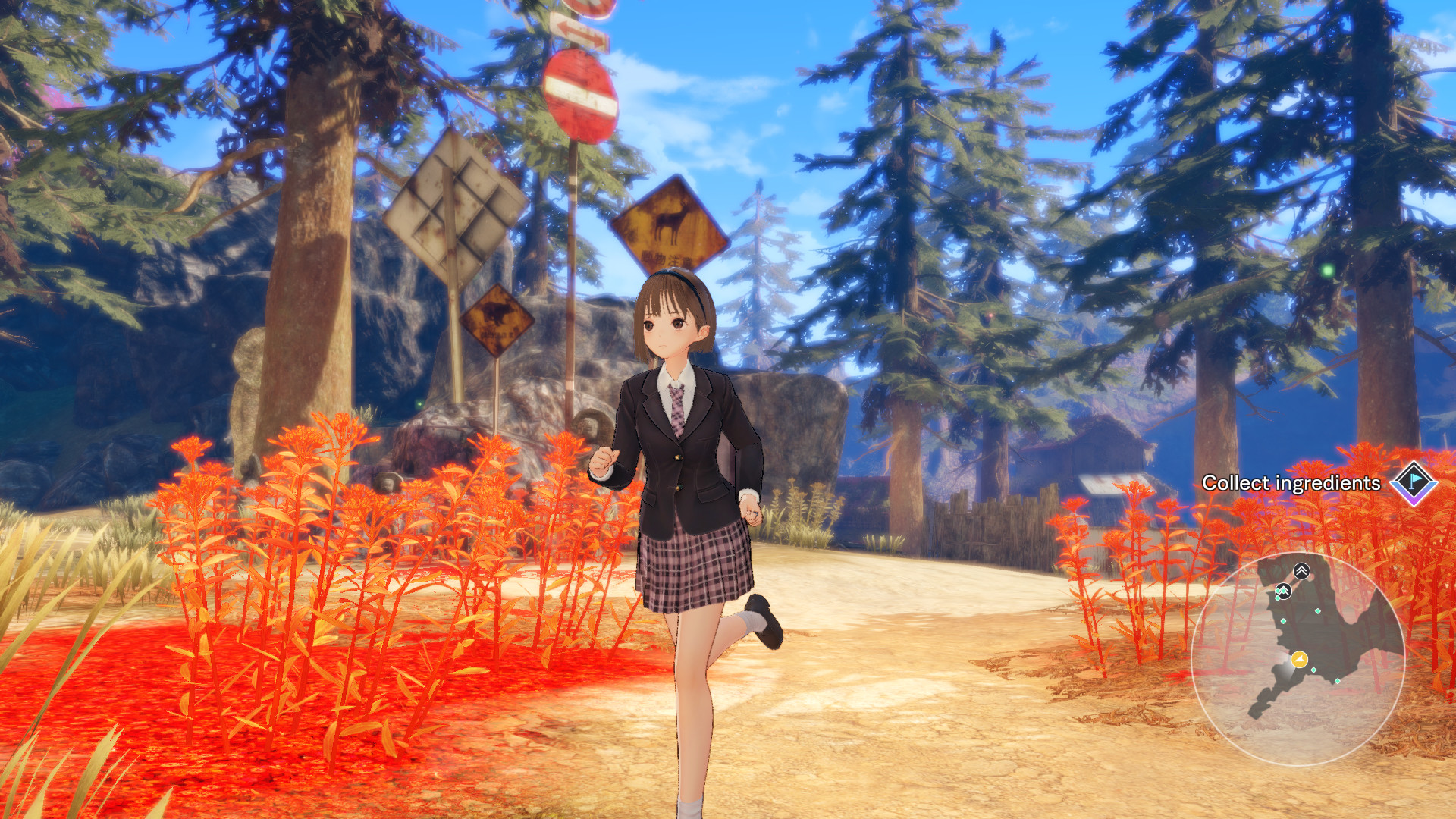
Heartscapes are the main exploration areas, where the group gathers materials and items, finds memory collection points and encounters the monsters that begin battles. Some routes are initially blocked; some routes open only after the party uses an item or raises a character’s Talent Level. Ao can move at a run, but Search Mode trades that speed for a smaller chance of being noticed. In Search Mode, enemy detection ranges appear on the mini-map, making their approach patterns visible. A weapon swing against an unaware enemy starts a Back Attack: the party gains the opening move, and the target is easier to knock down and begins with less HP. This makes positioning and timing useful before combat has even started. Heartscape maps also provide a return-to-school command, so excursions fit into a repeated journey between gathering and preparation. The exploration loop is direct: move through a region, collect materials and Memories, avoid or engage enemies, then bring what the group found back to the academy for crafting and development.
Combat uses an active timeline built around Ether, which accumulates as time passes and allows characters to use skills after their stored amount crosses the action line. The player reads the timeline to see who is approaching an action and selects skills or items when they become available; repeated attacks raise a combo and its damage multiplier, while a powerful enemy attack can interrupt that sequence. Using skills raises Ether recovery speed, and attacking a foe repeatedly can knock it down, drain its stored Ether and slow its recovery. Gear shifts increase the Ether limit and eventually enable stronger skill chains, but waiting for a higher Gear also delays the point at which a character’s equipped Fragments activate. Weaknesses matter too: attacks with a matching attribute deal more damage and push an enemy back on the timeline. Against some powerful opponents, breaking every barrier they create while knocked down can trigger a One-on-One duel. Win its timed challenge by reaching the required combo or reducing the foe’s HP to zero, and the character launches a Finisher before the accumulated combo carries back into the larger fight. The system rewards watching turns, building attacks and choosing when to spend the resources that have accumulated.
Each character’s progression has two connected layers. Talent Points come from requests, date events and other milestones; spending them unlocks abilities, raises Talent Levels and can improve existing skills. Story progress or a closer relationship opens some of the four Talent Types, so not every branch is available at the outset. Talent growth also increases Fragment capacity, while Ao gains additional Talent Points as the other girls’ Talent Levels rise. Fragments are earned mainly through dates and can also come from other situations. Equipping them costs slots according to size: larger Fragments use more capacity but provide more powerful effects. Their categories include attack, defense, recovery, One-on-One, support, skill and permanent effects. A Fragment activates only once its specified Gear has been reached, meaning the build influences when a benefit becomes available during the timeline-based battle. Raising Gear therefore serves more than one purpose: it permits longer skill sequences and switches on stronger equipment effects. The player can adjust these combinations between excursions as new date rewards and Talent upgrades change the available options.
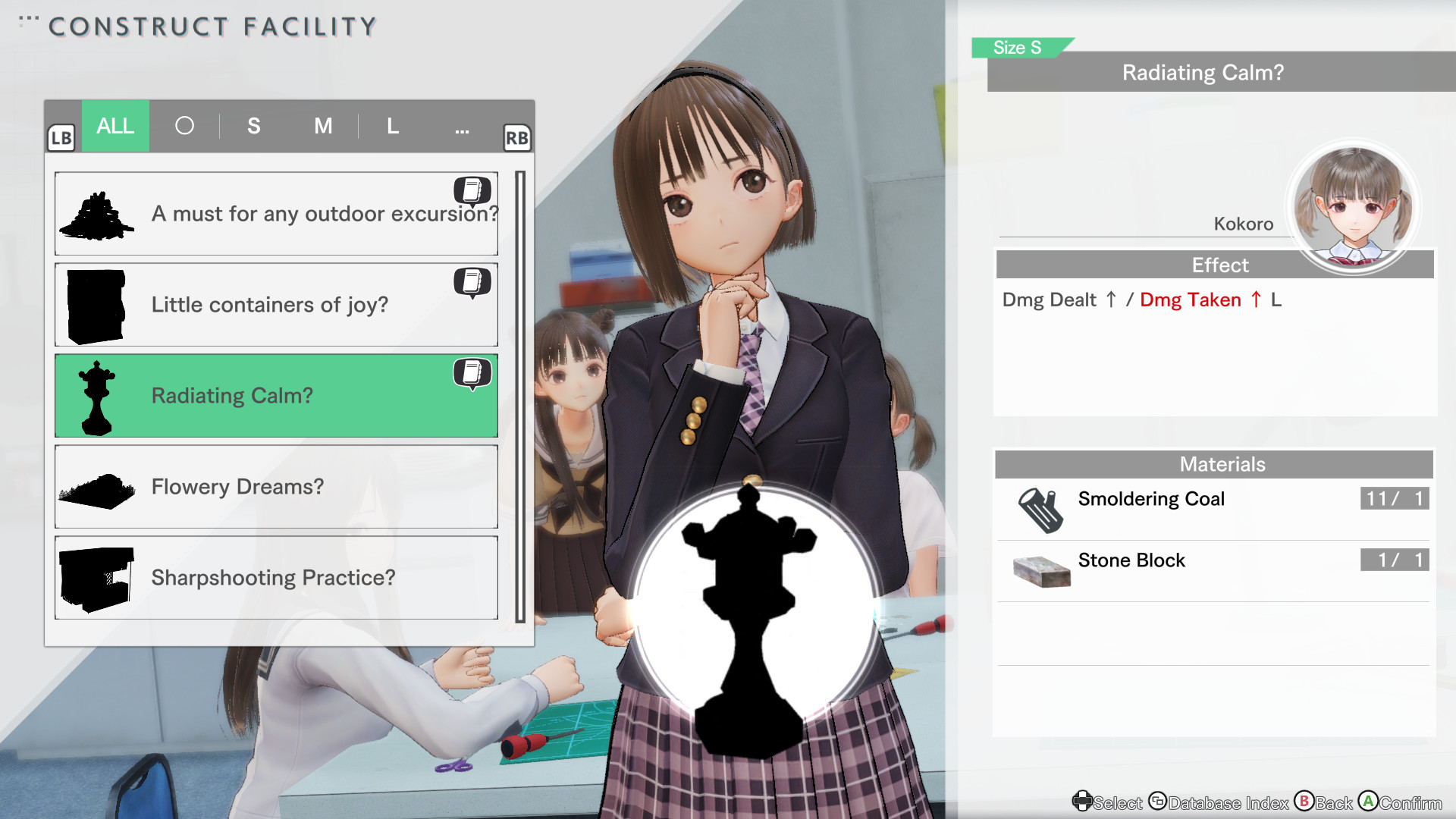
Materials collected in Heartscapes support both item crafting and School Development. At the school’s work room or through the school menu, the player can make items for battle or facilities, spending Memories as well as the required materials. Memories arrive through story progress, requests and Heartscapes, so exploration supplies part of the crafting economy. Up to four characters can help with a crafting job; certain pairs receive a unit bonus that strengthens the result, and each character’s abilities can add further effects when unlocked. Facilities begin with proposals from the girls, gained through the story or requests. Once constructed, they can be placed around the grounds and provide beneficial effects; particular combinations activate Set Effects. This connects the group’s social and material systems: a request can earn Talent Points and items, the items can produce a facility, and the facility can change the support available in battle. Because partners and facilities can alter outcomes rather than merely decorate the school, returning from a Heartscape is a chance to prepare the next attempt with the resources and companions currently available.
Requests offer a separate set of objectives that carry the school’s conversations into Heartscape play. Some ask Ao to talk to someone or visit a location; others require delivering an item, crafting with a named character, defeating a specified enemy or building a facility. Stealth Missions add a more focused traversal task: after accepting one, Ao reaches a marked place in a Heartscape and must make it to a destination without being seen. If an enemy spots her, the mission returns her to its start or a checkpoint, and leaving the designated area means restarting when she comes back. Attempts are unlimited, so these challenges are structured around learning the route rather than spending a scarce resource. Completing a request awards Talent Points to both Ao and the character who made it, sometimes along with items. This gives ordinary objectives a concrete progression purpose, while also creating a reason to revisit classmates’ requests as new crafting options, Heartscapes and character events become available.
- Developer
- Gust / KOEI TECMO GAMES CO., LTD. (Steam lists KOEI TECMO GAMES CO., LTD.)
- Genre
- Role-playing game