
About Bloodstained: Ritual of the Night
Bloodstained: Ritual of the Night is a side-scrolling action RPG set in a demon-filled fortress summoned by the alchemist Gebel. Miriam, a Shardbinder whose body is slowly crystallizing, explores the castle, fights its inhabitants, collects their powers, and searches for a way to stop the threat. Weapons, equipment, crafting, and new abilities shape her route and combat style.
The story follows Miriam, a young woman known as a Shardbinder because an alchemical experiment embedded demonic crystals in her body. The crystals are slowly spreading, and the danger becomes immediate when her former friend Gebel summons a vast fortress filled with demons. Miriam sets out to reach him and prevent the crisis from consuming the world. The setting draws on gothic fantasy: the castle is a hostile, enclosed world of towers, halls, laboratories, caverns, and other connected spaces, while its supernatural architecture reflects the alchemists’ attempt to summon forces beyond human control. The central cast includes Johannes, an alchemist who helps Miriam from a base outside the castle, Dominique, who provides services and requests, and the demon hunter Zangetsu, whose own pursuit intersects with Miriam’s. Their conversations fill in the history of the Shardbinders and the motives behind the fortress without turning the journey into a sequence of detached missions.
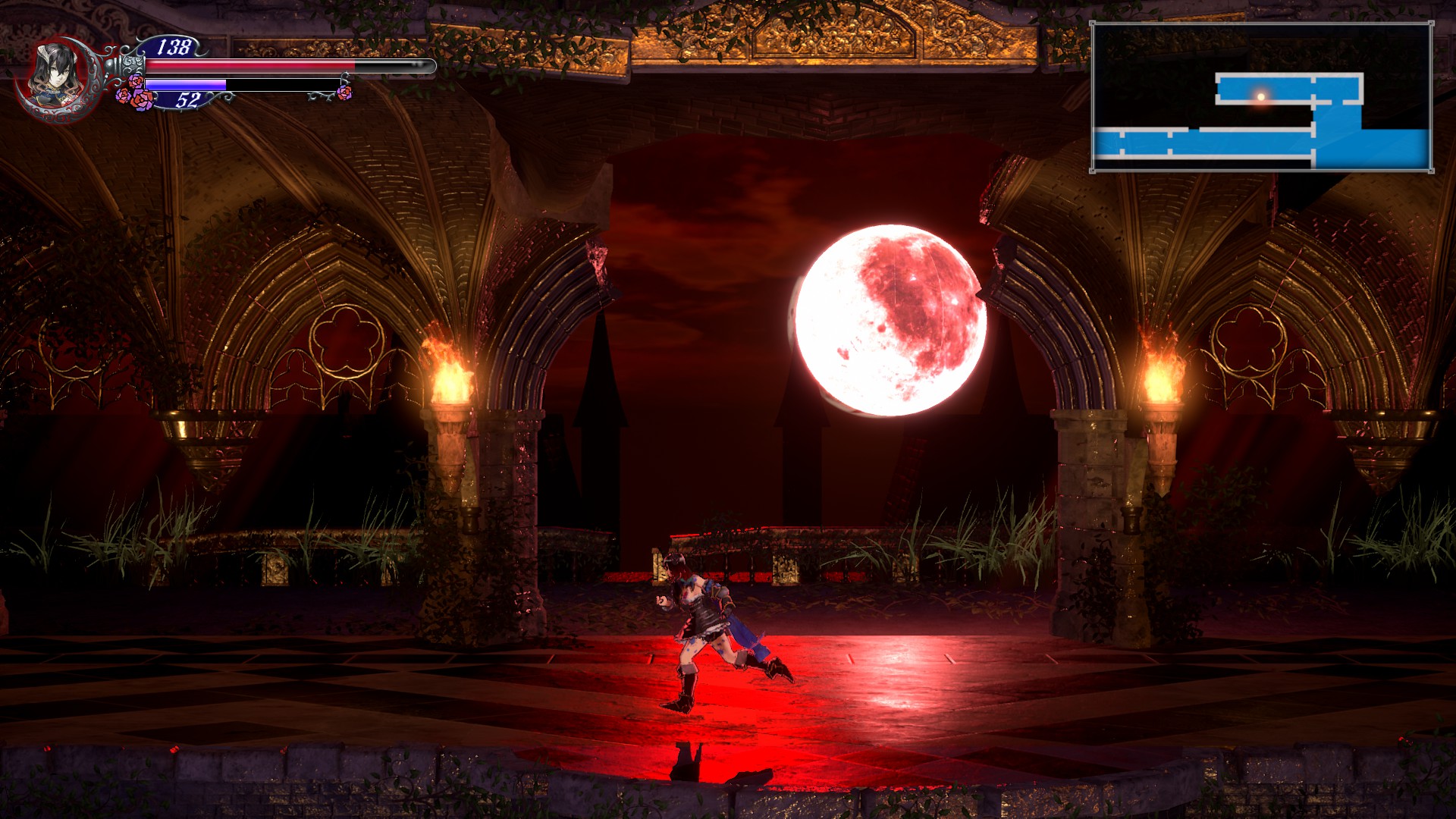
Exploration is organized around a large interconnected map. Miriam can revisit rooms, corridors, and distinct castle regions as she uncovers doors, obstacles, and routes that she could not initially pass. New powers and equipment change what is reachable: an ability may let her manipulate a heavy object or cross a previously impassable section, opening a connection between known rooms or leading to a new part of the castle. Boss encounters act as milestones within this search, often guarding a new route or granting a capability that changes how Miriam moves through the environment. Save rooms provide checkpoints, and warp rooms connect selected destinations, so backtracking becomes a practical part of planning rather than a single uninterrupted trek. The map gradually records discovered territory, helping players notice gaps and reconsider earlier branches when a new shard or movement option alters the possibilities.
Combat combines direct weapon attacks with the supernatural abilities Miriam absorbs from demons. The arsenal spans different reach, speed, and handling, from close-range blades and boots to longer weapons such as spears, whips, and firearms. Each choice changes how she approaches an enemy’s position and attack pattern. Shards add another layer: Conjure powers produce immediate magical effects, Directional powers can be aimed, Manipulative abilities alter or sustain an effect, Passive shards modify Miriam while equipped, and Familiar shards summon a companion. Most active powers draw on magic points, so using them is a resource decision alongside ordinary attacks. The player can switch combinations as the enemy mix changes, balancing direct damage, safer range, defense, mobility, and support. Experience gained in combat also raises Miriam’s level and improves her attributes, so defeating enemies contributes to both immediate survival and longer-term growth.
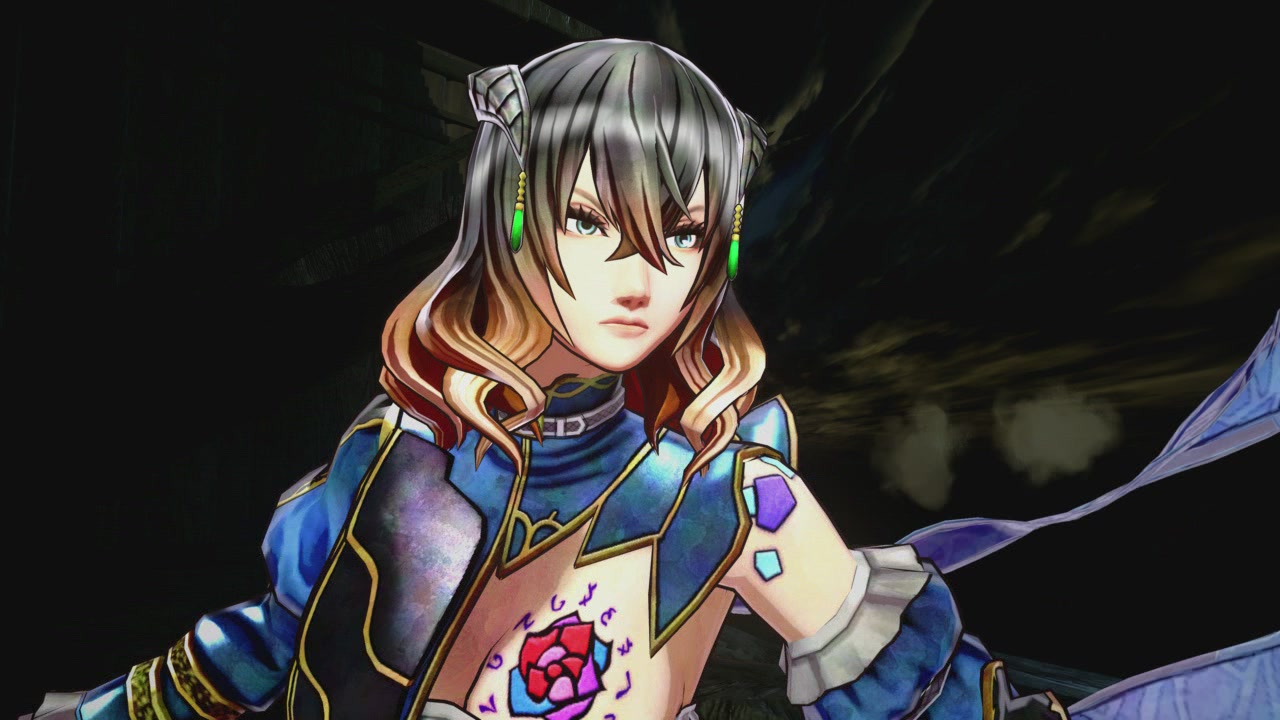
Shard collection ties combat to progression. Demons can drop the ability associated with their power, giving repeated encounters a chance to add a new tool to Miriam’s set. Some shards instead come from special crystal candlesticks, while others are made through Johannes using materials and other shards. The categories serve different purposes: some powers attack, some provide a persistent bonus, and some grant a practical ability that changes how Miriam interacts with the castle. Repeated copies can improve a shard’s grade, while Johannes can raise its rank with the materials required for alchemy. Passive shards have an additional progression path: increasing their rank can eventually unlock a corresponding skill effect that functions without occupying the same equipment slot. This creates a link between experimenting with powers, fighting particular enemies, and gathering resources for future upgrades.
The base outside the castle gives Miriam a place to turn discoveries into preparation. Johannes handles alchemy and equipment work, using materials collected from enemies, containers, and the environment to create or improve weapons, armor, consumables, and shards. Items can also be dismantled for ingredients, which makes a piece of equipment useful as a resource even when it no longer fits the current setup. Dominique’s shop supports buying and selling, while requests from people at the base can direct Miriam toward specific enemy drops or crafted items and reward her with useful supplies. Cooking provides another way to use gathered ingredients. These services connect exploration to a repeating loop: enter the castle, learn its routes and enemies, bring back materials, adjust the build, then return with a different tool or stronger equipment.
The main adventure is accompanied by additional modes and playable options, including a classic-style mode that reshapes the action into staged retro levels and a Randomizer mode that varies selected game elements. Updates also added other playable characters, each with a different relationship to the main progression and combat systems. These modes sit alongside Miriam’s central castle expedition and offer alternate structures for revisiting the setting. Within the main campaign, the changing combination of equipment, shard abilities, map access, and character growth keeps the route flexible: a newly acquired skill may uncover a side passage, while a crafted weapon or upgraded shard can change the safest way to approach a familiar enemy. The game’s progression is therefore built from several connected forms of discovery rather than a single linear increase in strength.
- Developer
- ArtPlay
- Genre
- Side-scrolling action role-playing game