
About Blasphemous 2
The Penitent One awakens as the Miracle returns to Cvstodia, setting out through a new interconnected world to confront a renewed cycle of suffering. Explore regions, fight monstrous foes with three distinct weapons, unlock movement abilities, and arrange equipment that shapes combat and traversal. This spoiler-light overview stays with the base game and avoids later expansion content.
Blasphemous 2 resumes the Penitent One’s story after the events of the Wounds of Eventide. The Heart in the Sky signals the Miracle’s return and the foretold birth of a new miracle child; the Penitent One awakens in an unfamiliar part of Cvstodia and begins a new journey. The setting retains the first game’s devotional imagery, bodily transformation, and melancholy, but presents new regions and people rather than retracing the earlier map. The narrative moves through encounters with strange figures, environmental details, and inhabitants’ stories. Its central objective is to break the returning cycle, while the cause and consequences emerge gradually. The game introduces its immediate conflict through the Penitent One’s new surroundings.
The map is a broad network of rooms and regions with several routes, locked passages, and connections to revisit. Early exploration opens from a central city, where NPCs and services provide orientation and side requests. Progress is not only about defeating a guardian: the player may need to locate a movement power, bring an appropriate weapon to an environmental object, or return with a combination that opens a blocked route. The map tracks visited spaces, and save points offer places to rest and recover. A closed route can signal a future ability rather than a missed jump, while another branch may remain available. This structure lets players choose among directions for stretches of the adventure, then connect them through shortcuts and traversal options. Each area changes exploration with hazards, enemies, and platforming challenges that teach how its spaces work.
At the start, the Penitent One chooses one of three weapons: Veredicto, Sarmiento and Centella, or Ruego al Alba. Each has a separate attack rhythm and a skill tree unlocked with Marks of Martyrdom. Veredicto is a heavy censer with broad swings and a charged flame state that consumes Fervour. Sarmiento and Centella are paired rapiers that reward rapid strikes and build electrical force through successful attacks. Ruego al Alba is a sword with a balanced chain of attacks, defensive timing, and a blood pact that trades health for heightened offense. Their differences matter outside combat too: the weapons interact with mechanisms such as bells, mirrors, and barriers. The initial choice affects which routes and tools are immediately accessible, but the other weapons can be found during the journey. Switching lets the player use an appropriate tool for an encounter or environmental puzzle.
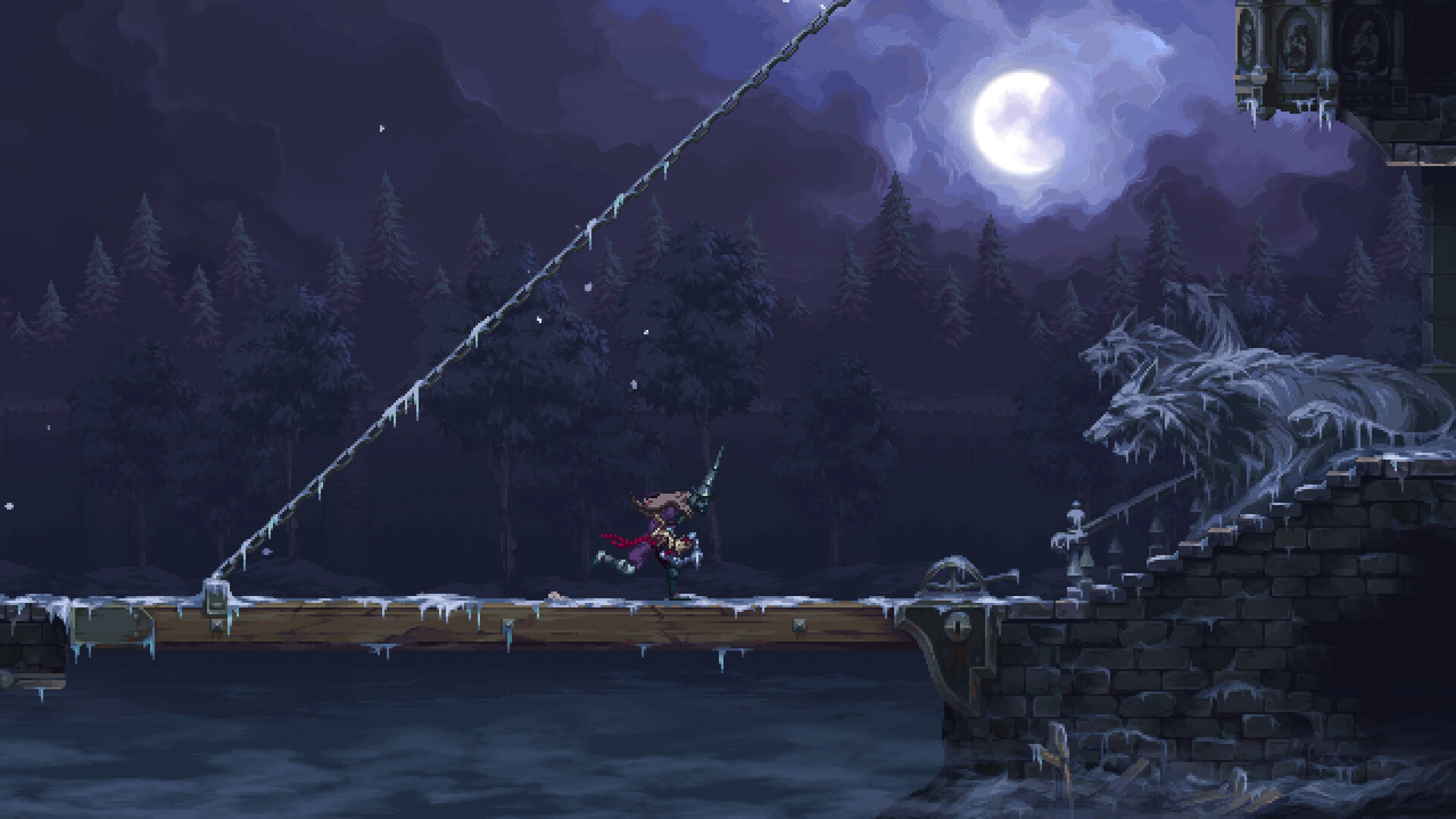
Fights build around weapon-specific actions, ordinary strikes, dodges, and defensive responses. Weapons have separate upgrade paths in Weapon Memories, where new moves and stronger versions can be unlocked. The shared Fervour resource supports prayers and certain weapon effects, making it useful to decide whether to spend it on a special attack or preserve it for a prayer. Executions can follow particular openings and finish a staggered enemy. Bosses have distinct patterns and test weapon range as well as the player’s ability to read an arena. Because the three weapons vary in speed, reach, and special properties, the player can adapt instead of treating every exchange as identical. A heavy blow may control space, rapid attacks may maintain pressure, while a measured sword response suits a moment that calls for defense.
Movement expands as the Penitent One finds abilities hidden in urns across the world. These include climbing or leaping from walls, reaching a second jump, dashing through the air, and interacting with rings suspended in some rooms. They are permanent additions that open branches, shortcuts, and treasure spaces. The weapons add another traversal layer: ringing a bronze bell can create temporary platforms, while the paired rapiers interact with special mirrors to reposition the character. Ruego al Alba has its own impact against certain floor barriers. Since the player begins with one weapon, discoveries change the map’s vocabulary as well as the combat toolkit. Returning to an earlier chamber can reveal that a familiar wall, ring, or switch now responds to an ability that was unavailable on the first visit.
The Altarpiece of Favours lets players arrange figures on a board to build a combat setup. Individual figures grant effects, and compatible pairs can strengthen their influence, so the arrangement is a puzzle as well as a collection system. Weapon Memories unlock techniques, while rosary beads and prayers provide passive and active options. The player can combine these systems around a preferred weapon or change equipment for a challenge. NPC requests and hidden items give reasons to explore optional rooms, and discoveries can grant new figures, resources, or context about Cvstodia. Each return through a connected region can therefore produce either a new combat approach or an access route. The base game’s progression comes from map knowledge, movement powers, weapon skills, and equipment choices; the later Mea Culpa expansion is outside this account. The weapon choice also gives the game multiple ways to address an obstacle: a bell may create a platform, a mirror may become a target for a rapier strike, and a floor seal may respond to the sword. Those interactions reward remembering tool properties while navigating.
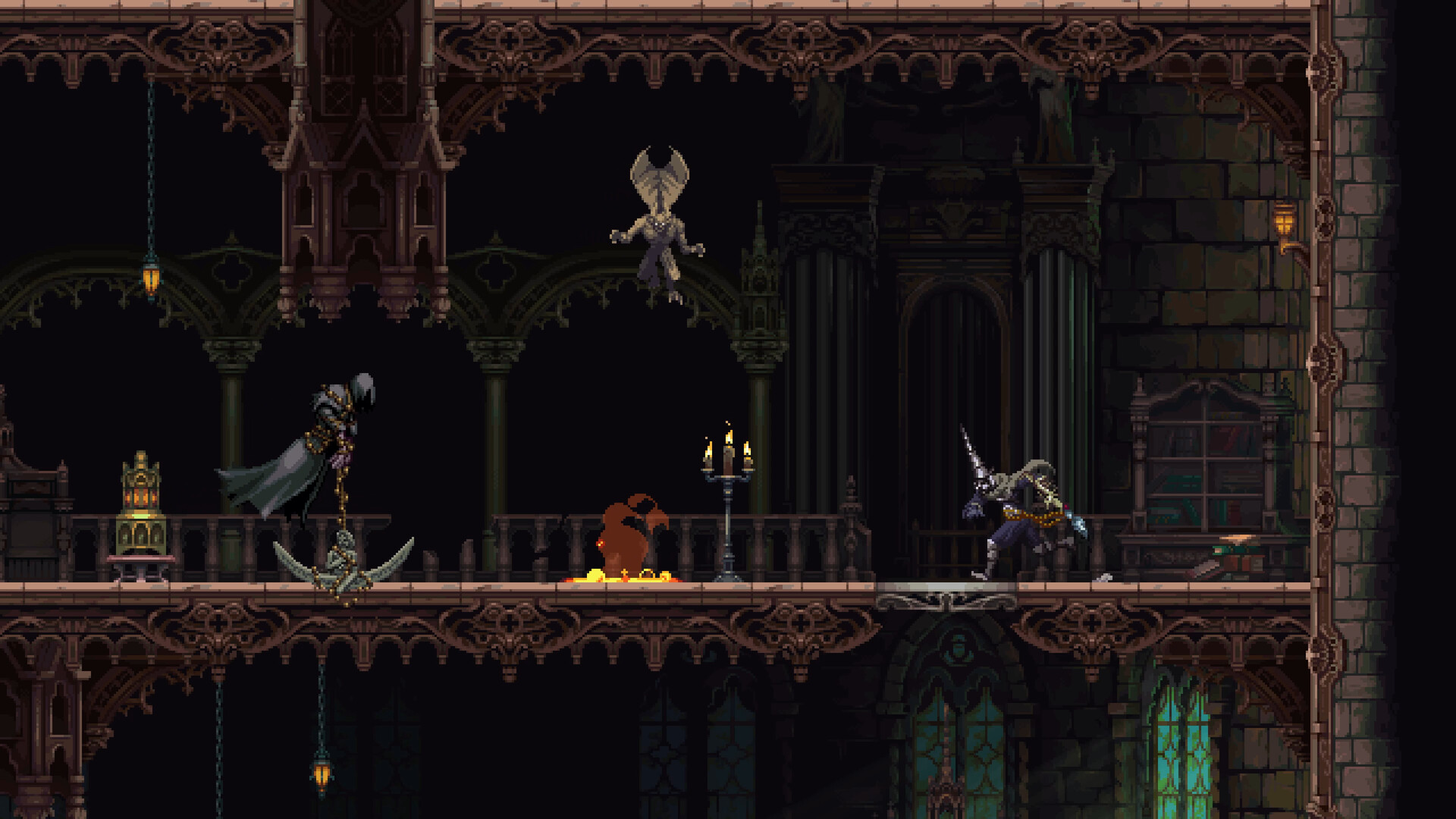
- Developer
- The Game Kitchen
- Genre
- Action-adventure; Metroidvania action-platformer