
About Blair Witch
In 1996, former police officer Ellis joins the search for a missing boy in Maryland’s Black Hills Forest, accompanied by his dog Bullet. The investigation becomes a psychological horror journey through woods that distort time and space, where Ellis uses practical tools, manages danger and confronts a force tied to the Blair Witch legend and his troubled past.
Blair Witch is a first-person, story-driven psychological horror game set in 1996, years after the events of the original film. A young boy has disappeared in the Black Hills Forest near Burkittsville, Maryland, and former police officer Ellis joins the search. He brings a troubled past of his own, and the investigation that begins as a search for the child turns into a confrontation with fear and the mysterious force known as the Blair Witch. The story uses the familiar legend as a setting for a new account centered on Ellis and the experience of becoming lost in the woods. Ellis's troubled past makes the search personal before the forest begins to undermine its ordinary purpose.
The forest is the game’s central environment and an active source of disorientation. Trails loop and landmarks shift as time and space bend, making navigation part of the investigation. The player explores wooded paths, searches for clues and tries to work out how the surroundings have changed. The forest is cursed and distorted, so returning to a familiar area may not mean it is safe or unchanged. This uncertainty shapes the pacing: movement and observation take place under the pressure of a landscape that refuses to behave like a stable map. As landmarks lose their reliability, the search becomes as much about interpreting change as choosing a direction.
Ellis is accompanied by Bullet, his dog and closest companion in the woods. Bullet helps make the search more than a solitary walk: he can be directed, and his reactions provide a point of attention amid the shifting environment. The way Ellis treats him also matters to the story. The relationship gives the player a personal decision in the middle of the investigation, as Ellis can show care or discipline when Bullet strays. Their partnership anchors the journey while the forest increasingly isolates Ellis from ordinary routines and dependable direction. Players can pet Bullet, feed him treats or discipline him if he wanders off, and Ellis's treatment of him directly affects the story.
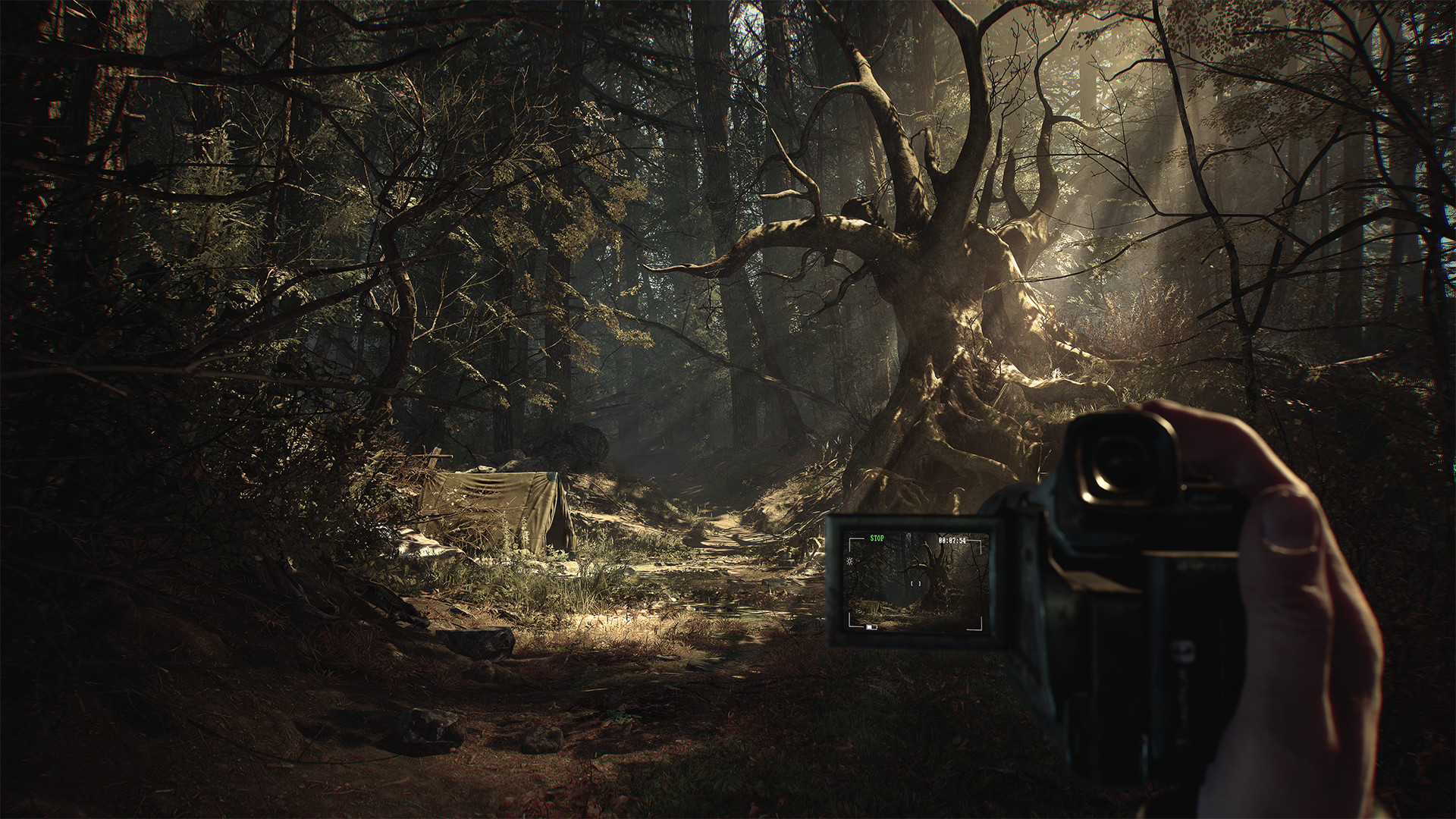
Investigation relies on tools rather than a single all-purpose solution. The search uses a camera, cell phone and flashlight as practical tools for investigating the disappearance and responding to the forest's dangers. These devices help him examine information and respond to obstacles, while the flashlight provides a way to see in the dark. The task remains to interpret what is happening and find a route forward. Tools support the search, but they do not remove the uncertainty created by the woods or guarantee that every threat can be confronted directly. These tools help Ellis pursue a human investigation as unnatural events increasingly disrupt the search.
The game connects Ellis’s physical journey to his psychological state. The game's fear-and-stress premise connects Ellis's physical journey to his psychological state and the difficult past he brings to the search. The forest’s supernatural influence and his difficult past therefore overlap: the player follows clues about the missing child while encountering fragments of Ellis. As the search becomes more threatening, the game uses changing surroundings and dangers to place his composure under strain, keeping character and environment connected. The woods test how Ellis responds in danger, bringing this personal dimension into the search rather than separating it from the supernatural events. How Ellis behaves in danger can reveal what he learns about himself, making those reactions matter beyond the immediate encounter.
The Blair Witch is an unseen presence that haunts the woods, while supernatural dangers make routine movement hazardous. Encounters can interrupt exploration and force Ellis to respond quickly, use available equipment or find a way through. The threat is designed around anticipation as much as direct confrontation: signs of something nearby matter because the forest limits visibility and offers few dependable landmarks. The result is a journey where the player must balance looking for evidence with staying alert to immediate danger, and where returning to an earlier path may carry a different risk. Time-and-space distortions can make the same stretch of forest feel unfamiliar when Ellis returns to it. Locating clues about the missing child remains Ellis's practical objective, even as the forest makes each route and encounter feel unstable.
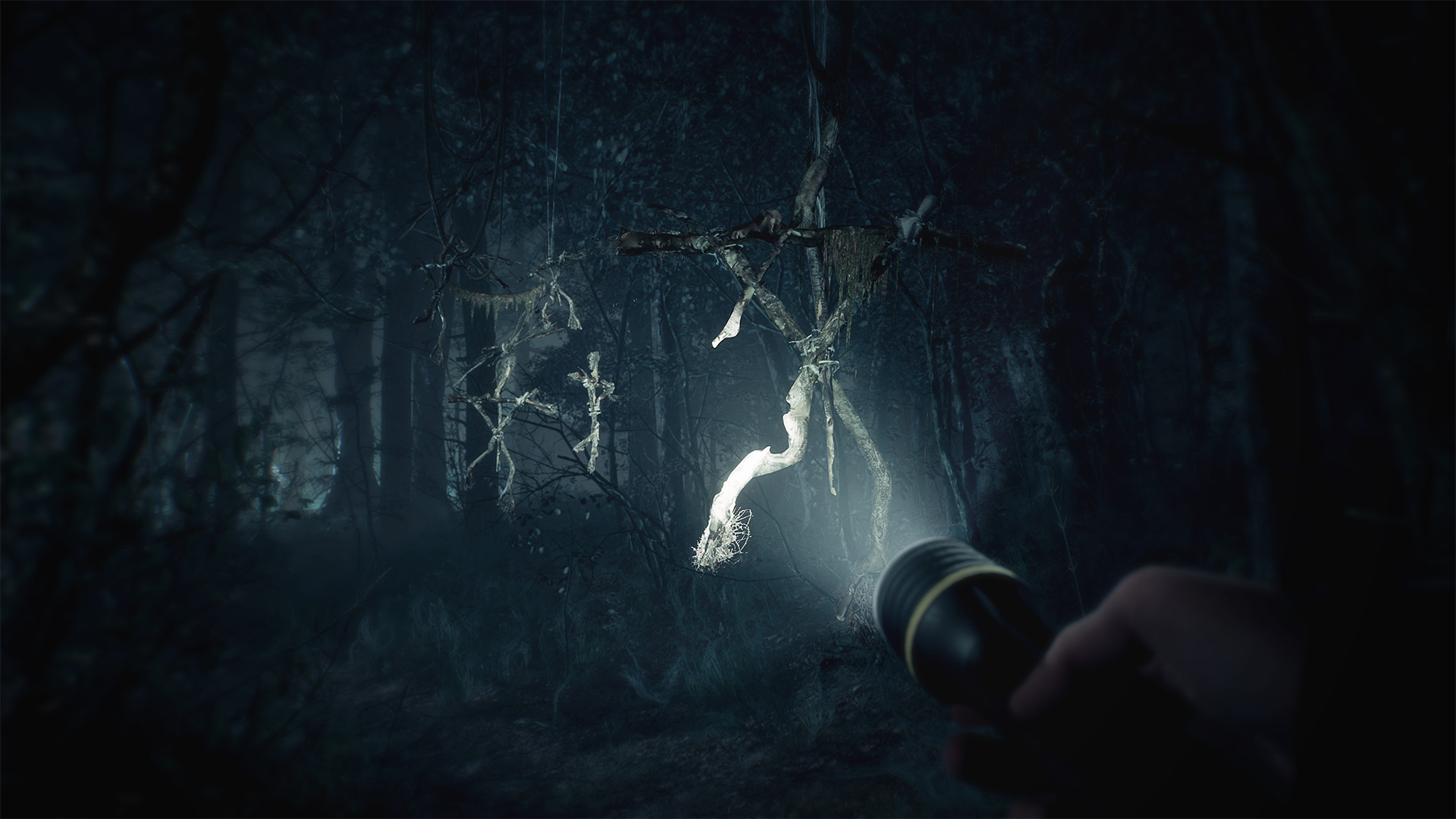
The game’s story expands the film legend with an original search rather than retelling the film’s events. Its focus stays with Ellis, Bullet and the missing boy, while the Black Hills Forest twists the investigation into something more personal and frightening. The narrative’s core tension comes from the gap between what Ellis sets out to do and what the woods make him confront. As he moves deeper into the forest, the search, the supernatural presence and the fragments of his past become increasingly difficult to separate, without turning the journey into a conventional police investigation. The legend supplies context, while the game follows Ellis through an original narrative organized around his search.
- Developer
- Bloober Team SA
- Genre
- First-person story-driven psychological horror adventure