

About Blackwell Unbound
Set in 1973, Blackwell Unbound follows medium Lauren Blackwell and spirit guide Joey Mallone as they investigate two Manhattan disturbances: a saxophone heard on Roosevelt Island and a string of accidents at a construction site. The cases draw Lauren into a mystery connected to the Blackwell family’s work with the dead.
Blackwell Unbound moves the series back to 1973, decades before the events centered on Lauren’s niece Rosangela in The Blackwell Legacy. Lauren is already an experienced medium, and Joey Mallone, a ghost from the 1930s, acts as her guide and partner. A saxophone seems to sound by itself along the Roosevelt Island promenade, while accidents interrupt work at a Midtown construction site. Manhattan’s residents treat these as separate oddities, but Lauren and Joey investigate both. This is the second Blackwell game by release sequence, while its setting makes it a prequel to The Blackwell Legacy. Its focus is Lauren’s period of responsibility, not Rosa’s first encounter with Joey or the university case that opens that later-set story.
The cases begin with two specific New York threads. On Roosevelt Island, Lauren and Joey encounter the ghost of saxophonist Isaac Brown, whose music is tied to a memory he cannot resolve. At 53rd and Lexington, Mavis Wilcox remains at a construction site that has replaced the apartment building she remembers. The player learns about those places through separate investigations rather than being handed a single crime-scene overview. A visit to the site trailer reveals a letter and company name; tracing that paper trail sends Lauren to Harriet Sherman and then back toward people who knew Mavis. Isaac’s lead moves through the club Johnny Ivory’s, the pianist Cecil Sharpe, Jambalaya Records and a writer at The New Yorker. Those locations give the cases different textures: one follows music and the people who played together, while the other turns on a vanished home, property records and family history. Each discovery changes what can be asked of the next person, so businesses and addresses become evidence-bearing parts of the story.
The character switch is built into those clues. Lauren uses her camera, Dictaphone, phonebook and notes, while Joey can cross barriers and speak to spirits. At Johnny Ivory’s, the player can inspect a band photograph and plaque, then switch to Joey to read a name on the sheet music. The clue notebook can connect Cecil Sharpe’s name with the C Sharps; a conversation then opens a route back to Isaac’s musical history. Lauren’s Dictaphone records a performance that later matters to Isaac, making a recording an investigative object rather than a decorative prop. In Mavis’s case, Joey can enter the fenced site and speak to her, but Lauren must follow living-world leads: a letter in the trailer, a call made using the phonebook and details passed on by people who knew the family. The pair solve different parts of a scene because their abilities and inventories differ. Switching is not a cosmetic change of sprite; it determines which people, objects and actions are available at each step. For the saxophonist, a name found on music becomes useful only after Lauren compares it with the group in an old photograph, and the player later records Cecil’s duet for Isaac. Mavis’s evidence has a different chain: the site’s letter points to Harriet Sherman, her photograph and letter reveal details about her son, and Lauren checks those names by phone before taking the information back to Joey. These examples show how the game makes ordinary research items carry the supernatural investigation forward.
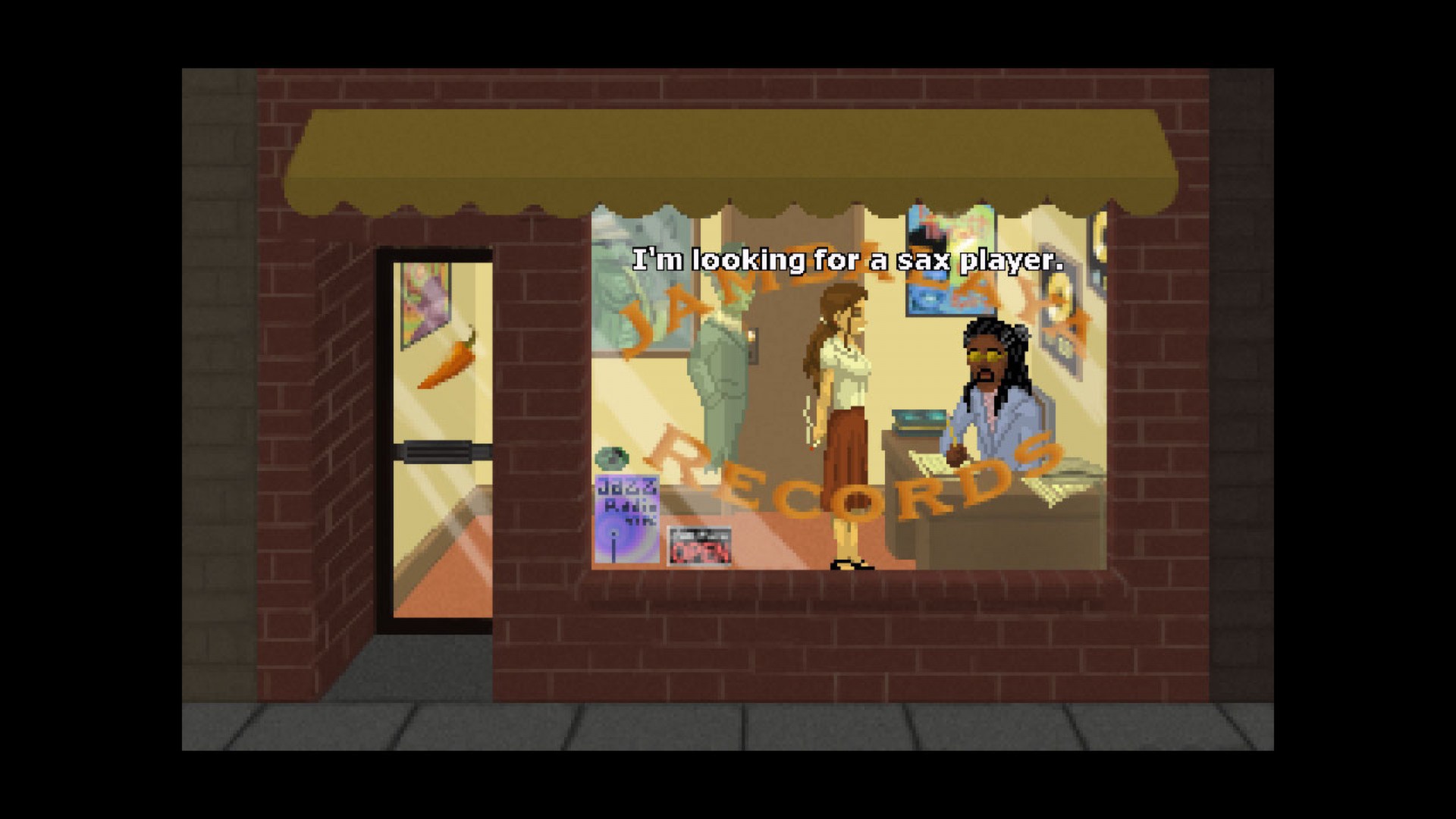
The case list lets Lauren and Joey work on Isaac’s haunting and Mavis’s construction-site story in parallel. If one line has run out of useful questions, the other may still offer a person to contact or an object to examine. Returning to a club after learning a name from a photograph can unlock a conversation that was previously unavailable, while information about Mavis’s relatives comes from comparing construction records with a letter and later accounts. Lauren records names and details in her notes, combines related entries when their connection becomes clear, and uses the map and phonebook to reach the next place. Dialogue is often a practical puzzle step: the right topic can elicit a memory, and that memory may become the clue needed to speak with someone else. The story moves from two local disturbances toward a broader mystery, but the investigation remains grounded in specific people, documents and conversations. Progress depends on linking evidence across the parallel cases, not on collecting upgrades or completing combat encounters. The sequence also lets players choose where to spend attention: the construction-site lead depends on paper and phone records, whereas Isaac’s investigation depends on identifying a song and finding someone who can perform it again. The shared case list makes that difference visible and lets the player move between them without treating either as an optional diversion.
Lauren and Joey’s established partnership is a distinct part of the game’s tone. Lauren is a chain-smoking medium whose blunt manner and case-focused habits differ from the younger Rosa seen in The Blackwell Legacy; Joey’s dry, teasing responses are shaped by the years he has spent working with her. Their exchanges at the apartment and between leads reveal a practiced routine: they review the case list and divide the work according to what each can do. Other recurring figures sharpen the period setting. Cecil Sharpe’s nightclub performance and the C Sharps’ old photograph connect a present-day ghost to a musical past, while newspaper reporter Joseph Mitchell helps Lauren investigate the construction-site history. These characters are not interchangeable informants. Their jobs and memories determine what evidence they can offer, whether a performance, a name, a letter or an account of someone’s former home. The mystery grows from those details and from the way the two investigators respond to them.
Pixel-art scenes establish the shift between period interiors, signs, street views and small objects that become important during investigation. Lauren’s apartment, a club stage, a record shop and the construction trailer each have a different visual purpose: some hold recurring tools, while others are searched for a document or conversation lead. Character animation and portraits support the game’s voiced dialogue, and an optional developer-commentary mode adds production context alongside the adventure. Sound is especially present in Isaac’s case: the saxophone is first heard as an unexplained signal, then becomes part of the player’s work with the Dictaphone and a clue about the people who knew him. This link between what is heard and what can be recorded gives the music a concrete place in the investigation. The scenes remain compact and hand-composed, keeping the click-and-examine rhythm close to the locations, people and evidence that Lauren and Joey are trying to understand.
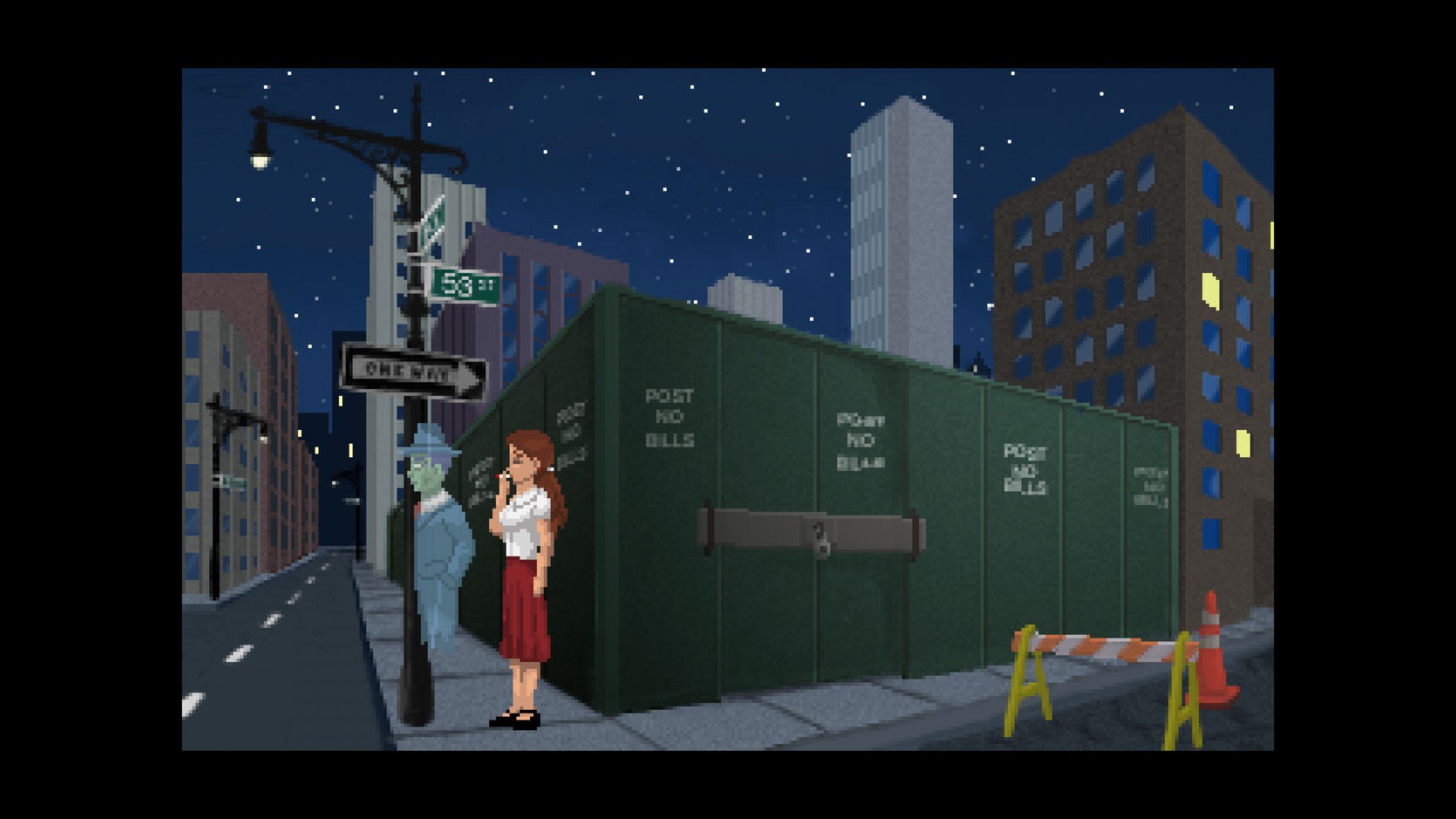
Lauren’s camera adds a smaller, optional layer to the casework. She can take photographs of people and objects encountered during the investigation, using the same tool that appears alongside her Dictaphone and notes. Those pictures are collected in an album and can unlock bonus material, so the camera rewards noticing characters and returning to details that do not form the main evidence chain. It does not replace the case list or determine the story’s central progress; it gives the player another reason to look carefully at the cast and their surroundings. The contrast between documenting the living city and recording Isaac’s music also fits Lauren’s role as an investigator: one device preserves a face or scene, while the other captures a sound that a witness cannot simply describe. Both tools turn observation into something she can carry back to the next conversation.
- Developer
- Wadjet Eye Games
- Genre
- Single-player point-and-click supernatural mystery adventure