
About Blackwell Epiphany
In the final Blackwell mystery, Rosa Blackwell and Joey Mallone investigate a spirit being destroyed during a blizzard. Their search leads through a citywide supernatural case involving frightened ghosts, guarded witnesses and police who cannot explain what is happening. The pair combine Rosa’s research and interviews with Joey’s ability to enter places the living cannot.
Blackwell Epiphany opens during a blizzard, as a dead man cries for help and a force tears his soul apart. Rosa Blackwell and Joey Mallone have helped restless spirits understand their deaths before, but this is a different kind of danger: the police cannot stop it, and another instance may follow. The pair investigate what is happening while continuing to meet the dead and the living people connected to them. That opening establishes the game’s main tension without explaining the cause or revealing the later turns. Rosa is a living psychic who can speak with witnesses and examine physical evidence; Joey is her ghost partner, able to reach places closed to her. Their roles let the mystery unfold through two kinds of access. A witness may share a detail with Rosa, while Joey can quietly investigate beyond a locked door. The case asks how these pieces relate to a soul being destroyed, but the pair’s familiar work helping spirits remains part of the story. As the fifth and final Blackwell game, Epiphany also brings prior relationships into its current crisis, giving the investigation a series-wide context while maintaining its own distinct premise.
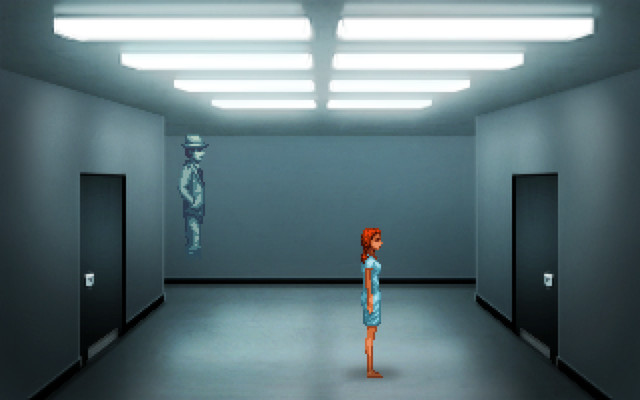
One early case sends Rosa and Joey to a run-down downtown building to help a ghost. The location introduces the game’s method of making a place legible through both characters: Rosa can inspect rooms and objects, while Joey can pass through a locked entrance and look into spaces she cannot yet reach. The ghost’s circumstances require more than finding her; the pair must learn about the life she left behind and give her information that helps her understand her situation. During this work, the investigation turns toward a second, more alarming event: a man’s soul is destroyed, and Rosa and Joey seek the reason. An NYPD contact helps connect the pair’s independent enquiries with information the department holds, though that help has limits. Scenes move between buildings, homes, public offices and other city locations as names and records point to new people. The city is therefore traversed by leads rather than by free roaming. Each room supplies a limited set of examinable details, conversations and exits, and the player decides which evidence belongs to the local ghost’s story and which may connect to the larger danger.
The most distinctive puzzle dependency is the cooperation between a person who can enter a room and a person who can change what happens there. Joey can slip through walls and locked doors, read scraps of paper and blow light objects, but he cannot pick up items or use a computer. Rosa can handle objects, use devices and question living people, but she may need Joey to inspect a sealed area first. If his observation reveals something useful, she still has to find a practical way to gain access or turn it into evidence. Likewise, Rosa may encounter a physical object that Joey can move only after she opens a route for it. These rules produce small, legible chains rather than a collection of arbitrary combinations: inspect, learn what is blocked, switch characters, and use the one ability suited to that obstacle. The pair can change places at any time, letting the player test a new angle without losing the details already found. Joey’s limited interaction is not a combat ability; it is a way to reveal or shift light objects so Rosa can continue the investigation. The puzzle design consistently relies on these complementary boundaries.
Rosa’s phone organizes the case as a set of usable facts. Its notes record clues and names, and two entries can be combined to produce a further lead. The search function can return information about a person or place; calls and email provide other ways to follow up. During an interview, Rosa can select a recorded clue as a topic, so an object discovered in one scene can become a question for someone in another. A new answer can then be added to the notes and compared with earlier information. That means a puzzle often has a dependency across scene, phone and dialogue: observe a detail, identify what it suggests, search or combine notes, then return to the person who can confirm or complicate it. This is especially useful when the case has more than one live enquiry path. The player may pursue a different lead while waiting for an interview to become productive, and the phone keeps discoveries available across those branches. The investigation feels like detective work because its progress depends on interpreting information rather than locating a sequence of glowing objects. Physical items still matter, but the central resource is the player’s growing account of who is connected to whom and what each person knows.
The ghost cases give the larger mystery a human scale. A newly encountered spirit may not realize they are dead, so Rosa and Joey need to learn about the person’s relationships and circumstances before they can explain what happened. A witness can fill in a name or connection; an object or a note can provide another piece; a phone search can then suggest where to look next. Once a ghost understands the situation, Joey’s tie is part of the recurring ritual that helps the spirit move on. Each encounter thus links investigation to a concrete outcome for an individual, while the accumulating cases deepen the question raised by the opening soul-destruction event. The game does not use character levels or equipment upgrades to represent progress. Instead, the player advances by discovering what each person’s story contributes and by recognizing when separate facts form a new lead. Because several lines of enquiry can be active, the next useful step may come from another witness or location rather than from repeating the same conversation. This structure keeps the familiar task of helping the dead present even as the finale expands the stakes surrounding it.
Epiphany’s dialogue and imagery carry a more serious register around that crisis while preserving the partnership’s exchanges. Rosa’s conversations with witnesses can be cautious or strained, particularly when police are guarded or people do not want to discuss a death. Joey’s movement through a room lets him find information without demanding that a living person disclose it, but he cannot replace Rosa’s ability to question them. Their distinct approaches keep character interaction tied to puzzle progress: a clue found by one can change what the other asks or notices. The game also treats each spirit as a person with a life and relationships, rather than as a generic supernatural obstacle. This makes the smaller investigations more than errands on the way to the finale; they give Rosa and Joey reasons to listen carefully and assemble a history from partial accounts. At the same time, the official premise keeps the central threat intentionally unexplained at first. The narrative builds from a specific opening event toward a wider crisis, but a spoiler-light account can stop at the point where the duo decide to investigate and where their ordinary work with ghosts intersects with something more dangerous.
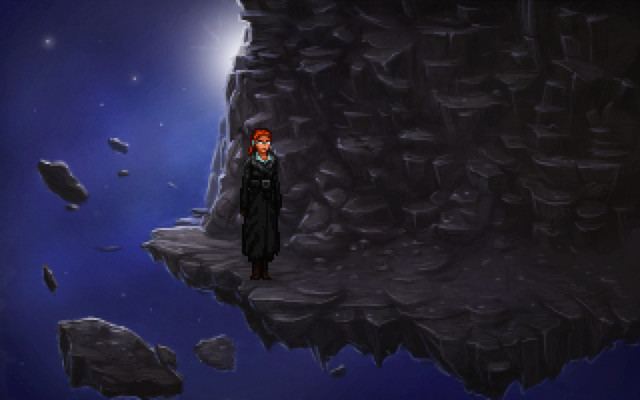
The presentation combines pixel-art character sprites with painted backgrounds, full voice-over and an original musical score. The distinct settings give each enquiry a visual identity, while expressive character art keeps the focus on reactions during conversation. The audio is similarly tied to character and scene: spoken dialogue handles both clues and the ongoing relationship between Rosa and Joey, while the score accompanies the shift from an individual haunting to a citywide supernatural concern. The point-and-click interface keeps attention on the details placed within a scene and the information carried from one location to another. Wadjet Eye identifies this as the conclusion of the Blackwell series and emphasizes that Rosa and Joey are two playable characters with different abilities. Epiphany’s crisis is the soul being torn apart during the blizzard, and its investigative structure builds around that event. Blackwell Deception is a separate earlier chapter, the fourth game, whose case concerns street psychics and their dead clients. The shared characters and ghost-investigation premise connect the titles, while Epiphany’s opening danger and finale role distinguish its story.
- Developer
- Wadjet Eye Games
- Genre
- Point-and-click supernatural adventure