
About Blackwell Convergence
Medium Rosangela Blackwell and her spirit guide Joey Mallone investigate a New York film premiere with a bloody past, an empty office, and troubling stories involving an artist and an investor. As apparently separate events converge, the pair follow clues through the city and uncover a mystery tied to the Blackwell family.
Blackwell Convergence follows Rosangela Blackwell, usually called Rosa, and her spirit guide Joey Mallone through a set of unsettling New York cases. A new film attracts attention despite a bloody history; an office sits unused in a desirable location; an artist regrets a commercial decision while an investor celebrates one. These details sound unrelated until Rosa and Joey investigate them. Rosa is the medium who can communicate with the dead, and Joey is the ghost who helps her cross boundaries that living people cannot. Their partnership is already established here. Convergence is the third released game in the Blackwell series and a sequel to The Blackwell Legacy, where Rosa first met Joey. It is a different story from Blackwell Unbound, the second released game, which travels back to 1973 to follow Rosa’s aunt Lauren and Joey. Convergence returns to Rosa’s investigations rather than revisiting Lauren’s earlier cases.
The investigation opens inside an apparently empty West Side office. Rosa cannot get through its locked door, so Joey blows a paperclip under it for her; once inside, they find a ghost at a window and an obituary in a desk drawer. That early sequence makes the division between the protagonists tangible and introduces Rosa’s notebook as a way to carry facts into a conversation. The case then moves through CubeStar Films, where employee Monique is linked to the ghost Frank Lyons, and toward the Gothic Bridge in Central Park and the Minetta Tavern. Each location supplies a different kind of lead: an obituary, a remembered name, a film script, a question about a past event. Rosa’s apartment is the connective hub, where she searches the computer for an address before choosing the next destination from the map. These are authored, discrete scenes rather than a continuous city. New York is revealed through the institutions and memories involved in a case, and revisiting a place changes what the pair know about a familiar room or person. At CubeStar, Monique Stahlman’s account redirects the pair toward a ghost at the bridge; asking about his memory yields the name of the Minetta, which Rosa can search for on her computer. That chain shows how a question in one workplace becomes a map destination and then a new set of people to interview. The Park Gallery adds another kind of evidence, with its paintings and artist conversations giving Rosa a different investigative problem from the office ghosts.
The player alternates between Rosa and Joey to investigate those scenes. Joey can enter a locked room or move through a window, while Rosa examines documents, uses the computer and records information in her notebook. The notebook does more than store a list of clues: selecting an entry during a conversation can provide the reference needed to ask about an obituary, a name or a past event. Map destinations also depend on what the pair learn. A question to Monique about a ghost story, for example, opens the Gothic Bridge; what Joey learns from the ghost there then points Rosa toward the Minetta. In another sequence, Joey can distract a cat at CubeStar while Rosa examines its tag to obtain an address. These small dependencies make character switching and information use parts of the same puzzle. A scene may require Joey to reach something, Rosa to read it, and either character to take the resulting fact to someone else. Progress depends on who can access a clue and which character can make it useful.
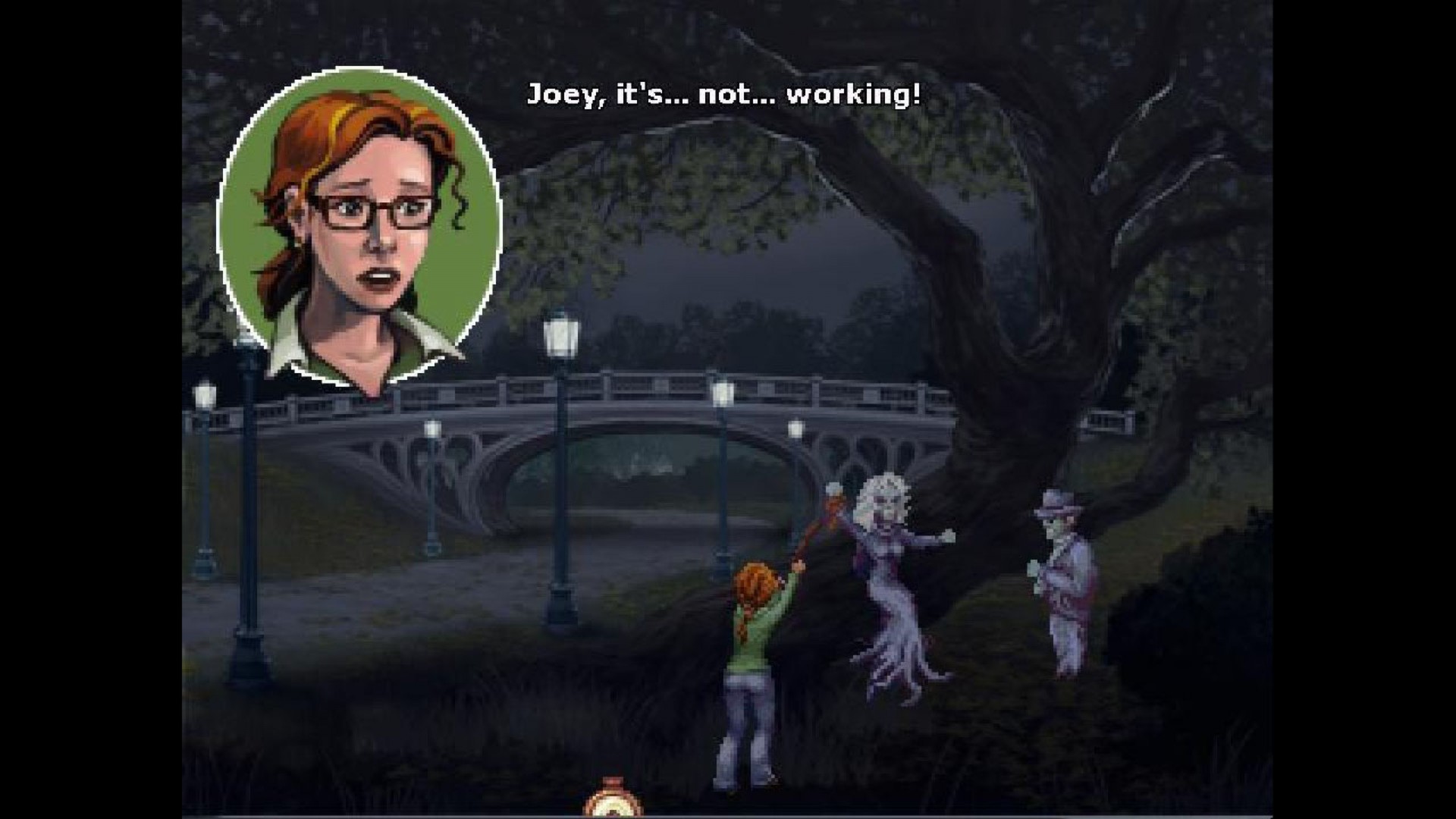
The four-day structure lets separate leads accumulate without reducing the adventure to one long conversation chain. The early ghost cases include Allen Reiken, whose obituary gives Joey a way to discuss a memory, and Frank Lyons, whose connection to CubeStar and the Minetta creates further destinations. A later thread brings in the Park Gallery and an artist whose questions require Rosa to use details learned elsewhere; the investigation also reaches an investment foundation and a technology company through research on the computer. Those names and places appear as the pair follow evidence, not as unrelated side missions. Rosa’s searches, notebook entries, phone calls and conversations form a linked toolkit: research can reveal a location, a spirit can disclose a remembered place, and a person’s account can make an older document relevant. Some dialogue variations depend on what Rosa says, but they do not alter the main outcome. The progression is fixed and authored, with the player focused on finding the evidence sequence that connects the people and unusual events. The Park Gallery thread is particularly tied to conversation: Rosa’s appointment with Nishanthi establishes the gallery, and questions about a ghost story at CubeStar later open the bridge lead. At the Minetta, notebook entries let Rosa ask the bartender about a remembered name and then take that information back to Monique. These dependencies make the player carry context across locations instead of exhausting every dialogue option in one visit.
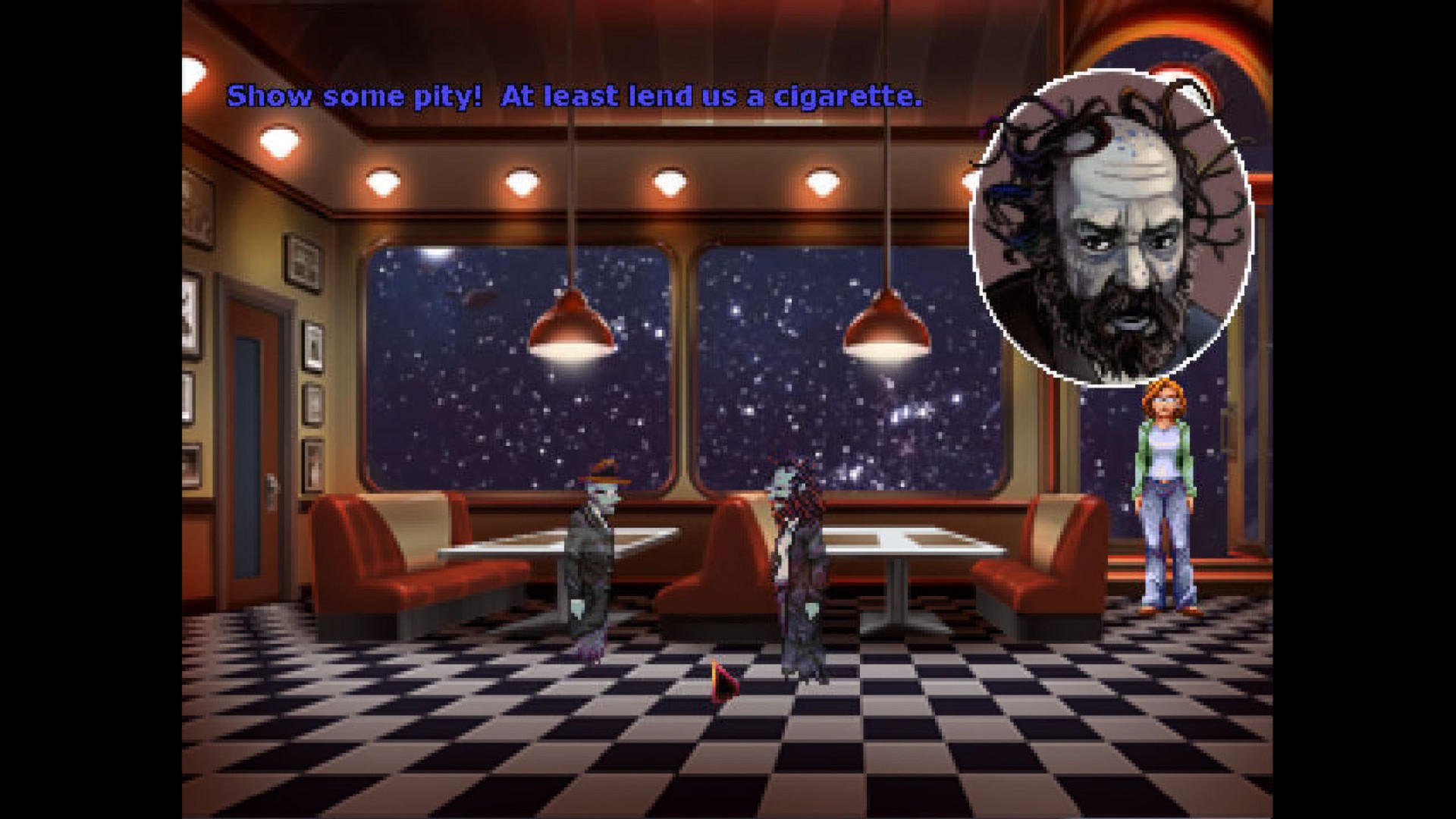
Rosa and Joey approach their work from different positions. Rosa is a living member of the Blackwell family, able to speak with people and use ordinary research tools; Joey is a spirit from an earlier era whose movement lets him reach places that are closed to her. Their partnership was established in The Blackwell Legacy, and Convergence gives them a new case rather than retelling how they first met. They can disagree over how directly to approach someone, and their exchanges carry both the familiarity of a continuing partnership and the practical need to decide who should investigate next. The supporting cast has distinct roles in the evidence chain. Monique works in the film office and can speak about its history; Josie and Claude connect the Park Gallery to another set of memories; people at the Minetta can respond to names in Rosa’s notebook. No single witness provides the full explanation, so the player returns with a new detail and listens for what changes in the next conversation.
The visual world is made from pixel-art rooms and streets that put interactive details within a compact frame. The office window, Rosa’s computer desk, a gallery portrait, the Minetta’s wall decorations and signs on objects have specific roles in what can be learned. These settings are not interchangeable backdrops: the office begins as a vacant workplace, the gallery organizes its story around paintings and artists, and the tavern holds traces of people who have been there before. The game includes fully voiced English dialogue, subtitles and an optional developer-commentary feature. The conversations matter because players follow what a character remembers, compare it with notes and decide which topic to raise. The supernatural events stay close to ordinary city life; a ghost may appear at a window, but the next step can be a search on Rosa’s computer or a conversation in a business. This shift between eerie encounters and practical research gives the investigation its pace.
Dialogue choices give some encounters a local variation without turning the investigation into a branching campaign. At the Park Gallery, for instance, Rosa can choose whether to stay for more conversation after meeting Nishanthi; the subsequent exchange changes, but the main outcome remains the same. That distinction suits the structure of the adventure. The player can approach people with different questions and see how they respond, while the evidence still has to be carried forward through the notebook, research and map. A conversation is therefore both characterization and a practical system: what Rosa learns may open a location, but a small social variation can simply make an encounter feel more personal. The authored route holds together a large cast and several ghost stories without requiring the player to manage relationships or select a long-term ending path. Attention stays on understanding what each person knows and how their account fits the clues already collected.
- Developer
- Wadjet Eye Games
- Genre
- Single-player point-and-click supernatural mystery adventure