

About Black Book
Black Book follows Vasilisa, a young sorceress travelling through the nineteenth-century Perm countryside after her betrothed's death. She seeks a demonic book whose seven seals may grant a wish, while helping villagers confront spirits and curses. Exploration, folklore riddles, a growing spell-card deck and the care of troublesome demons all shape her journey.
Black Book begins with a promise powerful enough to draw Vasilisa back toward a fate she meant to leave behind. She had planned to abandon the path of a witch and marry, but her betrothed dies under mysterious circumstances. The Black Book is said to answer a wish for whoever breaks its seven seals, so she takes it into the rural world of late nineteenth-century Perm in search of a way to restore what she has lost. Each seal anchors a chapter of the larger journey, but the villages, crossroads and people she meets give it more than a single objective. Residents need help with disturbances that ordinary explanations cannot settle. Vasilisa's knowledge of spirits, incantations and local custom makes her useful to them, even as her association with darker powers complicates the role. The book is therefore both the object she pursues and the instrument through which she acts. It connects a personal loss to a landscape where folklore is treated as part of everyday life, not as a separate fantasy realm reached through a portal.
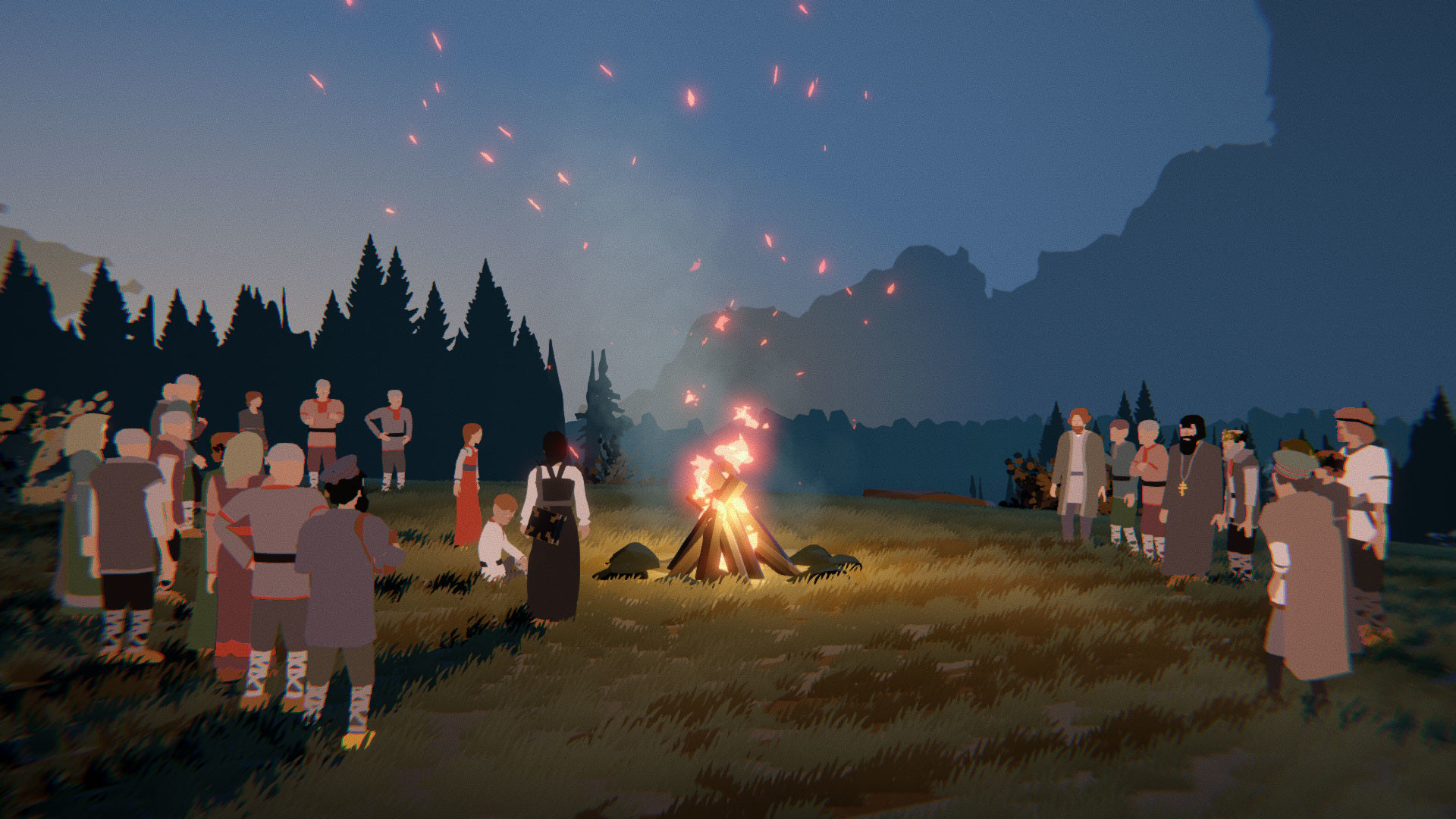
Travelling through Cherdyn and the surrounding countryside involves more than marching between battles. Vasilisa follows cases brought by common people, questions what has happened, solves riddles and decides how to use the knowledge she gathers. The game's seven chapters contain their own main strands and side stories, so a village problem can matter on its own terms while still contributing to the search for another seal. Some situations ask for an exorcism; others turn on what Vasilisa knows about a creature or a local account. An in-game encyclopedia collects information about the myths and customs she encounters, giving the player a way to recognise that a story told by a resident may also contain practical guidance. The historical setting is specific: Morteshka places it north of Cherdyn and drew on nineteenth-century regional maps and surviving buildings when shaping its settlements. That grounding gives the supernatural episodes a human scale. The player moves through households and communities with particular worries, habits and beliefs, meeting spirits within those local stories. The case structure also changes the role of the encyclopedia. It is not simply a gallery of discovered monsters: it gives the player a record of beliefs encountered while listening to people and investigating their troubles. Because the studio built the setting from accounts of supposedly real meetings with spirits, a local tale can function as a clue about how to understand a case. The seven-seal quest supplies the long arc, while those smaller encounters show what it means for the supernatural to be woven into work, family and travel across the district.
When Vasilisa does meet a hostile spirit, her magic becomes a card-based battle system. Cards represent pages and spells added to the Black Book, and the player chooses a deck from the growing collection before using it in turn-based encounters. This makes collecting a new page a strategic change rather than a simple rise in a damage number. One arrangement may suit an immediate attack, another may help withstand an enemy's response, and later skills broaden the available options. The core action remains readable because the book and the card interface describe the same thing: building a sequence of incantations out of pages that Vasilisa can carry into danger. The spell system is also a bridge between the folklore premise and the RPG structure. A witch who learns new words and practices is changing her capabilities, while the player learns to assemble those capabilities into a reliable hand. The fights interrupt exploration without replacing it, and the need to prepare a deck makes the stories found on the road matter to the next confrontation. The book grows in two linked senses. Narratively, Vasilisa is trying to uncover its sealed power; mechanically, the player is collecting spell pages and skills for encounters along the way. The official descriptions do not spell out every card interaction, but they establish why collecting new pages matters: the available choices change as the journey continues. Preparation is therefore part of the character arc rather than a detached minigame pasted onto the folk stories.
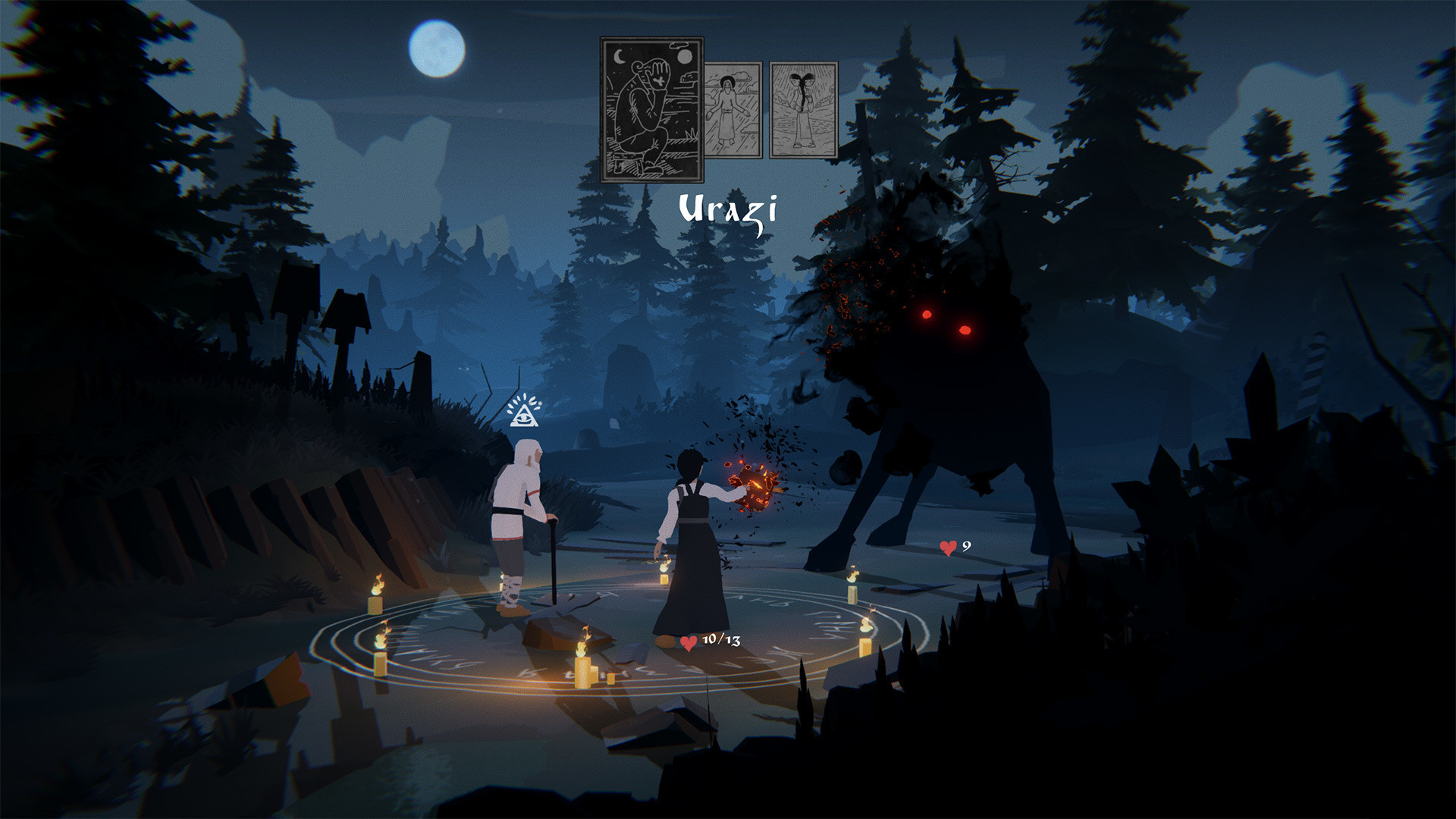
The demons Vasilisa recruits add a second kind of pressure to that journey. They can be sent to work for her, offering another source of power, but an idle demon is not a harmless collectible waiting in a menu. The publisher warns that one left without a task can torment its master. Managing the flock turns a tempting supernatural advantage into an ongoing responsibility, fitting the story's concern with bargains that have consequences. Vasilisa's dealings with demons sit beside her work for ordinary people, rather than being confined to a separate morality screen. A village request, a fight and the demands of her own spirits can all affect how much control she actually has over the dark forces she uses. The contrast also keeps the protagonist from becoming an uncomplicated saviour. She may help someone by confronting a spirit, yet the means of doing so are bound up with the same frightening world that caused the trouble. The player has to consider both the immediate utility and the burden of that power.
Morteshka based the game's narrative on northern Russian folklore and the short accounts of encounters with spirits known as bailichkas. The studio consulted historians and anthropologists, including ethnographer Konstantin Shumov, while building its fictional cases. This does not turn every supernatural event into a history lesson; it supplies the stories with local texture and rules that the player can learn. A companion might be a war-scarred soldier or a talking cat, but both belong to a setting where oral tales, beliefs and daily work coexist. The encyclopedia reinforces that relationship by letting the player revisit creatures and customs rather than treating their names as decorative labels. Visual details do similar work. The game's villages and buildings draw in part on archival maps and regional architectural examples, while its night scenes and ritual spaces give the card battles a different atmosphere from the ordinary settlements. The result is a world whose strangeness comes from the way familiar places are interpreted through inherited beliefs. Morteshka also worked with the Perm Museum of Local Lore and identified historical prototypes for some buildings at the Khokhlovka architectural and ethnographic museum and Solikamsk Museum of Salt History. Those references do not make the fictional plot a factual account of the region; they make the roads and settlements feel more closely tied to a particular landscape. The game draws a useful distinction between recording an inherited belief and confirming that belief as history, while allowing the player to inhabit a story in which the spirits themselves are real.
Black Book was developed by Morteshka and released in 2021 by HypeTrain Digital. Its role-playing journey combines chapter-based stories, optional village cases, riddles, a spell deck and demon management; none of those parts alone defines the whole game. A player drawn by the card combat will spend time listening to people and reading about local myths, while someone drawn by the folk narrative must still prepare for encounters with hostile forces. The seven seals give the journey a clear direction without revealing how Vasilisa's wish will be answered. That unanswered question is important because the book's promised power, her grief and the people she helps all push in different directions. Available on PC and consoles including Xbox One, PlayStation 4 and Nintendo Switch, it presents a single-player story rooted in a very particular place. The countryside is not merely a backdrop for battles: its tales teach Vasilisa what she faces, its residents give her reasons to use her magic, and its dangers test what that magic costs.
- Developer
- Morteshka
- Genre
- Folklore role-playing game with card-based battles