
About BioShock Remastered
After a plane crash leaves him stranded in the Atlantic, Jack finds a way into Rapture, an underwater city built as a refuge for people who wanted freedom from the rules of the surface. Its halls are now contested by mutated Splicers, automated security and the guarded Little Sisters. Survival depends on scavenging, weapons, Plasmids and decisions about ADAM.
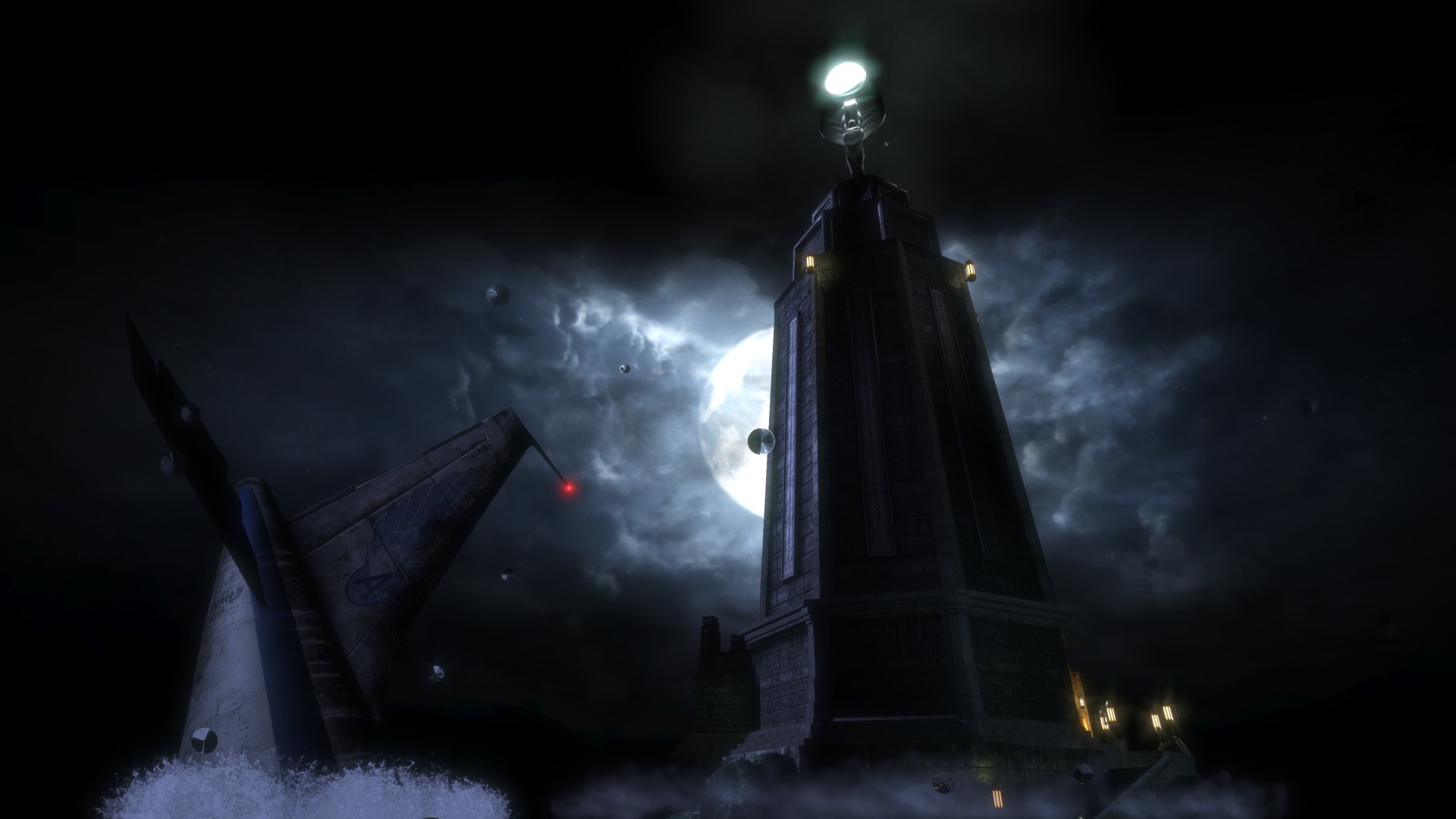
BioShock Remastered follows Jack after an aircraft goes down over the Atlantic. A lighthouse leads him below the waves to Rapture, a city Andrew Ryan built for people he believed should be free to pursue their work without political, religious or social restraint. That ambition left its mark on every district: public spaces, theatres, medical facilities and industrial machinery all speak to a place designed as a functioning society, not a military base. By the time Jack arrives, the city is damaged and its remaining residents, known as Splicers, attack anyone they do not recognise. Radio contact with people still moving through Rapture gives Jack immediate objectives, while rooms, recordings and abandoned equipment gradually show how the city reached this state. The descent also establishes the game's central contrast: a place built around carefully designed public interiors has become a maze of flooded corridors, sealed doors and improvised barricades. The player's route is guided, but the spaces reward looking beyond the direct path.
Movement between Rapture's connected areas is built around following those objectives while searching side rooms and the remains of apartments, shops and work spaces. Containers and bodies can hold money, ammunition, First Aid Kits and EVE Hypos; money buys supplies at vending machines, while food and drink can restore small amounts of health or EVE. Audio diaries preserve messages left by residents and supply context about the collapse, and the status screen keeps current goals and a map together. The player therefore alternates between moving toward the next objective and checking corners for the resources that make the next encounter manageable. Some machines can be bypassed or repurposed, so exploration also reveals tactical options rather than only extra supplies. The districts are linked by transit and access points, and the local map, goal list and radio guidance help keep the next route legible without replacing the need to navigate each space.
Combat combines conventional weapons with Plasmids, genetic abilities that alter enemies or the environment. The pistol, shotgun and other firearms use different ammunition types, each with a specific purpose; the wrench remains a close-range option when ammunition is scarce. Plasmids such as electrical attacks or fire consume EVE, so a player must watch a separate reserve and carry EVE Hypos for moments when powers are needed. Weapons and Plasmids occupy distinct modes and can be switched quickly, allowing a shot to be followed by an ability or the reverse. Gene Tonics add passive effects in physical, engineering and combat categories, from resistance and utility benefits to improved attacks. Gene Banks let the player rearrange collected Tonics and Plasmids, while additional slots and upgrades come through progression. Each weapon can use a standard ammunition type and two specialised types, and Power to the People machines provide permanent, free upgrades one at a time. Because each station closes after one choice, a damage, capacity or utility improvement commits that machine to a single use.
Rapture's security network creates another layer of risk and opportunity. Cameras can identify Jack and trigger an alarm that sends Security Bots after him; turrets and other devices may also attack on sight. Hacking presents a pipe-routing puzzle in which the player redirects fluid to an exit while avoiding hazards that can injure Jack or call security. A successful hack can turn a device to his side, make a vending machine cheaper, or improve access to supplies. An Autohack Tool can finish a hack immediately, and a paid buyout is another option when the puzzle is too risky. These interactions keep the machinery in each room relevant: a camera can be a threat to evade, a warning to disable, or a resource to convert into support. The pipe puzzle unfolds while the player is vulnerable to its hazards, so a nearby fight or alarm can make the reward harder to obtain. Paying to bypass a machine trades money for safety, while engineering Tonics can reduce that cost.
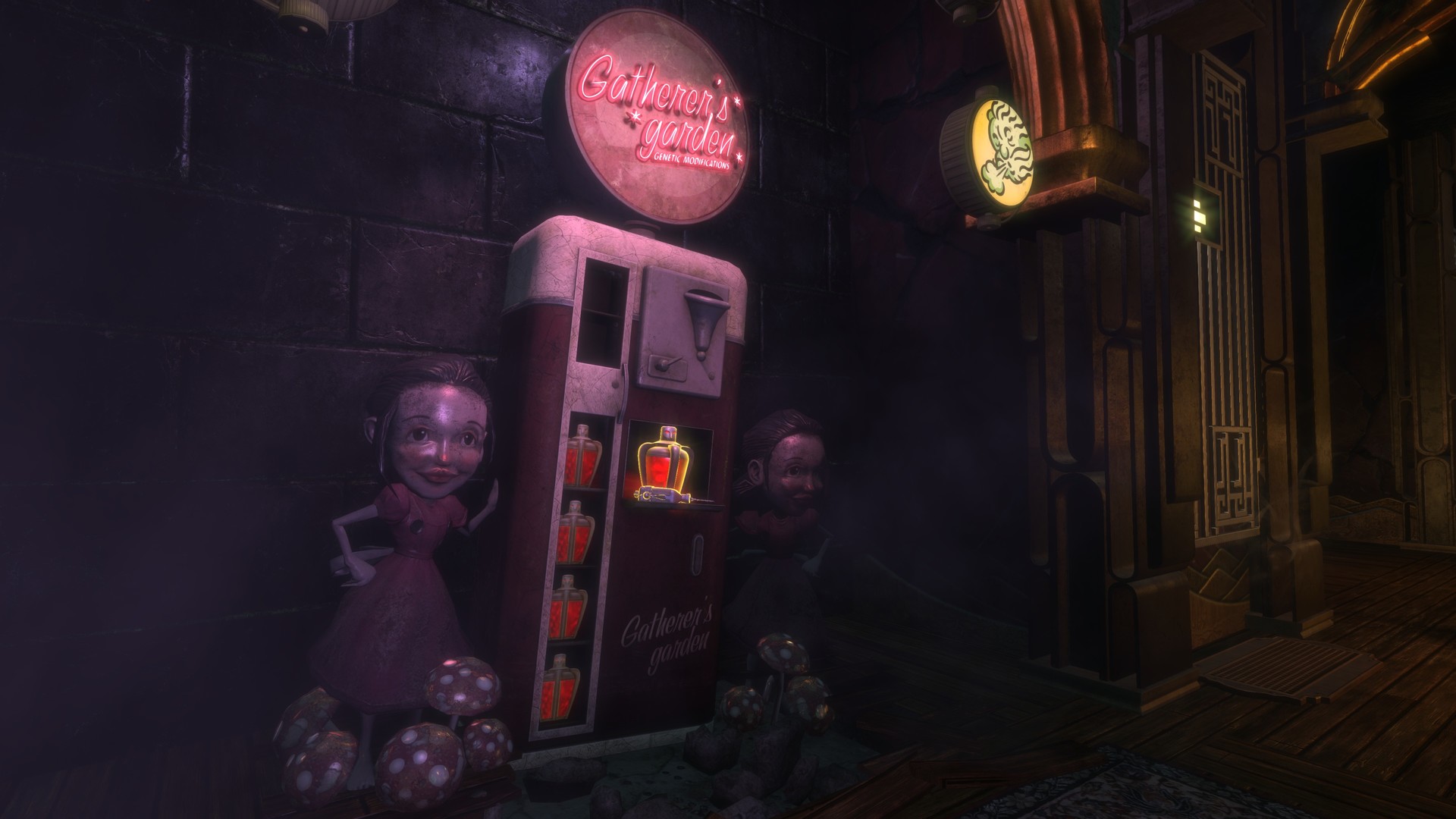
ADAM is the resource used to buy genetic changes, and Little Sisters gather it from corpses while protected by Big Daddies. Reaching a Little Sister requires defeating her guardian; afterward, Jack can rescue her or harvest the ADAM directly. The choice changes how much ADAM is immediately available, and the resource is spent at Gatherer's Garden machines on Plasmids, Gene Tonics, extra slots, or increases to maximum health and EVE. The system ties a combat encounter to long-term character development: the player may want more power now, but each encounter also affects how much flexibility is available later. Little Sisters are therefore part of both Rapture's story and the progression loop, rather than ordinary enemies or interchangeable pickups. The Little Sister’s fate remains part of the campaign’s repeated encounter structure rather than a simple inventory transaction.
Research and crafting provide additional routes to strengthen Jack. A research camera takes photographs of Splicers and security devices; useful shots advance research and can unlock damage bonuses or Gene Tonics against the subject. The camera encourages the player to document threats instead of treating every encounter as identical. Scavenged components can be taken to U-Invent machines and turned into ammunition, hacking tools and other items. Alongside the campaign, the remastered release includes Challenge Rooms, a non-story set of combat and puzzle trials, a virtual museum of discarded or reworked concepts, and unlockable development commentary. The original campaign remains the central experience in this edition; those extras sit alongside it as optional activities and archival material.
- Developer
- 2K Boston and 2K Australia (with Blind Squirrel identified on the Xbox remastered-edition listing)
- Genre
- Single-player shooter