

About BIOMUTANT
BIOMUTANT is a single-player action RPG in a post-apocalyptic world where a plague threatens the Tree of Life. You shape a mutant hero, cross wildlands and old-world bunkers, and decide how to engage with divided Tribes. Melee, firearms, Wung-Fu forms, mutations and modular weapon crafting combine in a mobile combat system.
BIOMUTANT presents its setting as a colorful fable after the old world has fallen. A plague is spreading through the land, and the Tree of Life bleeds from its roots while the Tribes remain divided over what should happen next. The player creates a mutant animal-like hero and is guided through events by a Storyteller whose narration accompanies the journey. Choices affect the direction of the conflict and the fate of the world, but the central activity remains direct: travel through the wildlands, meet the inhabitants, deal with the factions and confront the threats around the Tree. The tone mixes post-apocalyptic remnants with martial-arts fantasy rather than treating the setting as a realistic survival simulation.
Character creation establishes a starting shape, not a permanent class lock. Breed adjusts the initial attributes, while class selection supplies an opening equipment loadout and class-specific perks; as the adventure continues, the hero can develop abilities and gear beyond that first setup. Bio Points and Psi-Points support different kinds of abilities. Bio Points collected through exploration and encounters unlock Biogenetics and improve environmental resistances. Psi-Points earned through activities such as visiting shrines and interacting with captives unlock Psi-Powers; some also require a particular Light or Dark Aura, tying access to choices made along the journey. These systems connect the ruined environment to character growth: exploring a contaminated area can change what the hero can do, while outfit choices help determine which hostile zones are practical to cross.
The map spans a dying wildland, underground tunnels and bunker networks, mountains and an archipelago. The player can travel on foot or use vehicles and mounts such as a mech, jet-ski and air-balloon to reach different terrain. Hazard zones make equipment part of navigation: a gas mask and oxygen tank help with Dead Zones, thermal clothing is suited to cryonic areas, and protective gear helps in bio-contaminated regions. Old bunkers and ruins provide discoveries as well as combat; their relics, supplies and enemies give exploration a purpose beyond moving toward the next story marker. Some routes call for a specific way to travel or survive, so the broader loop alternates between preparing, crossing terrain and investigating what is there.
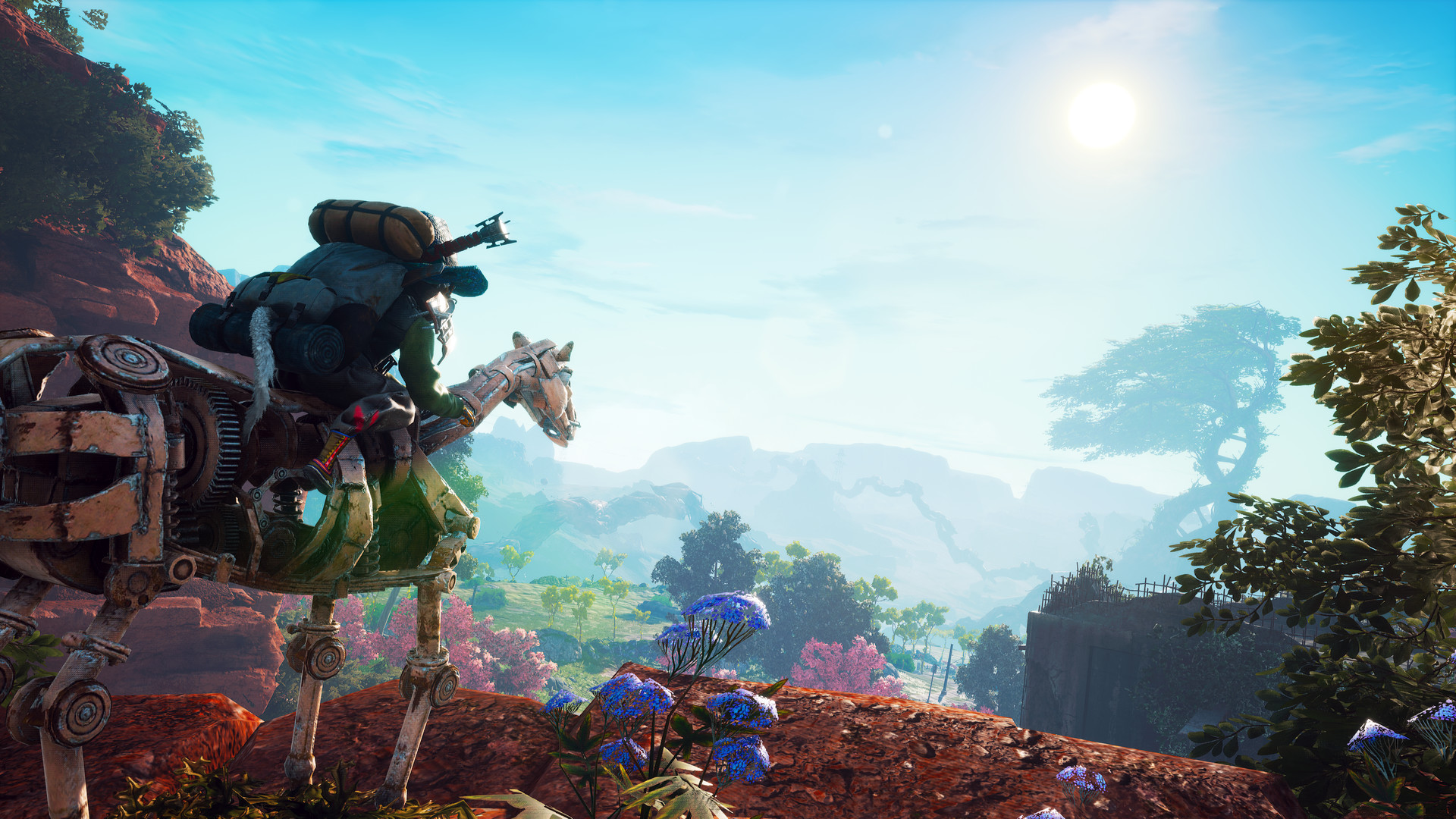
Weapon crafting lets the player assemble melee and ranged tools from parts instead of relying only on fixed drops. A melee build can combine components into one- or two-handed weapons with slash, crush or pierce damage; firearms include revolvers, rifles and shotguns, and modifications range from mechanical additions to bio-contaminated effects. Crafted weapons can then be paired with armor and other gear to support a chosen approach. This creates a material-based progression loop: search containers, complete quests and defeat enemies for parts or equipment, then adjust a weapon to fit the attacks and movement the player prefers. Specialist characters encountered in the world can also craft equipment such as bionic wings or a jump-pack and modify the Automaton sidekick.
Combat combines shooting, melee and mutation powers in a mobile third-person system. Wung-Fu names the game’s physical combat arts, covering both close and ranged attacks. Melee and ranged weapons have their own moves, and performing different special finishers fills the meter for a Super Wung-Fu technique. Dodging avoids attacks and creates an opening for a counter; a well-timed parry can briefly stun an enemy. Weapon choice affects which Wung-Fu moves are available, while mutations add further powers and resistances. The player can switch between a firearm, a close-range weapon and abilities rather than committing to a single action type. Master trainers met during the journey provide additional forms, expanding the moves available as the character progresses.
The divided Tribes add a political thread to the open-world journey. The player can choose an allegiance and influence whether the factions are brought together or overcome, while the story’s light-and-dark framing reflects those decisions. The world map and changing relationships give exploration an outward objective alongside the Tree of Life and the plague: meeting characters, entering new regions and engaging with the conflicts can shift which activities or responses are available. This sits alongside a large pool of regional quests and events that can appear as the hero enters an area. The result is a campaign that mixes personal equipment growth with decisions about how the surrounding communities should respond to a collapsing world.
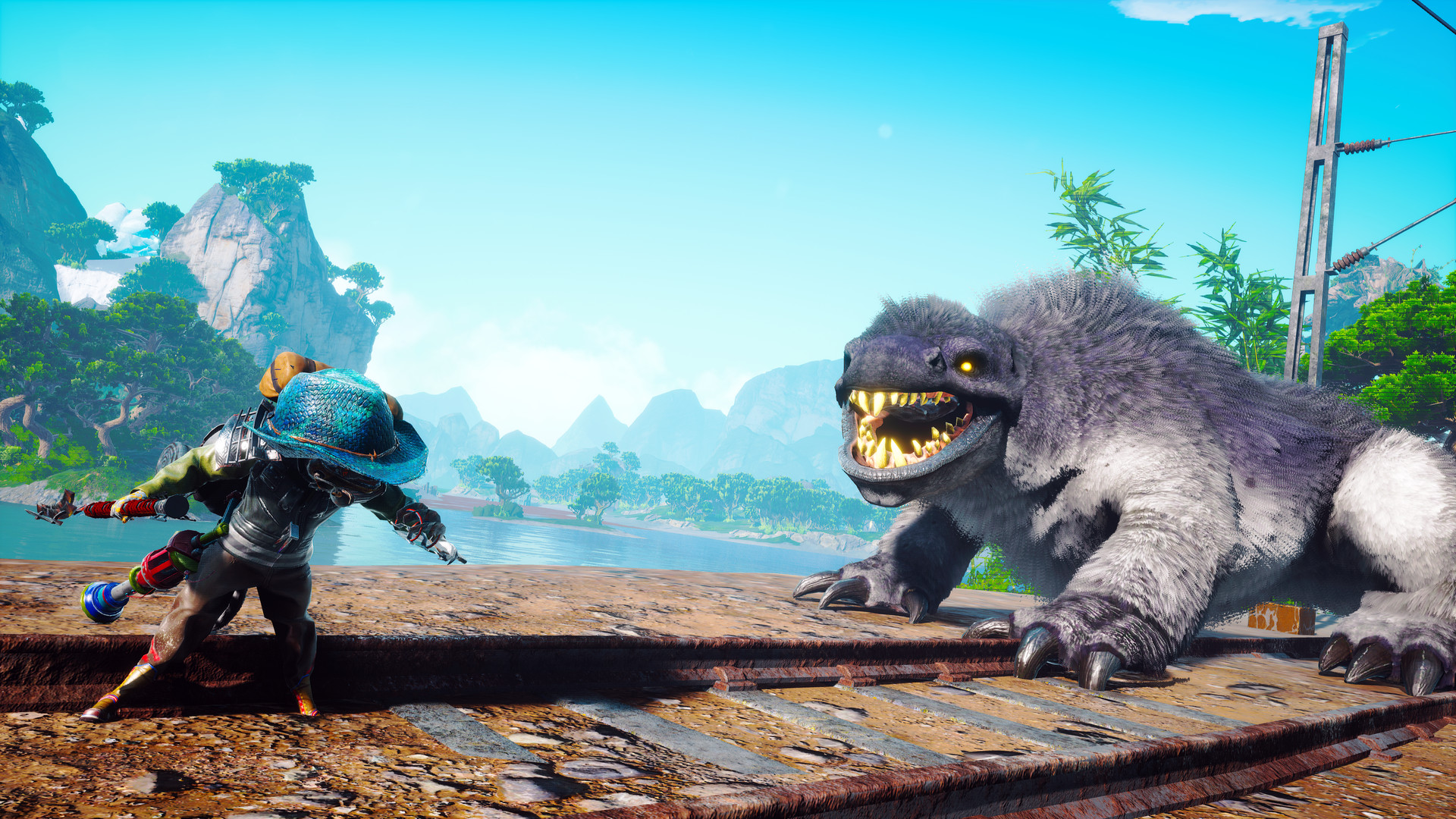
The Automaton acts as a recurring companion in exploration, and it can be modified as the adventure develops. Other characters can provide traversal equipment, while vehicles open access to regions that are awkward to reach on foot. Side activities, strange inhabitants and old-world locations fill the space between major encounters, and the game supports returning to those places with improved gear or new movement options. Its progression is therefore spread across several concrete forms of discovery: gain levels and abilities, find parts for crafted weapons, unlock mutations, learn Wung-Fu from masters, and obtain equipment for environmental hazards. Each branch feeds back into the same broad journey across the New World, where combat style and faction choices both affect the route forward.
The world is dying from a plague, the Tree-of-Life is bleeding from its roots and the Tribes are split. Your job is to decide whether that ends with a unifier or an executioner, and the mutation system is how you get there.
Different points unlock different abilities
Bio Points unlock Biogenetics abilities and can improve resistances, while Psi Points unlock Psi-Powers. Some Psi-Powers also require a particular Aura alignment. These are upgrade choices, not powers granted automatically by walking through a contaminated area.
Check the cost and requirements of an ability before spending its points. Your starting class supplies an initial selection of perks and equipment, while later upgrades and crafted gear develop the build further.
Combat is movement first
The fight system is built around maximum freedom of movement and agility while mixing three damage sources: melee, shooting and mutated powers. That ordering matters. Positioning is not separate from combat here, it is what makes the mix work, and a build that leans on psi-powers still has to stay mobile to use them.
Upgrade Points earned through levelling can unlock Wung-Fu techniques and perks. Read which weapon type a technique uses before buying it so that the move fits your equipment.
Weapons are assembled, and gear is survival equipment
Crafting is unusually loose. You mix and match parts to build your own one- or two-handed weapons in the slash, crush and pierce families, and you do the same for revolvers, rifles and shotguns. Then you add modules, and the examples are not subtle: cork-screws, battery-powered chainsaw modules and vials of bio-contaminated sludge. Characters you meet will also build things for you, including bionic wings, a jump-pack, and modifications for your Automaton, the scrap-toy that follows you around.
Armour does double duty. Gear is the environmental preparation the store describes, a gas-mask and oxygen tank for the Dead Zones, thermos-resistant clothing for the cryonic areas and protective gear for bio-contaminated creatures, and it is also where your defensive numbers live. So a piece that answers a zone hazard is still a piece with stats on it, and your loadout is a packing list and an optimisation problem at the same time.
The world is traversed, not crossed
The open world is described as a dying wildland with tunnels and bunker networks beneath it, mountains above and an archipelago offshore, and you move through it by foot, mech, jet-ski, air-balloon and region-specific mounts. Different terrain calls for different travel tools, so consider the route as well as the destination.
Narratively, you are guided by a Storyteller who narrates the journey, and your actions decide how the story of survival ends. Post-launch patches added a Narrator setting under the dialogue options and changed how often some of the narration plays, so if the voice grates there is a control for it, alongside a patch that doubled the level cap and a long run of fixes.
Should you play it
Yes, with a clear expectation of what you are buying. This is a 2021 open-world action role-playing game with a very large map and a lot of systems stacked on top of each other, and the mutation and crafting layers are what give it its own shape. Consider it if you enjoy combining weapon crafting with a selection of combat abilities.
Two things to check before you start. The add-on worth knowing about is the Mercenary class, which the publisher first gave away with digital preorders and later put on sale for everyone else, so if you want that class, decide before you pick a character rather than after. And the PC listing still asks for an internet connection and a Direct3D 11 capable card alongside its memory and graphics lines, so read the whole requirements block rather than only the storage figure.
Go deeper with V4mp
- Developer
- Experiment 101
- Genre
- Open-world action RPG
Explore BIOMUTANT further
Explore the wiki for detailed reference pages on the game's world, systems, items and locations.