
About The Binding of Isaac: Rebirth
The Binding of Isaac: Rebirth is a randomly generated action shooter about a child escaping through a monster-filled basement. Each run combines room-by-room combat, exploration and resource decisions with items that alter Isaac’s abilities. Defeating bosses opens deeper stages, while deaths reset a run and unlocks add future possibilities.
The story begins when Isaac’s mother hears what she believes is a divine command to sacrifice her son. Isaac flees into the basement, where the rooms turn the home into a shifting dungeon of monsters, hazards and unsettling images. The player guides Isaac through this descent and eventually confronts his mother. Short animated scenes between stages add fragments of his family life, while later endings extend the game’s strange, often ambiguous picture of what is happening. The premise is presented through a darkly comic horror style, with religious imagery, childhood fears and bodily transformations appearing throughout the world. Isaac is the starting character, and further characters become available through play; their different starting traits change how a run begins. The basement also has rooms filled with obstacles such as rocks and fires, which affect movement and can be interacted with using bombs. These environmental details make each room more than an arena, because its layout can shelter enemies, block a path or hide a resource.
A run starts in a procedurally arranged floor made of connected rooms. The map reveals as Isaac enters each room, and most ordinary rooms lock their doors until their enemies are defeated. Combat is continuous and real time: Isaac moves in four directions and fires tears, so survival depends on aiming while dodging projectiles, contact attacks and environmental hazards. Clearing rooms can produce small rewards such as coins, hearts, keys or bombs. The player chooses how much of a floor to explore before entering its marked boss room; defeating that boss provides a reward and opens a trapdoor to the next stage.
Each floor combines common combat spaces with special rooms that shape the route. Treasure Rooms hold a collectible item and usually require a key after the opening floor; shops also use keys for entry and let Isaac spend coins on displayed supplies. Boss Rooms provide the required fight to descend. Secret Rooms are hidden behind walls and can often be exposed by placing a bomb where a doorway might be, making map layout and bomb supply part of the search. Challenge Rooms add waves of enemies around a chest or reward, while mini-boss encounters can block progress until the tougher foe is defeated. Their locations and contents vary between runs.
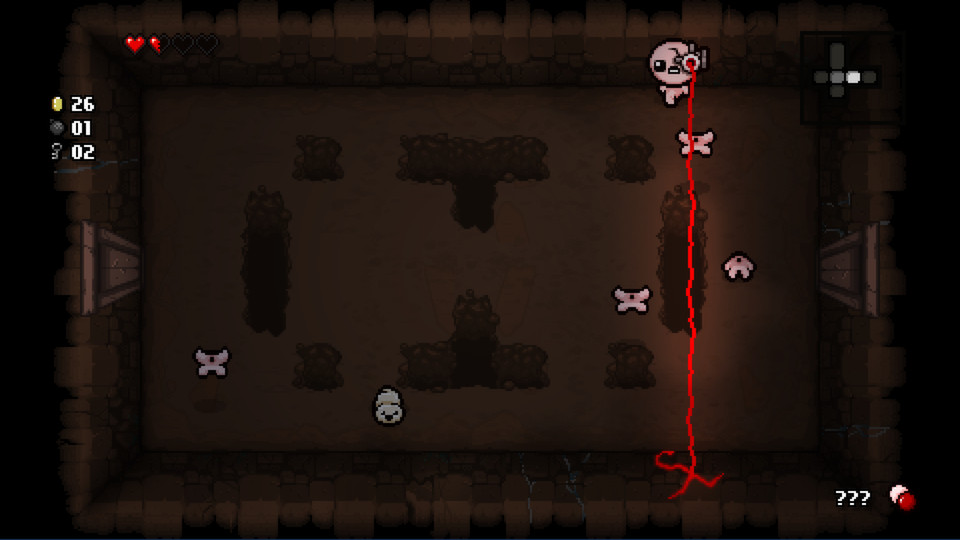
Keys, bombs, coins and health each solve different problems. A key can open a treasure room, a shop, a chest or another locked door, so spending one now may mean giving up a later option. Bombs damage enemies and can clear obstacles, expose secret entrances or reveal rewards hidden in special rocks. Coins become useful in shops, where their value depends on what Isaac can afford and how many keys remain. Hearts restore or protect health, and different heart types interact with Isaac’s health containers in different ways. This makes a seemingly small pickup an important choice when the next room or boss could end a run.
Collectible items are the main source of run-to-run character growth. Some change attributes such as damage, movement speed, range or health; others alter how Isaac attacks or add a special effect. Active items are triggered by the player and generally recharge through room clears, while passive items remain in effect after being collected. Because their effects accumulate, a modest change can combine with a later pickup to produce a very different attack pattern or defensive setup. Item pedestals and rewards are randomized, so the player has to judge a new build from the effects available rather than follow a fixed upgrade path.
The floor sequence gradually raises the stakes. Early stages provide more space to collect resources and find items, while later areas bring stronger enemies and more punishing damage. Boss encounters act as gates between floors and test the player’s ability to keep moving, recognize attack patterns and use Isaac's collected abilities. The first major destination is the fight with Mom, but defeating her is only an early milestone in Rebirth’s wider structure: successful runs and specific achievements can add new items, characters, challenges and routes to later attempts. The unlock system changes what can appear in future runs without carrying Isaac’s current inventory forward after death.
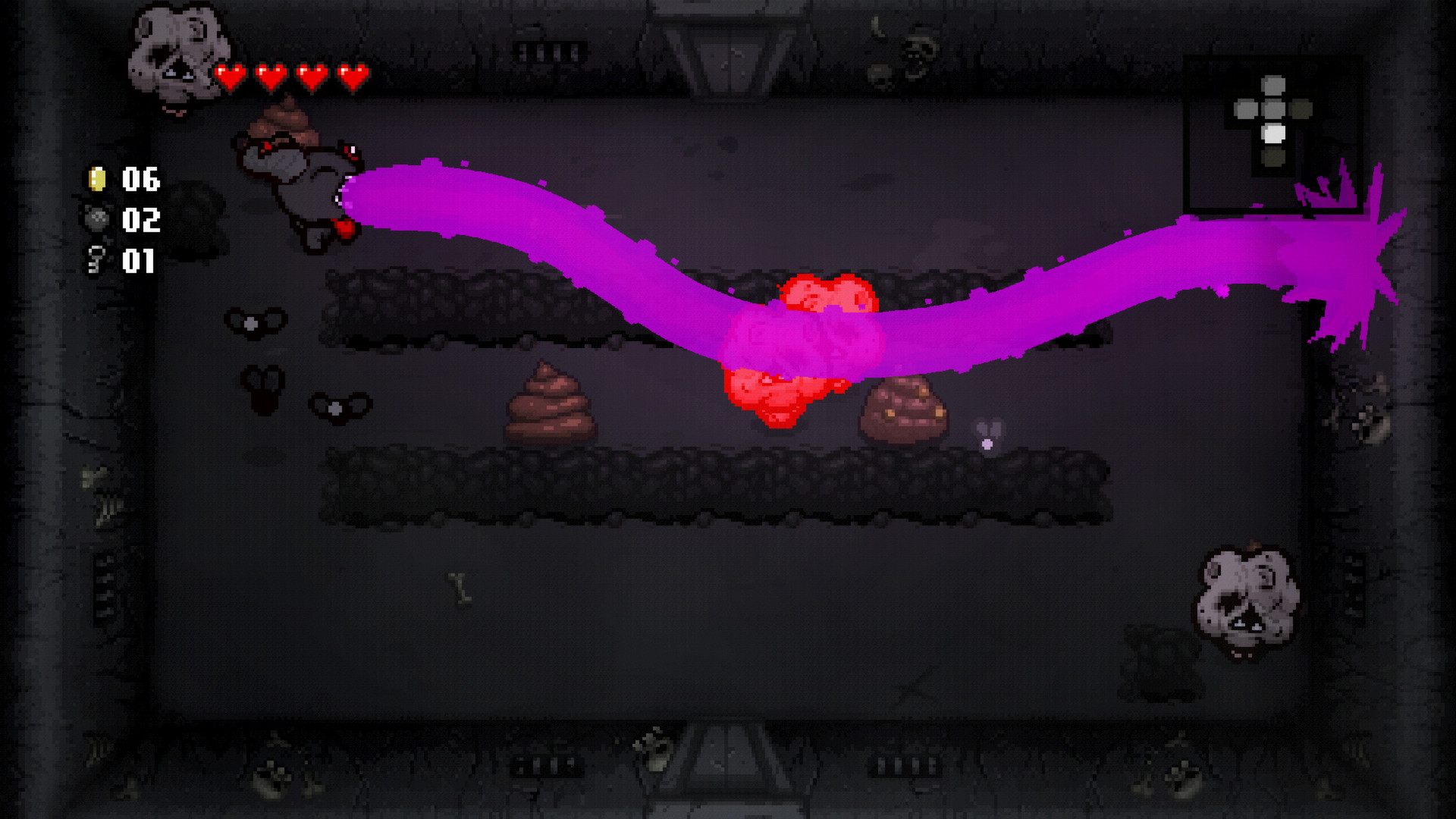
Rebirth is designed around repeated attempts rather than a single permanent character journey. When Isaac loses all health, that run ends and its collected items disappear; the next attempt begins with a fresh arrangement of rooms and rewards. The growing pool of unlocked content gives repeated playthroughs additional possibilities, and the game includes challenge runs with special starting conditions as well as local cooperative play. Its replay structure comes from combining familiar controls and floor goals with changing room layouts, enemies and item interactions. The game’s own ending scenes reveal more over time, so the basic escape premise remains simple while the larger story is pieced together across many runs. Challenges begin with prescribed conditions and ask the player to handle an unusual ruleset or objective. Unlocks add future possibilities to the game without preserving a failed run's equipment.
- Developer
- Nicalis, Inc.; Edmund McMillen
- Genre
- Randomly generated action RPG shooter with roguelike elements