
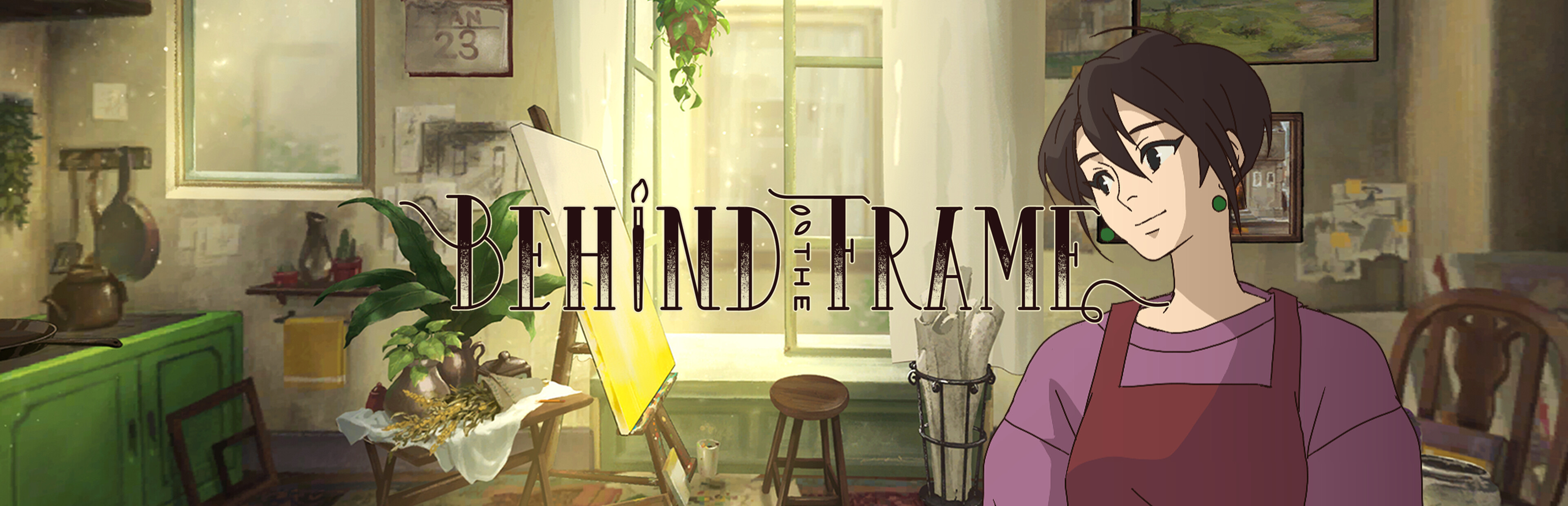
About Behind the Frame: The Finest Scenery
An aspiring painter works toward a gallery submission while studio routines are interrupted by a lost cat, an older neighbour and traces of shared history. The player explores hand-painted rooms, gathers colours, completes sketches and solves compact puzzles. These actions connect apparently separate moments, while another painters story follows completion of the main narrative.
Behind the Frame follows a young artist nearing completion of the final painting for a gallery submission. Her work unfolds inside a modest apartment that functions as both home and studio: an easel, canvases, kitchen objects, windows and the view onto the next building form the familiar details of her day. The calm routine is disrupted by a cat that appears to be lost, a brusque older neighbour who is also an artist, handwritten notes and glimpses that feel oddly familiar. At first these encounters seem like the small interruptions of an ordinary working day. The mystery is not framed as a detective case with a culprit to expose; the question is how these people and moments relate to the painting and to the artist’s memories. The game presents its narrative through what the player sees and does, allowing the meaning of a neighbour’s gesture or an object left behind to accumulate over time. Its title points toward this relationship between an image and the lives just outside its visible borders: the painting is a goal, but also a way into the surrounding story.
Most of the early play takes place in the apartment and nearby views, where exploration means looking carefully and interacting with objects that belong to everyday routines. A kitchen counter, a breakfast task, a coffee break, the artist’s easel and a window onto the neighbour’s rooms can all become small playable scenes. The player clicks or taps objects, examines spaces and works out which action makes sense in context. This is a contained form of exploration rather than a large navigable map: the environments are composed as rooms and carefully framed panoramas, and attention moves among objects, paintings and people within them. The neighbour and his cat give the artist’s studio a social edge, while repeated glimpses through the window make the space outside feel connected to her own. The cat is not merely a decorative companion; its movements and interruptions become part of the interaction and of the story’s pattern of recurring details. Ordinary actions such as preparing food or attending to a pet provide gentle puzzle prompts, making the daily setting function as both a place to inhabit and a sequence of tactile tasks.
Painting is the central hands-on system. The player guides brush strokes, sketches subjects and retouches images, including the unfinished work that motivates the artist’s day. Missing colours are collected and used to bring paintings to life, so the act of applying pigment is connected to progression rather than serving only as a free-form art tool. The game describes the artist as seeking colours and completing her masterpiece and memories; the publisher also calls out painting, sketching and retouching as distinct actions. These gestures appear alongside more ordinary interactions, such as tapping buttons on a cassette player or moving an egg from a pan to a plate. Their scale is deliberately modest: each interaction asks for attention to the image in front of the player, not mastery of a complex control scheme. The result is an adventure whose main verb changes with the scene. Sometimes the player is finding an object, sometimes tracing a stroke, and sometimes deciding how an image should be completed. Across these variations, colour serves as both material and clue, tying the visible act of painting to the larger process of recovering memories.
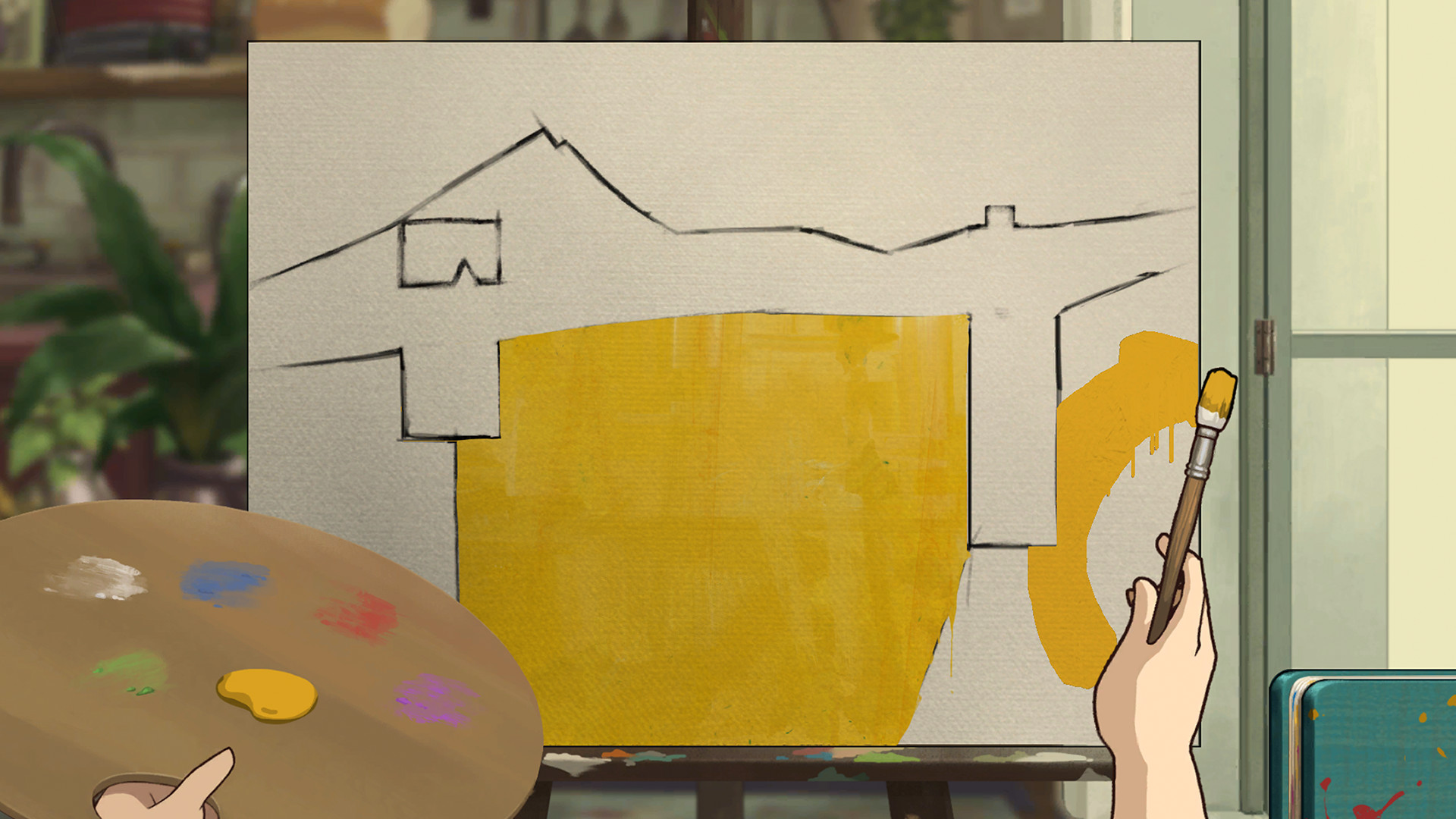
Puzzles borrow from point-and-click adventures and escape-room design, but are kept close to their environments. The player searches a room for a relevant object, recognizes a visual cue, then performs a simple sequence to continue. Some tasks concern studio life, while others ask the player to interact with a painting or a device. The old man’s presence and the cat’s pawprints can turn a familiar scene into a small problem to solve; the key is to notice what changed and what the scene invites the player to do. The puzzles are not built around a separate inventory economy, combat, or a broad set of character abilities. Instead, their solutions make the player look more closely at the spaces and paintings already in view. This keeps the activity legible as the story moves between animated passages, interactive rooms and wider panoramic scenes. A gamepad and touchscreen provide different ways of handling these interactions: the design was originally suited to touch, where drawing and tapping are direct, while rotating a 360-degree view can feel more natural with a thumbstick. The interaction remains simple, but the choice of platform can change how immediate that simplicity feels.
The game’s structure develops through six chapters in its original mobile release, according to a contemporary account; later console editions add an epilogue that gives the story another perspective. The main sequence follows the artist’s attempt to finish her submission, with each room and puzzle introducing another detail about the people appearing in her surroundings. Progress comes from completing scene-specific tasks and paintings rather than collecting experience points or upgrading attributes. The paintings themselves operate as thresholds: adding colours and finishing strokes reveals more of their content and lets the player interpret the memories taking shape behind them. Once the main story is complete, the publisher describes an additional painter’s artistic adventure as available. This extra chapter is an appended perspective, not a separate combat mode or a general free-roaming sandbox. Edition matters here: the Steam listing presents the 2021 game and its related soundtrack and art books, while the Nintendo Switch release in 2022 is reported to include an epilogue. The separate VR edition is also a distinct adaptation and is outside this profile. These boundaries explain why descriptions of the story’s length and final chapter can differ between versions without necessarily referring to contradictory accounts of the same release.
The presentation combines hand-painted 2D art with animated scenes and 360-degree views of 3D spaces. Rotating a panorama lets the player inspect a room or street from different angles, while flatter interactive scenes focus attention on individual props and actions. The apartment’s windows, paintings, kitchen and neighbouring building repeatedly place people within a composed visual frame. The broader town is shown through scenic spaces that can be turned and examined, and the paintings themselves become images within images. This gives the game a visual grammar for moving between present observation and recollection without needing lengthy explanatory dialogue. The studio describes the art as hand-painted and the narrative as interactive storytelling about character emotion and plot; the publisher characterizes the worlds as panoramic and hand-animated. Those descriptions match the shift between static compositions, small character movements and broader views. Music adds another layer to the routine: a cassette player lets the artist select or start music within the room, while an original score and songs provide continuity through the chapters. The audio is part of the setting and scene transitions, not a rhythm challenge or a player-managed soundtrack system.
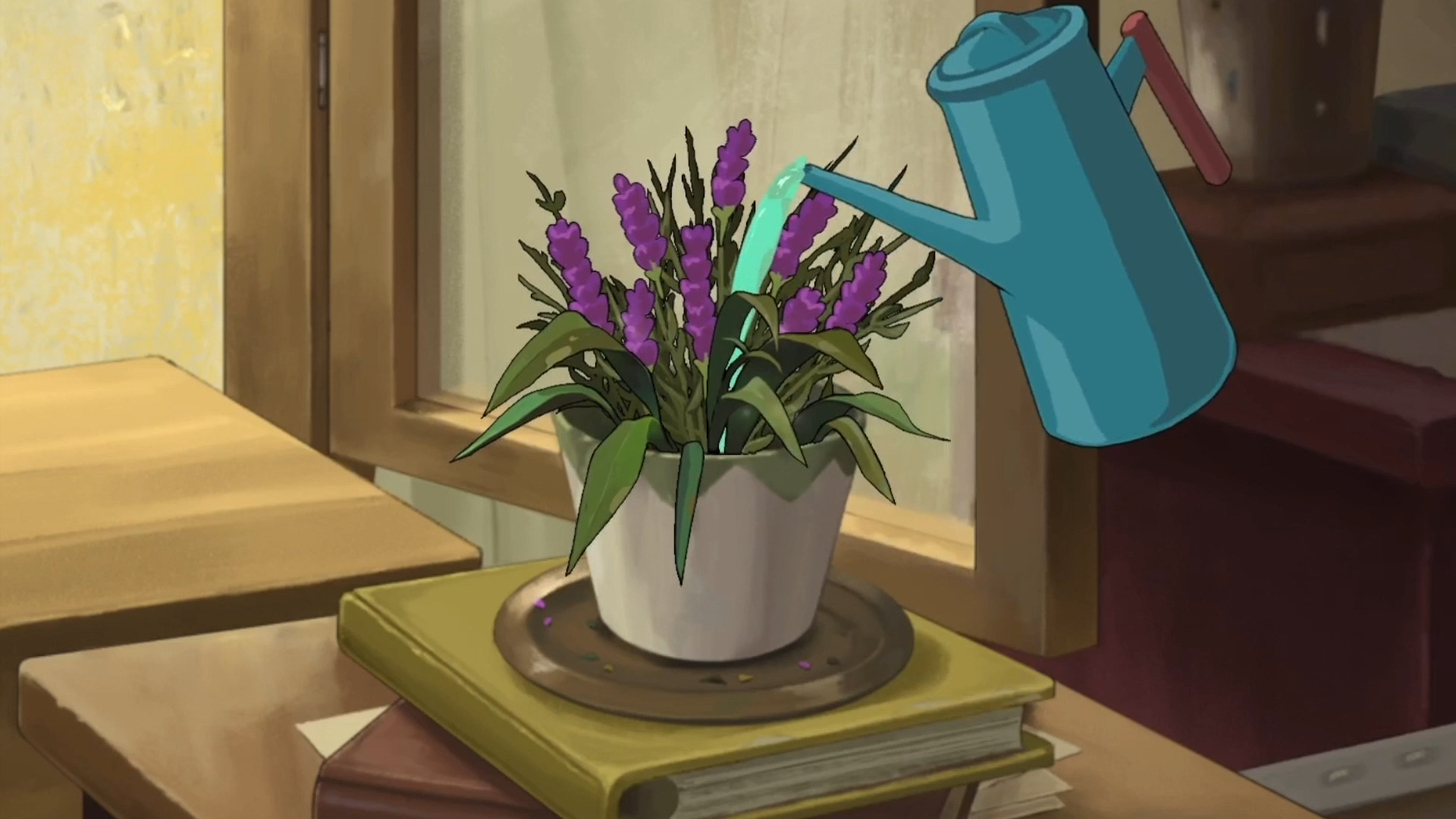
The story’s emotional links emerge through repetition and contrast. A neighbour glimpsed across a window can seem detached from the painter’s own work until later scenes make the relationship between their activities more legible. The cat’s visits, notes and small changes in rooms similarly turn mundane observations into signals that the apparent separateness of the characters may be misleading. The narrative moves between what the artist is doing now and the story her paintings disclose, using the act of creation as a way to arrange memory. Its hand-drawn and three-dimensional styles help mark those layers: a painted recollection and a present-day room can share colours and shapes while remaining visually distinct. The writing relies on visual performance, objects and musical cues, leaving much of the interpretation to the player’s attention. The central progression is therefore not a series of high-stakes choices but an expanding understanding of how the people, images and everyday interruptions fit together. The console release adds an epilogue, while Behind the Frame VR is a separate adaptation. The connection between the characters remains for the story to reveal.
- Developer
- Silver Lining Studio
- Genre
- Interactive fiction / puzzle adventure