
About Before Your Eyes
After death, Benny meets a Ferryman who guides souls toward the afterlife and asks to see the story of his life. In this first-person narrative adventure, real blinks move between memories of family, music and art, making the passage of time part of how the story is played.
Before Your Eyes is a first-person narrative adventure about Benny’s life as it is revisited after his death. The story begins aboard the vessel of a mythical Ferryman, a guide whose task is to shepherd souls toward the afterlife. To help Benny pass on, the Ferryman must first hear and see the memories that make up his life, so he sends Benny back through them. The frame story remains present as the memories unfold: Benny is not simply moving through a chronological set of scenes, because the Ferryman is deciding what those recollections reveal. The game builds its progression around this return to the past rather than combat, equipment or a conventional level-up system.
The defining interaction uses a webcam to detect the player’s real blinks. Before the story begins, a calibration sequence asks the player to face the camera and blink so the game can tune how it recognises them; sensitivity can be adjusted if the camera misses blinks or mistakes open eyes for them. Steam recommends a webcam for the full blink interaction, while the game also allows mouse input as an alternative. The mouse provides a way to perform the same forward action without eye tracking. These controls make the player’s physical response part of the interface, while keeping a conventional input option available for people who cannot or do not want to use a webcam.
A memory begins with a short opportunity to look around and take in the scene. When a metronome appears, blinking advances time, sometimes moving the story to another moment before every line of dialogue has been heard. The pause before that cue gives each scene a small period of observation; after it appears, the player can try to remain in the memory or allow the next transition to happen. The amount of time that passes between memories can vary, so one blink may carry the narrative forward by a brief interval or across a much longer stretch. The mechanic makes the sequence of scenes feel like recollection: moments arrive, linger for a while and eventually give way to others.
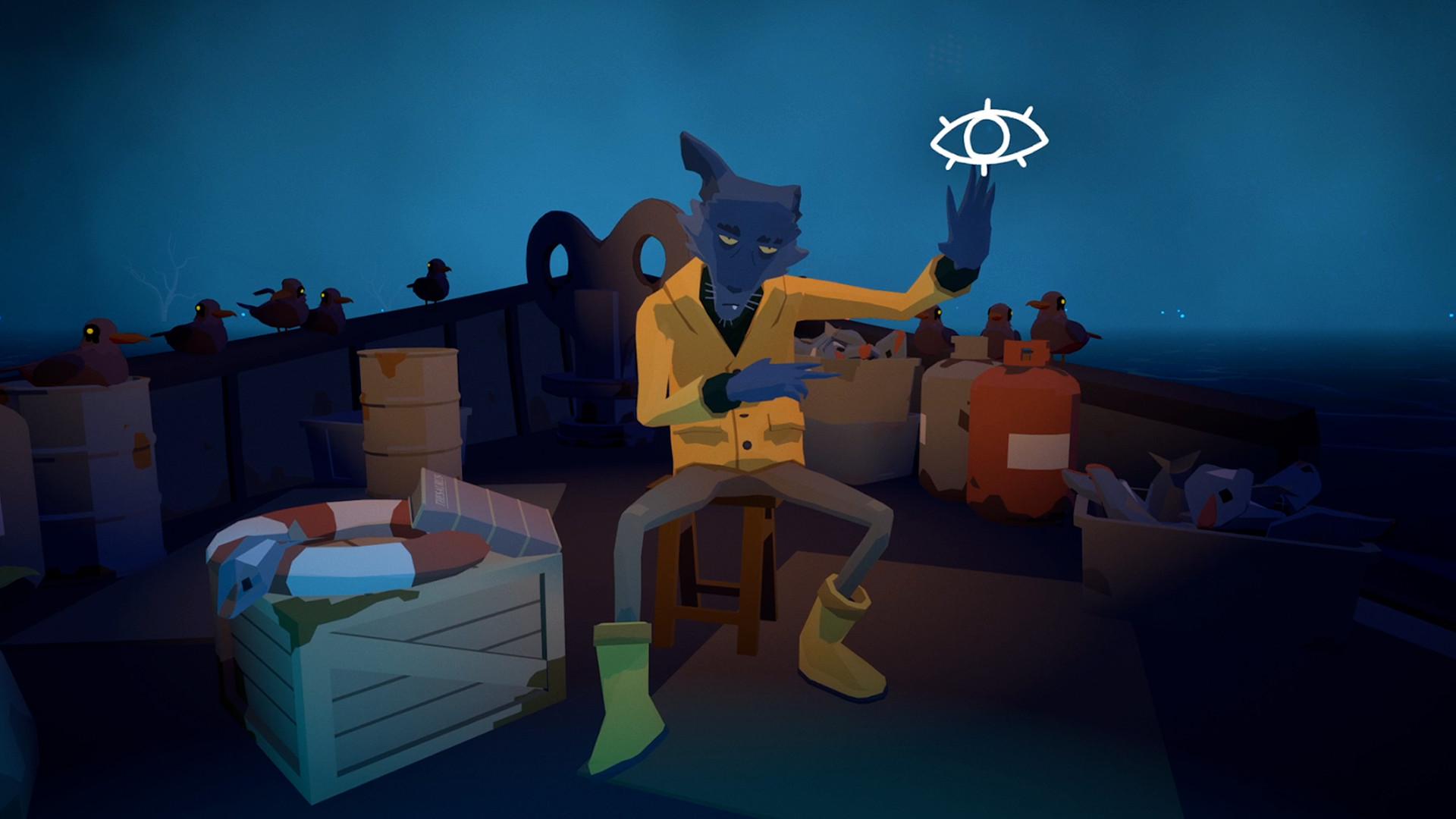
Benny’s memories follow him from childhood through relationships and developing interests. The family at their centre includes his mother, Elle, and his father, Richard. Elle once hoped to become a composer, and her ambitions shape some of the expectations placed on Benny as he grows up. Richard’s role in the family provides a different presence around Benny’s daily life. Rather than presenting this background in a long explanation at the start, the game lets the player encounter it through separate remembered scenes, conversations and activities. The Ferryman’s request to see Benny’s life gives those ordinary details a narrative purpose while leaving the larger story’s discoveries to unfold in sequence.
Music and visual art become hands-on parts of several memories. Piano scenes ask the player to follow highlighted keys with the mouse, connecting the action to Benny’s lessons and performances. Other moments involve choosing or shaping elements of a painting through blinking at selected prompts. These actions are brief, but they change the role of the player from observer to participant: the same blink that advances a scene can also answer an interaction prompt. The activities tie the controls to Benny’s interests and to the expectations around his future, while keeping the story moving through lived moments rather than turning those interests into separate skill trees or long challenge modes.
Blinking also serves as a general interaction for objects and details within a memory. An eye marker can identify something that can be selected, and some scenes use the action to clear a dark haze at the edge of the view or to add a note to Benny’s journal. Because the webcam reads the player rather than a button press, a natural blink can sometimes move the timeline when the player would rather stay. That possibility is central to the play rhythm: attention is split between watching the scene, listening to dialogue and deciding when to continue. Mouse control changes that timing by making advancement deliberate, but the sequence of memories and their interactive moments remains the same.
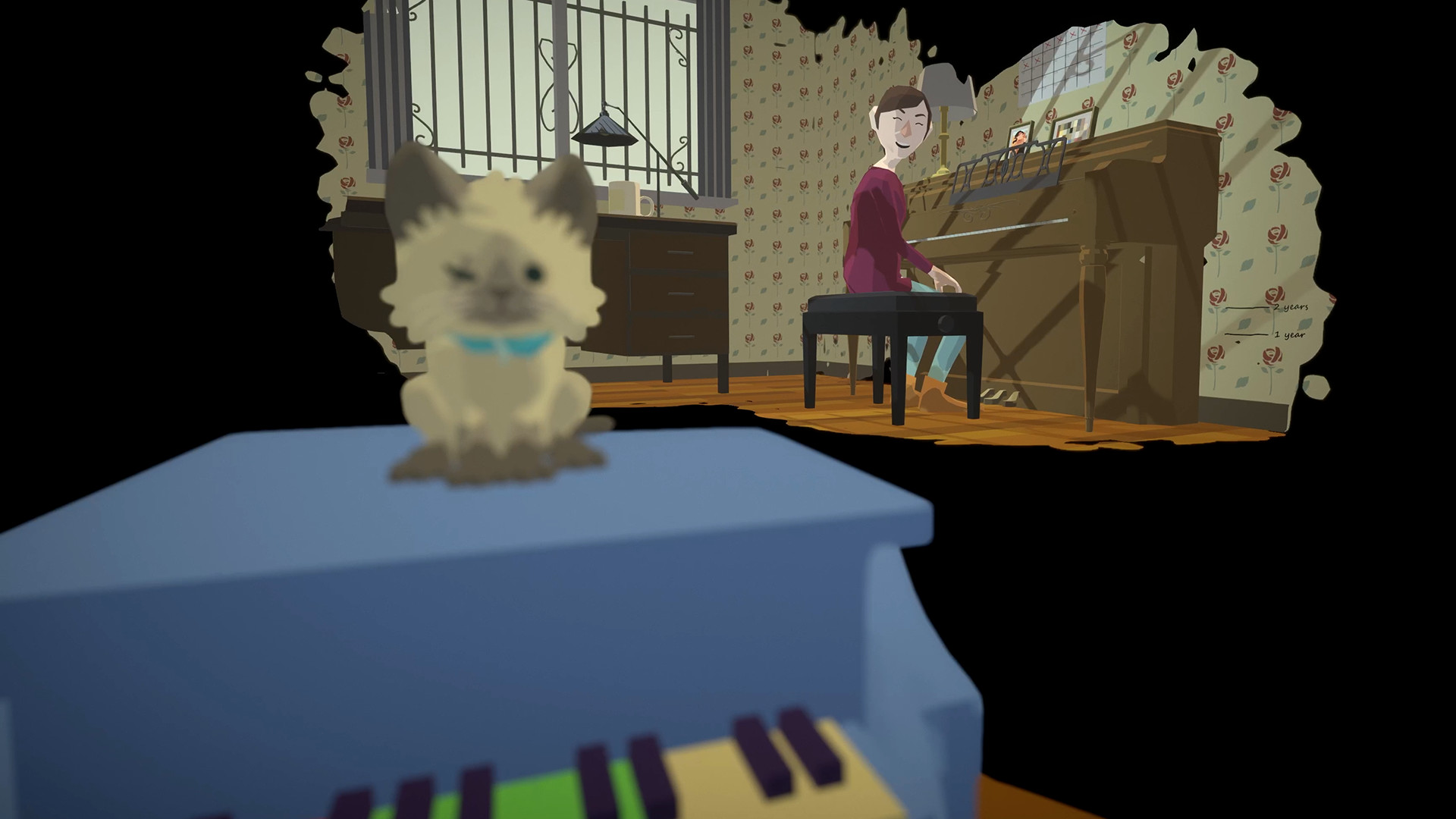
Later scenes vary how the eyes are used, including moments that ask the player to keep them open and focus on a detail, as well as moments where closing them helps with listening. These shifts grow from the same camera-based interaction rather than adding a separate combat system. The game is fully voice acted, and its scenes are carried by conversations, sounds and changes in the images around Benny. It deals with death, illness and grief, with the Ferryman’s inquiry gradually reaching beyond the achievements and family memories that first appear. Across each recollection, the same physical action can either carry Benny onward or keep attention on what is happening in the present moment.
- Developer
- GoodbyeWorld Games
- Genre
- First-person narrative adventure