
About BEAUTIFUL DESOLATION
Mark arrives in a far-future, post-apocalyptic world and searches for his missing brother, Don. Explore an African-inspired landscape shaped by advanced technology, meet communities with competing interests, negotiate with leaders, solve point-and-click puzzles and make choices that affect the region beyond the immediate journey.
BEAUTIFUL DESOLATION follows Mark, a man out of time, as he searches for his lost brother Don in a far-future world. Advanced technologies shape this society, but people respond to them in different ways: technology is revered in some contexts and reviled in others. The landscape bears the marks of a desolate past while its future remains open to the player’s decisions. Mark’s search gives the story a concrete destination, yet the journey also becomes an encounter with communities whose histories and priorities are not the same. The game describes a post-apocalyptic setting, but its world is not presented as a single uniform wasteland. Villages, ruined cities, petrified forests and dry ocean beds show different ways the land has changed. The central question of finding Don unfolds alongside the broader task of understanding the strange world Mark has entered and how its inhabitants live with the legacy of advanced technology.
The game is a two-dimensional isometric adventure built around point-and-click interaction. Its painted and rendered environments are arranged as scenes to examine rather than as a conventional three-dimensional action space. Players explore, inspect the surroundings and search for clues that make the next route or conversation possible. The African-inspired landscape anchors its speculative setting in a recognizable visual influence while filling it with unfamiliar terrain, creatures and machines. From thriving settlements to crumbling urban areas and bone-dry seabeds, the environments change the kind of place Mark is navigating and the people he may meet there. Movement through these scenes supports discovery, but the adventure’s progression also depends on reading context: a route may involve negotiation, an environmental puzzle or a conflict. The isometric presentation lets each location function as both a composition and a practical space, containing points of interest that help build the picture of this future.
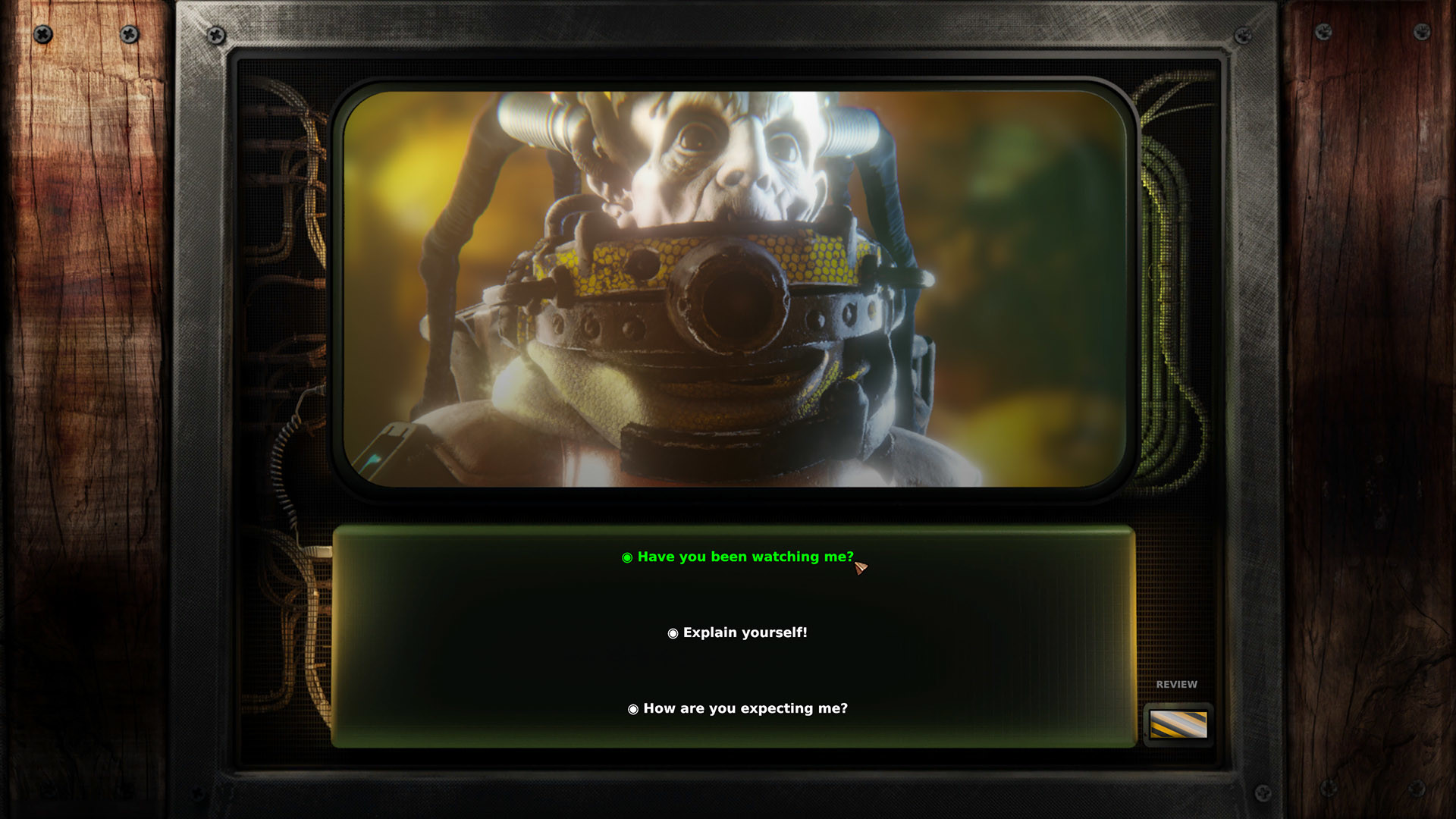
Puzzle solving and conversation are the core forms of interaction. The player uses simple point-and-click controls to inspect places and objects, then works through puzzles that can require observation and connections between clues. Conversations offer another way forward: leaders, healers and warriors can help Mark pass through a region, but the player must decide how to approach them and what kind of relationship to pursue. The world contains thousands of lines of dialogue and multiple conversation paths, so talking is not limited to a single exposition exchange. Choices can shape the land after the immediate journey, giving decisions a wider consequence than simply opening the next door. The game also includes situations where mediation or negotiation may avert conflict, alongside places where violence threatens. Its adventure structure asks the player to understand a situation, choose a response and live with how that response affects the people and places encountered along the way.
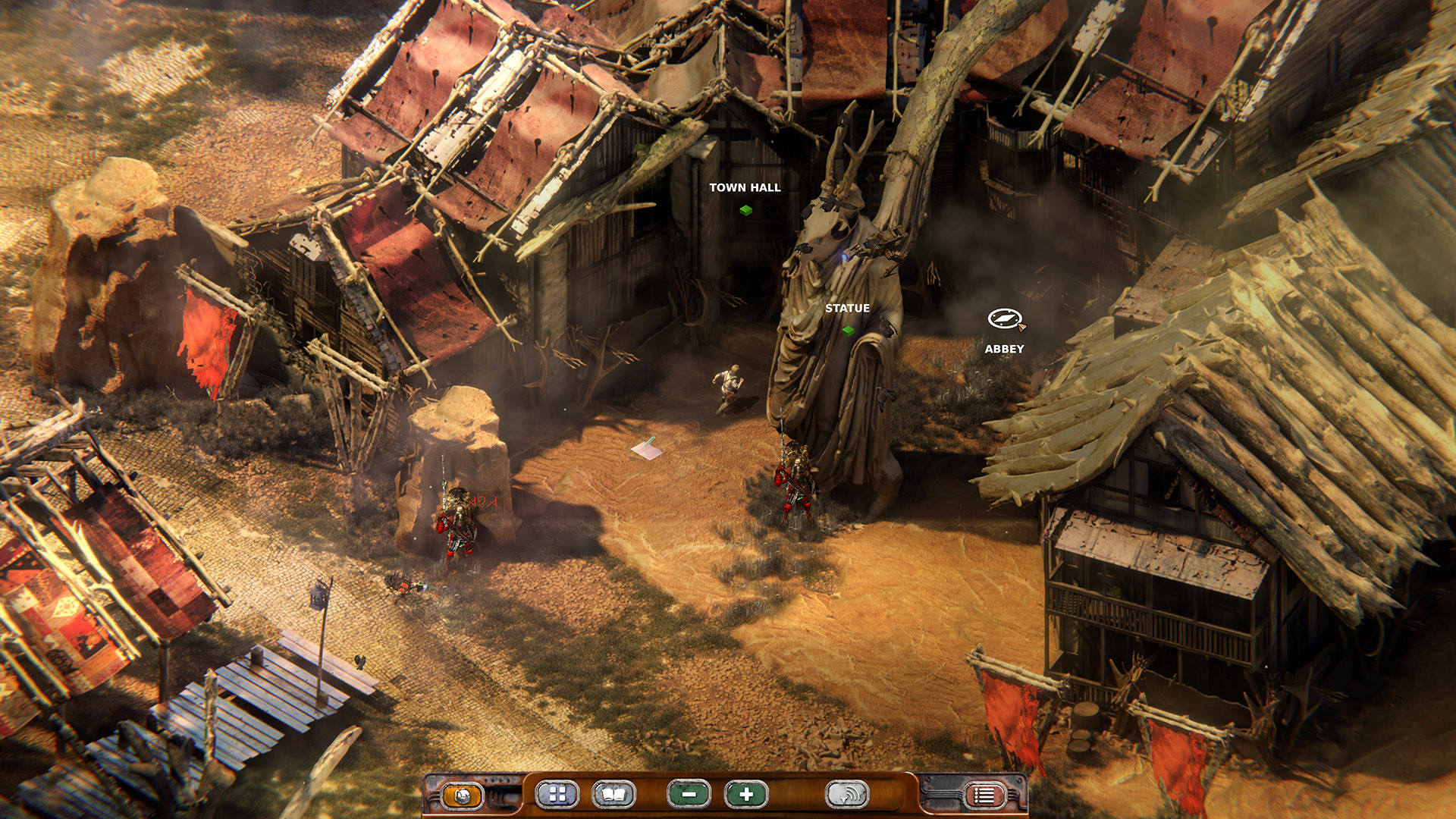
Mark is not alone in the world, but the people he meets can help or hinder him. More than forty unique characters inhabit the landscape, including local leaders, healers and warriors. Each encounter is part of a broader society shaped by the collapse and transformation of the old world. Some residents may negotiate safe passage or share what they know; others may become opponents as interests collide. The inhabitants are not simply background figures placed between puzzles. Their dialogue paths and relationships connect the personal search for Don to the regional effects of Mark’s choices. This social dimension gives the player more than one way to approach a problem: understanding a local perspective, brokering a conflict or facing a threat can all become part of the journey. The choices are consequential, with effects that may extend beyond the completion of the immediate mission. Those possibilities place each encounter within a wider political and social landscape.
The world’s dangers range from strange animals to advanced weapons and swarms of nanites. Enormous scorpions and rocket-equipped robots sit alongside the people and villages encountered during exploration, making the post-apocalyptic setting a mixture of natural and technological threats. Fighting for survival is one possibility within an adventure also built around puzzles, dialogue and mediation. Technology itself is culturally charged: people can treat it as something worthy of reverence or as a source of fear and hostility. This tension connects the landscape’s visual oddities with the societies living in it. Ruined infrastructure and active machines both reveal how the past continues to affect the present. Mark’s actions can shape the future of the region, so the player encounters these dangers within a world that remains responsive to decisions rather than serving only as a sequence of obstacles.
The adventure’s conversations offer many routes into the same unfamiliar society. A leader may be concerned with local authority, a healer with the needs of a community, and a warrior with its safety; Mark’s approach can influence how people respond. The dialogue paths let the player ask, negotiate and learn, while choices can affect the land after a particular encounter has ended. Exploration supplies context for these conversations: the condition of a village, a ruin or a machine helps explain what matters to the people nearby. Puzzles likewise connect observation to action, asking the player to use information found in the environment. Together, these systems make the journey more than a search across striking terrain. Mark’s progress depends on understanding places and people, deciding when to negotiate and recognizing when a situation has become dangerous. The world’s many inhabitants and varied settings give those decisions a broad human and geographic context.
- Developer
- THE BROTHERHOOD
- Genre
- Isometric point-and-click post-apocalyptic adventure