
About Beacon Pines
Luka and his friends investigate unsettling changes in the woodland town of Beacon Pines, where a strange warehouse and a troubled local history point toward a mystery. Explore illustrated locations, collect word Charms, and use The Chronicle to revisit story Turning Points and open different branches.
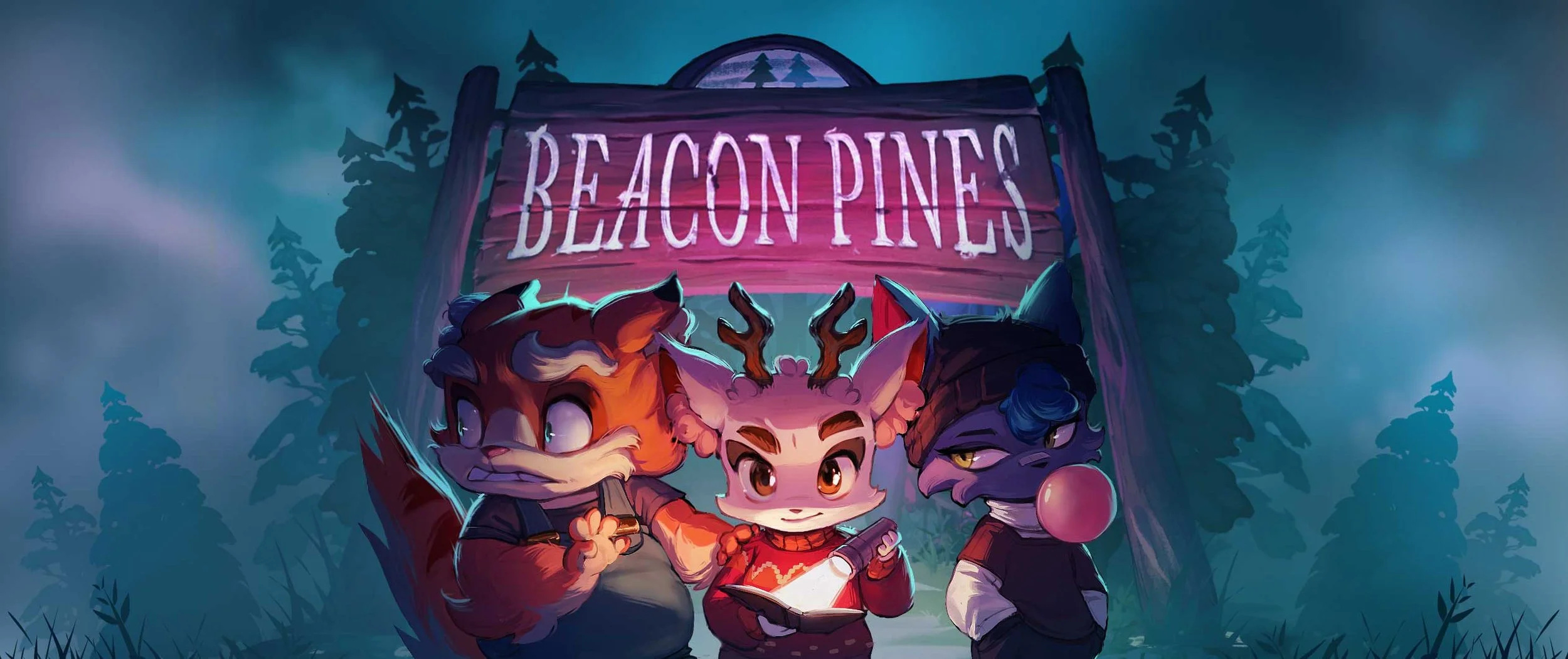
Beacon Pines begins as a story being read and as a place Luka can walk through. Luka, a young deer, lives with his grandmother Gran after losing his parents, and spends time with his friends Rolo and Beck. Their ordinary routines in the small woodland town begin to intersect with odd activity around an old warehouse. The town has a past shaped by the Valentine family and its former industrial success, while a newer company, Perennial Harvest, has become part of its present. Luka and his friends notice troubling signs that adults seem to overlook, and their investigation brings childhood mischief into contact with a much stranger mystery. The narrator is more than a voice outside the action: the book’s reader is also a participant, following Luka’s story and deciding how certain sentences continue. That double perspective lets the game move between the characters’ immediate experiences and the structure of a story being assembled. The setting’s cute animal cast and picture-book framing sit alongside unsettling material, so the tone shifts between familiar friendship, curiosity and unease. The central question is what is happening in Beacon Pines and how its residents’ history connects to what Luka finds now; details emerge through conversations, places and the branches of the narrative.
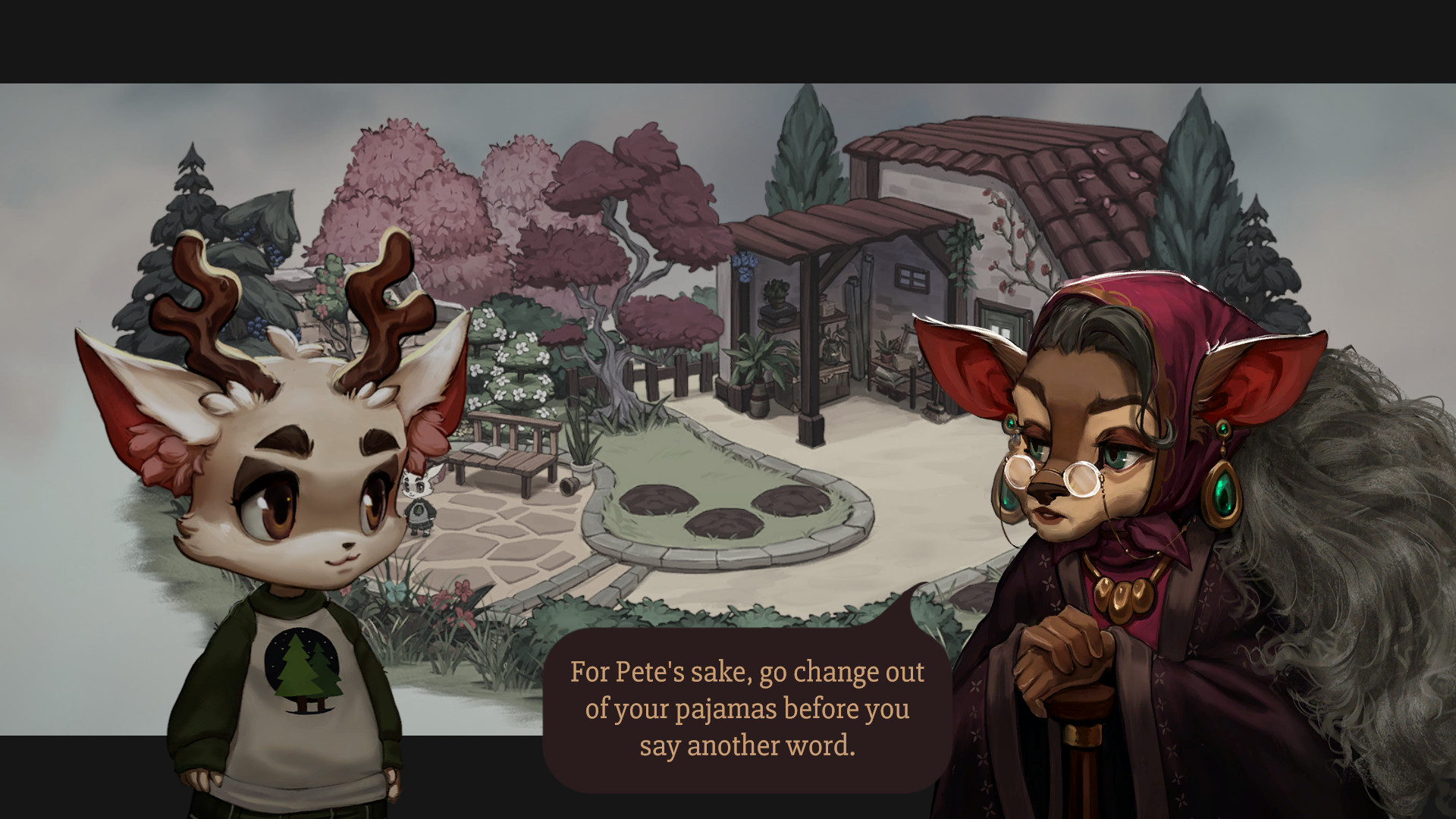
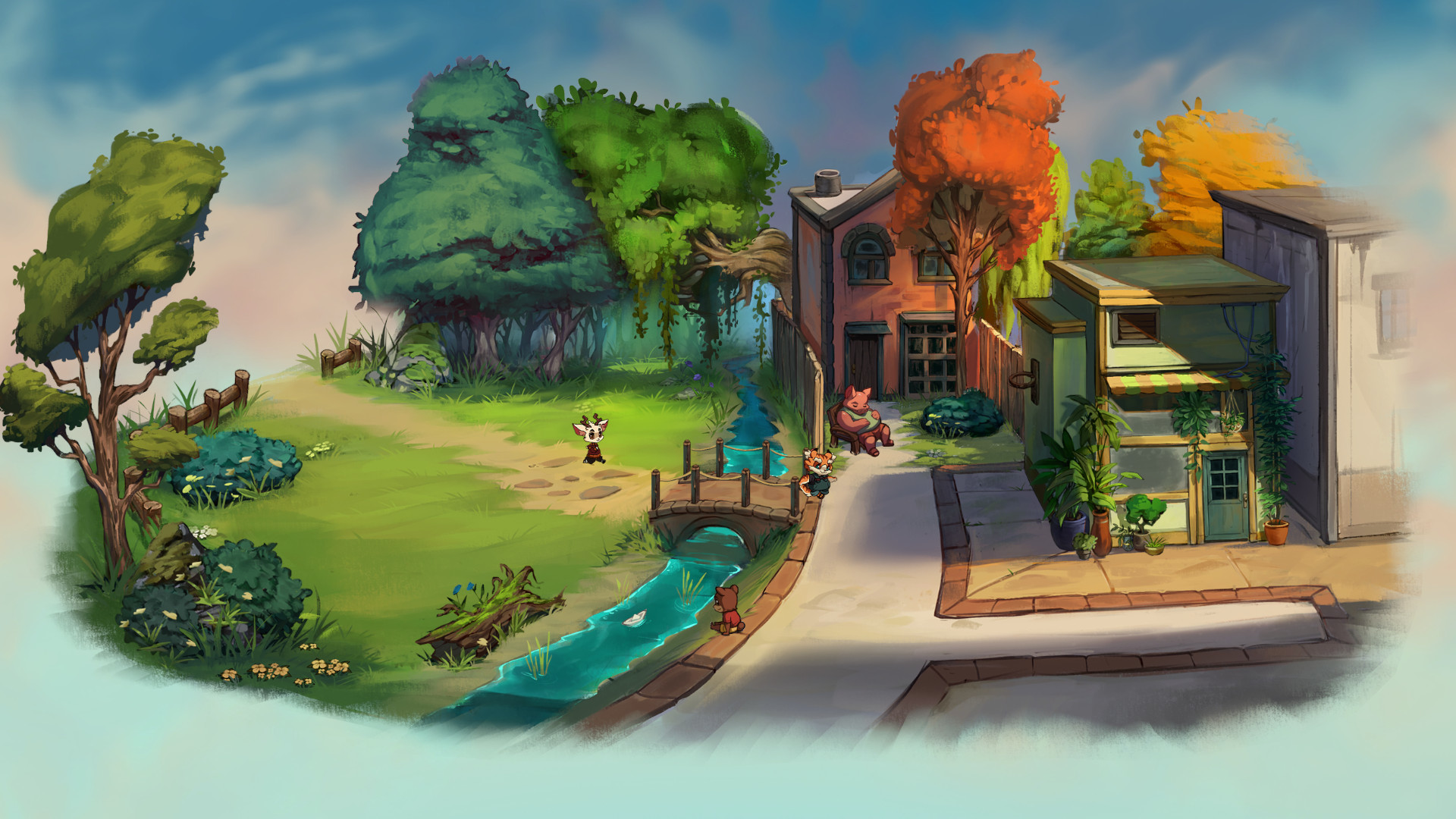
Exploration takes place in compact, illustrated scenes arranged like small three-dimensional dioramas. Luka walks through town locations, speaks with residents and interacts with objects when the game presents an opportunity. These scenes provide the physical side of the adventure: the player moves Luka around a location, follows conversations and notices which parts of the environment can be examined. The spaces are staged rather than an open world, and movement serves the investigation and character encounters instead of platform challenges or action. Places such as the woods, familiar hangouts and the warehouse area give the story different social and atmospheric contexts. Returning to locations can matter because the narrative may send Luka through another version of events, and exploration can yield a Charm needed at a later Turning Point. Some interactions are conversational, while others come from checking an object or an available point in the scene. The experience is a mix of walking around and reading, with most forward motion carried by dialogue and narration. There is no combat loop: the game is a single-player narrative adventure built around exploration, character scenes and branching story choices. The town’s individual settings remain legible, while the storybook presentation frames each place as part of a larger tale rather than a space designed for free-roaming collection.
The collectible words, called Charms, connect exploration to the story’s branching structure. Each Charm is represented as a golden trinket marked with a word. Luka can discover them while investigating the town, including through interactions with characters and objects. At certain points, the book presents a sentence with a blank, and a Charm supplies the missing word. This is not a conventional dialogue wheel where the player selects a complete spoken response; the same word can fit a sentence in more than one context, and its meaning depends on the moment. A Turning Point can send the story in a sharply different direction depending on the word inserted. The Charm is both a collectible found in the illustrated world and a tool for changing how a scene unfolds. Because the player does not necessarily know the consequence in advance, the wording itself becomes part of the mystery. A choice can reach a dead-end version of the story, after which the game returns the reader to a point where another possibility can be tried. Those outcomes are part of how the story communicates risk and discovery, rather than a separate combat or survival challenge. The emphasis stays on interpreting a sentence, considering the word available and seeing which path that combination opens.
The Chronicle turns those choices into a navigable story tree. Its branches represent Turning Points and the events that follow from them, letting the reader move back to a prior decision and use a different Charm. The game does not require a complete restart each time a branch reaches an ending. A newly found word can also be carried back to an earlier point, where it may create a route unavailable on the first visit. That makes progression less about building Luka’s statistics or collecting equipment and more about expanding the set of story possibilities. The key unlock condition is finding Charms in the town: exploration adds words to the available set, and The Chronicle lets the player test them at earlier blanks. A branch may reveal further context or provide another Charm, which can then change a different Turning Point. In this way, movement through the story tree and movement around the town feed one another. The player alternates between following a narrative thread, returning to a meaningful blank and checking newly available words. The Chronicle also gives the story a visible shape, showing that an apparent conclusion can be one route among several. Its purpose is not simply to record a single preferred choice, but to make different outcomes accessible as parts of the larger mystery.
Luka’s friendships give the branching mystery its human scale. Rolo meets obstacles with enthusiasm, while Beck brings a distinct perspective and expressive presence to the group; their conversations make the town feel inhabited before its stranger history comes to the fore. Iggy and other residents also change how a scene feels, whether Luka is sharing a familiar place or finding that a choice has led somewhere unexpected. The word-charms do more than change an isolated line of dialogue: a different word can shift the circumstances in which these characters meet, react and understand one another. Because The Chronicle keeps earlier Turning Points accessible, the reader can see how a friend’s situation changes on another path without discarding the words already found. Exploration and conversation therefore have a purpose beyond collecting Charms. They establish who lives in Beacon Pines, which relationships matter to Luka and why each altered version of events carries a different weight.
The presentation reinforces the contrast between a familiar children’s book and a mystery with a darker edge. Character portraits and expressive animal designs sit within illustrated environments that resemble miniature stages, while narrated prose makes the act of reading part of the play. Scenes move between spoken exchanges and short stretches of walking, so the visual details and character expressions help distinguish locations and moods as the text carries the plot. Kirsten Mize narrates the story, and the voice performance is a central part of how the book’s author addresses the reader. The music shifts with the emotional register, supporting both the warmth of time spent with friends and the unease surrounding the town’s strange activity. The art style does not turn exploration into a hidden-object hunt or a platforming challenge; its primary role is to give Luka’s small-town world a clear, readable identity. This is a text-forward adventure, and its rhythm comes from following narration, inspecting scenes and reaching the next Turning Point. The book frame also gives the Chronicle a natural place in the fiction: the branching diagram is a practical interface, but it belongs to the larger conceit of the reader and character sharing one story. The result is a narrative game whose visual, audio and interface choices all support the act of exploring possible versions of events.
Developed by Hiding Spot and published by Fellow Traveller, Beacon Pines is a single-player adventure available on PC, Xbox and Nintendo Switch. The full game follows Luka’s investigation through illustrated town scenes and a branching storybook, with Charms and The Chronicle at the centre of progression. Its soundtrack and artbook are sold separately on Steam and appear alongside the game in a Collector’s Edition bundle; they are companion materials rather than extra story campaigns. The game’s unusual structure lets a word found in one branch open an earlier Turning Point, making a return to a previous page part of the adventure rather than a restart.
- Developer
- Hiding Spot
- Genre
- Narrative adventure with exploration and branching story choices