
About Bayonetta
Awakening with few memories, the Umbra Witch Bayonetta follows faint clues to the European city of Vigrid, where angels pursue her and familiar strangers stir questions about her past. She answers with gun-fu, demonic magic, weapon combinations and perfectly timed evasions in a fast-moving action adventure.
Bayonetta begins with a witch returning to the modern world after centuries, unable to remember her name or the events that came before. The power she still commands is unmistakable: she can summon fearsome demons and fight the angels that pursue her. Following the few clues tied to her lost history brings her to Vigrid, a European city where chance meetings and hostile encounters gradually connect the present journey to an older mystery. The story introduces Bayonetta through her dry confidence and theatrical fighting style, then surrounds her with characters whose motives are not immediately clear. Jeanne, a witch with a similar command of magic, repeatedly crosses her path, while journalist Luka follows Bayonetta because of a grievance rooted in their shared past.
Combat is based on combinations of punches, kicks and gunfire. Bayonetta’s Bullet Arts style lets her fire weapons mounted at her hands and feet while striking at close range, so a punch or kick can continue to deal damage after the physical hit. Attack strings build toward Wicked Weaves: powerful magical blows in which her hair channels a demon into the world. The player can combine the two main attack types in different orders, hold attacks to extend their gunfire and choose between close pressure or a finishing blow. Dodge Offset lets Bayonetta evade while holding an attack input, preserving the current combo so it can continue after the movement. In the middle of an enemy sequence, the player is deciding both how to continue the current combo and when to leave it to avoid a counter.
A last-moment dodge activates Witch Time, briefly slowing the surrounding action while Bayonetta can move and attack at speed. This creates a window to strike enemies that would otherwise be difficult to approach, but the effect depends on avoiding an incoming blow at close range. The system rewards learning attack tells and makes defensive movement part of an offensive plan. Bayonetta can also use an aerial dodge and techniques that close distance, such as Stiletto, or slide toward an opponent with Heel Slide. Certain places allow Witch Walk, letting her run along walls, and Beast Within turns her into an animal form for rapid movement. These abilities keep traversal connected to the same responsive action language as the fights.
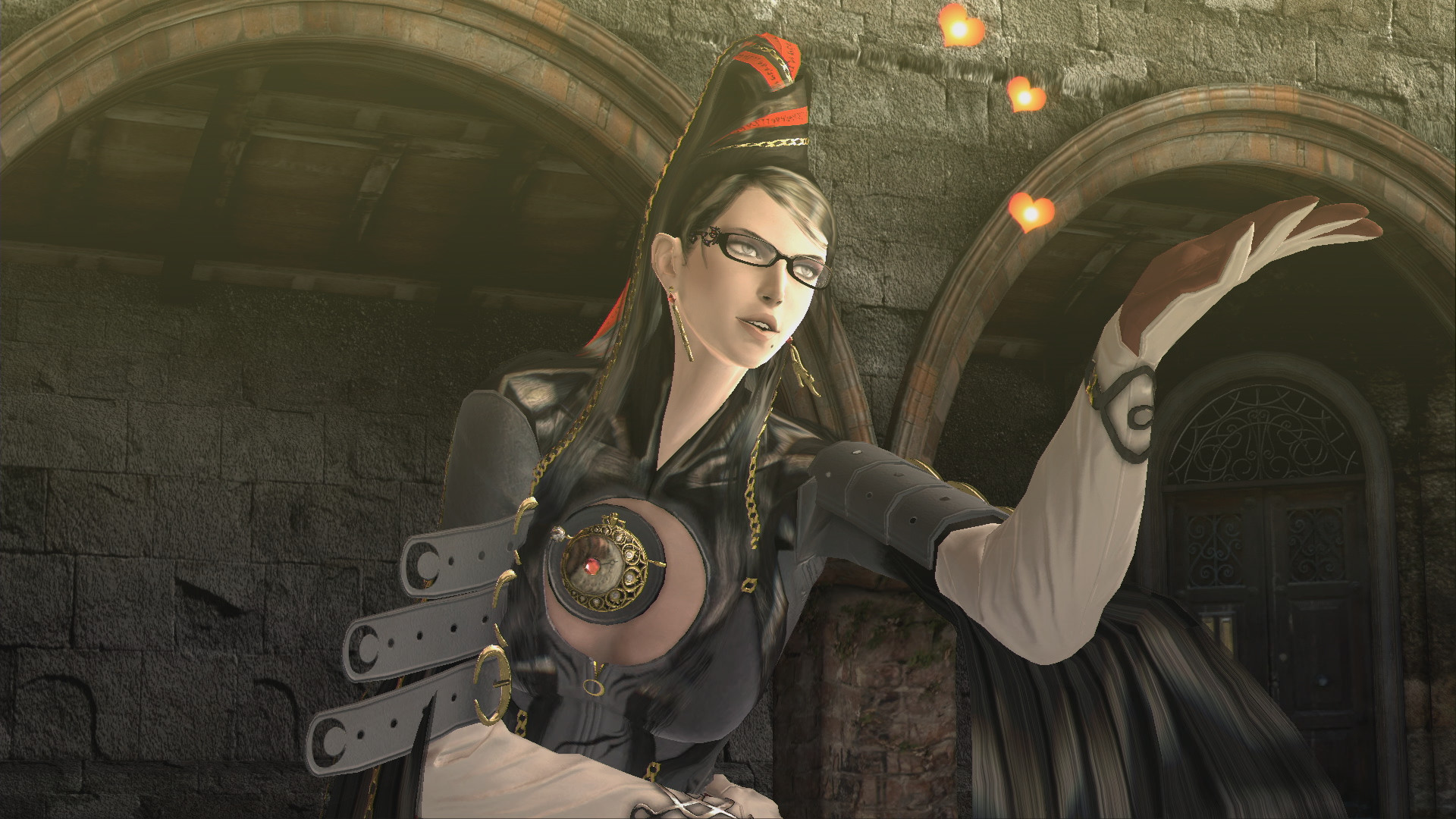
Bayonetta’s weapons can change how her attack strings work. The signature Scarborough Fair is a set of four pistols, while other options include the Shuraba sword and the whip-like Kulshedra. Weapons may be assigned to her hands and feet, and two equipment sets can be prepared and switched during combat. Some weapons have distinct reach or attack behavior, which gives players room to change the rhythm of a combo without changing its basic punch-and-kick structure. Rodin, the weaponsmith who runs the Gates of Hell bar, supplies and trades weapons. Techniques and accessories add further options, while accessories provide different effects and can be equipped in pairs. The range of choices grows the combat vocabulary as the campaign advances.
Magic supports several of Bayonetta’s strongest actions. Torture Attacks spend a portion of the Magic Gauge to summon an elaborate device against a nearby enemy, and the target can vary according to the opponent. These attacks can interrupt a dangerous foe, while certain enemies may drop a weapon when defeated this way. Powerful Infernal Demon techniques become available against particularly strong enemies at a finishing moment. Players can also mix collected compounds into useful items, including items that restore health or magic, then set selected items into quick-use slots. The game therefore asks players to balance immediate survival with saving magic for a bigger opening. Weapons, accessories, techniques and consumables provide distinct ways to shape each encounter.
The adventure moves through chapters built from exploration, enemy encounters and cinematic action sequences that remain playable. Combat scenes are broken into smaller encounters, and the game evaluates performance using factors such as time, damage and combo points. That scoring structure gives each fight an arcade-like measure of execution and provides a reason to replay chapters with different weapons or improved timing. Between battles, Bayonetta navigates changing environments, uses traversal techniques and encounters short action events that call for direct button presses or other inputs. The pacing shifts from contained fights to large spectacle while keeping Bayonetta under the player’s control. As the mystery around her memories, Jeanne and Vigrid develops, the same mixture of precise dodging, flexible combos and supernatural attacks carries the story forward.
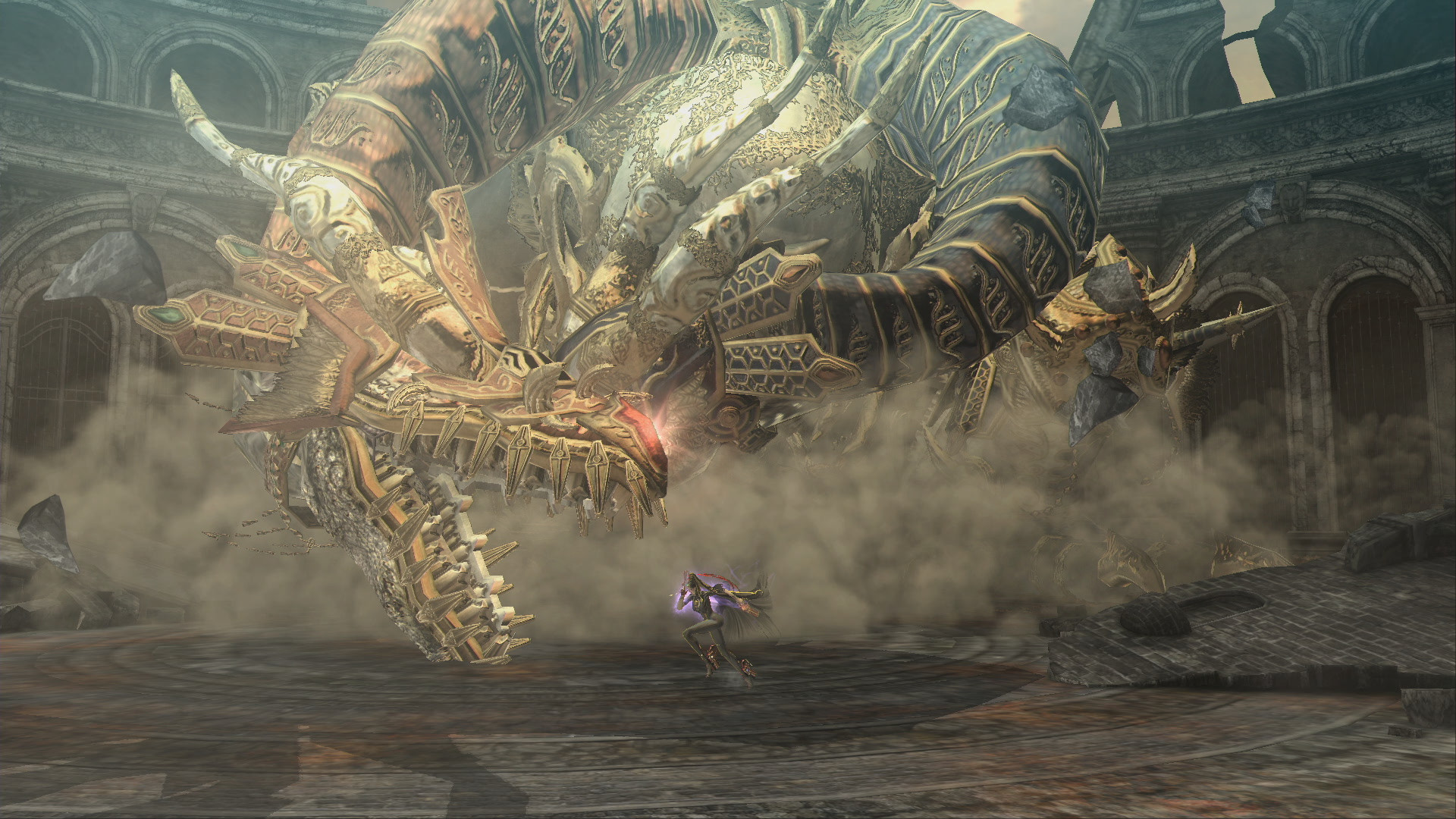
The score earned in combat feeds a second layer of progression. Combo points are converted into Halos, the currency Bayonetta spends at Rodin’s Gates of Hell on techniques, accessories and items. Chapter results also grant bonus Halos according to the encounters cleared and how the player performed. After a chapter, Angel Attack offers a short shooting challenge whose points can be exchanged for items or more Halos. A fight is therefore more than a barrier on the route through Vigrid: maintaining a combo, using Witch Time and finishing efficiently can enlarge the pool available for the next chapter’s equipment choices. The optional bonus game adds another way to turn successful action into practical supplies before Bayonetta returns to the mystery around her past.
- Developer
- PlatinumGames
- Genre
- Action, Adventure