
About Battlefield 1
Battlefield 1 is a first-person shooter set across the fronts of the First World War. Its single-player War Stories follow separate characters, while multiplayer turns infantry, classes, cavalry, aircraft and armoured vehicles into team-based battles. Operations links successive maps into a push-and-hold campaign where each side fights to move or stop the frontline.
Battlefield 1 places its fictional combatants in the First World War, moving between besieged French towns, Alpine slopes, desert outposts and other fronts. The setting shapes the equipment and the battlefield: infantry carry rifles, shotguns and early automatic weapons, while horses, armoured cars, tanks, aircraft and naval craft share the field. Buildings and defensive works can be damaged, and weather changes visibility and the look of an encounter. The game uses these details to frame playable battles rather than present a continuous historical survey; its single-player stories and multiplayer matches each approach the war on their own terms.
The single-player campaign is an anthology called War Stories. Instead of following one soldier through every theatre, its chapters introduce people with different backgrounds, skills and immediate problems. Through Mud and Blood follows Danny Edwards, a former chauffeur assigned to drive a British Mark V tank and earn the confidence of its crew. Other chapters shift to an American pilot, an Italian soldier and an Arab rebel connected to Lawrence of Arabia. Their situations give each story a different setting and combat emphasis, while the framing keeps the campaign focused on individuals caught inside a much larger conflict. The tales can be played as separate episodes, so the campaign changes viewpoint rather than building one uninterrupted protagonist’s journey.
War Stories also use Battlefield’s combat spaces for objectives with more than one route. In Through Mud and Blood’s fog-shrouded forest, Edwards can leave the tank and move on foot to clear enemy camps. Explosives can disable anti-tank guns, or the player can approach unseen and use a melee takedown. A larger position contains field guns that can be destroyed to protect the tank or turned against the defenders; taking out a tank crew can also open the way to seize its vehicle. In another story, a rebel scout can approach enemy encampments quietly or openly, collect equipment and use it to draw an armoured train into a confrontation. These choices change how a particular encounter is handled, without turning the campaign into a branching account of the whole war.
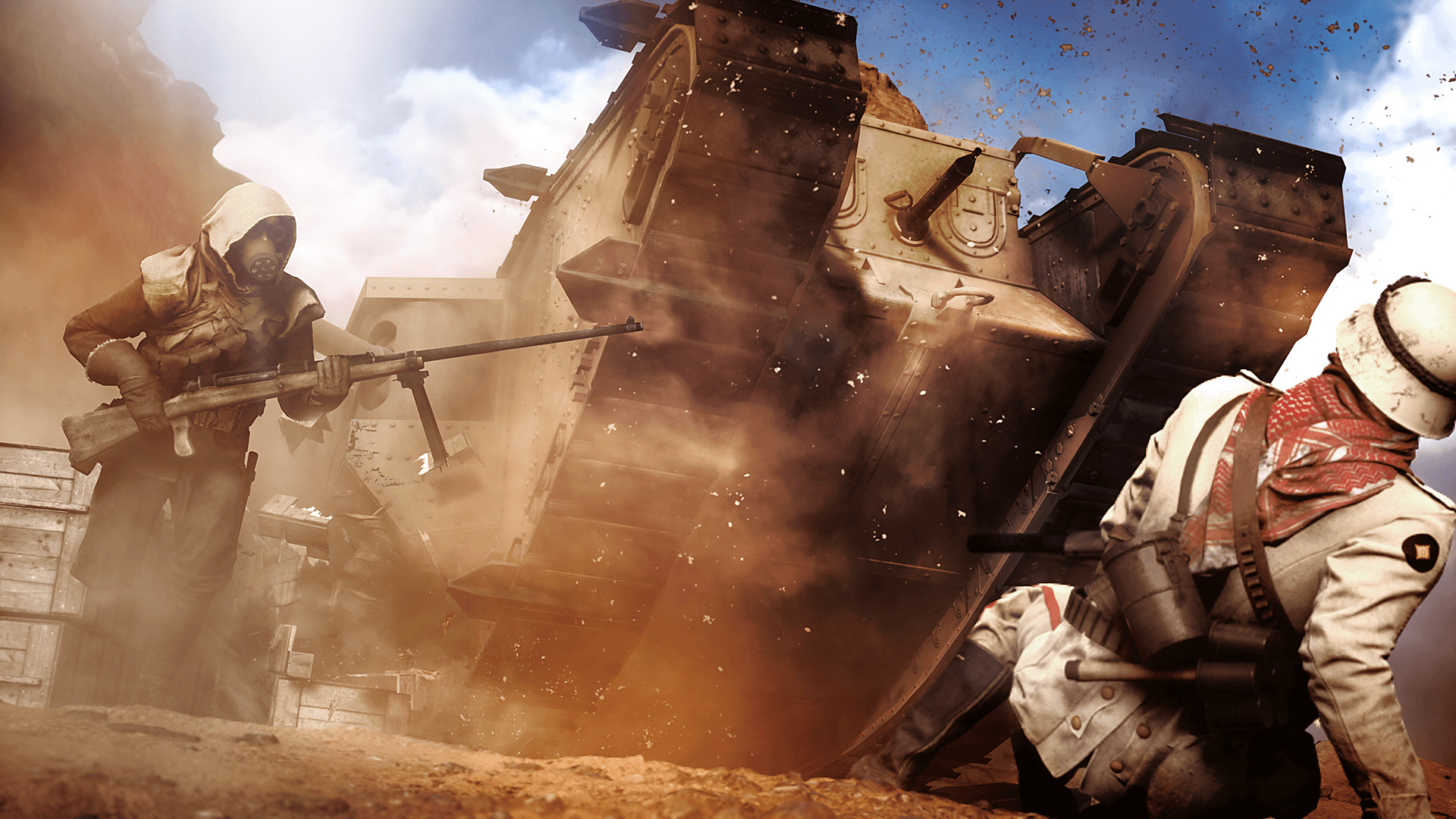
Multiplayer takes the form of large team fights in which players select a soldier class and a loadout before deploying. The classes divide useful battlefield jobs: Assault carries close-range weapons and tools for attacking vehicles, Medic supports wounded teammates, Support brings ammunition and sustained fire, and Scout works at longer ranges with rifles and spotting equipment. Weapons have different effective distances and handling, so the choice between an Assault shotgun and a submachine gun, or between a Support machine gun suited to suppressing fire and one that handles better from the hip, changes how a player contributes. Gadgets refine that role further, from vehicle-damaging explosives to medical supplies and deployable traps.
Conquest asks both teams to capture and hold marked objectives across a map, encouraging squads to move between contested points while infantry and vehicles meet along the routes. Rush and smaller infantry modes provide different objective layouts, but Operations gives the multiplayer a longer frontline structure. It joins several maps into connected battles based on First World War campaigns. Attackers advance through sectors by capturing every position in the current area; defenders withdraw to the next sector if they lose it. A successful push can carry the fight onto another map, while a defence tries to exhaust the attack before the line gives way. Each sector brings its own objective count, chokepoints and approach routes.
Vehicles make those pushes feel different from one map to the next. A tank can break through ground positions, aircraft attack from above, and boats or cavalry can move troops across spaces that would otherwise take longer to cross on foot. Tank and aircraft drivers can also repair from inside their vehicles, allowing operators to keep a vehicle in action as the fight develops. The game has enormous Behemoth vehicles, including an airship, an armoured train and a battleship; in Operations, reinforcements of this scale can arrive as an assault falters, giving the losing side another tool while pulling several players into operating the vehicle. Destruction and changing weather alter sightlines and cover during a match.
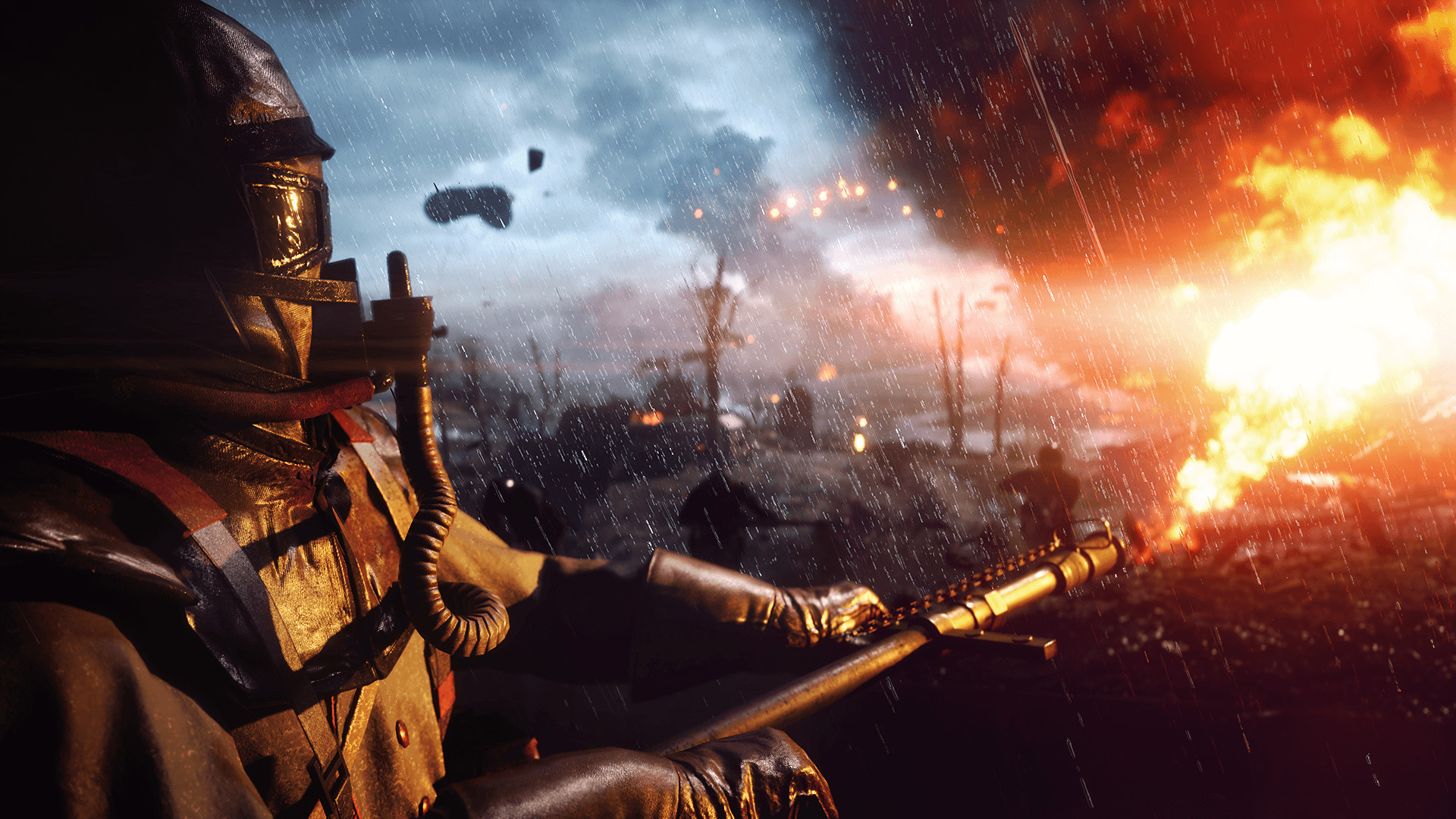
Multiplayer also has longer-term progression tied to a soldier’s role and equipment. Service Assignments provide goals to work through, and Specializations let players customize a soldier to suit how they want to contribute. Progress adds further goals as players continue using the multiplayer systems, while the class choice still determines the broad kit and team function brought into a round. These layers sit alongside the immediate match objectives: players decide what to unlock and equip between deployments, then put those choices to work while capturing ground, supporting a squad or contesting vehicles. Players can climb ranks, unlock and customize weapons over time, so progression changes the equipment available for later deployments while each match still turns on its current objectives.
- Developer
- DICE
- Genre
- First-person shooter