
About Bastion
After the Calamity breaks the world apart, the Kid travels through shattered landscapes to recover the Cores that can rebuild the Bastion, a refuge where survivors gather. A reactive narrator follows his actions as he fights with an expanding arsenal, recovers fragments of the old world, and learns what the disaster left behind.
The Calamity has fractured the world into isolated pieces, and the Kid wakes in the ruins with the Bastion as his destination. Roads, platforms and fragments of landscape form beneath him as he moves, making each route a passage across ground that did not exist moments earlier. The Stranger, a narrator whose voice responds to what the Kid does, gives context to the journey without stopping the action. His remarks can reflect combat and discoveries as they happen, so the world’s history arrives alongside the player’s immediate task rather than in a detached lecture. The game varies this narration according to how the player moves through its areas, so the spoken account can respond to the particular sequence of events unfolding on a run.
The Skyway at the Bastion connects the Kid to missions across the broken land. These stages lead through distinct environments and put enemies, useful objects and a Core or Shard along his path. Cores restore the central Monument and let the survivors construct one of the Bastion’s six buildings; Shards later allow those structures to be expanded. The Kid returns to this refuge between expeditions, where the new facilities make the settlement a working hub for choosing equipment, improving weapons and taking on challenges. The route outward therefore feeds directly into the place that supports the next trip. As the refuge develops, its six structures make the settlement’s recovery visible as well as functional: each new foundation changes what the Kid can do before setting out again, and later upgrades deepen those options.
Combat is built around switching among more than ten weapons with different ranges and attack patterns, then pairing them with a Secret Skill. The Cael Hammer delivers close-range blows, while ranged choices let the Kid engage enemies from farther away; a shield and dodge give him ways to respond when threats close in. The Arsenal sets the equipped weapons and skill, while the Forge gives each weapon its own upgrade path. Materials gathered during the journey are matched to particular weapons, and upgrades cost Fragments as well. At each available tier, the player chooses between benefits, shaping a weapon toward a preferred role. The weapons remain viable throughout the campaign, so upgrades tune how a chosen weapon works rather than requiring the Kid to discard it for a stronger replacement.
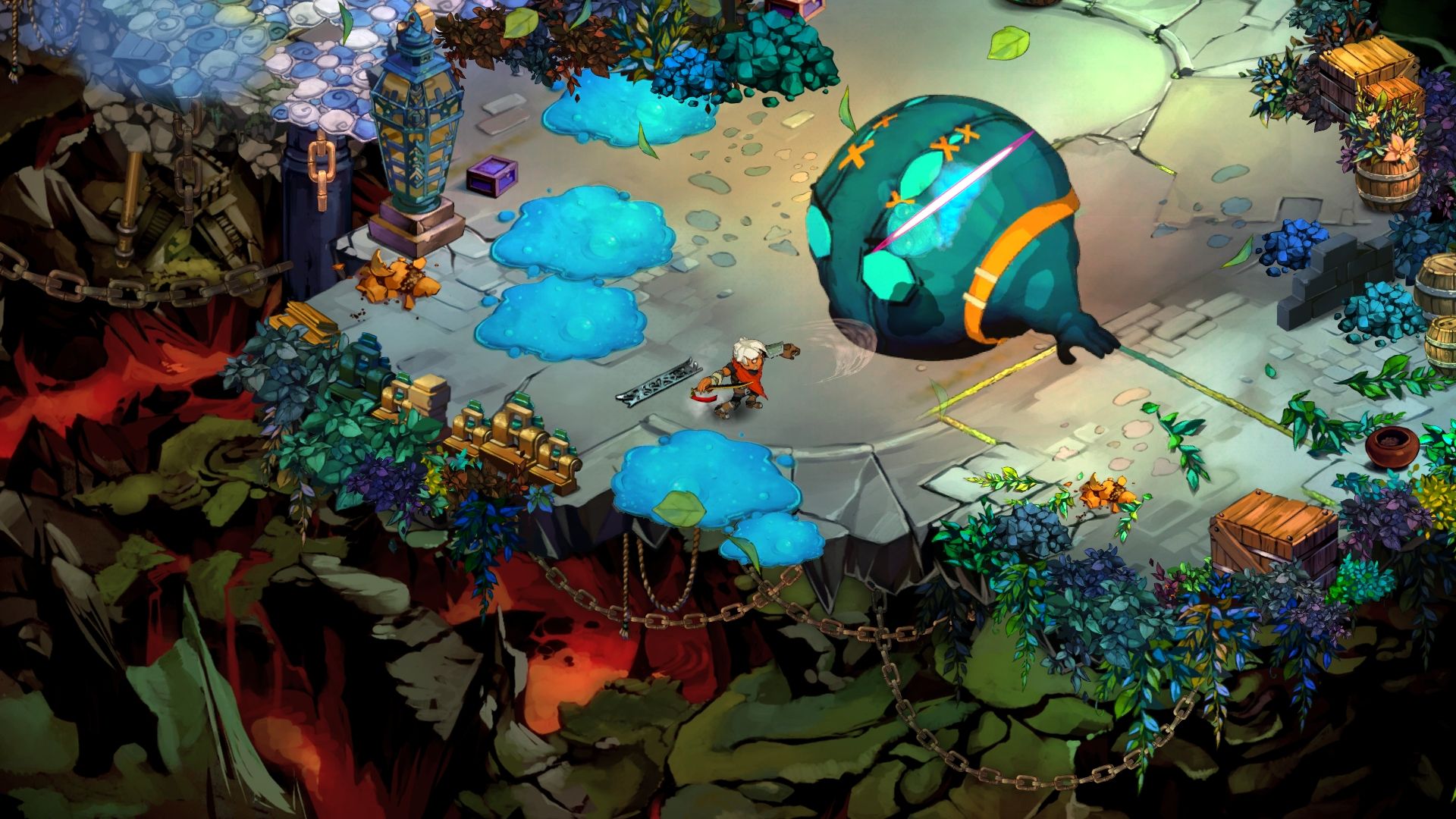
The Distillery turns level growth into a set of persistent equipment choices. Each new level lets the Kid equip another Spirit, up to ten, and he can change the selection at the Bastion. Squirt Cider increases maximum health, while Cinderbrick Stout lets him move faster while defending with the shield; other Spirits can change tonic capacity or improve the effect of a counter-block. The Distillery itself can be upgraded to unlock more drinks. These bonuses occupy a limited set of slots, so a player can build toward survivability, defense or another useful effect, then revise that combination when a different challenge calls for it. The choice changes how the Kid enters a stage without removing his ability to reconfigure later.
The Shrine offers a deliberate risk-and-reward setting through Idols associated with the gods of Caelondia. Activating an Idol adds a rule that makes enemies more dangerous or changes how they behave; defeating those enemies then pays out increased experience and Fragments. Idols can be enabled or disabled at the Shrine, so the player controls how many extra conditions shape a later expedition. The added earnings can help fund upgrades and purchases, but the tougher encounters demand a loadout able to handle the chosen effects. This system lets players adjust the challenge while tying the decision to the same resources used to build and equip the Bastion.
The Memorial records Vigils, optional challenges that award Fragments when their stated conditions are met. Some are tied to using particular weapons, while others ask for different kinds of combat progress; they give the player an objective to pursue alongside the main route. Weapon-specific Proving Grounds test proficiency with an individual weapon, and earning first place can unlock a Secret Skill associated with it. Who Knows Where offers another format: the Kid faces successive enemy groups in a survival challenge, where a suitable Spirit and Shrine settings can affect the risk of each attempt. These activities provide distinct ways to earn rewards or unlock abilities by engaging with the combat systems under focused conditions.
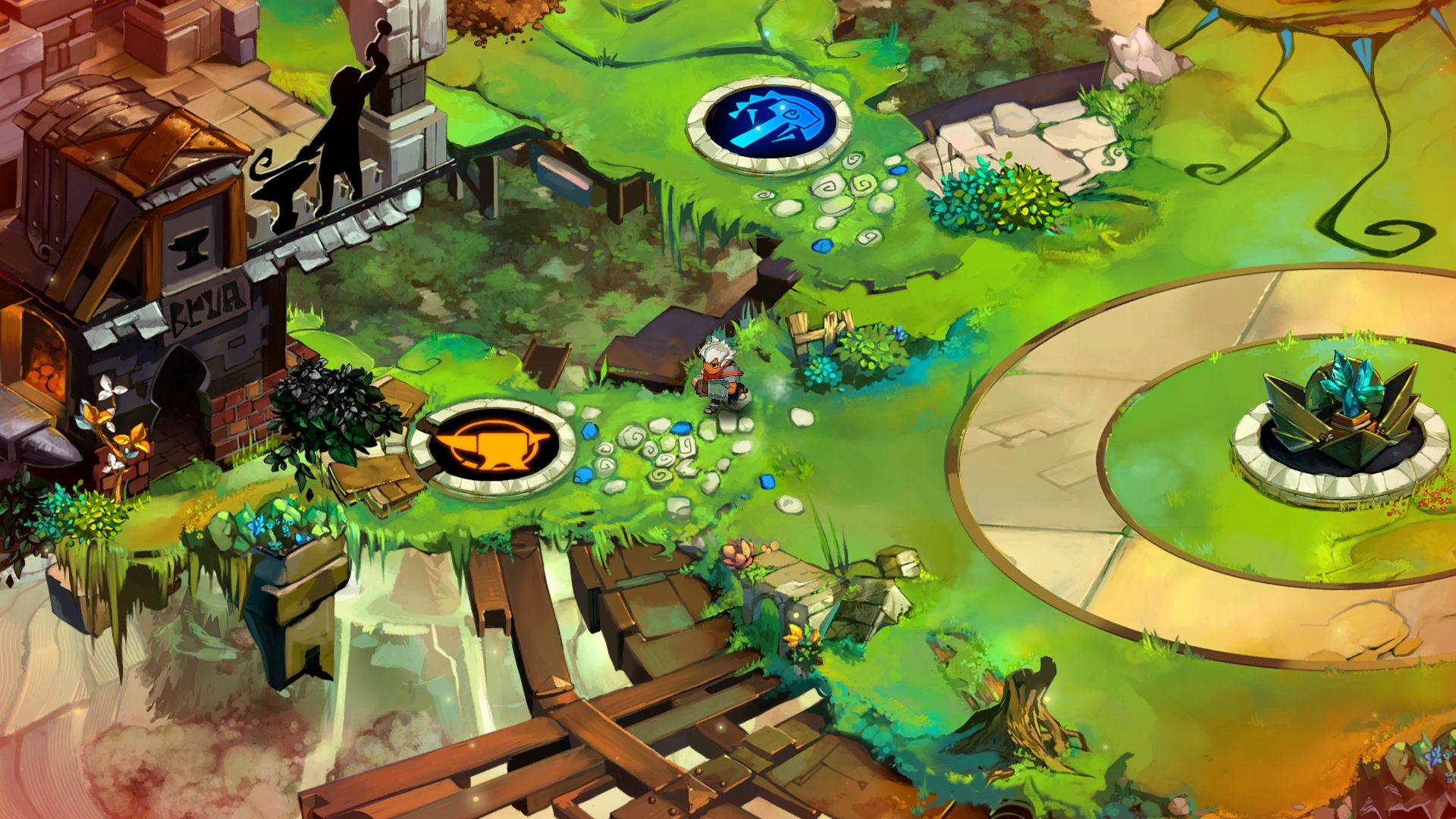
The Bastion also brings the Kid into contact with the people the catastrophe has displaced. Rucks, the old man waiting at the refuge, believes he can repair what has happened and sends the Kid to seek the materials needed to restore the Bastion’s power. Zulf, an Ura survivor, and Zia later become part of the settlement, giving its reconstruction a human dimension alongside the Monument and its buildings. Mementos recovered in the field can be brought back and discussed with the people there, connecting the places the Kid visits with the lives that existed before the Calamity. Rucks’ narration carries that context into the expeditions, while conversations at home give discoveries a place within the community being rebuilt.
Field supplies give the Kid a second layer of resource management during combat. Health Tonics restore health, while Black Tonics power Secret Skills, so the player decides when a special attack is worth spending a charge and watches for chances to replenish either supply. The shield can block attacks and perform a Counter when raised just before a blow lands, turning a precisely timed defense into a retaliatory hit. These tools complement the selected weapons: the Kid can guard against a projectile, evade to an opening, or spend a Black Tonic for a skill suited to the crowd. Tonics can be found by defeating foes or searching rubble, and Arsenal stations in some stages replenish supplies, linking preparation at the Bastion with decisions made while away from it.
- Developer
- Supergiant Games
- Genre
- Action RPG