
About Back 4 Blood
Back 4 Blood is a cooperative first-person shooter set after a parasite has transformed much of humanity into the Ridden. Choose a Cleaner, build a campaign deck, and work through missions with a team while gathering equipment and responding to changing threats. The base game also includes the round-based Swarm competitive mode.
Back 4 Blood takes place after the Devil Worm parasite has transformed people into the Ridden, creatures that threaten what remains of human society. The player joins the Cleaners, immune survivors organized to fight back and reclaim territory. The opening campaign brings Walker, Mom, Holly and Evangelo to the settlement of Evansburgh, where the group’s immediate goals grow from protecting survivors and supplies into a larger effort against the Ridden. The story unfolds through missions, dialogue and encounters rather than a single uninterrupted journey. Each act contains connected chapters, and the team’s task changes from simply reaching a safe room to completing local objectives before it can leave.
The Cleaners are a roster of playable survivors with distinct identities and team-oriented perks. Walker improves precision kills and provides a team health bonus, Mom can instantly revive a teammate once per level and grants the team an extra life, and Holly gains stamina from kills. Evangelo can break free from grabs, while other Cleaners include Doc, Hoffman, Jim and Karlee. Their character selection affects the bonuses and starting equipment available to the team, while the campaign deck lets players shape a role around the squad’s needs. A player can emphasize healing, ammunition, durability or melee fighting through card choices. These choices support different approaches to a shared mission, but no one can complete the route alone when a teammate is pinned or overwhelmed.
Each mission sends a team of up to four Cleaners through infested locations toward an exit or safe room. Common Ridden attack in crowds, while larger mutations such as Tallboys, Hockers and Reekers can disrupt a formation or incapacitate a player. Shooting at glowing weak points, pinging a dangerous target and moving so teammates can assist all help the group respond to threats. Levels also include objectives that require players to hold an area, clear obstacles or carry an item while exposed. Sound-sensitive hazards—such as birds, car alarms and security doors—can trigger a horde, making the choice to fire, detour or quietly pass part of the moment-to-moment route.
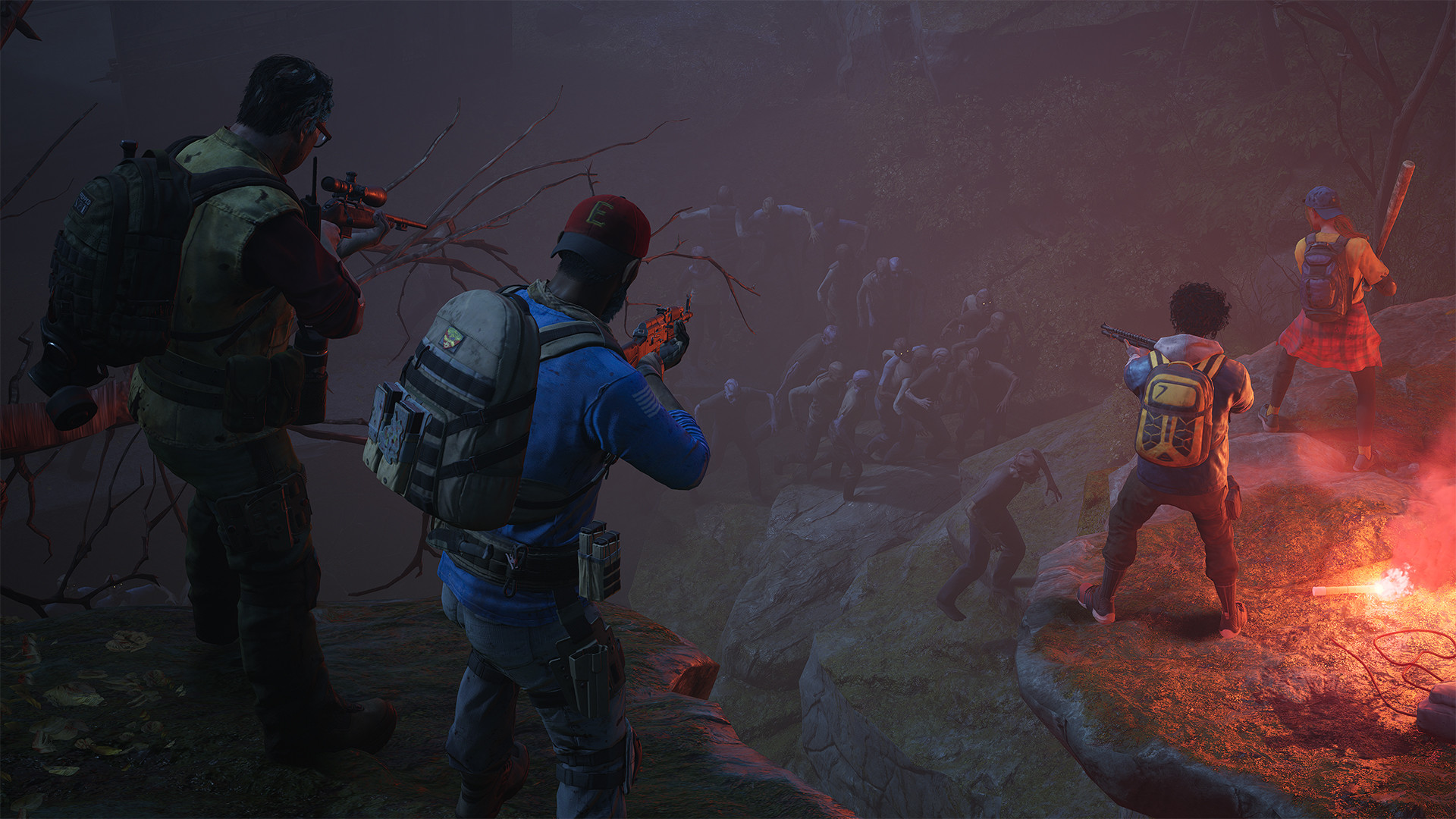
Firearms include shotguns, assault rifles, submachine guns and sniper rifles, and weapons can be fitted with attachments that modify their handling or performance. Players scavenge ammunition, healing and support equipment as they advance, then use copper collected during a mission at safe-room stores. The shop can provide guns, consumables and team upgrades, so the group has to decide whether to improve an individual loadout or buy something that helps everyone. Medical resources matter beyond immediate health: repeated damage can reduce maximum health through trauma, while first-aid stations can restore health and address trauma. Healing a teammate or paying for a station can protect the squad’s ability to finish later chapters. Copper therefore has value beyond a single purchase: a team that agrees on priorities can secure more healing or ammunition for a hard chapter, while a player spending alone may leave a shared upgrade out of reach. The safe room is a planning point as well as a checkpoint, and its stock changes with the campaign’s equipment tier.
Campaign cards make preparation another layer of the cooperative loop. Players build a personal deck from cards that modify attributes or grant specific abilities, such as changing a basic bash into a knife attack or improving a role’s strengths. The Game Director also introduces Corruption Cards that alter the conditions of a chapter, including environmental visibility or enemy variations. The player deck expresses how a Cleaner contributes to the group; the Corruption selection establishes the extra pressure the group must handle. As the team moves between safe rooms, it can adapt its equipment to the current route while keeping the deck’s longer-term build in mind. Unlocking additional cards expands the combinations available for later runs.
The campaign keeps the story moving across four acts, with chapters linked by safe rooms that provide a pause to restock, review equipment and continue the run. Missions combine straightforward travel with set-piece tasks: a team may need to create a distraction, defend a position or complete an objective while the Ridden close in. The Game Director changes enemy pressure and other chapter conditions in response to play, while the card system adds another source of variation. The base campaign’s cast and core story are distinct from content delivered through the Annual Pass and later expansions; the base game has its own campaign and cast, with expansion missions and characters added separately.
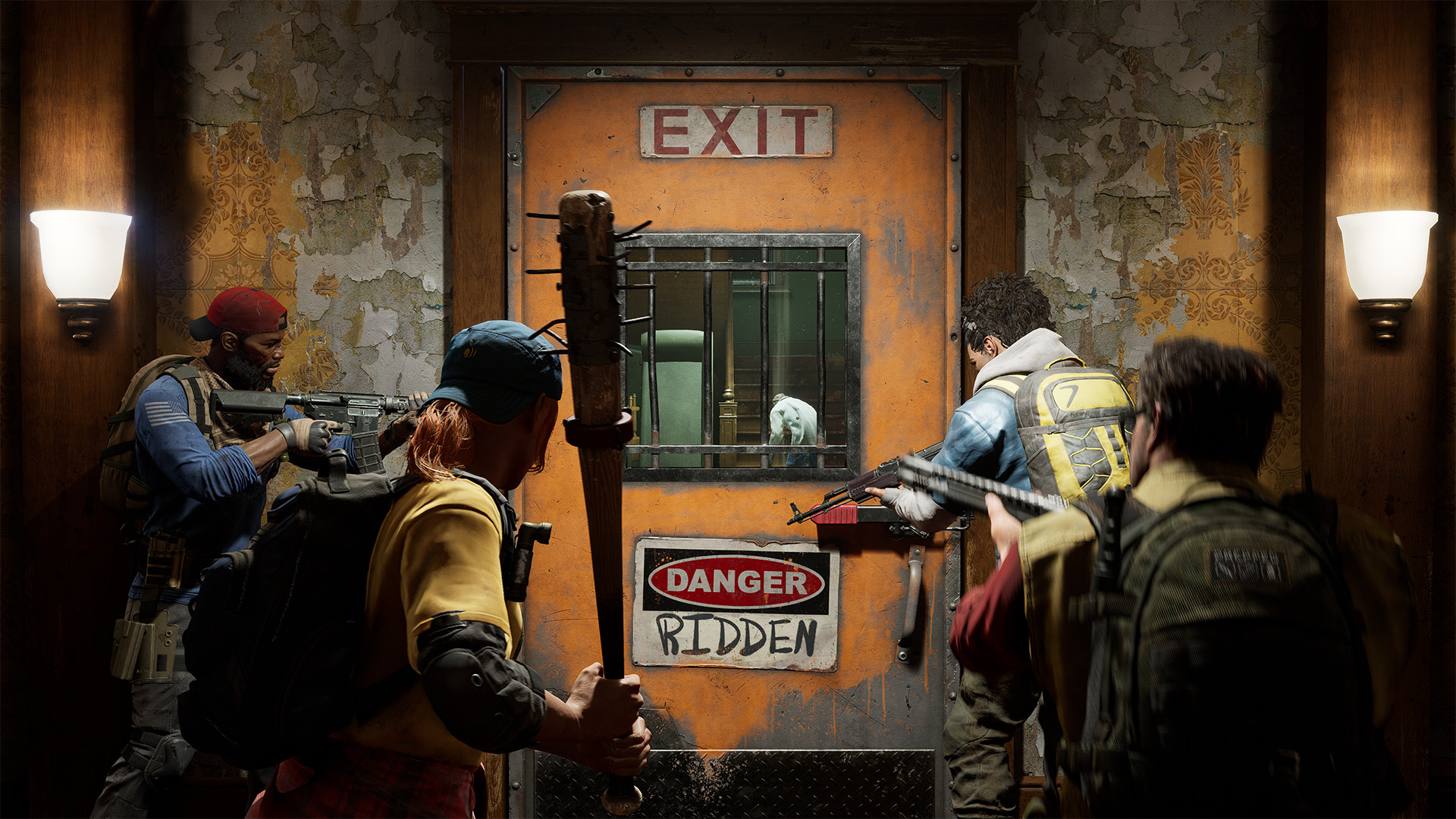
Outside the co-op campaign, Swarm is a competitive mode in which Cleaner and Ridden teams take turns attacking and defending in a confined arena. The human side tries to survive longer, while players controlling Ridden use their distinct abilities to pressure and separate the Cleaners. The match structure differs from the campaign’s mission-to-safe-room progression, even though both modes draw on the same contrast between coordinated survivors and specialized infected. The base game also permits solo campaign play with computer-controlled teammates. Its training and mission structure gives players room to learn the different weapons, equipment and Cleaner roles before attempting more demanding campaign runs. The roster and equipment systems carry across its campaign and competitive modes.
- Developer
- Turtle Rock Studios
- Genre
- Cooperative first-person shooter