
About Atomfall
Five years after the Windscale disaster, Atomfall places you inside a fictional quarantine zone in Northern England. Explore its countryside, investigate leads, and deal with isolated communities, cults and rogue authorities through conversation, barter, scavenging, crafting and combat as you piece together the mystery behind the disaster.
Atomfall is a single-player survival-action game set in a fictionalised version of Northern England, five years after the Windscale nuclear disaster. Its quarantine zone draws on recognisable British countryside while mixing the aftermath of a real historical event with invented mysteries, strange phenomena and competing groups. You arrive in a region where ordinary civic order has broken down and access is restricted. Rather than framing the setting as a straightforward military battlefield, the game places settlements, government sites, isolated characters and unfamiliar dangers within the same landscape. Conversations and discoveries contribute to an investigation into what happened, while the uncertainty around the zone gives practical importance to each trip beyond a safe conversation or familiar path.
The story is structured around leads: information gathered from people, documents and objects that can point toward further places or questions. This makes investigation part of progression instead of a layer of exposition separated from play. Characters can offer knowledge, trade, assistance or opposition, and the way you approach them matters because talk and barter sit alongside fighting as ways to deal with encounters. A lead may send you toward a site or person, while an object or environmental clue can give context to what you find there. The central mystery concerns the disaster and the quarantine zone, but the route through its information is not presented as a single linear chain of cutscenes. The people and groups you encounter shape what you learn and the options open to you.
Exploration connects rural paths, buildings, restricted facilities and pockets of habitation where different groups have established their own routines. The countryside is not only scenery between combat arenas: it is where you search for supplies, investigate suspicious details and decide which encounters to pursue. Cults, mysticism and rogue government agencies place political authority and stranger beliefs beside one another. That mixture gives the player more to question than the cause of the original disaster. A villager's explanation, an agency's claim and a disturbing discovery may point in different directions, leaving the player to decide which lead deserves attention. The quarantine zone is fictional, using the historical Windscale disaster as a starting point for its own mysteries.
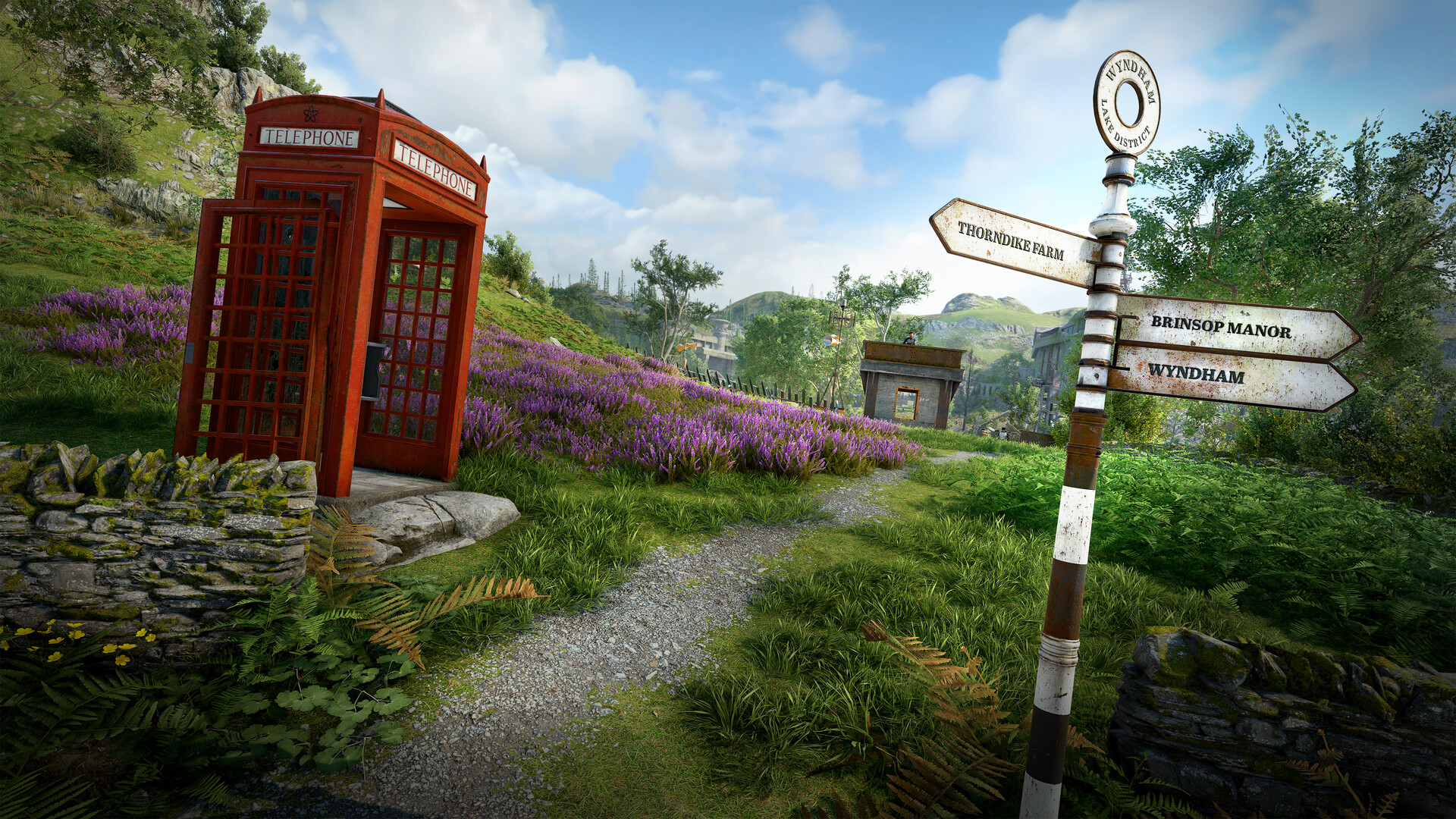
Survival depends on managing what you carry and what you can find. Scavenging brings resources and usable objects into the loop, while crafting lets collected materials become items for later situations. Barter gives supplies another route: they can have value in an exchange with a character rather than serving only as ingredients or equipment. Recipes, ingredients, limited inventory space and traders make preparation relevant beyond a single encounter. The player has to weigh immediate needs against future use. A trip through a dangerous area may produce materials, information or both, and the value of what you bring back depends on the problems you expect to face next. Even an apparently ordinary container can matter when supplies are scarce.
When conversation or avoidance cannot resolve a situation, Atomfall uses first-person combat with improvised and conventional weapons. Melee weapons, firearms and thrown explosives offer different responses, while tall grass and hidden-state indicators support stealth. Enemies can move from investigating a disturbance into open combat, so position and the decision to become visible matter. Skills and upgrades can improve the character's capabilities over the course of the investigation. Combat is one option within a broader survival framework, not the only way the setting communicates. Encountering a person or group can involve reading the situation, using a suitable item, trading or accepting a fight, depending on what is known and available.
Atomfall’s map and inventory support a journey made from distinct areas and ongoing investigations. The map helps situate travel between regions, while tracked leads keep discovered threads visible. Equipment such as a torch, metal detector and signal redirector can give the player another way to search or interact with a place. Searching bodies and containers, using storage, assigning items and crafting are all part of the practical layer between encounters. The design gives exploration an investigative rhythm: move into an area, notice something useful, gather supplies or evidence, and decide how that discovery changes the next destination or conversation. Information gathering and material preparation remain closely linked throughout the quarantine zone.
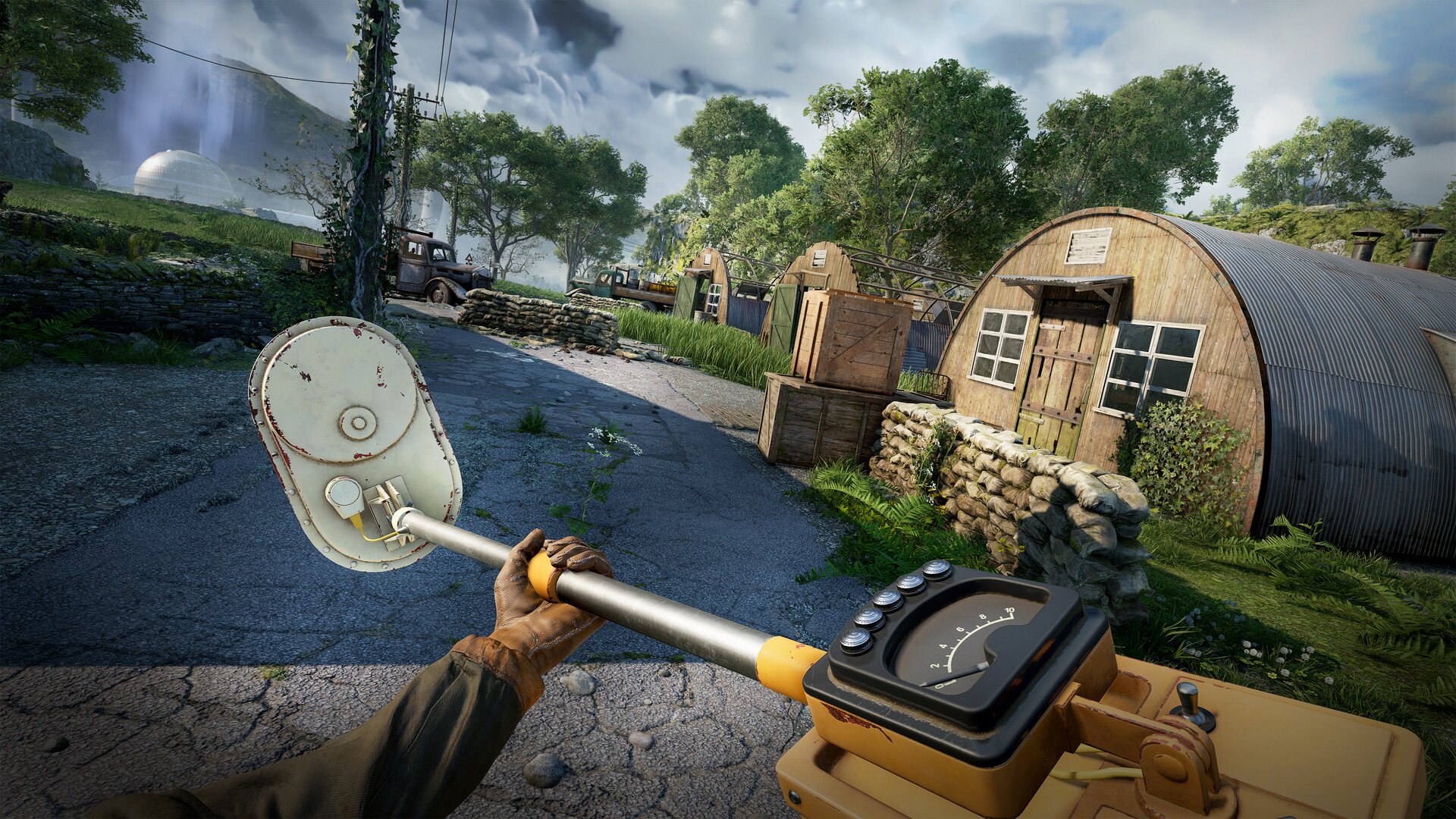
The base game's mystery belongs to the quarantine zone and the people living within it. The player can follow a lead into a government site, look for supplies on a rural path or seek information from someone whose account may change the next decision. Each approach carries practical consequences because resources and relationships matter to survival. Atomfall combines a recognisably British rural setting with a fictional post-disaster scenario, then gives the player several ways to engage with people and danger. Following leads, talking, bartering, scavenging, crafting and fighting all contribute to understanding and traversing the zone. The unanswered questions give the player a reason to keep investigating even when an immediate obstacle has been overcome.
- Developer
- Rebellion Developments
- Genre
- Single-player survival-action