
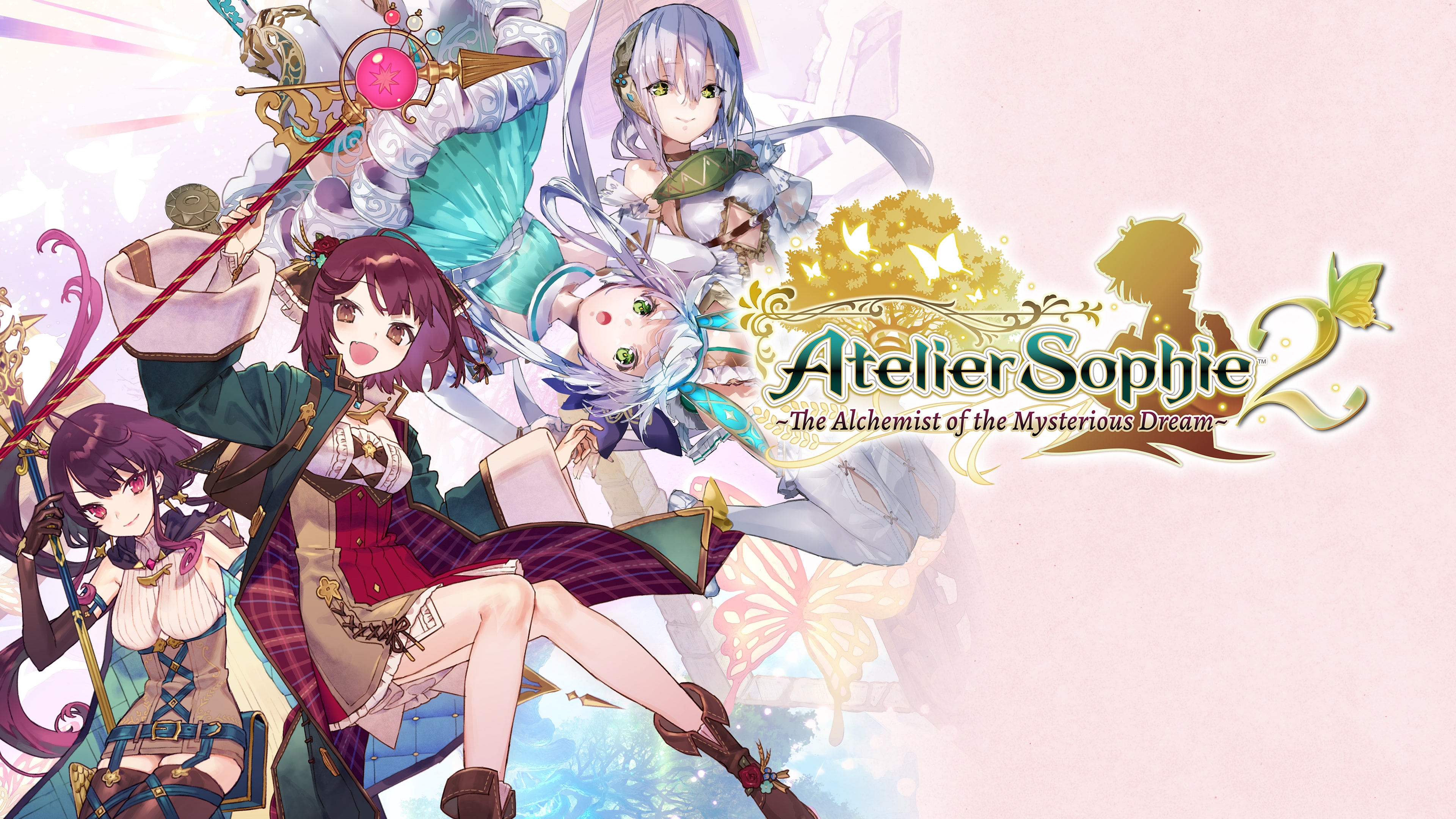
About Atelier Sophie 2: The Alchemist of the Mysterious Dream
After a strange vortex separates Sophie from Plachta, the young alchemist wakes in Erde Wiege, a dream world shaped by its inhabitants’ hopes. With new companions in Roytale, Sophie searches for her friend, gathers materials, develops recipes and uses alchemy to help people while finding a way forward.
Atelier Sophie 2: The Alchemist of the Mysterious Dream follows Sophie Neuenmuller and Plachta after they leave Kirchen Bell to continue travelling. A tree resembling one from Plachta’s dream draws the pair into a vortex, and Sophie wakes alone in Roytale, a town in Erde Wiege. This is a dream world associated with Elvira, a goddess who brings people there through their dreams. Sophie learns that Plachta is missing and begins looking for her, while also pursuing the goal of becoming a licensed alchemist like her late grandmother. The story’s central complication is visible early: another young alchemist named Plachta lives in this world, but she does not recognize Sophie. Their shared name and interest in alchemy make the search more personal than a simple journey between locations, while the unfamiliar rules of Erde Wiege give Sophie a new community to understand. The premise establishes the reunion as the main thread while leaving room for everyday requests, friendship scenes and discoveries about the dream realm.
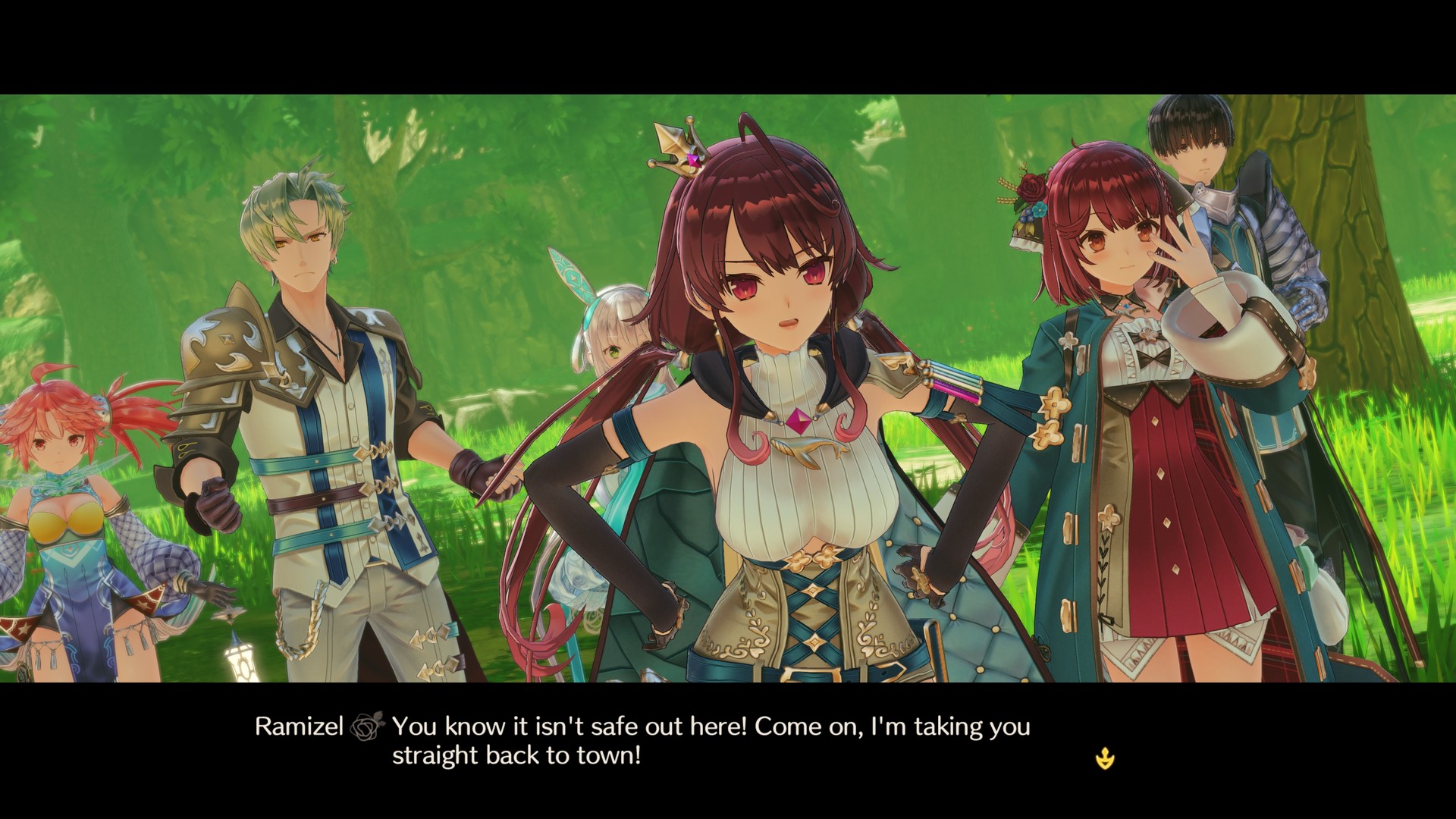
Roytale becomes Sophie’s base as she makes connections with people who know the dream world better than she does. Alette, a merchant who finds Sophie after she arrives, and Pirka, the shop’s owner, help orient her; the game’s official materials also identify Ramizel as an alchemist who mediates among Erde Wiege’s residents. The new Plachta is researching alchemy in her own atelier, and her lack of recognition keeps Sophie’s reunion goal unresolved. These characters are not just names attached to the premise: the story uses their different relationships to the town to connect Sophie’s search with its ordinary concerns. Residents can be spoken to, requests can be taken on, and party members’ personal stories develop alongside the main route. The town’s shop and atelier provide practical functions too, linking errands, item management and synthesis to the wider journey. The character episodes therefore give the player reasons to return to Roytale between expeditions, while the changing party lets the wider plot unfold through people who have their own roles and histories in this place.
Outside town, progression involves moving through distinct fields, gathering ingredients and dealing with monsters that can be engaged by contact or by striking them with Sophie’s staff. The environments are more than routes between story scenes: gathering points supply materials for recipes, and enemy victories provide both experience and ingredients. Different methods and tools apply at different gathering spots; a fishing rod or grass sickle, for example, is needed where that tool is specified. Gathering proficiency rises through use or relevant abilities, and higher gathering rank can reveal rarer materials. At special glowing points, Major Gathering turns collection into a short activity in which the player chooses a target material and can earn bonuses such as added components, extra quantity or improved quality. Exploration equipment also matters because its effects can change movement speed or battle rewards. Previously visited areas can be selected from the world map, and activating Journey Stones creates convenient fast-travel points within fields. This loop ties route planning to alchemy: a needed component may require another tool, a different gathering rank or another pass through an area.
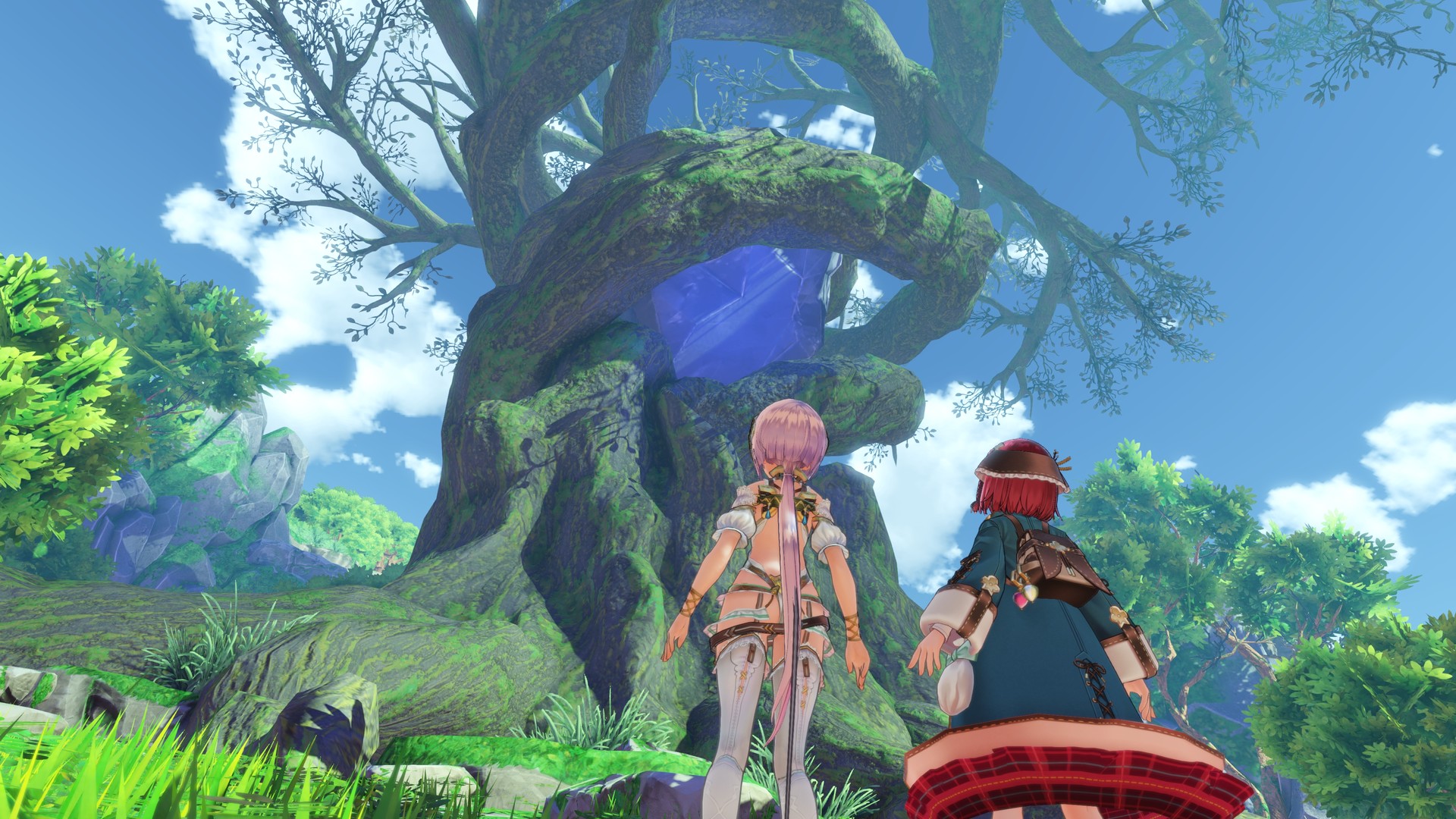
Weather is a practical exploration system tied to the layout of Erde Wiege. Each field has its own current conditions, and changing those conditions can affect which materials appear, which monsters inhabit an area and whether particular routes are passable. Weather control is performed at Dreamspace Stones with specially synthesized items, and the ability becomes available as the story advances. As a result, an obstacle in the landscape may call for a return to the atelier and a crafted weather item, then another trip to test the changed conditions. Time also moves forward when Sophie changes areas, completes synthesis or reaches event scenes; resting at the atelier’s bed or at an outdoor bonfire lets the player choose a later time. The world map opens access to explored fields, while the local map shows points of interest and story destinations. These systems make exploration a repeated process of noticing what is blocked or missing, changing the relevant preparation, and returning with new tools or knowledge. They also give gathering a useful context: weather changes both the route available and the ingredients worth seeking.
Alchemy is presented as a panel puzzle whose outcome depends on the materials selected and how their components are placed. At the cauldron, the player chooses a recipe, selects ingredients and places their alchemical components on the synthesis panel; every ingredient must contribute at least one component. Materials carry quality, traits and elemental components, so replacing one ingredient can affect the finished item’s strength and available effects. The panel’s links track combinations of components, while filling its slots and completing rows increases the chance of a Super Success, which substantially raises the result’s quality. After synthesis, up to three ingredient traits can be passed on. The game also separates Sophie’s synthesis from Plachta’s, with some items exclusive to one alchemist; Plachta’s option opens as the story progresses. Later systems deepen the puzzle rather than replace it: catalysts alter placement rules, and the Restricted Panel removes some slots in exchange for access to stronger effects. Friendship and character stories unlock Assist Skills, which can improve quality or permit additional ingredients when enough linked components match the assisting character’s element. Ingredient gathering, relationship progression and item crafting therefore feed into the same production choices.
Battles begin seamlessly while exploring, preserving the field context as the encounter moves into turn-based combat. Up to six party members are arranged in an Attack team and a Back-up team, with each group serving a different purpose. The front team takes ordinary turns using attacks, skills, equipped items or guarding; the back team supports special commands that consume Technical Points or the Dual Gauge, and advances if the front line falls. A staff strike that connects before contact begins a fight with TP and an advantage. Twin Actions let paired allies coordinate, Support Guard provides protection, and Dual Triggers spend the gauge on powerful combined attacks. Each turn’s order is visible on a timeline, and checking enemy actions helps show who is being targeted. Skills and items can carry physical or magical properties and elemental attributes, making enemy weaknesses relevant to turn choices. Winning provides experience and materials, feeding both character development and the next round of synthesis. The arrangement makes party composition and resource timing part of the same plan: the back row can enable a decisive action, while its reserve role also protects the party from losing its only active formation.
Character growth links combat, alchemy and relationships. Experience from battles raises character levels, while Ability Points can be spent to learn or strengthen skills used in combat or exploration. Some AP comes from automatically generated party quests, which ask Sophie or another party member to meet a condition and can be checked through the Story Menu. Alchemy has its own level, increasing with practice and governing access to recipes; recipes may also require ingredients that the party must locate or produce. Sophie’s recipe ideas are discovered through activities including gathering, synthesis and fighting, so the player’s ordinary routine can open new crafting options. In town, the greenhouse offers another way to grow and harvest materials, and the atelier serves as the place to synthesize, manage items and rest. Friends’ personal stories increase friendship, which in turn reveals additional Assist Skills for use at the cauldron. This progression does not reduce to gaining levels alone: new tools and recipes expand what can be gathered or made, while party quests and story scenes add capabilities that change how the same synthesis panel can be used.
The presentation places expressive character models and a range of open environments inside the dream setting, with fields, town spaces and alchemy rooms providing distinct contexts for the same party. Sophie’s travels are structured around returning to the atelier, where the cauldron and the characters’ relationships sit alongside practical preparation; the official manual also describes an in-world Photo Mode for posing a character and applying filters. The base game is a single-player role-playing game developed by Gust and published by Koei Tecmo, released for PlayStation 4, Nintendo Switch and Windows PC through Steam. Its Digital Deluxe Edition adds a set of costumes, weapons and useful items to the main game, while the Ultimate Edition includes that set and the Season Pass. The Season Pass’s additional Atelier Plachta scenario follows young Plachta after her arrival in Erde Wiege, with Ramizel and Diebold available as party members; that episode and its area are separate additions rather than part of the base game’s opening search.
- Developer
- Gust
- Genre
- Alchemy RPG; role-playing game