
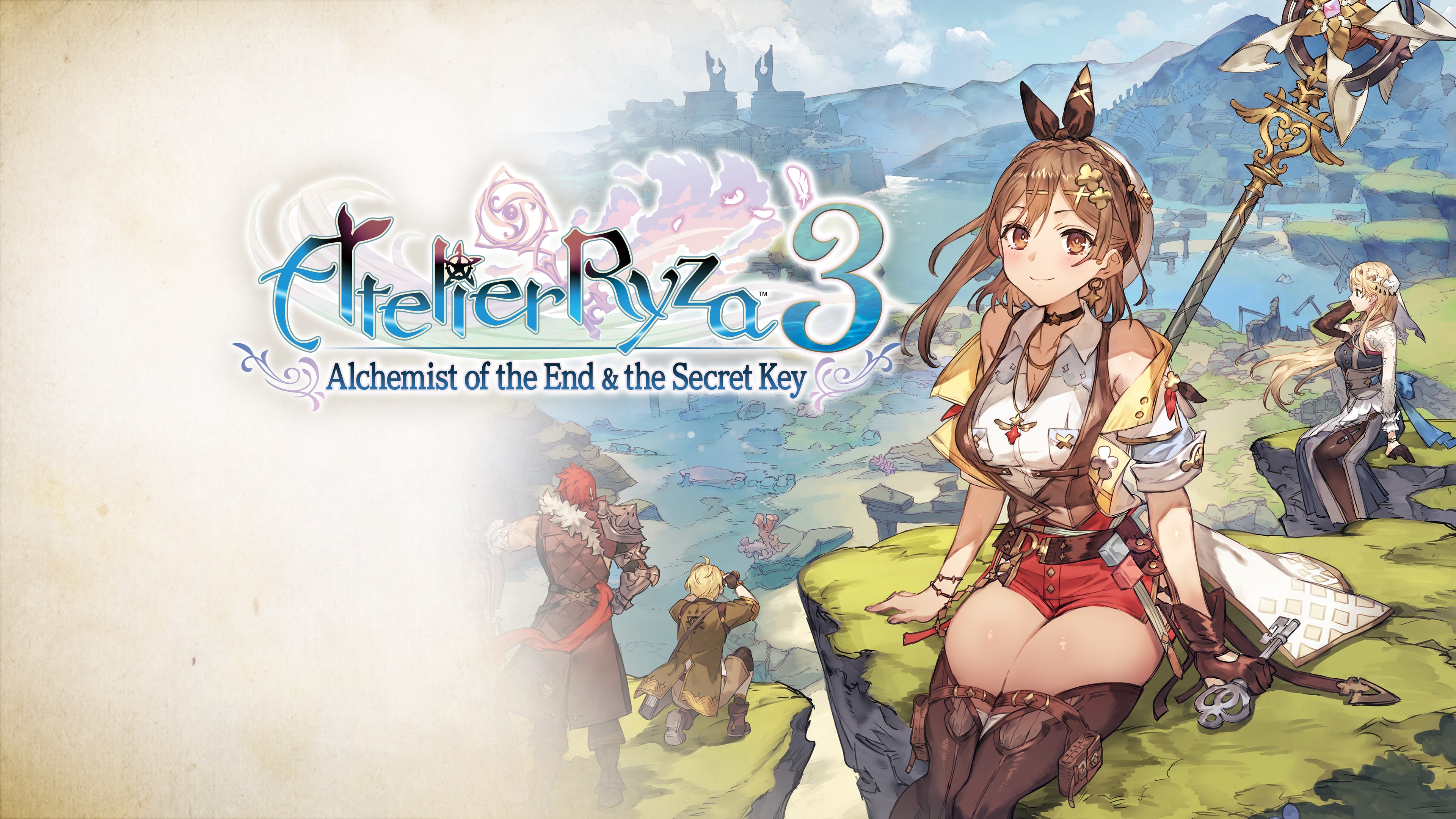
About Atelier Ryza 3: Alchemist of the End & the Secret Key
Reisalin “Ryza” Stout and her friends leave Kurken Island to investigate the Kark Isles, whose appearance threatens their homeland. Across four connected regions, gather ingredients, synthesize equipment and items, and use Secret Keys in exploration, alchemy and real-time battles as the crew pursues the mystery of the Code of the Universe.
Atelier Ryza 3: Alchemist of the End & the Secret Key follows Reisalin Stout—usually called Ryza—one year after the events of Atelier Ryza 2. Her peaceful life on Kurken Island is interrupted by news that a group of islands has appeared in nearby waters and is affecting her home. Ryza and her friends travel to the Kark Isles to investigate. Deep in unusual ruins, they encounter an enormous gate and Ryza hears a voice urging her toward the Code of the Universe. The mystery links the new islands to the roots of alchemy and to the futures Ryza and her companions are trying to shape. The game continues the Secret trilogy with the same central protagonist and a returning group of friends, while introducing new characters encountered during the journey. Its central movement is outward: from familiar island life into several regions where environmental discoveries, ancient structures and the crew’s personal aims intersect.
Ryza’s party is made up of returning companions and new allies, each joining the expedition with their own history and role in the group. Klaudia and Lent return from earlier adventures, while new faces broaden the cast as Ryza follows the islands’ mystery. Their destination is not a single dungeon: the group follows a trail of unusual ruins and ancient structures while pursuing the islands’ mystery. The changing landscape is both a route through the story and a source of materials for Ryza’s craft. As old relationships meet new circumstances, the trip also gives familiar characters a chance to reconsider what they want from the future. The Kark Isles are therefore not only a puzzle to solve: the journey gives the group a changing place in which to pursue individual goals and decide how those goals fit alongside Ryza’s investigation.
Movement through the field combines direct traversal with tools for finding points of interest. The compass indicates nearby landmarks or tracked quest objectives in the direction Ryza faces, while the minimap marks the current position and destination. Discovering a landmark reveals the surrounding area on the map, and previously found landmarks can later serve as fast-travel destinations. Four regions each contain multiple maps connected seamlessly within that region; travel between regions or by fast travel loads separately. Fields contain visible gathering points for alchemy ingredients, monsters and treasure chests. Campfires provide places to rest or cook; resting advances the time of day, restores health and the CC Bottle, while meals grant temporary stat benefits. Traveler’s Memoirs found in the world can be read from the guide, and some offer clues to hidden treasures or powerful enemies. These details give field movement distinct purposes: landmarks chart the surrounding area, camps provide a preparation stop, and written clues can point toward discoveries beyond the direct quest route.
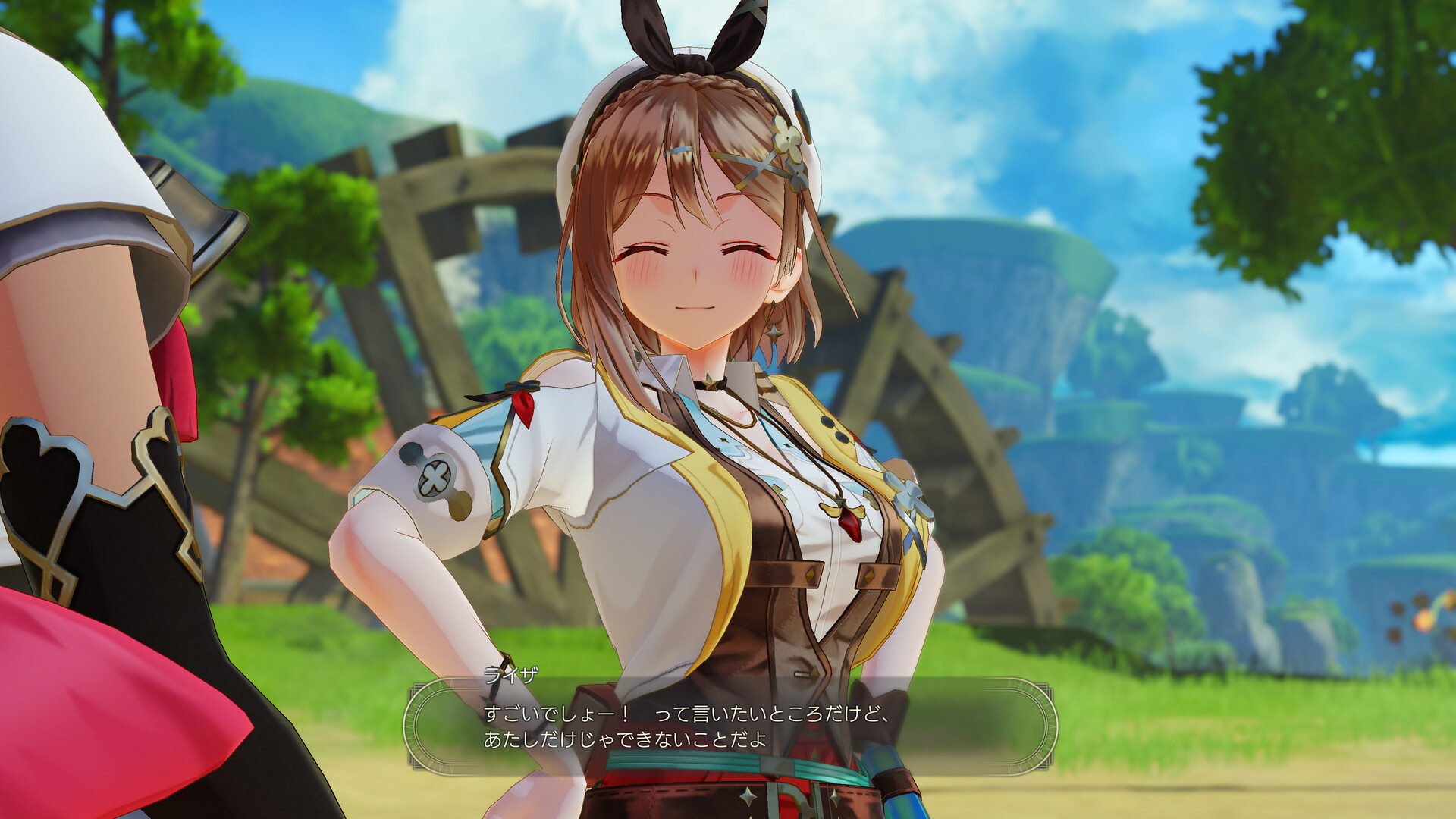
Alchemy is Ryza’s defining craft and a practical link between gathering and preparation. At an atelier or secret hideout, she can synthesize items and save; as the story progresses, new ateliers can be built in different locations. Materials collected in the field feed into synthesis, where recipes and ingredient choices determine the crafted results. Building up equipment and useful items lets the party prepare for stronger enemies and longer expeditions. Rare gathering points can yield Super Traits, giving certain ingredients additional properties for crafting. At bases, the basket of gathered materials transfers into the container and party HP is fully restored, making the return trip useful before another synthesis session. Supply points that appear during exploration offer items when unlocked with a Secret Key carrying an adventure effect, while some barriers require a key of the appropriate element. These are two separate field applications of keys: one opens access, the other rewards an interaction point with supplies. The resulting loop is specific: gather materials, return to a base to organize and synthesize, then carry crafted tools and equipment into the next field excursion.
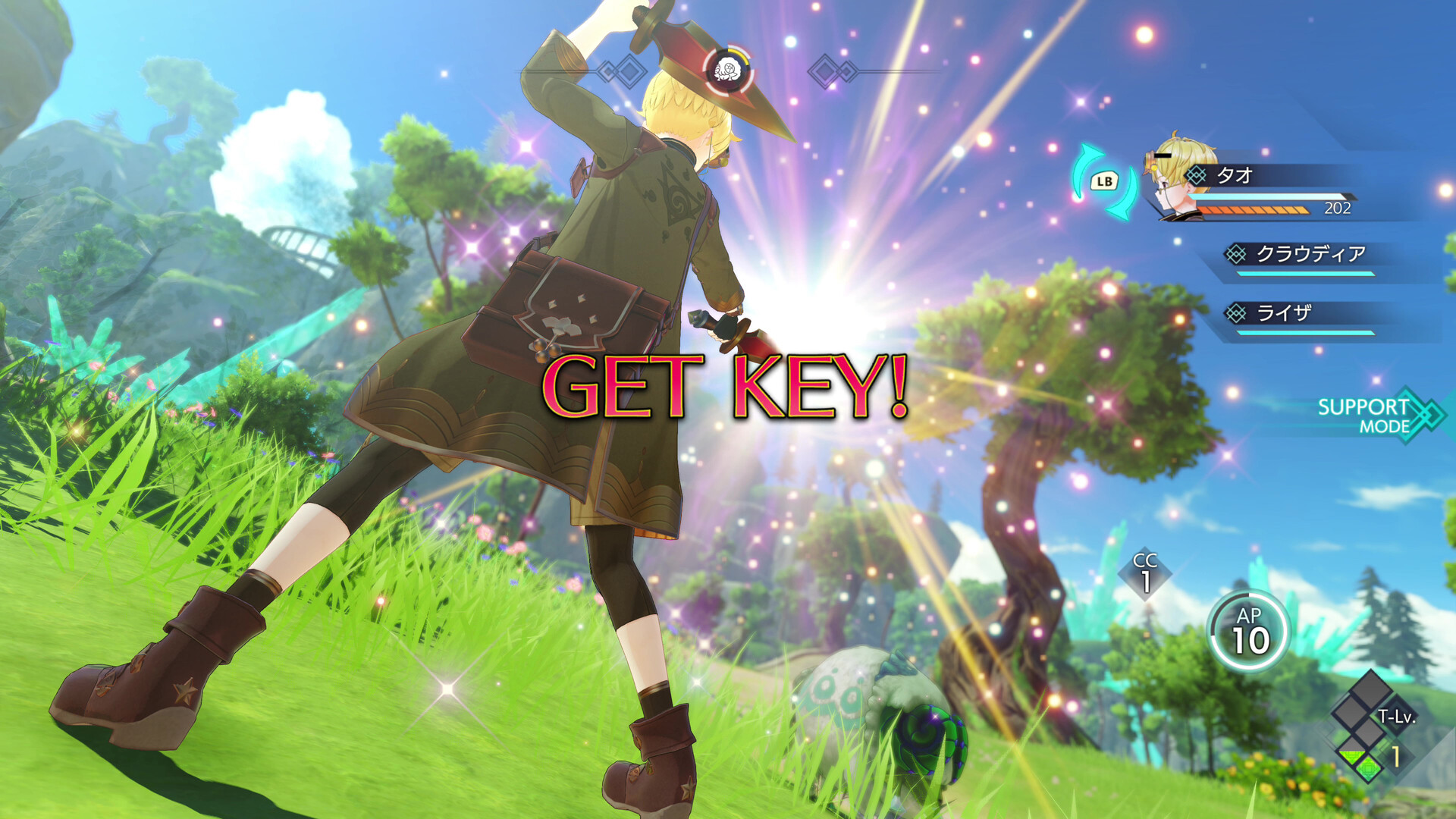
Secret Keys are the game’s central new system, and their effects span exploration, gathering, synthesis and battle. Ryza can create Secret Keys at landmarks once their Landmark Power reaches 100%, using a Hollow Key or, later in the story, a Pristine Key. Landmark Power is unique to each landmark and recovers over time after a key is made. Keys can also be created from enemies during combat; the resulting key depends on the monster, and stronger enemies can yield better keys, though creation is not guaranteed. Keys have limited uses, so the player chooses when to spend them. At base or at campfires, Hollow Key uses replenish; Pristine Keys are consumed when used to create a more powerful Secret Key. Secret Keys can hold multiple effects drawn from four categories: symbol, buff, adventure and synthesis. Different effects determine where a key can be applied: they can unlock matching elemental barriers, open supply points, activate synthesis bonuses or provide battle effects. A synthesis-effect key can increase the number of ingredients added to a recipe or apply another effect to the finished item, consuming one of its limited uses. In combat, Key Modification uses a key to strengthen an ally temporarily, while keys equipped for symbol effects can raise character statistics or grant a role. Each character can equip one such symbol key, while the shared key bundle can hold up to ten Secret Keys for use in exploration or combat. This system turns landmarks and enemy encounters into opportunities to shape a resource with several possible applications.
Battles are real-time party encounters against field enemies and larger threats. Contact with a monster or striking it with a swing triggers combat, so an encounter can begin as part of moving through the environment. Secret Keys make their most immediate contribution here through Key Modification, which temporarily strengthens an ally; other battle effects vary by key. Keys can support faster repeated attacks and continuous skill use, linking their effects to the pace of action rather than only to permanent character growth. Keys can also be created from enemies during combat, although creation is not guaranteed and the resulting key depends on the monster. Because uses are limited, the player weighs an immediate combat benefit against spending a key later on synthesis or field access. That choice links the encounter to exploration: the party may make a key while fighting, then carry the resulting resource into a later situation. Alchemy supports this action loop with equipment and items crafted from gathered ingredients, so field materials and combat preparation remain connected without making every battle simply a key puzzle.
Random Quests can appear during exploration, with some carrying time limits and others remaining available without one. The field display tracks the current quest and its objectives, while notices identify random tasks in progress, separating timed tasks from those without a deadline. Ryza can track a quest objective and see its direction on the field screen. If time is running short or Ryza moves too far from where a task began, its notice flashes; completing or abandoning the quest clears it. These incidental objectives add a separate layer to the tracked story route, asking the player to respond to what appears in the field rather than only following a fixed destination. The base game is available on PC, PlayStation 4, PlayStation 5 and Nintendo Switch; later trilogy bundles are separate packages.
- Developer
- Gust / KOEI TECMO GAMES CO., LTD.
- Genre
- Role-playing game