
About Assassin's Creed Syndicate
In 1868 London, Assassin twins Jacob and Evie Frye build the Rooks to challenge Templar-backed control of the city. Assassin’s Creed Syndicate combines selectable protagonists, stealth and close combat with rope-launcher traversal, carriage pursuits and district activities that gradually shift London’s balance of power.
Assassin’s Creed Syndicate is set in London in 1868, amid the Industrial Revolution, and follows twin Assassins Jacob and Evie Frye. They arrive in a city where Templar influence is tied to an entrenched underworld, then build the Rooks, a street gang that can challenge the Blighters who control neighborhoods. The campaign combines the twins’ conflict with that power structure and their efforts to help people harmed by it. London is the central open world: its crowded streets, rooftops, public works and River Thames are spaces to cross, investigate and fight through. The premise connects the Brotherhood’s struggle to local activity, so missions about targets and allies sit alongside attempts to change who holds influence across the city. The main story focuses on the Fryes and their network in Victorian London.
The two protagonists can usually be switched freely while exploring, although some story missions specify Jacob or Evie. They share access to much of the same equipment, while their skills and the upper parts of their trees give each a different emphasis. Jacob’s abilities support direct combat; Evie can specialize more heavily in stealth. This gives players a choice about which twin to develop and bring to many activities, without making them identical or turning the game into a system where any mission can always be assigned to either character. Both use the familiar Assassin toolkit of hidden blades, ranged tools and close-combat weapons, but the story also uses their contrasting temperaments to frame how they approach the work of taking on London’s ruling order. Their progress is tracked separately, so skills invested in one do not automatically become the other’s build.
Movement is built around climbing, rooftop free-running and quick transitions through a large city. Syndicate’s rope launcher provides another route across London: it can pull a twin up a tall façade or create a line between distant buildings, helping cross streets without dropping to ground level. The line can also place a character above a guarded position for an aerial takedown. Carriages offer a street-level alternative for travel and pursuits; players can hijack and drive them in street races, then shift onto rooftops or moving vehicles to track down enemies or escape after a raid. Steam-powered boats add routes along the Thames. These options make planning a route part of approaching an objective: a roof can offer concealment and height, a rope can cross an open gap, while a carriage can close distance quickly through the street grid.
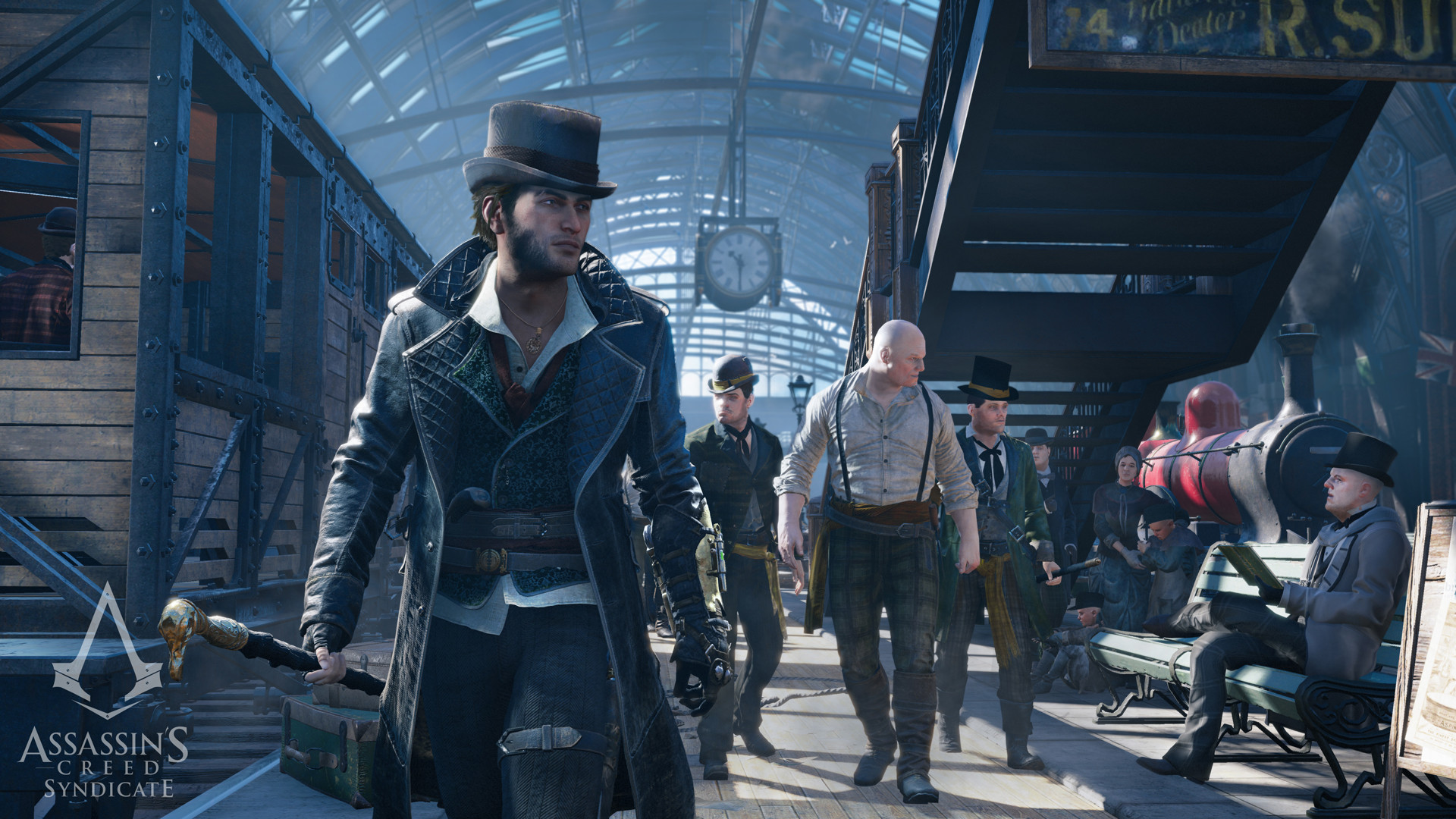
Missions can be approached through stealth, combat or a mixture of the two. Evading sight lines, climbing above guards and entering a stronghold quietly suits an infiltration; when a confrontation begins, the Fryes can counter attacks and chain quick strikes, using weapons such as Jacob’s kukri, brass knuckles or a sword cane. A hallucinogenic dart can send a target into a frenzy against those nearby, turning one enemy into a short-lived distraction during a group encounter. Optional mission conditions can reward a particular approach, while other objectives permit a direct fight. That flexibility matters because many targets are surrounded by lookouts, gang members or guards rather than waiting alone. Players can observe a site, use the environment to create an opening, and then decide whether to remain hidden or turn the encounter into a street battle.
The Rooks’ campaign turns district control into a series of connected activities. London’s boroughs contain Blighter-controlled targets and locations; completing local tasks weakens that hold and builds the way toward a final gang confrontation for the district. Activities include taking over a gang stronghold, eliminating a marked Templar, freeing imprisoned Rooks or carrying out a specified objective such as burning documents. Some missions let the player choose a quiet or open approach, while a requested condition may ask for a particular method. The district’s gang war then brings Jacob or Evie and Rook allies into a street fight against the Blighters and their leader. Taking territory changes which gang has the local advantage and contributes to the wider effort to wrest London from Templar control.
The gang has its own upgrade tree, separate from the twins’ personal skills. Ringleader upgrades strengthen Rooks and can weaken the Blighters; the Swindler branch improves gang income and the capacity of the safe, while Insider upgrades affect encounters around London. These purchases require cash and crafting materials, and higher ranks depend on earlier investments. Rooks can accompany the Fryes, help in fights and support some missions, so the gang system affects more than the ending of a borough activity. Choosing income-oriented improvements can build resources for later upgrades, whereas combat-oriented ranks make gang support more useful when a fight breaks out. The result is a second progression track: personal ability develops through experience, while the Rooks become a more capable organization through funds and materials gathered during play.
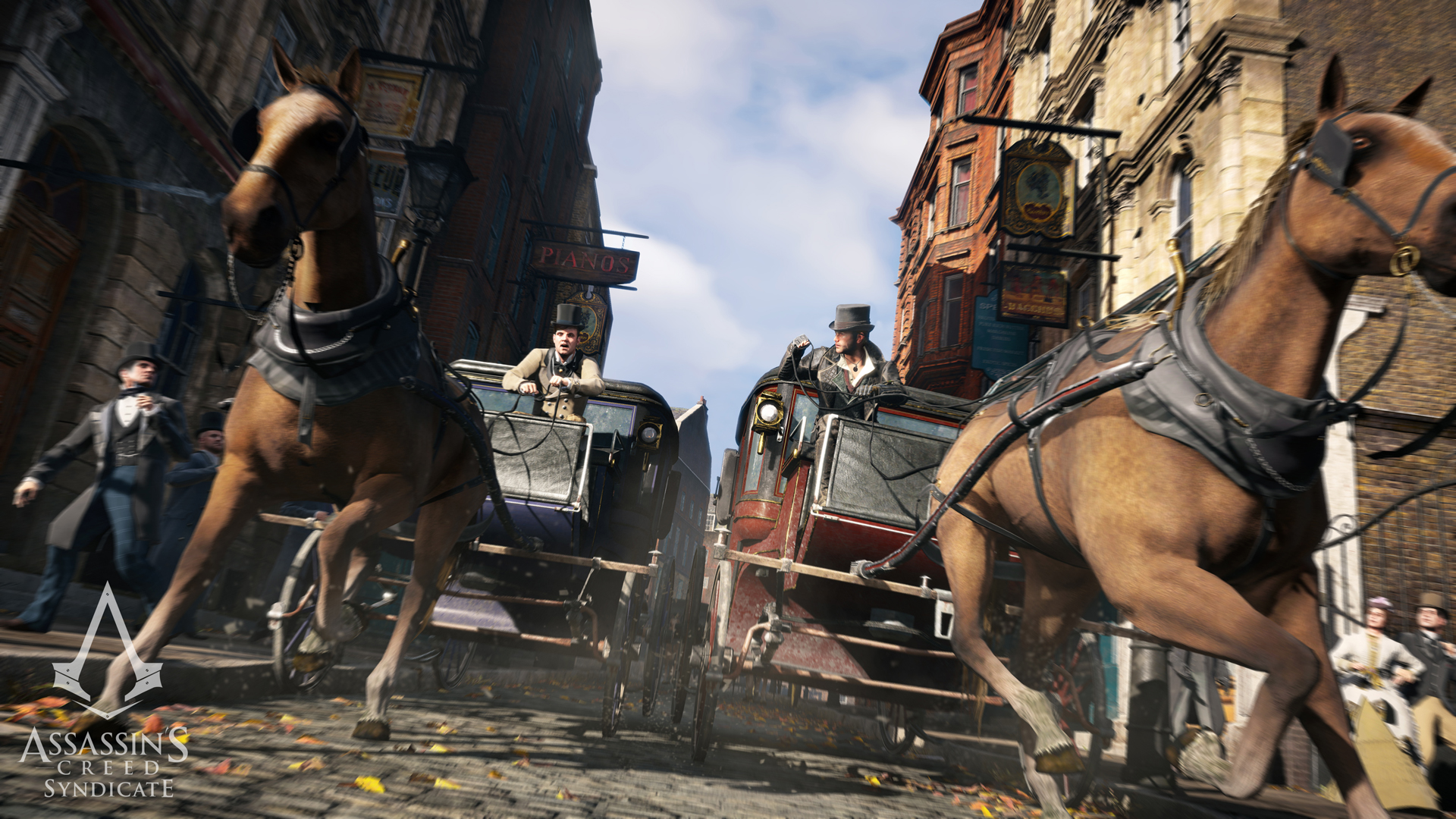
The Fryes use a train as a mobile headquarters, so the railway is more than a backdrop for pursuits and robberies. It moves through the city while Jacob and Evie work across different boroughs, giving their gang a base that belongs to the world they are trying to change. Returning to the train links scattered operations: a lead can take the twins out into a crowded district, while the moving headquarters gives them a place to regroup before the next target. The game also uses carriages as moving cover and lets the Rooks travel with the twins when there is room, tying the street-level gang campaign to the vehicles crossing London. This makes transport part of the campaign’s identity, whether the player is climbing above a road, chasing a carriage, fighting through a train or returning to the Fryes’ base.
- Developer
- Ubisoft Quebec
- Genre
- Action-adventure