
About Arknights: Endfield
Hypergryph's spin-off launched globally on 22 January across Windows, PlayStation 5, iOS and Android in 2026, and it is a free-to-play gacha game with a top-up store rather than a paid box.
The combat half: a four-person squad and a shared gauge
You take a squad of four onto the field and fight in real time, switching between them as the fight demands. The vocabulary is compact and worth learning properly: basic attacks that break into normal, drop, final and execution versions, plus tactical skills, combo skills and team ultimates. Combo skills are the centrepiece of the system, and each one has its own trigger condition — the impressive chains are built by setting those conditions up rather than by pressing a fixed rotation in order.
Switching is the heart of it. Operators who are not under your control only throw basic attacks, so the useful skill is knowing when to hand the field to somebody else and what their kit wants before you do. The four-member team shares three skill gauges, any operator can spend one on a tactical skill, and the gauges recharge over time — but heavy basic attacks also add segments to them, so the way you finish one sequence pays for the next. Those heavy hits build an enemy's imbalance gauge too, and when it fills they enter an imbalanced state where they take more damage and your next heavy attack lands as an execution. Learn to read that bar and you stop spending your biggest hit on a light opening.
The other half: an AIC factory with its own vocabulary
The second game inside Endfield is the AIC factory, and it is not a side activity you can ignore for long. You harvest resources from remote mining nodes, refine and process them at specific machines, and route the output through conveyor belts, all while managing several ore types and the power budget that keeps the whole complex running. Assigning inputs and outputs and routing electricity is a constraint you satisfy rather than a decoration you place.
Anyone who has played a factory builder will recognise the shape of the problem immediately: throughput, bottlenecks and layout. What makes it more than a bolt-on is the tie back to the rest of the game. The base supplies the progression materials you need to grow your operators, so the factory is a means of production for the gacha side rather than an optional engineering sandbox. Whether that is the best feature or the biggest distraction is the argument the game keeps having, and I come down on the side of it being the reason to play.
Ziplines, power and shared building
Traversal is the smaller system worth knowing before you commit. Ziplines strung across the map link distant mining nodes back to your base, which turns the terrain into part of your factory layout rather than a set of fast-travel points you unlock and forget, and they stay the practical way to keep a remote operation supplied. Power is the other half: routing electricity and assigning inputs and outputs is a constraint you have to satisfy rather than a decoration, and an industrial complex that overdraws is a complex that stops.
Endfield also shares construction between players in a limited way, so the world around your base is shaped by what other people have built, and blueprints can be passed around for you to import and adjust rather than rebuild from scratch. It gives a single-player space a feeling of company, and the useful side effect is that you can study somebody else's layout before you commit to your own.
Operators, headhunting and what money buys
Operators are the characters you build the squad from, and the acquisition loop is the one this genre established: you pull for them. Endfield runs its own recruitment banners, and the current cycle includes a themed headhunting event, which is the polite name for the gacha. There is a top-up store, and the game is honest about being free-to-play with purchases rather than hiding it behind a demo.
The practical decision is where to spend. Operators give you more squad options; the factory gives you the materials to bring those operators up. Pull a new character with nothing banked to equip them, and the pull has not done much for you yet, so the sensible way to play is to decide what you are building toward before you start pulling.
Where the game is right now
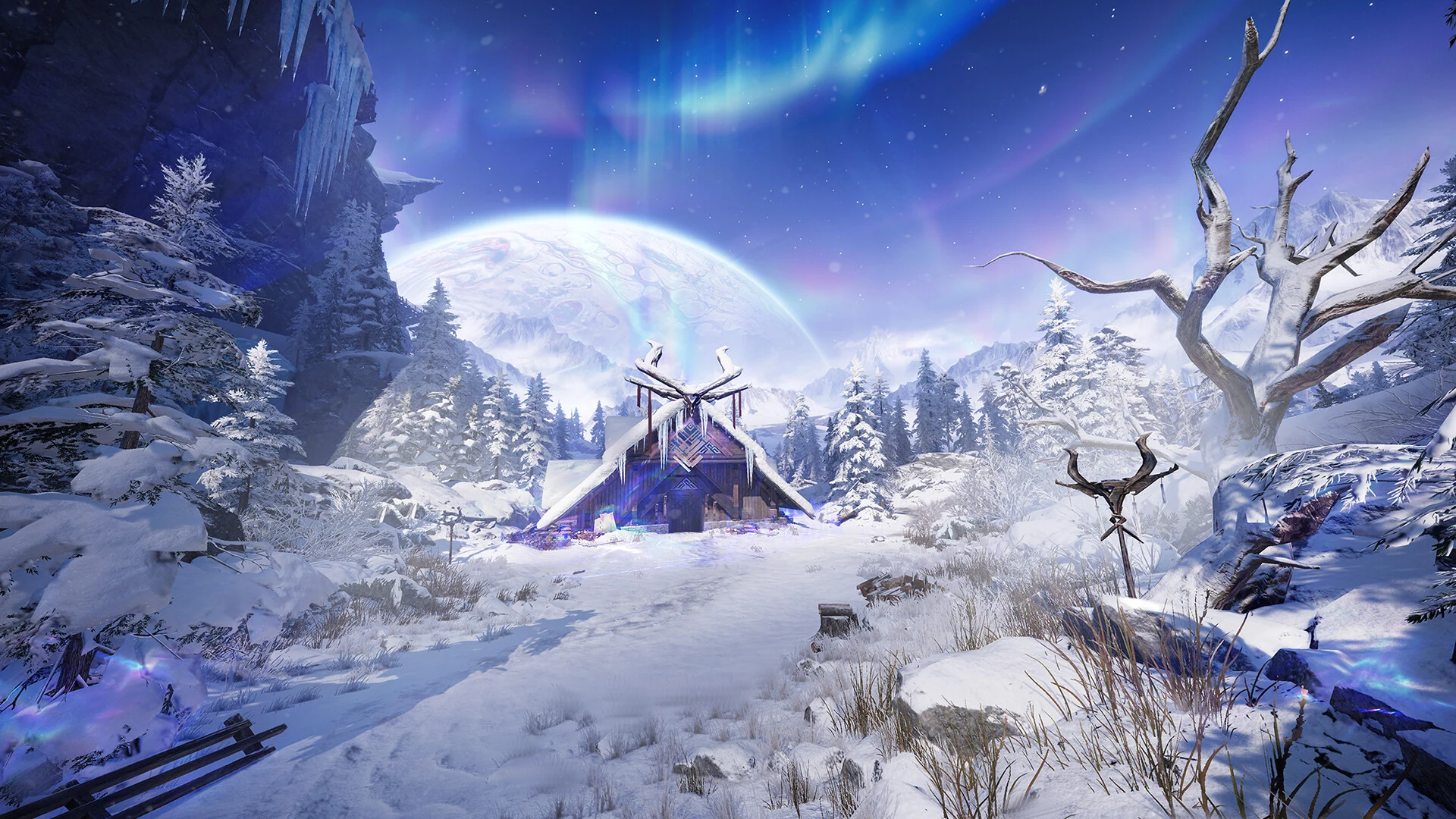
Endfield is a live service on a version schedule, and the current cycle is the Dreamscape of Wind and Snow update. PC players are running the game through its own client for now, and a limited-access Steam playtest has been announced ahead of the Steam release, which is still listed as coming later this year. If you are starting now, expect the game to keep moving under you, and expect the long-run content to arrive as events rather than as one finished campaign.
Should you play it
Yes, if you want an action RPG with a real second discipline attached to it. Fighting through a region and then rebuilding your supply line to support the next one is a genuinely unusual loop, and the factory is structured clearly enough that improving a layout gives you something concrete back.
Skip it if you want a story you can finish and put down. Operator acquisition runs on banners, the menus are dense, and the systems assume you will keep coming back between events. If that shape of game is a dealbreaker, the factory will not rescue it, because the factory exists to feed the roster.
Go deeper with V4mp
- Developer
- Hypergryph
- Genre
- Action RPG
Explore Arknights: Endfield further
Explore the wiki for detailed reference pages on the game's world, systems, items and locations.