

About Arise: A Simple Story
Arise follows an elderly man through memories of a life shaped by love, hardship and loss. In a wordless 3D platform adventure, he crosses landscapes drawn from those recollections, shifting time to alter seasons and moving events. Each chapter joins environmental puzzles and traversal with scenes from the life he is remembering.
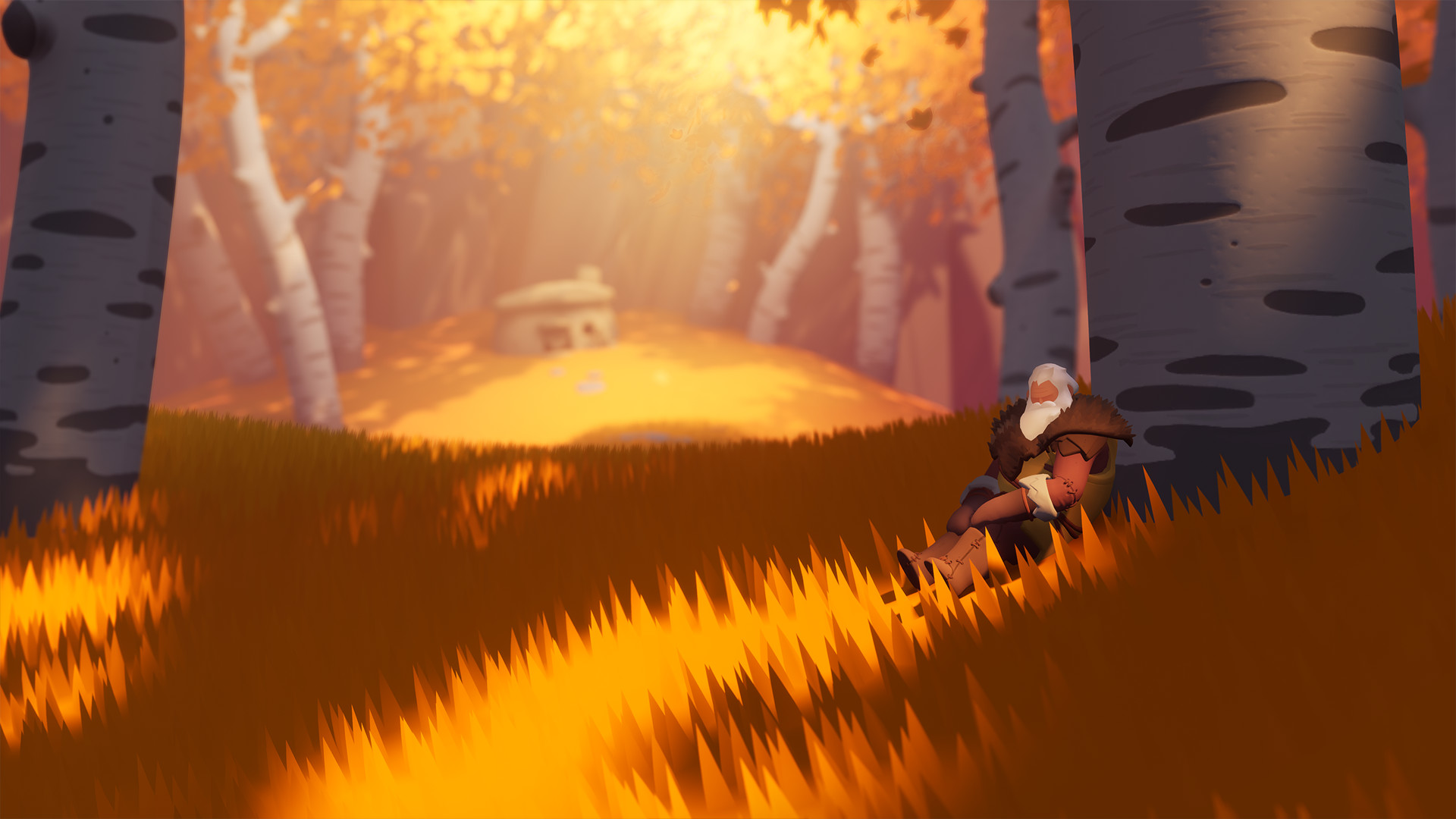
Arise begins at the end of a life and turns remembrance into a journey through places that feel both physical and symbolic. Its central figure is an elderly man whose memories lead across a mountain and into scenes from the ordinary life he shared with the person he loved. The story is conveyed without spoken dialogue, using the man's movement, brief animated scenes, environmental details, music and changing landscapes to establish what each memory means. Rather than presenting a detailed biography through exposition, the game lets the player infer a relationship from fragments: an isolated beginning, companionship, shared happiness, hardship and eventual loss. The emotional arc is personal, but the moments are arranged around experiences that are broadly recognizable. The setting changes as the memories change, so the landscape itself becomes part of the storytelling. A snowbound slope, a dense forest or an oversized garden is not a conventional location to map and revisit; each is a distinct stage shaped around a period or feeling in the man's past. The player advances through these scenes as the old man, with the sequence of levels carrying the recollection forward. The game keeps its focus on this single life and the changing world around him, leaving the relationship's details to be read through the scenes rather than explained in text.
Movement is the practical foundation of each chapter. The man walks, jumps between ledges, climbs rough surfaces and uses a grappling hook to cross gaps or swing through sections where ordinary platforming is not enough. These actions create a steady rhythm of looking ahead, finding a route and timing a crossing. The world is three-dimensional, but the camera generally frames the route rather than inviting unrestricted exploration, so progress is structured through a succession of spaces. Within that path, the player can look for small illustrated collectibles that add visual keepsakes to the larger recollection. They do not turn the adventure into a statistics-driven quest: the main progression comes from reaching the next scene and seeing how a new place changes the story. The platforming is deliberately paired with the narrative. A climb can lead from an exposed, difficult stretch into a calmer view, while a gap or unstable surface makes the player actively participate in moving through a memory instead of only watching it. There is no combat system to master and no character build to optimize. The challenge comes from reading the terrain, using the old man's available actions and discovering how a particular level's environmental rule affects a safe route. The game keeps the scale intimate by making traversal, observation and the unfolding of memory its central activities.
Time manipulation is the main puzzle tool, and its role changes with the landscape. The player can move time backward or forward and, in key moments, pause it. These controls affect the environment around the man, changing what can be crossed or reached. In snowy areas, the passing of time alters how much snow has accumulated, raising or lowering parts of the route. In other sections, a shift in time moves natural elements through a useful position: bees travel through the garden, and a sunflower turns as the sun moves. Such changes make the scenery behave as a platforming system. The player is not merely waiting for scenery to animate; they adjust its timing so that the route becomes possible. Later situations combine time control with movement. A falling ledge or object can be brought to the point where it offers a foothold, then held in place long enough for a jump or climb. Pausing becomes especially important where a moving environmental event briefly reveals a safe passage or changes a threat in the surrounding space. The specific interaction belongs to each level, which lets the same control produce different kinds of puzzles rather than a single repeated switch. The design asks the player to observe what in the scene responds to time, test the direction of change and coordinate that change with the man's movement. This links the central mechanic to the themes of memory: the player can revisit, accelerate or hold a moment while the remembered world rearranges itself.
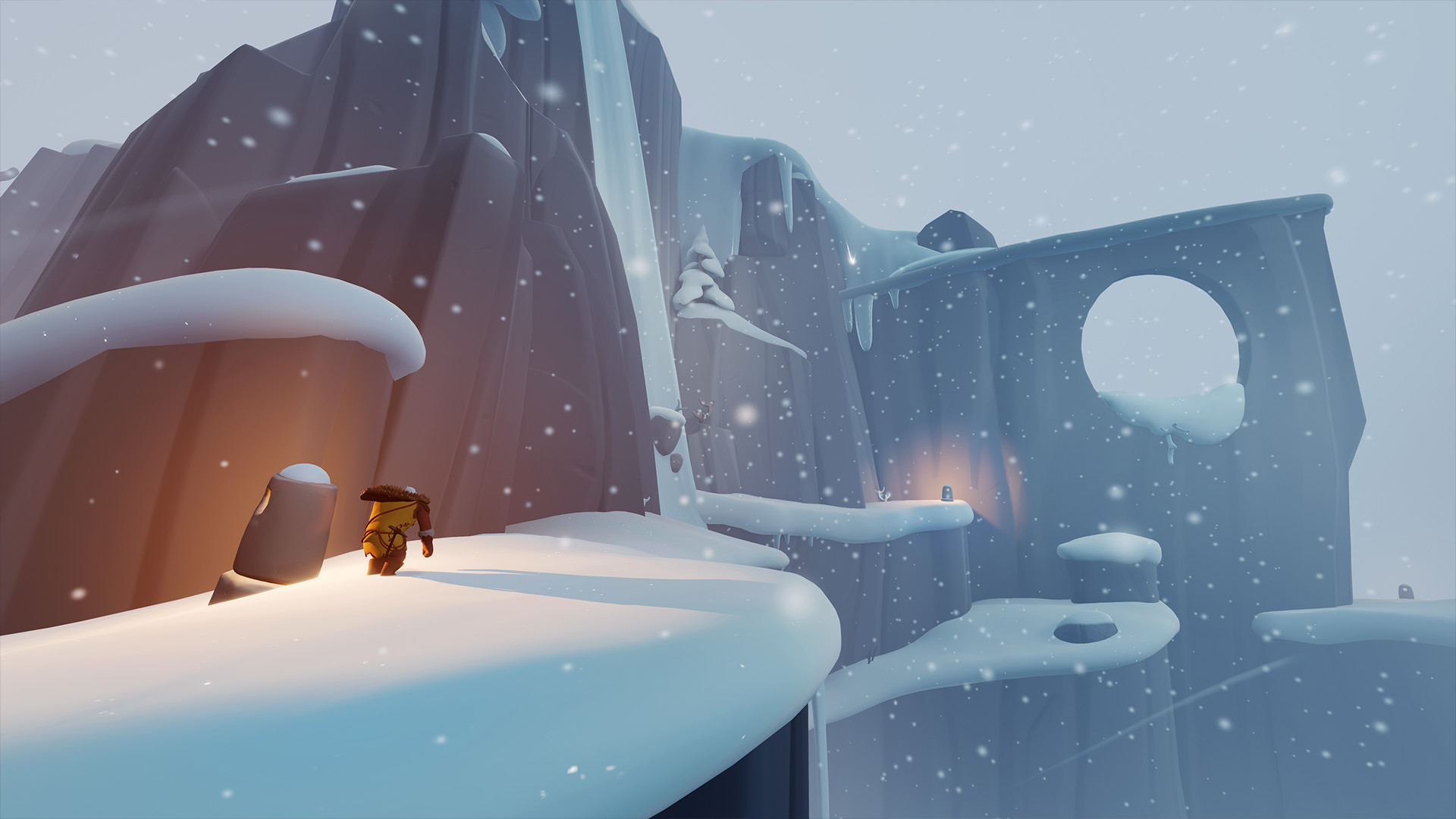
The chapters introduce their ideas through distinct settings and then build on them. A level may begin with a clear environmental pattern, such as changing snow or moving plants, and then ask the player to combine that observation with jumping, climbing or grappling. Forest sections put more emphasis on the hook and on surfaces that alter how a swing or landing works; later obstacles can bring back earlier ideas under a different visual and timing context. The sequence is linear, so the player does not choose a route across a large open map or decide which memory to see next. Instead, the progression is authored as a chain of stages, each with its own visual identity and a small set of interacting rules. This structure allows a new scene to change both the mood and the practical problem without requiring a new inventory of abilities. The most useful progression is the player's growing familiarity with the time controls: first seeing how a landscape changes, then anticipating when that change will help movement. There are no experience points, equipment tiers or upgrade tree between chapters. The memories themselves provide continuity, while the mechanics vary in service of the scenes. The illustrated collectibles add optional discoveries along the way, and their images provide another way to connect the man's shared life to the environments he passes through. Completion is therefore measured by moving through the memories and their platform puzzles, not by accumulating power or clearing combat encounters.
The story's emotional direction comes from the contrast between the old man travelling alone and the glimpses of a life that involved another person. Joy and sorrow are expressed through changes in color, scale, pace and music as much as through events. The landscapes can make a simple experience feel monumental: plants tower overhead, weather reshapes familiar ground, and natural forms become routes through a place that exists as a memory. The game does not name a large cast or build a social world through dialogue; it keeps attention on the central pair and on the way their shared past is recalled. That choice makes the player's interpretation important. An encounter with a place or object can carry emotional weight because it sits within the order of memories, even when no character explains what to feel about it. The stages are not a branching narrative with a range of character endings. They form a single authored sequence, while the player's moment-to-moment decisions concern how to cross each obstacle and when to manipulate time. That division gives the story a clear shape without asking platforming choices to determine the remembered relationship's outcome. The journey asks the player to move through changing recollections, not to rewrite the life being remembered. Its narrative and mechanical progression consequently meet in a focused way: each new setting is both a platforming space with a rule to understand and an emotional scene within the man's larger remembrance.
Arise is a 3D adventure platformer built around time-based environmental puzzles, rather than combat or dialogue-heavy quests. Its presentation combines sculpted scenery, expressive animation and an orchestral score to carry the story without spoken words. The journey supports a second player who helps control time, so one person can handle the platforming while another changes the world around them. On Switch, the Definitive Edition adds photo mode and gyroscope time controls, alongside a digital artbook and soundtrack. Those extras belong to that edition; the main journey remains the same sequence of memories and changing landscapes. Across the game, the core structure remains a sequence of memories, with movement and time manipulation providing the means to pass through them. Its puzzles are built from changes in seasons, natural motion and timed events; its progression comes from completing stages and encountering the next part of the man's recollection. The story's intimate scale, the platforming route and the shifting scenery all point toward the same activity: inhabiting a memory long enough to move through it. By giving the player control over time in a world shaped by recollection, Arise makes the act of remembering part of how its landscapes work.
- Developer
- Piccolo Studio
- Genre
- 3D platform adventure with environmental puzzles and time manipulation