
About ArcaniA
War reaches Feshyr, where a new nameless hero seeks revenge after royal paladins destroy his village. As he travels across the southern islands, the cause proves more complex, tying his journey to an ancient power and a woman carrying a powerful artifact. ArcaniA combines third-person combat, quests, skill development and crafting.
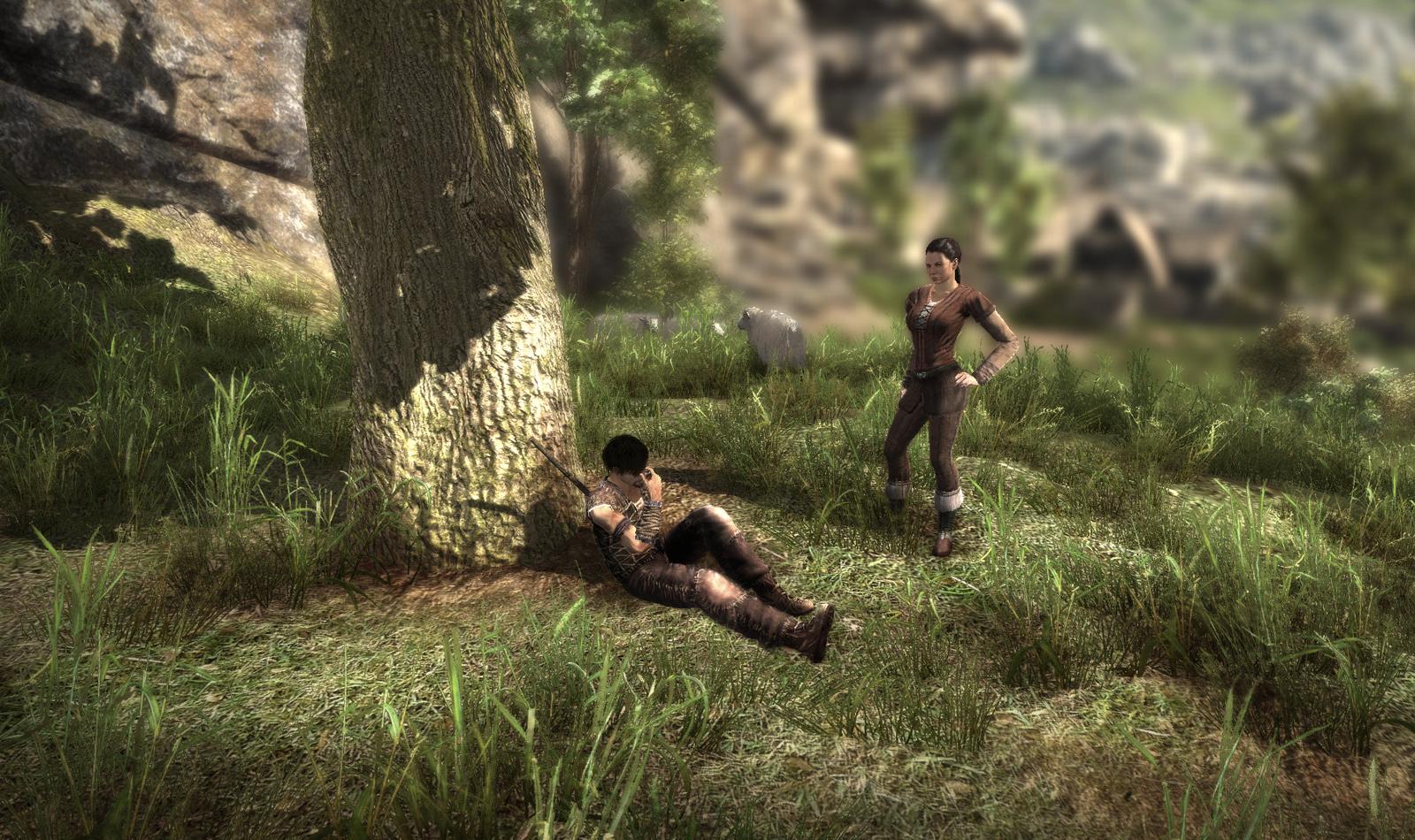
ArcaniA opens as war across the southern islands reaches Feshyr, an island whose quiet village is pillaged by the king’s paladins. The player takes the role of the new nameless hero from that village, whose search for revenge uncovers a force behind the attack. His fate is tied to a woman carrying an artifact from a long-forgotten past. This is ArcaniA’s own protagonist and story, separate from the earlier Gothic trilogy’s Nameless Hero. The game’s direction follows the young man away from the destroyed home and into a wider conflict shaped by royal power, ancient secrets and the people caught between them. Conversations and quests carry that search forward, while combat and character growth determine how he meets threats along the way.
The southern islands provide the setting for travel between inhabited places, quest destinations and hostile areas. A map can be viewed at both surface and underground levels, and it distinguishes places already visited from areas still unexplored. The questbook records active and completed tasks; choosing a priority quest highlights its direction on the map and minimap. Most travel is on foot, while certain ancient stone circles allow chosen people to move instantly between circles they can use. This gives movement a practical rhythm: talk to people in a settlement, set a task as the current priority, then cross the surrounding land or underground spaces to reach its next objective. New locations become easier to understand as they are explored, and conversations can reveal additional topics beyond the immediate job. Local discovery, map reading and marked objectives guide the hero as he follows work across the islands.
The quest structure mixes the central search with side work for people encountered along the route. Most side quests can be resolved in different ways, so the player may find more than one approach to a task. Dialogue is the main way to learn what characters need: looking at someone and interacting opens a conversation, with options appearing when the exchange calls for a choice. The questbook keeps track of current and completed jobs, while the bestiary adds an entry after the hero defeats a creature of a new species. Some characters know more than their first conversation reveals, so returning to them can surface optional information. Trading is also attached to dialogue with merchants. These activities make settlements useful for more than resupply: they are places to collect work, learn how people understand a problem, check progress and decide which lead to follow next.
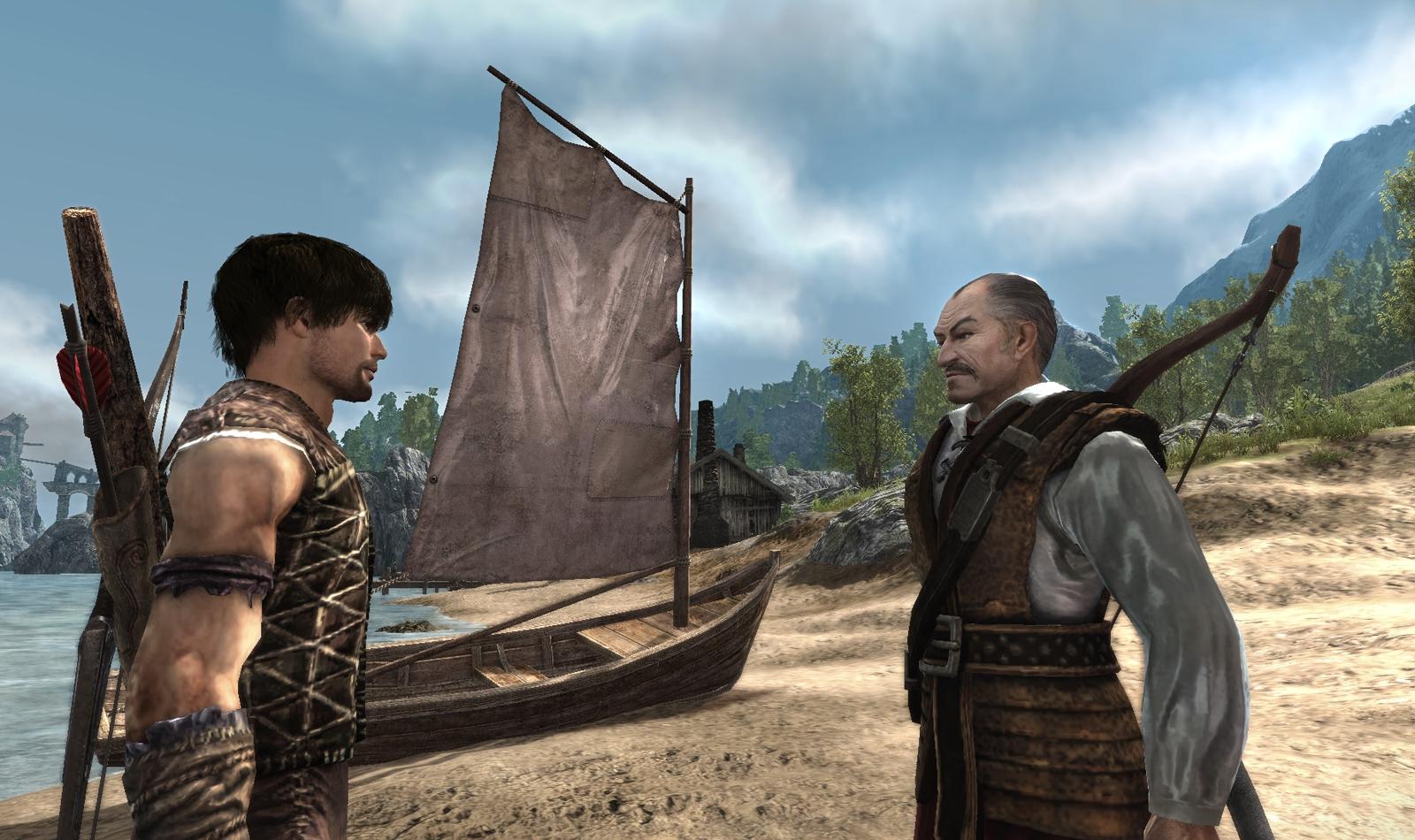
Combat supports close-range weapons, ranged weapons and magic, with three basic attack types and special moves. One-handed weapons strike faster, while two-handed weapons move more slowly and inflict more damage. The hero can block with a shield, weapon or magic, though some attacks break through a guard. Bows must be drawn before releasing an arrow, while crossbows fire without that draw; active magic skills let the player cast spells. Health, mana and stamina form the main combat resources, with mana used for spells and stamina for skills, and both refill over time. Food and potions can restore health during a fight, while bandages are an option outside combat. Armour reduces physical damage but does not protect against magic, making equipment and the kind of incoming attack relevant to how a fight is handled.
Experience gained through the adventure raises the hero’s level and grants skill points for development. Attribute values rise automatically with a level, while the player spends the new points in the skill menu. Its lines contain active skills, spells and passive improvements: some abilities can be assigned to a quick-access bar, while others strengthen an existing skill or improve basic attributes. Investing in passive skills can unlock higher active or unique passive choices, so advancement follows a path rather than a single list of unrelated bonuses. Before committing an allocation, the player can inspect each skill’s description; saving makes the chosen distribution permanent. Active spells can be assigned to the quick slot bar, keeping them ready to use during combat. The player can develop close combat, ranged attacks or magic, then use unlocked abilities and spells during later encounters.
Crafting gives found materials and learned instructions a direct use. Recipes may be discovered in the world or purchased from traders; purchased instructions must first be learned from the inventory. Once learned, a recipe appears under equipment, alchemy or consumables, with its required components listed before the player creates the item. Weapons and shields, food and potions can therefore be made when the required resources are available. Traders let the hero buy and sell equipment, ingredients and other goods, while a brief rebuy category preserves recently sold items only until the trading window closes. Locked chests use a timing interaction with a rotating keyhole, and map markers distinguish discovered places from unexplored ground. As the journey connects quests, supplies, skills and exploration, the player decides whether to spend time searching for materials and instructions or continue toward the next marked objective.
- Developer
- Spellbound
- Genre
- Role-playing game