
About APE OUT
APE OUT is a top-down action game about an unnamed gorilla breaking out of captivity. Push through guarded rooms and shifting labyrinths, using captors as shields or weapons while searching for each exit. A responsive percussion soundtrack follows the pace and violence of the escape.
APE OUT begins with a gorilla locked in a cell and turns escape into the whole premise. The player breaks out and moves through human-controlled facilities, aiming to reach the next exit while armed guards try to stop the animal. There is little explanatory dialogue or named cast: the situation is communicated through the cage, the guards, the architecture and the direction of movement. From above, the player sees a stylised maze of rooms, halls, doors and open spaces, but tall walls often hide what lies around the next corner. The gorilla is powerful at close range and vulnerable to gunfire, so progress comes from staying in motion, reading the spaces ahead and finding a route through captivity rather than clearing every room methodically.
The basic combat kit is deliberately small. A shove sends the gorilla forward into a guard or obstacle; hitting a wall or another person can turn that force into a lethal collision. A grab lets the player hold a guard in front of the ape as a temporary shield, and the captive may fire their weapon in the direction the gorilla faces. Holding a person also slows the ape’s movement, so the extra protection comes at a cost when crossing an exposed room. The player can then release or throw that person toward another threat. These actions make the guards part of the escape route’s resources: a body can absorb incoming fire, a shot can interrupt an enemy, and a carefully aimed throw can carry danger into a group. The same close-range strength that clears a path also requires the player to cross the distance to armed humans, making timing and approach matter.
The people trying to contain the gorilla carry different weapons and create different problems. Ordinary soldiers can be rushed or used as shields, while more specialised opponents make a direct approach dangerous. Grenadiers present another hazard: a frontal attack can detonate their explosives, but grabbing and throwing one into a group can turn that risk outward. Other armed guards can fire once when held, which lets the player use their weapon before discarding them. Destroyed enemies can leave body parts that briefly stun opponents when thrown. Those interactions encourage quick decisions rather than a fixed combo: push to clear immediate space, hold a guard when bullets are closing in, or use the captive’s weapon and momentum to interrupt a more distant threat. The gorilla’s strength is powerful but not invulnerability.
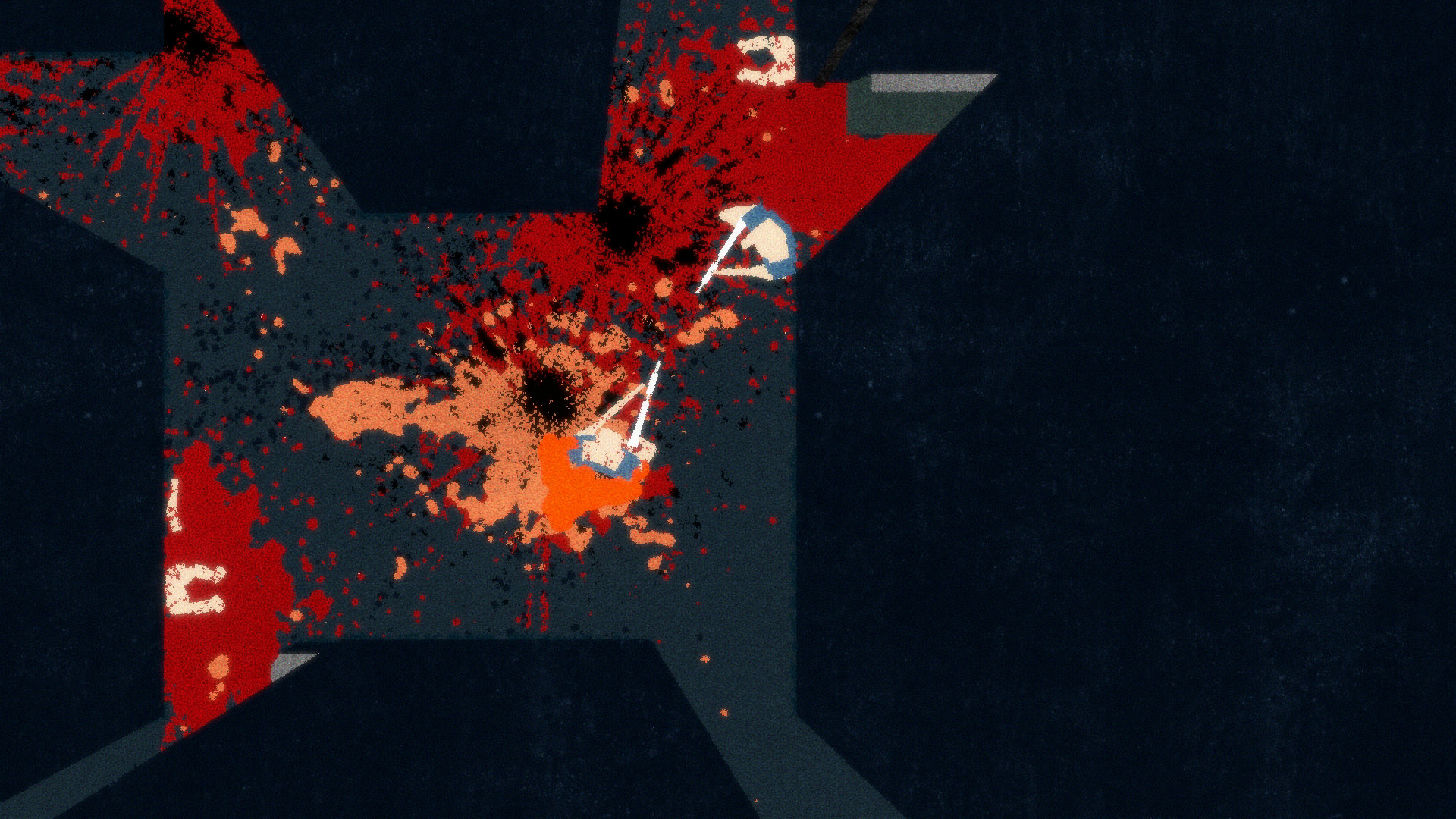
The layouts make those decisions less predictable. Levels use procedural generation and vary the placement of corridors, rooms, doors and enemies, so a route that was open on one attempt may lead into a different arrangement on another. The camera’s elevated view is still obstructed by walls; sightlines open as the gorilla turns a corner or steps into a doorway. That means a hallway can conceal the size of a patrol or the direction of a weapon until the player commits to moving forward. The game can also use darkness and flashlight beams to change what is visible, while its limited palette shifts to communicate alarms or power changes. When a run ends, the revealed path makes the distance crossed legible, giving the next attempt a clearer sense of where the route broke down.
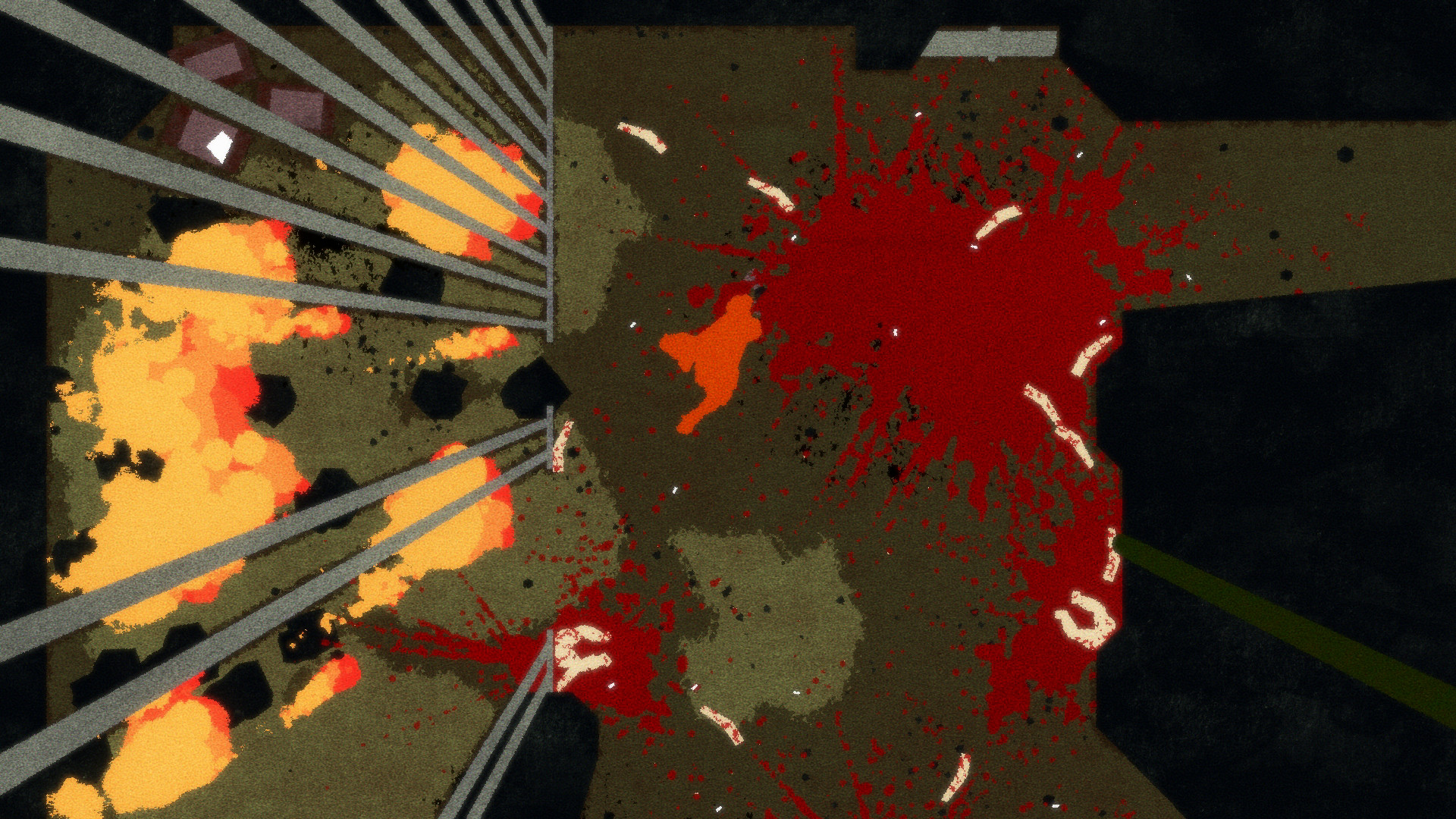
Each area adds environmental features to the same escape loop. In a high-rise, windows create opportunities to throw guards out of the building, while distant snipers punish standing still. Other spaces introduce obstacles, breakable barriers or hazards that change how quickly the ape can move through a room. Metal doors can be ripped from their frames, changing the boundary between rooms as the ape forces a way onward, and explosive enemies can threaten nearby guards. The game presents its larger sections as albums, with individual levels arranged like tracks; their settings and visual motifs shift as the gorilla escapes from one environment into another. The locations do not turn the ape into a different character with a growing arsenal. Instead, they alter the hazards and routes that the same push, grab, throw and run actions must solve.
Music is woven into those actions. The percussion rises with movement and confrontation, punctuating impacts and kills with drums, cymbals and occasional horns; quieter stretches give the rhythm room to fall back before a new clash. Levels are framed as tracks on an album, with a transition from Side A to Side B, so the changing sound and setting mark progress through the escape. Beyond the standard campaign, Arcade Mode puts each album under a time limit and awards points for kills and reaching the end quickly. Hard variations add longer labyrinths and more guards, and a further challenge stage becomes available after clearing the normal stages. These modes ask for faster or more careful route choices while keeping the same compact movement and combat system at the centre.
- Developer
- Gabe Cuzzillo, Bennett Foddy and Maxi Boch
- Genre
- Top-down single-player action / smash 'em up