
About ANIMAL WELL
ANIMAL WELL follows a small creature exploring a shadowy labyrinth filled with curious animals, environmental puzzles and hidden routes. Find objects with multiple uses, learn how they affect rooms and creatures, and revisit connected areas as new tools reveal paths deeper into the well.
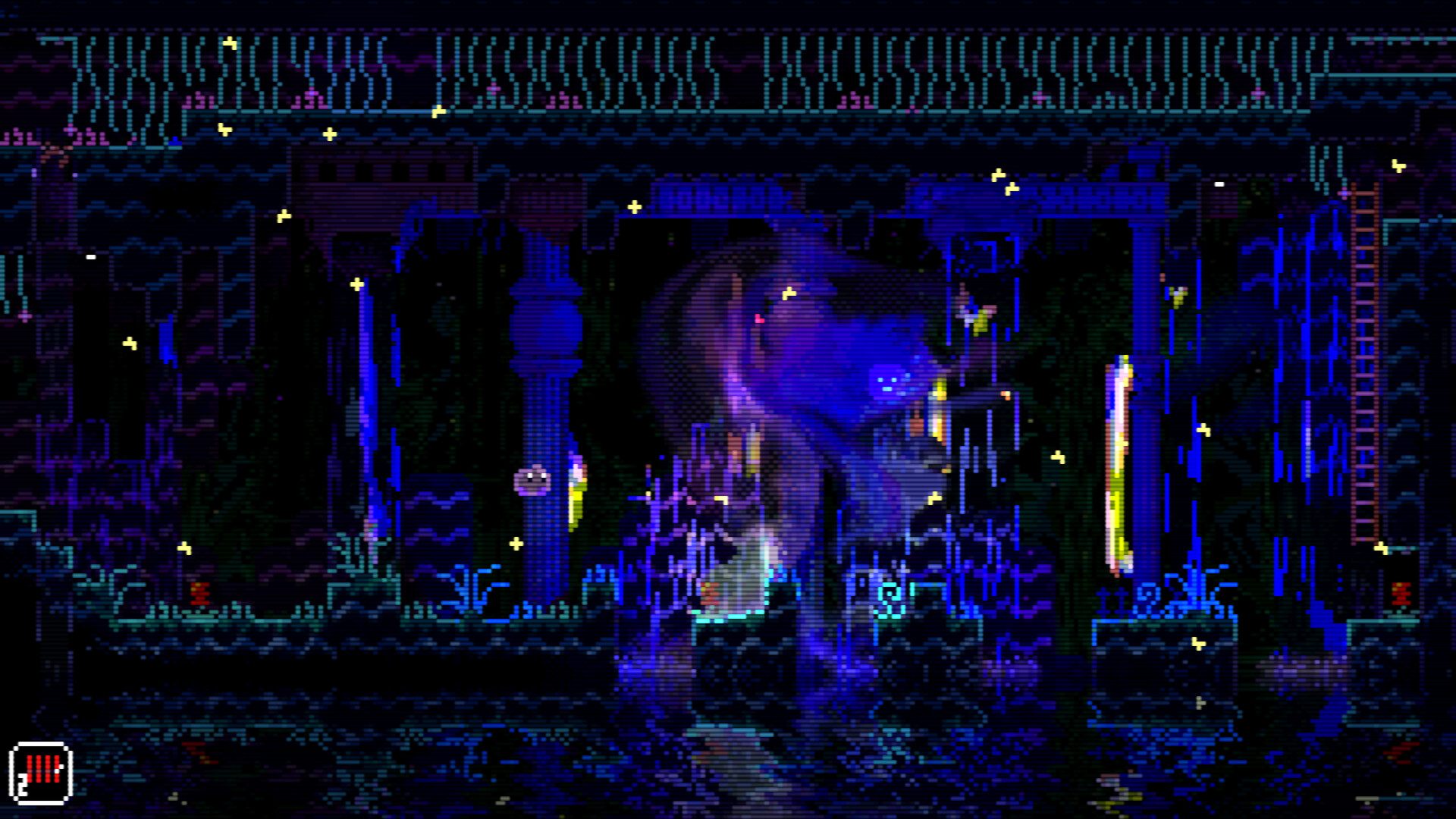
ANIMAL WELL begins with a small, bright creature hatching from a flower in a subterranean world. There is no spoken briefing that names a mission or explains the history of this place; the first direction comes from the rooms themselves, their doors, ledges, switches and signs of movement. The cave is presented as a dense, connected labyrinth rather than a succession of isolated levels. Passageways loop between regions, and a barrier that seems final may become understandable after finding a new object or noticing a detail elsewhere. The pixel art uses pockets of saturated colour against deep shadow, while small animated movements and carefully placed sounds make each chamber feel inhabited. Exploration sets the pace: move, jump, look around, and decide which opening might lead further down or back toward somewhere familiar.
The player character has a limited set of basic movements and is vulnerable to the creatures that inhabit the well. Progress grows through objects found in chests and tucked into the environment, each of which adds an action rather than a conventional weapon upgrade. A bubble wand creates floating bubbles that can serve as temporary footholds, letting the character rise toward ledges beyond an ordinary jump. A disc can travel across a room, strike distant switches and interact with some animals; under the right conditions, its bounce can also help cross a gap. A yo-yo reaches nearby targets, while a spring-like Slink can roll or drop through a space. Learning the controls is only the start: the same item may solve a platforming problem in one room and affect a creature or mechanism in another.
New items open routes through the map, giving the journey its Metroidvania shape. A blocked passage can send the player to another branch of the labyrinth, where a tool or clue changes what is possible on a return trip. That backtracking relies on recognizing rooms and remembering their unusual features, not following a stream of objective markers. Some routes connect in unexpected ways, so a doorway found far from an earlier obstacle may shorten the journey between them. The discovered map helps the player follow these connections and understand how the regions fit together. Opening a route is often only the first step: it may lead to another puzzle, a safe point, a chest or a more dangerous encounter. Exploration therefore combines navigation with a running set of questions about which gaps, switches and strange objects the available tools can affect.
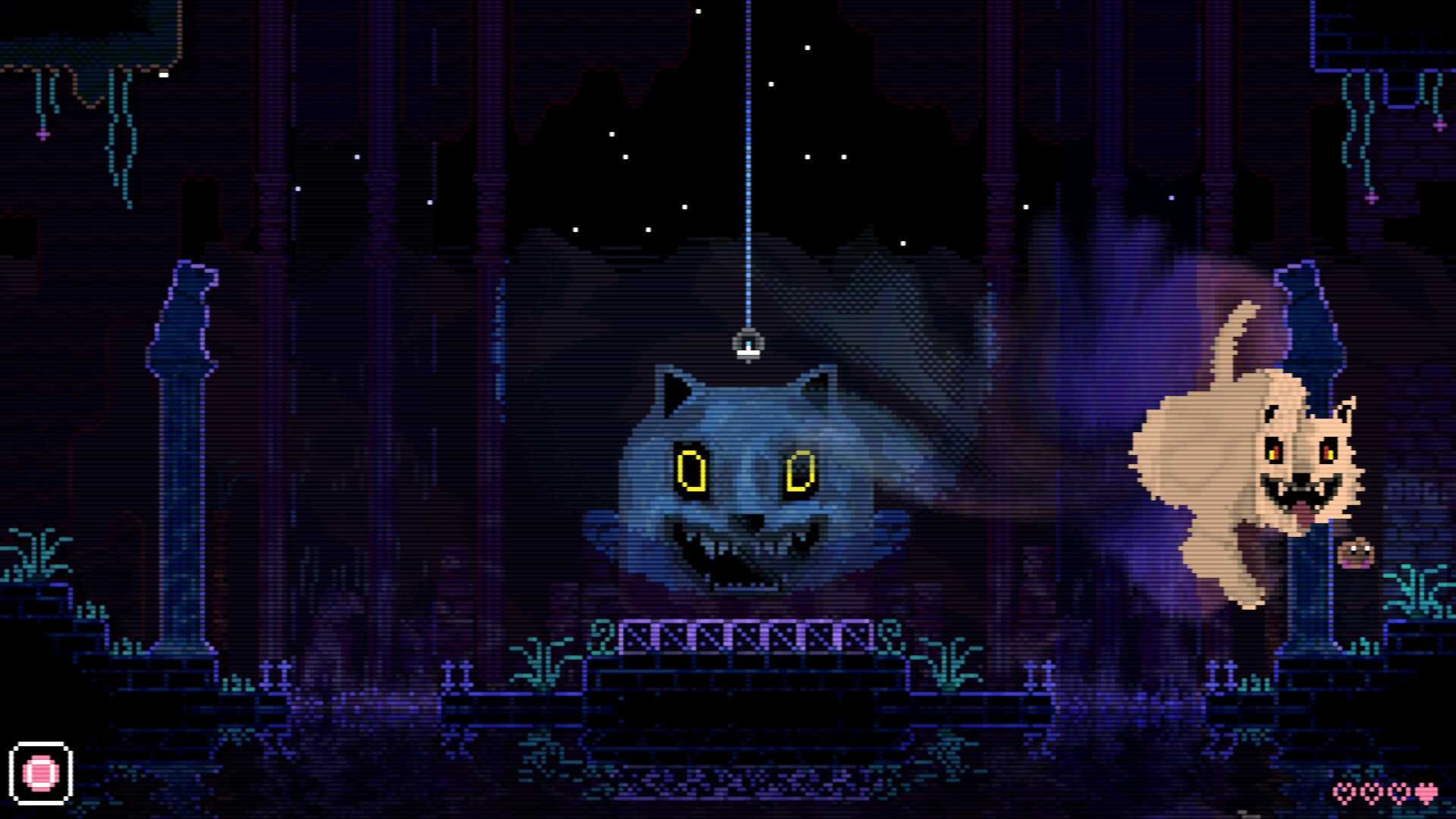
The animals are part of the level design as much as its atmosphere. Dogs may bark and approach, birds can occupy narrow passages, and larger creatures can make a room feel unsafe before their behaviour is clear. Encounters ask for observation and timing: watch what an animal responds to, find a path around it, or use an object to distract or redirect it. The character is not equipped for a standard combat loop, so survival often means avoiding contact and reading the space. Traps, moving platforms and sudden changes in how a creature moves can turn a familiar corridor into a short timing challenge. The game leaves room to test possibilities, but misjudging a hazard can send the player back to a recent save point. Sound cues and animation help signal activity, while darkness can keep the source of a noise uncertain until the player gets closer.
Many puzzles are built from switches, blocks, platforms and environmental reactions, with solutions that depend on how an item moves through the room. A disc may need to reach a lever from an awkward angle; a Slink can travel along a path shaped by movable blocks; and an animal may step on a pressure switch if its attention is drawn to the right place. Other challenges ask the player to coordinate mechanisms, such as changing which platforms are active or redirecting a stream of water. Some puzzles fit within one screen, while others link clues or effects across several rooms. The important skill is testing the objects as physical things: where they fall, what they bounce from, which surfaces they affect, and whether their use changes how a nearby creature behaves. Because tools can have more than one purpose, a route may become possible through experimentation rather than a single obvious key.
Chests and optional discoveries provide a longer thread alongside the main route. Eggs found in hidden corners are collected in a hub area, where groups of them relate to locked doors and further rewards. They are separate from the tools that establish the basic exploration loop, so players can concentrate on reaching new areas or spend time searching for small alcoves and concealed passages. Returning to known rooms with a fuller set of objects can reveal interactions that were unavailable earlier, and some discoveries lead toward secrets beyond the most direct path through the labyrinth. This extra depth is intentionally mysterious: the game does not turn every discovery into a checklist with an explanation. More concealed routes remain after an initial journey through the well, and a newly found item may change how the player understands a chamber visited much earlier.
- Developer
- Billy Basso
- Genre
- Puzzle platformer with Metroidvania-style interconnected exploration