
About Anger Foot
In Shit City, Anger Foot fights through gang-controlled districts with a weapon in one hand and a sneaker-powered kick ready to break doors and send enemies flying. This single-player action game combines fast room-clearing, bass-heavy music, unlockable footwear and replayable challenges.
Anger Foot turns a simple premise into the engine for its world: the city is overrun by violent gangs, and the hero answers with a forceful kick. The game takes place in Shit City, a deliberately exaggerated urban fever dream. Its enemies are colourful anthropomorphic gangsters, and the tone mixes criminal-underworld imagery with cartoon violence, bright environments and absurd objects such as crumpled energy drinks. The action focuses on clearing districts and reaching exits. That makes the city itself the main setting and the repeated confrontations its main form of storytelling: each level sends the player through another part of this unruly place.
The levels move through different city districts and environments, including slums, sewers and skyscrapers. Each stage is a compact route through rooms and connected spaces, where doors can be kicked open and enemies may be waiting just beyond them. The immediate aim is to fight through the area and reach the exit. The spaces are designed to reward quick decisions: the player can burst through an entrance, assess the room and choose whether to kick, shoot or reposition. The named environments provide visual variety as the route moves from cramped underground spaces to taller urban locations. Across them, the emphasis stays on pace and momentum, making each room a short action problem rather than an extended exploration sequence. A doorway can serve as the start of an encounter, a threat can draw attention across the room, and a dropped weapon or object can shift the next decision. The route remains easy to grasp, but clearing it asks the player to react quickly and keep moving.
Kicking is the defining action. A forceful boot can smash a door open, strike an enemy or interact with objects in the level, while the player can also pick up guns and shoot. This first-person action game treats the kick as a central combat tool rather than a novelty. Encounters ask the player to combine that kick with aiming, timing and movement. Breaking a door can give an immediate opening, but the room beyond still has to be cleared. Enemies can be hit with a kick or engaged with a weapon, and the player needs to keep moving to avoid being overwhelmed. The combination gives the fights a rapid rhythm: open, read the space, attack and keep pushing toward the exit.
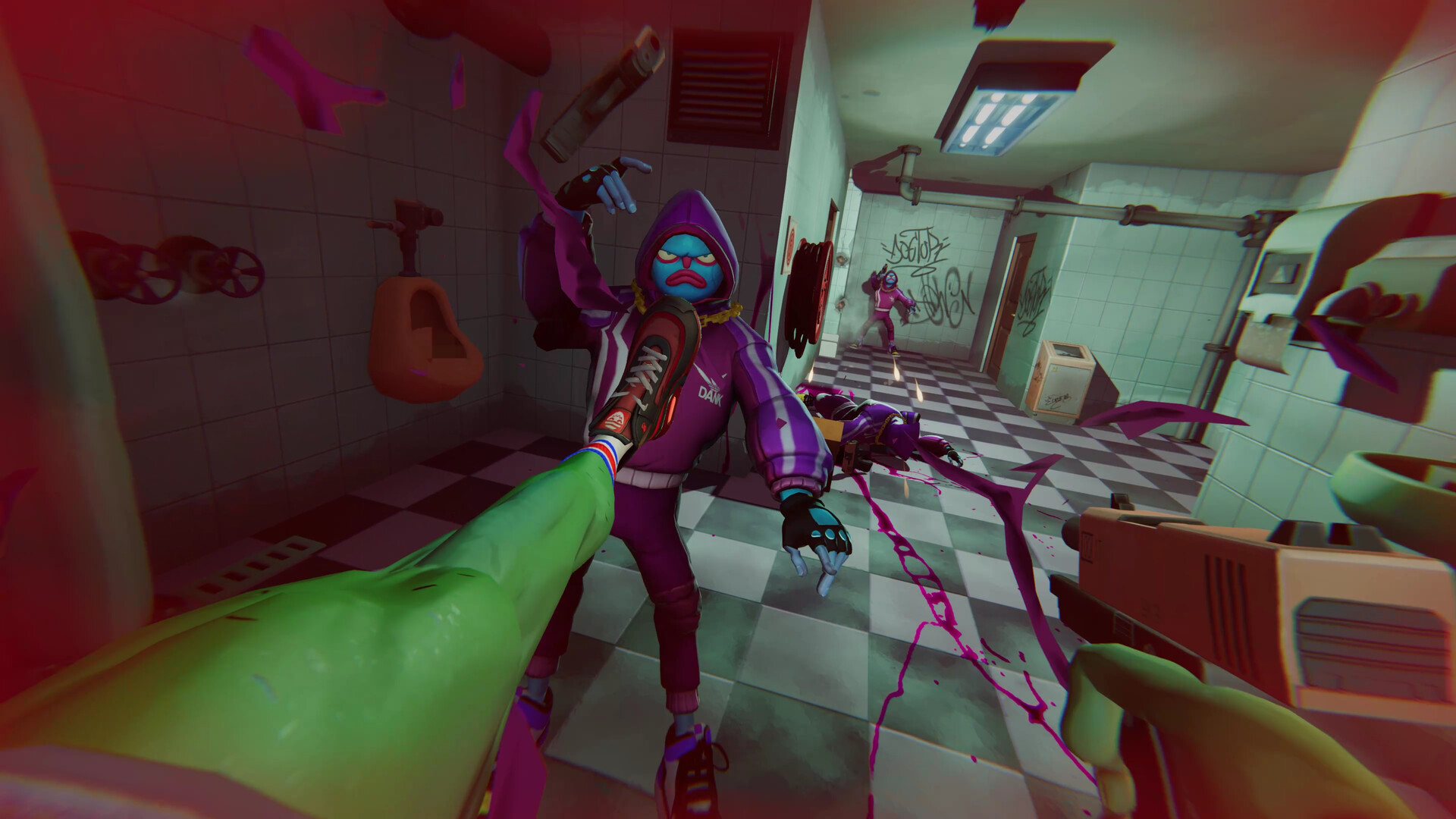
Sneakers add a layer of progression and change how a player approaches each level. Their powers can alter how an encounter unfolds. Scavenger shoes, for example, replenish ammunition when the player kills enemies; Brain Expanders make enemy heads grow, making headshots easier; and Uppercutters give the kick an upward strike. These effects connect the game’s main visual motif to practical combat choices. Selecting different footwear can encourage a player to pursue a different balance of accuracy, ammunition or direct kicking. The sneaker collection works as more than a cosmetic reward: it gives each run a tool that can support a chosen style.
Weapons remain an important complement to the shoe powers. The player can pick up guns while moving through levels and use them alongside kicks to deal with enemies at range or in the middle of a rush. The focus is on how weapons and shoe powers work together as the player kicks and shoots toward the exit. That keeps attention on the interaction between the player’s equipment and the room in front of them. A kick can open a door or disrupt an enemy; a weapon can handle a threat before the player closes the distance. The game’s tempo rewards switching between these options as the space changes, and its levels give both actions a place in the same short encounter.
Music and visual style help define the city’s attitude. A bass-heavy soundtrack by Jaybooty drives the action. The bright presentation carries stylised violence and gore through cartoon imagery. Shattered doors, broken bones and energy drinks become part of the visual language of a run, turning the aftermath of a fight into another piece of the joke. The soundtrack’s hard bass is intended to keep the action moving, matching the fast pace of the kicks and firefights. Sound, colour and exaggerated physical comedy all support the same high-energy tone.
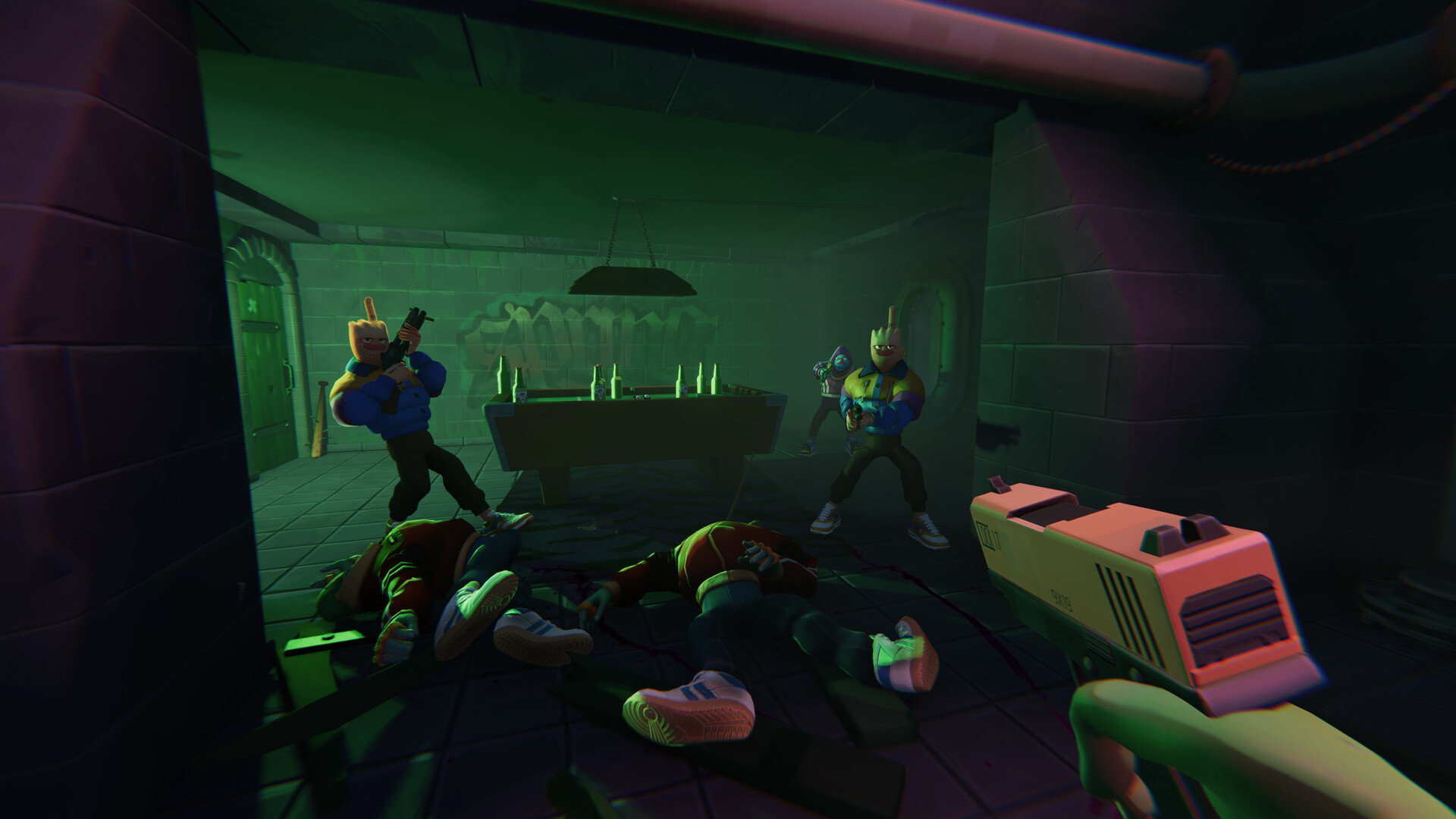
The short level format gives Anger Foot a clear challenge to master: make a fast entrance, read the room and reach the exit with the right mix of kicks and gunfire. New sneakers change the tools available for that attempt, while secrets reward players who look beyond the quickest route. Each return can focus on a different goal, from testing a footwear power to finding a hidden reward or improving a run. Shit City provides a vivid setting for these repeated incursions, but the player’s changing equipment and approach keep the action from being only a march through familiar rooms.
- Developer
- Free Lives
- Genre
- Single-player first-person action shooter