
About Amnesia: The Bunker
During the First World War, French soldier Henri Clément is trapped alone in a desolate bunker with a stalking creature nearby. He explores its semi-open spaces, scavenges and crafts scarce supplies, operates a noisy dynamo flashlight, and manages fuel to keep the lights on while seeking a way out.
Amnesia: The Bunker is set during the First World War inside a French military bunker. Henri Clément, a French soldier, has been left alone in the underground complex with only limited equipment and supplies. A creature stalks the bunker and reacts to what happens around it, making noise and light important parts of survival. Henri’s immediate aim is to make his way out, but the route is not presented as a simple corridor with a fixed series of steps. The bunker is a semi-open space to explore, and the player must learn its connected rooms, obstacles, and possible approaches while living with the threat that follows.
Light is a central resource because the bunker’s generator needs fuel to keep the main lights on. Fuel is scarce, so the player must weigh the value of spending it against the dangers of moving through darkness. Henri also carries a dynamo flashlight, which can provide light without relying on the generator but makes noise when operated. That noise can draw attention from the creature. The player has to decide which kind of risk to accept in order to see a room clearly. Managing the generator, the flashlight, and the time spent exploring gives ordinary movement a survival cost, and returning to the bunker’s central systems becomes part of planning each excursion.
The bunker invites exploration and experimentation. Its rooms and passageways contain tools, supplies, and information about the people who lived and fought there. Henri needs to scavenge what remains and use items to overcome problems. The game supports multiple solutions and a non-linear approach, so the player can investigate the environment and decide how to handle obstacles instead of following one prescribed method for every situation. Physical interactions are emphasized: objects can be handled, moved, and used in the world. Learning the layout and remembering where useful resources or blocked routes are located matters because the bunker’s open structure gives the player room to choose where to go next.
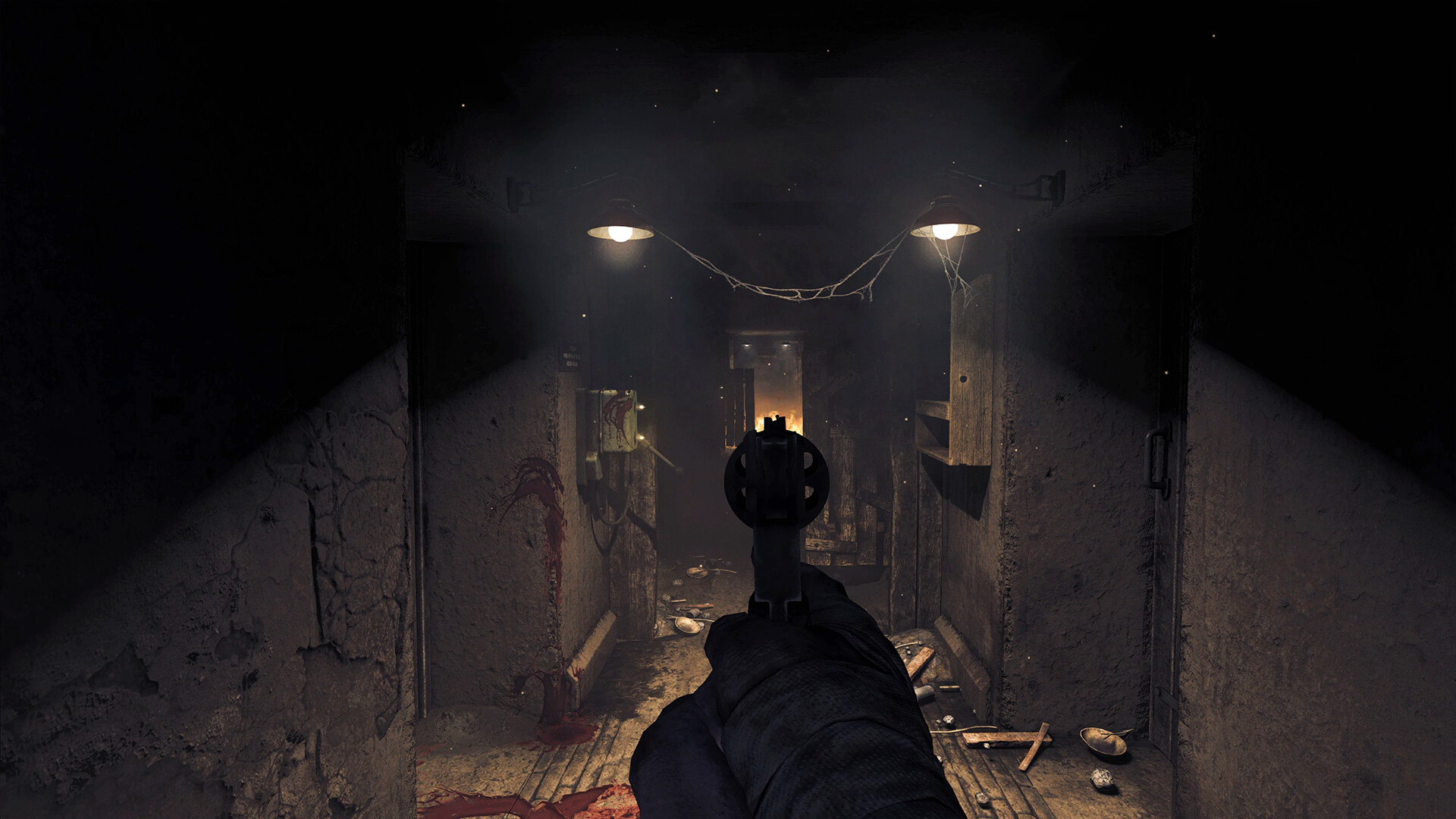
Supplies are deliberately limited, and crafting lets Henri turn scavenged materials into practical tools. The revolver is available, but ammunition is scarce, and firing it creates sound that can attract the creature. It offers a means of response rather than a reliable way to clear the bunker. Other items can help with specific hazards or access problems, and deciding what to carry is part of managing a constrained inventory. Because the player cannot depend on abundant equipment, the value of an object depends on the obstacle ahead and the risk of spending it now. Scavenging, combining items, and choosing when to use them form a flexible problem-solving loop within the bunker.
The creature is described as dynamic and ever-present, responding to player actions and sounds. Its unpredictable behavior means the player has to adapt rather than rely on a single routine that guarantees safety. Actions can carry consequences: a noisy attempt to make progress may solve an immediate problem while increasing danger nearby. The bunker’s spaces provide places to examine, routes to try, and decisions about when to risk movement. The game combines stealth with limited opportunities to fight back, leaving the player to consider whether to hide, distract, retreat, or use one of the few available tools. Threat is woven into exploration, so searching for a useful item can itself become a tense choice.
The setting’s wartime history shapes what Henri finds and the questions he faces. The bunker is a military installation, but its rooms also preserve evidence of the soldiers and officers who were there before him. Henri must work out what happened to the other people underground and what the creature is, while his practical goal remains getting out alive. These mysteries are tied to exploring the same space that supplies the tools for survival. The story does not require a separate shift into a broad battlefield campaign: it stays with Henri, the bunker, and the increasingly urgent effort to understand the situation well enough to escape. The confined setting makes each discovery part of navigating a place that is both shelter and trap.
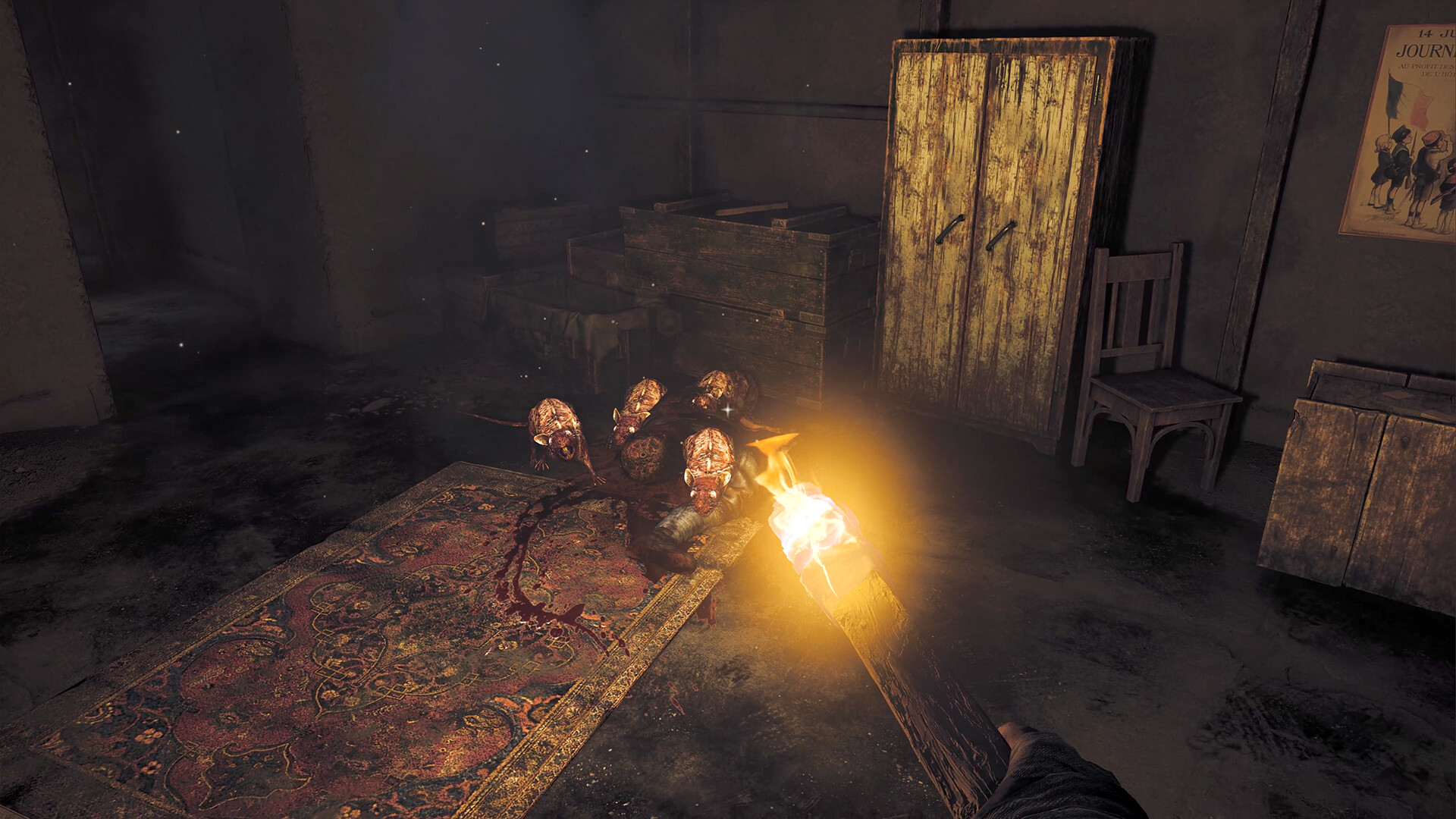
The result is a first-person horror experience built around a compact but reconfigurable space. The player chooses where to explore and how to address obstacles, while fuel, light, noise, ammunition, and crafted items place limits on those choices. The generator can make large areas safer to traverse visually, yet maintaining it requires fuel; the hand-powered flashlight can travel with Henri, yet its sound carries risk. The creature’s responses connect those resource decisions to moment-by-moment survival. With a non-linear layout, physical interactions, and several ways to approach problems, the bunker asks the player to learn its geography and improvise with what is available. Henri’s path out is shaped by how carefully those resources and risks are managed. Each journey through the bunker begins with a decision about what Henri can afford to spend: a little fuel for visibility, a scarce item for a blocked path, or time spent searching while the creature remains nearby.
- Developer
- Frictional Games
- Genre
- First-person horror; survival horror