
About Amnesia: Rebirth
Amnesia: Rebirth follows Tasi Trianon, who wakes alone in Algeria and searches for her missing companions while trying to understand the fragments of her past. Across desert, subterranean ruins and stranger places, she gathers supplies, solves environmental puzzles and avoids creatures. Light, fear and concealment shape a first-person journey about survival and memory.
Amnesia: Rebirth begins with Tasi Trianon waking in the Algerian desert after an uncertain stretch of time. The people who travelled with her are gone, and her own memories arrive as fragments rather than a reliable account. Her immediate task is to retrace the route and find a way home, but each place also raises questions about what happened before she woke. The player sees the journey from Tasi’s first-person perspective, moving through spaces at her pace and learning about the expedition through discoveries, recollections and present-day obstacles. The story keeps its largest answers out of view while establishing the personal stakes: Tasi is trying to reach her loved ones and survive a danger that affects both body and mind.
The route is built as a journey through sharply different environments. Sunlit stretches of desert lead into buried ruins and abandoned caverns; later spaces move further from ordinary landscapes into unsettling territory. The changing surroundings signal distance travelled and make progress feel like passage between distinct regions, rather than repeated rooms in one complex. Inside each area, the player searches for useful objects, examines the layout and works out how to reach a blocked exit or continue along a path. The game ties exploration to its mystery: physical traces and memories make a location part of Tasi’s history, while its architecture also supplies the routes and mechanisms that the player must understand to move on.
Light is a practical resource and a way to manage Tasi’s fear. Darkness can intensify her distress, so the player looks for ways to illuminate a space and uses limited supplies carefully. Matches can briefly light candles or other sources; the lantern provides a portable glow but its fuel is finite. That creates a recurring choice about whether to spend a match on a nearby fixed light, rely on the lantern while crossing a dark passage, or move through shadow to conserve supplies. A light source can make searching and puzzle solving easier, but it does not make a threatening place safe. The resource decisions belong to navigation as much as inventory: a room’s layout and the next stretch of darkness affect how much light is useful.
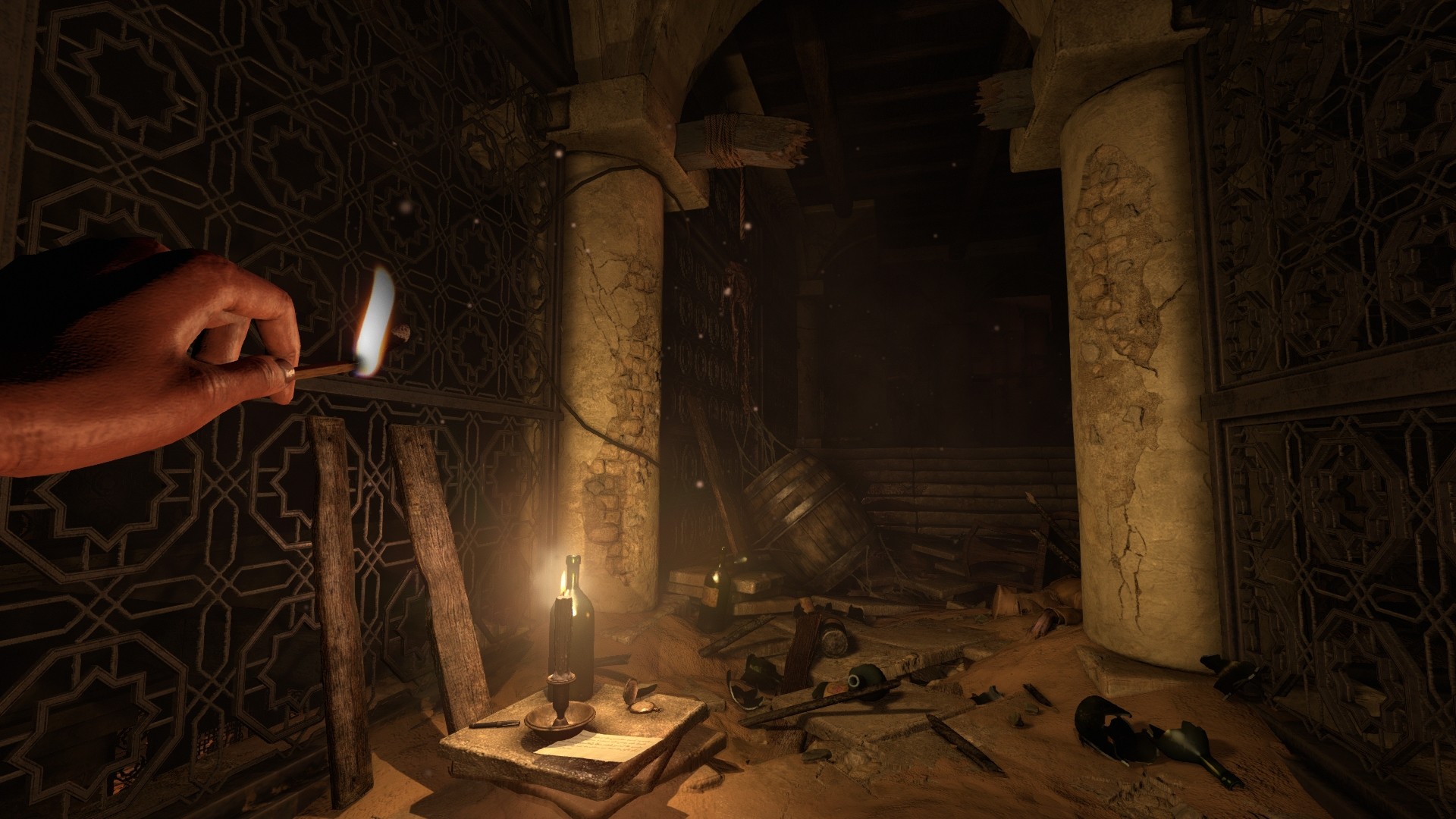
Puzzles turn the spaces themselves into problems to read. A locked route may require finding an item, identifying how a mechanism works, or applying an object from one part of a room somewhere else. The player can inspect the area for clues, gather materials and test a sequence of actions, with progress opening the next portion of the journey. These tasks give the expedition a hands-on rhythm: careful searching reveals what is available, and understanding the immediate environment matters more than fighting through it. Supplies also have physical and mental value, so a detour for an item can help prepare for a difficult passage even when it does not directly unlock a door. New locations introduce different arrangements and visual logic rather than one repeated puzzle interface.
When a creature is nearby, movement becomes a problem of exposure. Tasi has no combat role; survival depends on staying hidden, keeping quiet, using the surroundings as cover and running when there is no safer route. The player must judge distance and visibility while deciding whether to cross a dangerous opening, wait in concealment or move toward a different way through. Darkness can hide Tasi from an adversary while also worsening her fear, so concealment and calm do not always point to the same choice. These encounters interrupt the slower work of examining objects and solving puzzles, requiring the player to use knowledge of the space under pressure. The game’s threats remain part of a larger journey rather than a sequence of battles.
Memory connects present exploration with the story Tasi cannot initially recall. As she revisits places and finds traces of the expedition, pieces of the past surface alongside the task of getting through the current room. Those recollections give familiar objects and landscapes a second role: they are both clues to what has happened and part of the route the player must negotiate. The narrative remains focused on Tasi’s personal ordeal and her effort to locate the others, not on a detached catalogue of the setting. Moving forward therefore combines practical understanding—where to go, what to use and how to avoid danger—with a gradual reconstruction of why the journey has taken this shape.
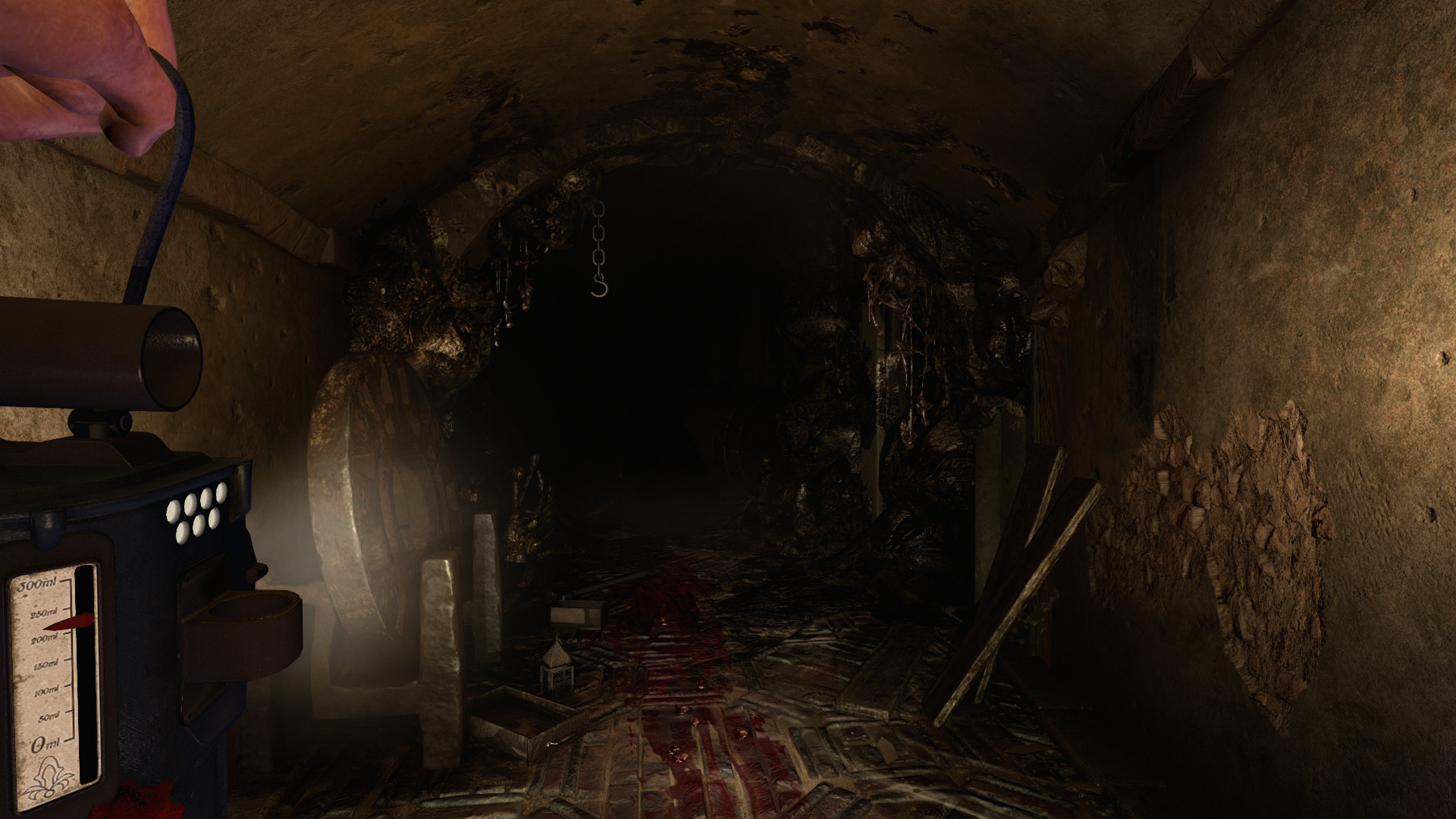
Amnesia: Rebirth also includes Adventure Mode, which preserves the story and exploration while reducing the horror pressure. It is an alternate way to experience the same broad journey for players who want to focus more on its narrative and puzzles. In the standard experience, light, fear and creatures continually affect how the player approaches a place; in Adventure Mode, the emphasis shifts toward following Tasi’s route and uncovering its history. Both approaches are built around traversal, environmental problem solving and the unfolding mystery. The settings continue to change as the journey goes on, so reaching a new region brings fresh spaces to investigate and new context for Tasi’s search, rather than simply repeating an earlier encounter.
- Developer
- Frictional Games
- Genre
- First-person horror adventure