
About Amnesia: A Machine for Pigs
In 1899, industrialist Oswald Mandus wakes feverish in his silent London home, hearing a machine below and fearing for his children. He explores the house and the industrial spaces beneath it, following clues, operating machinery and avoiding hostile creatures as he tries to reach them. The story centers on his guilt, fractured memories and the consequences of his ambitions.
Amnesia: A Machine for Pigs is a first-person horror adventure set in 1899. Oswald Mandus, a wealthy industrialist, wakes from fever and unsettling dreams in a house that feels emptied of ordinary life. The floor trembles with the operation of a hidden engine, and Mandus believes his children are in grave danger. His immediate search for them supplies a clear direction through an increasingly strange environment, while fragments of memory and details in the world complicate what he thinks he knows. The opening premise ties the domestic setting to industry and personal responsibility: the home is not an isolated refuge, because its machinery and the larger enterprise beyond it press into the rooms. The story begins with urgent uncertainty rather than a full account of the expedition, illness and decisions that preceded Mandus’s awakening.
Exploration connects the game’s narrative to its spaces. Mandus moves through rooms, corridors and industrial environments, looking for routes forward and clues that explain the activity around him. Doors, mechanisms and other objects make the setting interactive, so progress often comes from noticing how a place is arranged and working out what can be operated. The journey shifts between recognisable architecture and spaces dominated by pipes, machinery and the sound of systems running out of sight. The industrial environment is more than a backdrop: it gives the player a series of connected thresholds, rooms and machines to investigate while keeping the source of the disturbance partly concealed. Notes and environmental details add context, but the central route remains legible through Mandus’s goal of finding his children.
Puzzles are integrated into the places Mandus passes through rather than presented as detached riddles. The player examines nearby objects, locates a mechanism or obstruction and works out how to continue. The puzzles ask Mandus to figure out practical problems that help him make his way through the adventure and belong naturally in its world. This design makes observation and interaction central: a useful clue may be the layout of a room, the relationship between two machines or a route that becomes available after an object is moved. The game uses direct, real-time interaction rather than an inventory of collected items, and it removes several resource-management systems associated with The Dark Descent. There is no oil supply to conserve for a lamp and no sanity meter that penalizes remaining in darkness, so attention stays on the immediate space and the story carried through it.
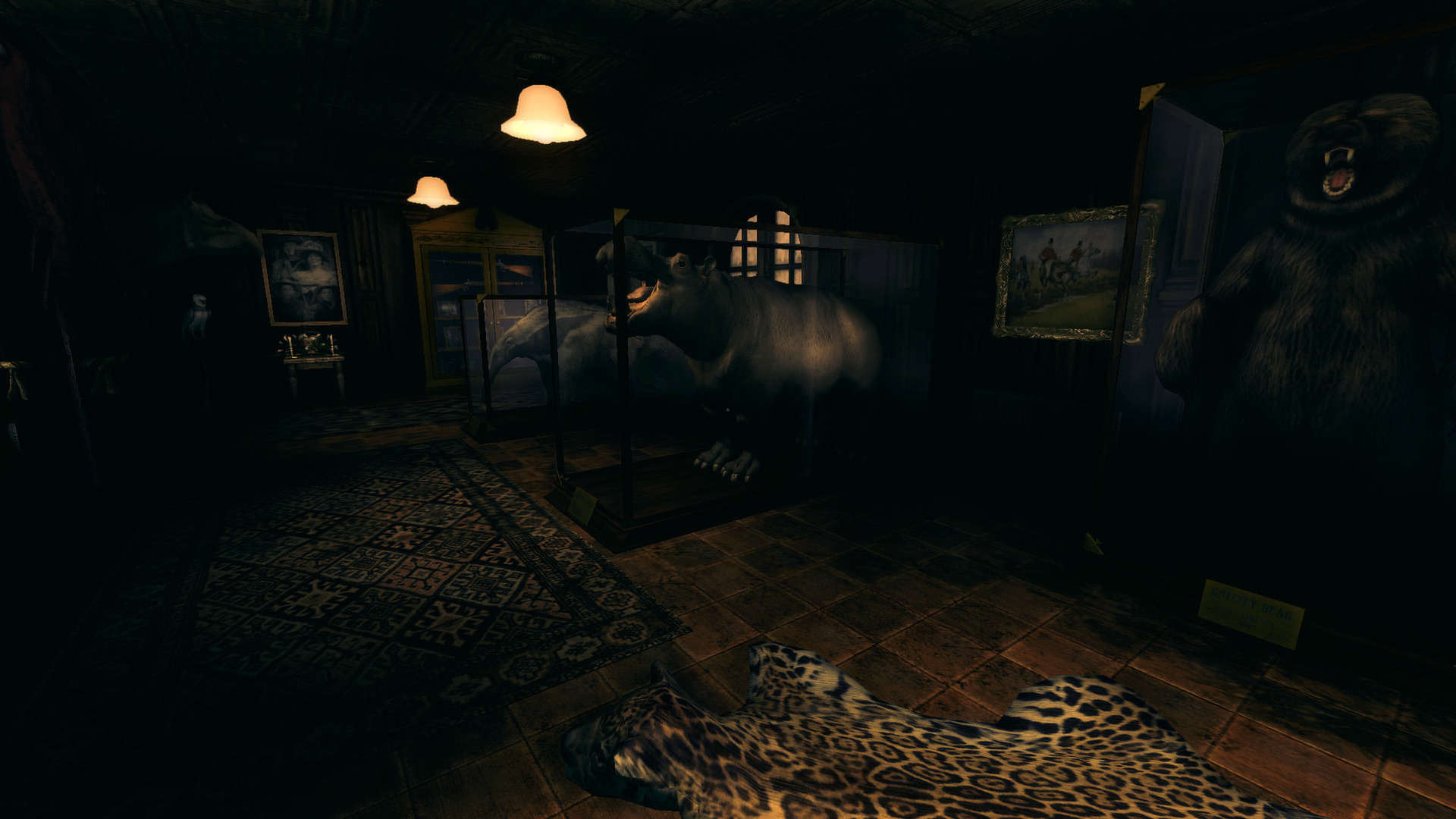
Danger changes how the player moves through those spaces. Hostile creatures can make a passage unsafe, and survival depends on evading them or getting away instead of treating encounters as conventional combat. A creature’s presence gives ordinary rooms a second purpose: places to investigate can become routes to cross carefully, and the player must judge when to advance or wait. The reduced emphasis on survival meters does not remove vulnerability; it concentrates tension in the uncertainty of what lies beyond a doorway and whether a threatening presence is near. Sound, darkness and limited visibility help communicate that uncertainty. The player’s task remains to continue through the environment, but the route can feel exposed whenever the game’s threats overlap with a puzzle or a search for the next passage.
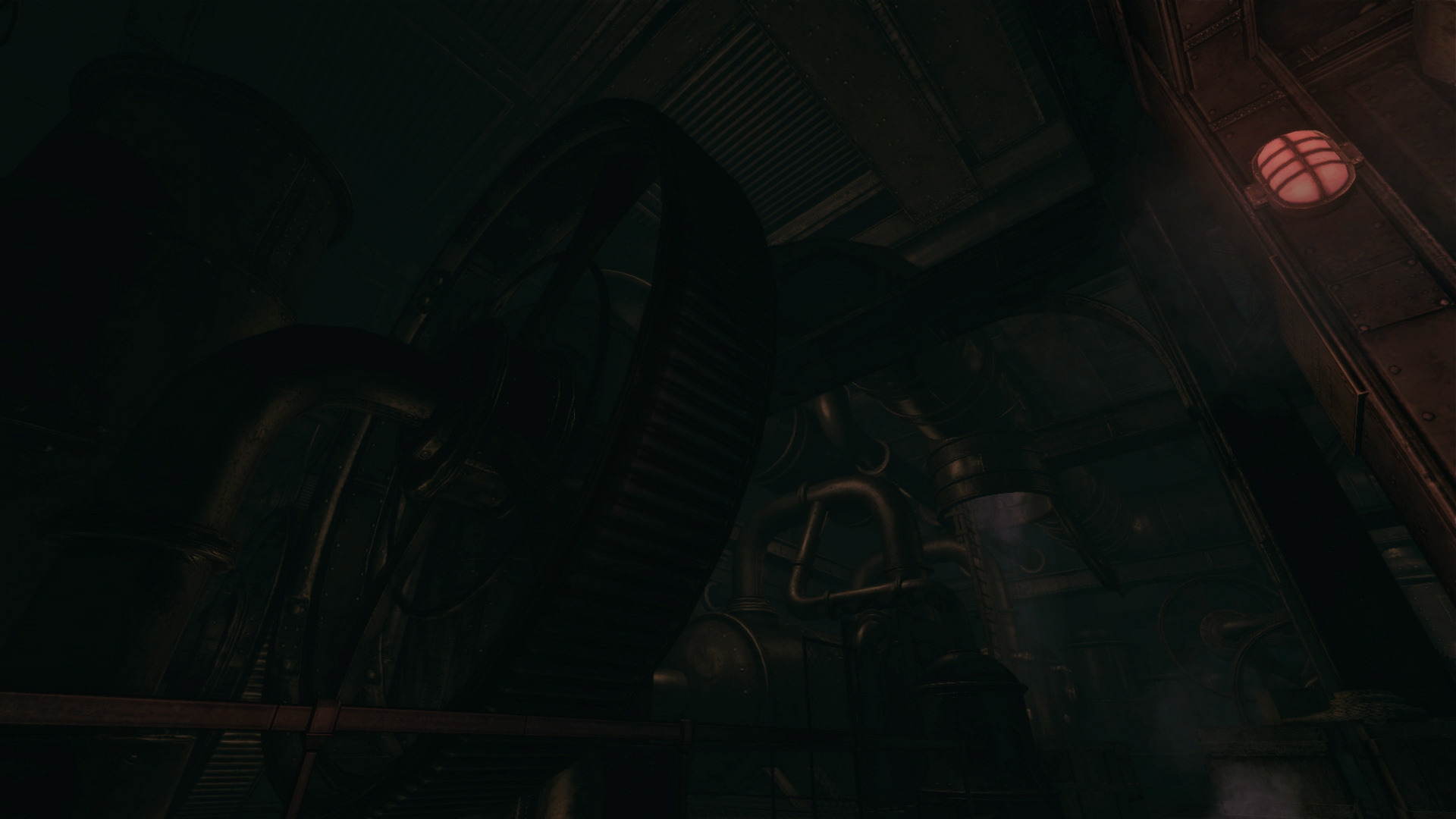
Audio and visual design reinforce the link between Mandus’s private fear and the industrial scale of the story. Its music, sound effects and environments use the noises of a working machine to suggest activity beyond the player’s immediate view. Mechanical sounds can make an unseen space feel present before it is reached; silence can make a familiar room seem abandoned. The London setting and its machinery create a contrast between domestic rooms and the larger industrial structures connected to them. That contrast supports the story’s concerns with wealth, power and the idea of an engineered utopia, while keeping the player’s attention on concrete things nearby: a sound through a wall, an object that can be moved or a machine that needs to be understood. These cues provide atmosphere and navigation without explaining every mystery at once.
The narrative unfolds as Mandus follows the machine’s routes and tries to locate his children. Memories of a disastrous expedition to Mexico, illness and guilt form part of the premise, with further context about that expedition emerging as Mandus explores. Finding a note or reaching a new environment can change how earlier details read, making exploration part of the act of piecing together Mandus’s situation. The story gradually reveals Mandus’s circumstances and withholds its final explanation until later. A Machine for Pigs belongs to the Amnesia setting but is a standalone story centered on a different protagonist and a different set of pressures. Its connected loop is straightforward: explore, read the environment, solve practical obstacles and avoid danger while moving toward the family crisis. The result keeps the emphasis on a directed narrative journey through an increasingly unsettling industrial world.
- Developer
- The Chinese Room
- Genre
- First-person horror adventure