
About AMID EVIL
Chosen as a champion after being branded a heretic, the player reclaims sacred weapons and ancient lands in AMID EVIL, a fast first-person fantasy shooter. Seven episodes move through distinct realms filled with different enemies, while magical weapons, soul-powered attacks, hidden routes and an endless arena mode shape its combat and exploration.
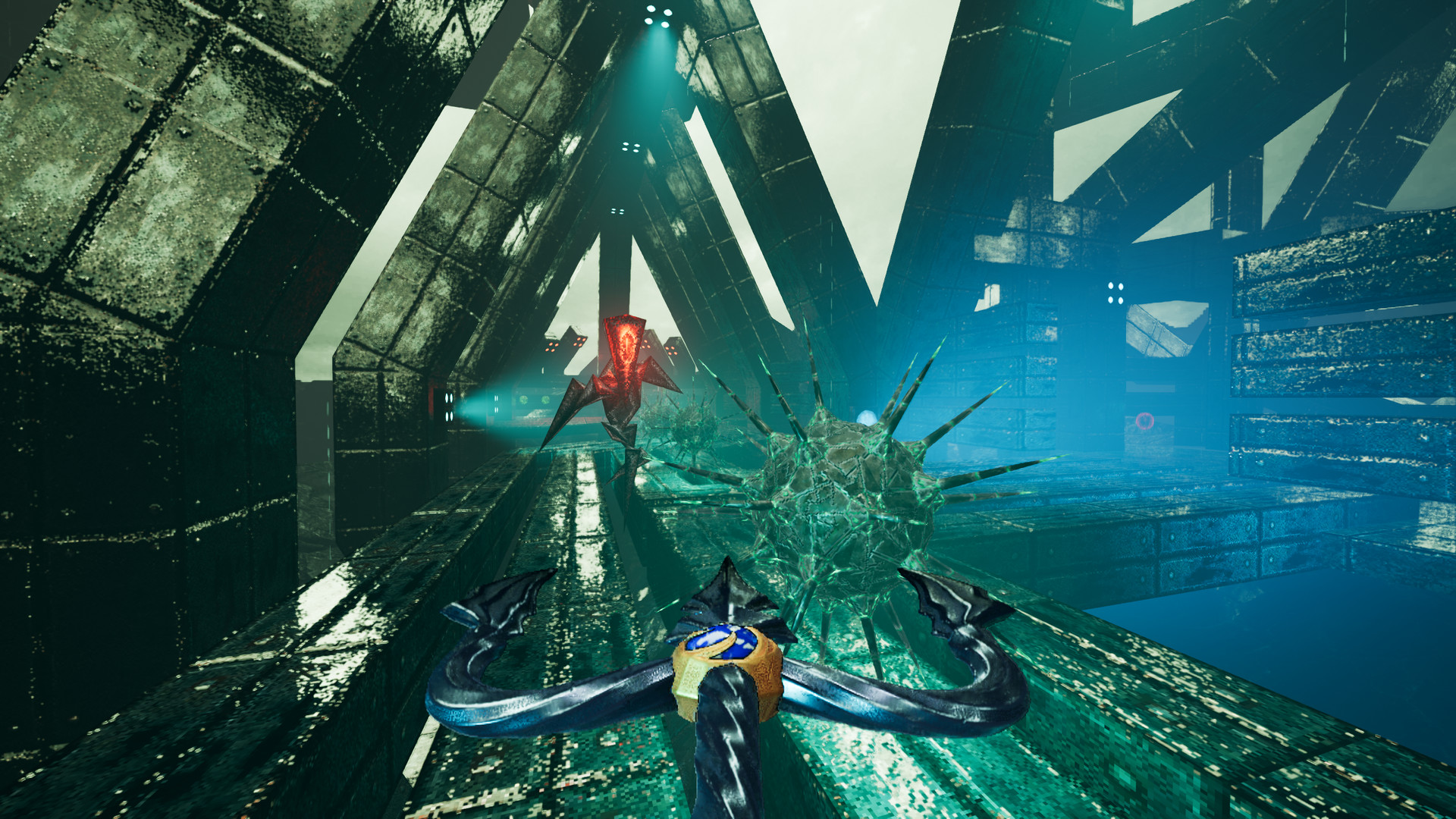
AMID EVIL casts the player as a champion branded a heretic and sent to reclaim sacred weapons and ancient lands from an encroaching evil. Its story is delivered in broad mythic strokes rather than through a large cast or extended dialogue: the journey supplies the context for entering hostile realms, fighting their guardians and pushing deeper into each episode. The setting is deliberately varied. The seven episodes each have their own visual character, environments and enemy groups, moving from recognizable fantasy spaces toward stranger, more surreal places. That shift gives the campaign a changing sense of scale without replacing its central role: a lone warrior moving through dangerous territory with a magical arsenal. The game keeps attention on immediate threats, routes and weapons, while inscriptions and in-game lore entries add background for players who want more context about the world.
The campaign is divided into seven episodes, each built from connected levels and ending in a major confrontation. Levels combine combat arenas with passages, locked doors, keys, switches and routes that loop back through earlier spaces. Reaching the exit can mean defeating enemies and locating the mechanism that opens a route onward, so forward movement involves both fighting and reading the environment. Some areas open into broad courtyards or multi-level structures; others use machinery, water, platforms or shifting architecture to make navigation part of the challenge. Hidden rooms and secret pickups reward looking beyond the most direct path. Each episode changes the setting and brings its own enemies, so learning a familiar route or relying on one weapon does not resolve every new space. The structure keeps the overall objective clear—advance through the realm—while asking the player to find the route and tools needed for each stretch.
Combat centers on a set of magical weapons that occupy the roles conventional shooters give to firearms, but each has a distinct shape and range. The Aeturnum axe is always available for close attacks, while ranged choices include Whisper's Edge, which sends cutting waves, and the Star of Torment, which launches spikes that can pin enemies. Other weapons cover different distances and firing patterns: a lightning trident can punish clustered enemies, a staff fires homing projectiles at distant targets, and heavier magical attacks provide an option against tougher threats. Ammunition is represented by several forms of mana found throughout the levels, so switching weapons also means considering which resource is available. Enemies approach from different angles and elevations, making movement and target selection central to each fight. A weapon that reaches a distant flyer or crosses a line of advancing foes can be more useful in a particular space than the attack with the greatest immediate force.
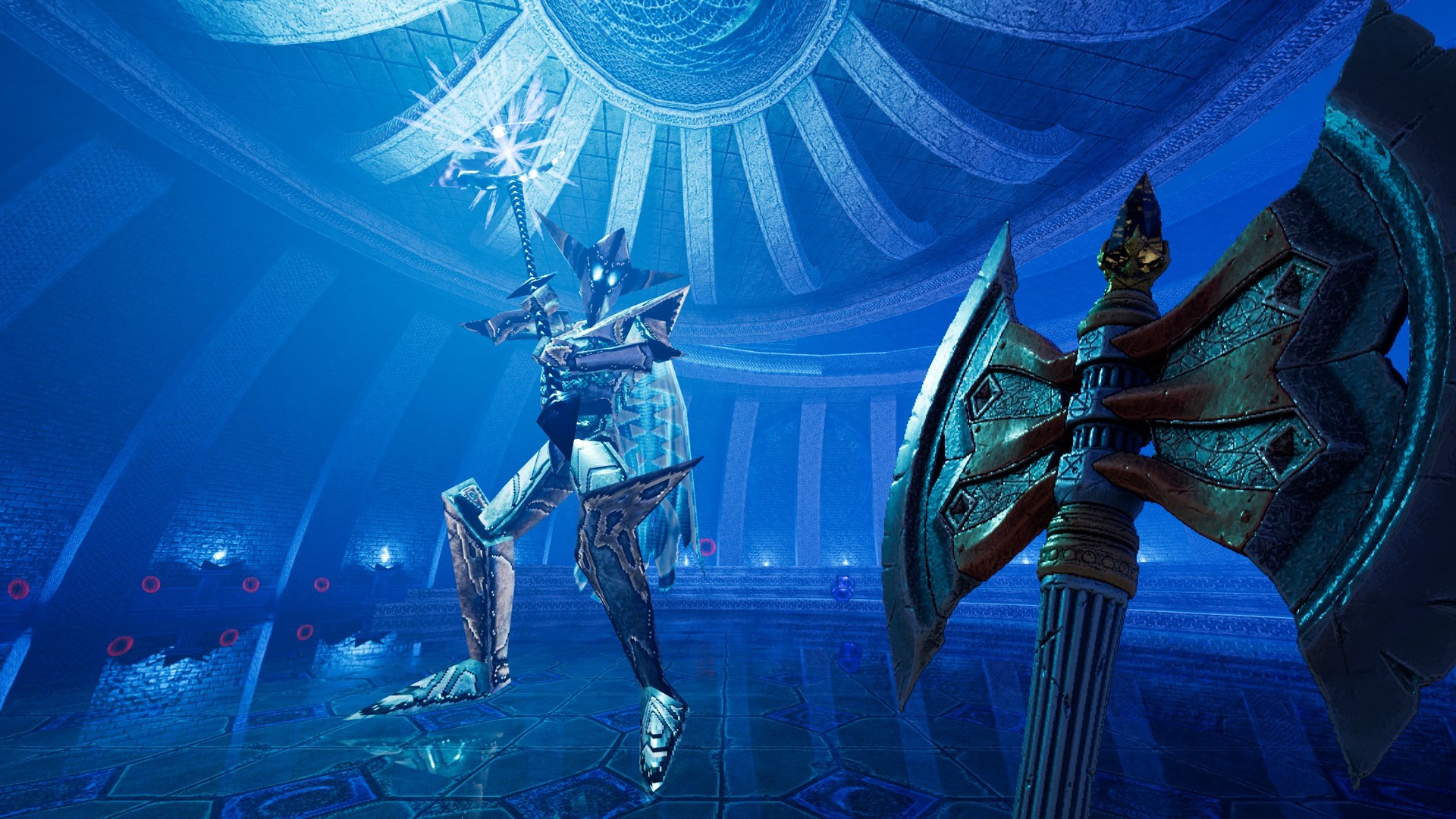
Souls left by defeated enemies feed the Soul Mode meter, which the player can activate when it is charged. The effect temporarily changes the selected weapon's attack and increases its power, so the same arsenal has a second set of uses tied to progress through combat. The Star of Torment, for example, changes from its ordinary spike attack to a spread of seeking crystals; other weapons gain their own altered forms rather than sharing one generic blast. The meter creates a timing decision: spend the charge to thin a dangerous group now or hold it for a tougher encounter later. Since enemy defeats build the resource, moving through a crowded section can prepare the next burst of power, while reaching a new area with the meter empty shifts the immediate emphasis back to ordinary attacks and careful use of mana. Soul Mode adds a short-term power cycle on top of weapon selection without removing the value of each weapon's standard attack.
The player navigates these spaces at a quick pace, combining strafing, jumping and changes in elevation with attacks rather than treating combat as stationary marksmanship. Enemies can occupy floors, ledges, water or open air, and the different realms introduce distinct combinations of threats. Some encounters leave room to circle a group and fire through its formation; others demand that the player first deal with a ranged attacker or cross a hazardous gap. Keys and switches sit alongside these fights, creating pauses in which the player searches for a route, then turns back to combat when a door opens or a new area is reached. Health and mana pickups found in the environment help sustain a run through a level, and secrets can provide a useful detour. The result is a loop of navigating, locating the route forward, collecting resources and fighting waves of varied enemies, with each arena testing how well the player can move and select an answer under pressure.
Alongside the seven-episode story campaign, the base game includes Hordes of Evil, an endless arena mode built around surviving successive enemy waves. It takes the same magical weapons, enemy encounters and movement into a format where the immediate goal is to keep fighting rather than reach the next campaign exit. The mode offers a place to practice the arsenal and its Soul Mode attacks against continuing pressure, separate from the campaign's keys, switches and route-finding. Difficulty choices also let players set the intensity of the campaign challenge. These activities belong to the base game. The Black Labyrinth is a separately sold prequel expansion with its own levels and weapons, beyond the seven-episode campaign described here.
- Developer
- Indefatigable
- Genre
- Retro first-person fantasy shooter / action