
About Aliens: Dark Descent
On Moon Lethe, Colonial Marines confront a spreading Xenomorph outbreak and a corporate rebellion. Aliens: Dark Descent is a single-player real-time tactics game in which you command a four-person squad, plan dangerous raids, and return to the damaged USS Otago to treat, train, and re-equip survivors before the next deployment.
Aliens: Dark Descent tells an original story on the frontier colony world of Lethe, after the events of the original Alien film trilogy. The outbreak is tied to a rogue Weyland-Yutani scientist and a rebellion within the corporation, while the immediate crisis unfolds around the Pioneer station and the wider moon. The story follows Maeko Hayes, the station’s newly appointed Deputy Administrator, and Sergeant Jonas Harper, a Colonial Marine aboard the damaged USS Otago. Their different positions connect the civilian colony’s collapse with the military effort to contain it. The campaign moves between those characters’ perspectives and the missions Harper’s marines undertake, framing the Xenomorph threat alongside human factions and the corporation’s secrets without requiring knowledge of the films to follow the central conflict.
The game is a single-player, top-down tactical action experience built around a squad of four Colonial Marines. You direct the whole team in real time, choosing where they move, what they investigate, and when they engage, while a tactical command interface lets you slow or pause the action to issue abilities under pressure. Marines travel together rather than being managed as separate soldiers across a turn-based grid, so positioning the group and choosing a safe route matter. Their weapons provide automatic fire when targets appear, but the player decides how to spend limited command resources on actions such as suppressing a lane or using a grenade. The result is a continuous operation in which movement, detection, combat and retreat all affect what the squad can accomplish.
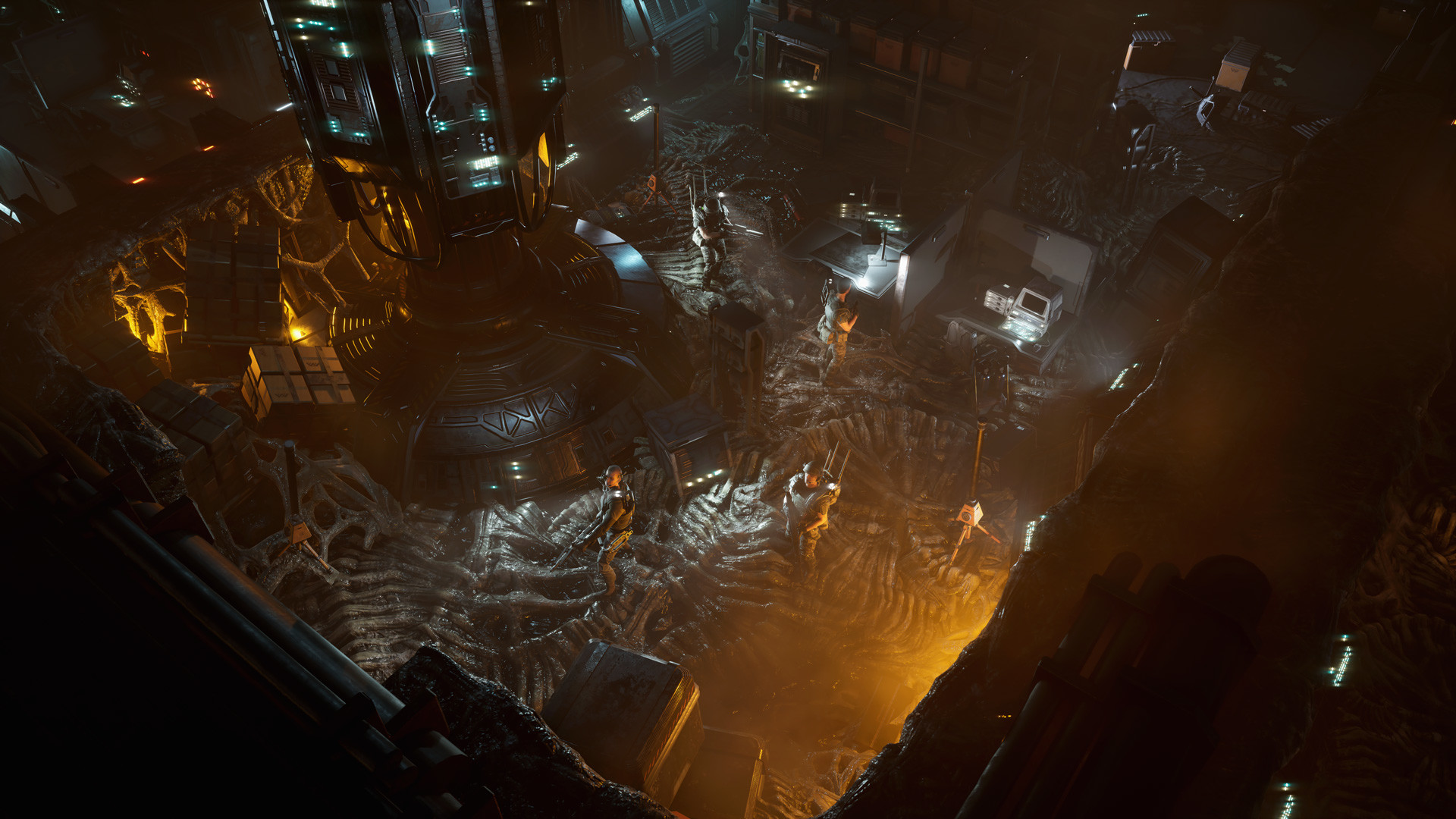
Each deployment sends the team into a large, connected area with primary objectives, optional tasks, supplies and routes that can be opened for later use. A motion tracker helps reveal movement nearby, and the squad’s lamp can expose objects worth examining as they search buildings and colony spaces. Remaining undetected can delay a hunt; once Xenomorphs spot the marines, the hive begins converging on their position. The practical loop is to scout, identify an objective or resource, decide whether to keep moving or prepare for contact, and then reach an extraction point before injuries and ammunition make continuing too costly. Objectives may involve finding missing colonists, activating facilities or recovering information, so one mission can require several trips through dangerous ground rather than a single firefight. Side rooms can hold useful supplies, but searching them means taking more time and exposing the team to another patrol or attack. The map is also a route-planning problem: a cleared corridor may become a safer way back, while an unexplored branch can hide both the objective and the threat between the squad and it.
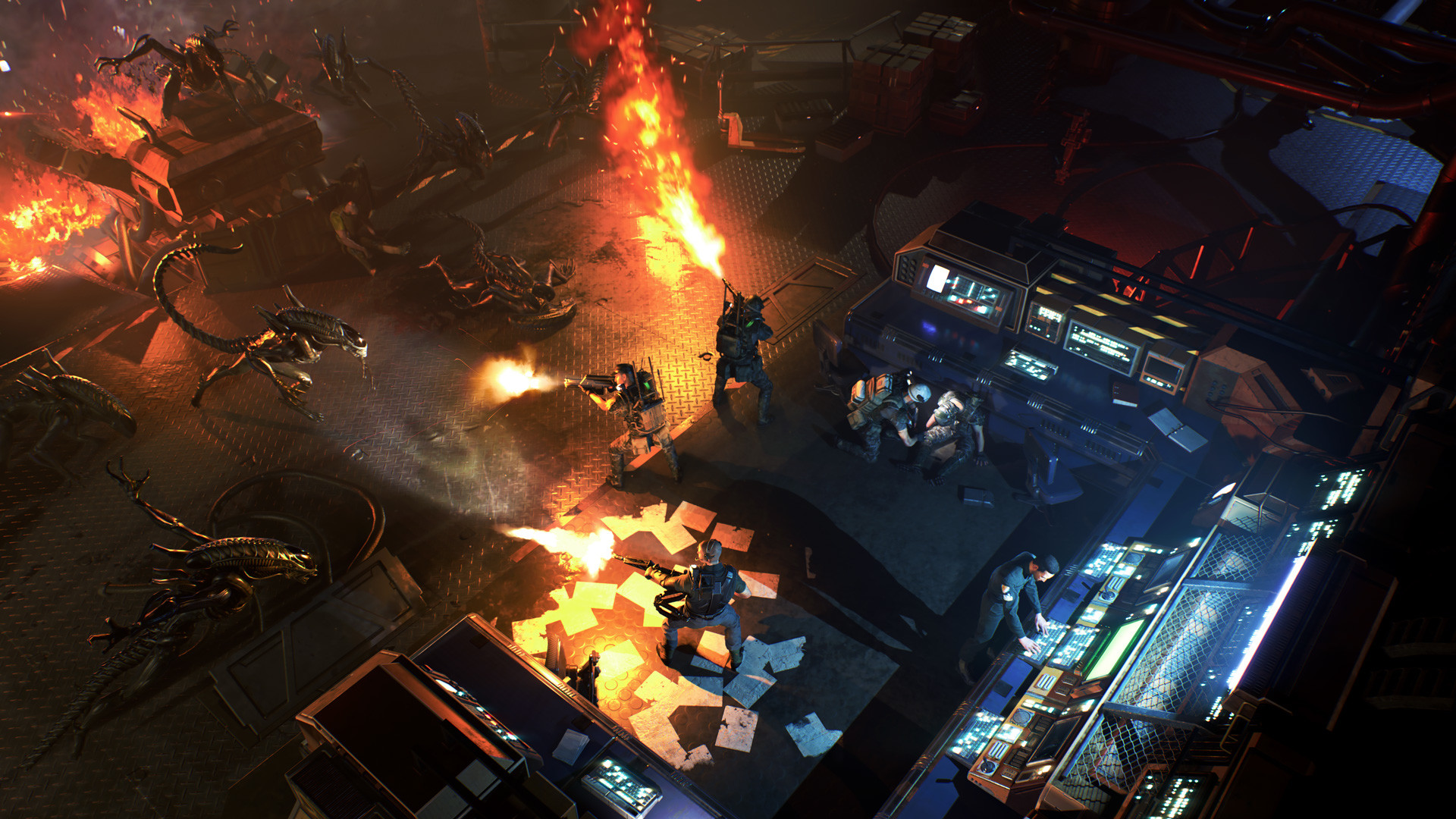
When combat starts, ordinary weapon fire is only part of the response. The command menu gives access to squad abilities such as suppressive fire, which slows approaching enemies in an area, alongside grenades and other class-specific actions unlocked as marines develop. These abilities draw on Command Points, so spending them to stop one attack can leave fewer options for the next. Fights also raise the Xenomorph hive’s aggressiveness; later hunts bring more pressure, while noise and detection can pull additional creatures toward the squad. Stress compounds that danger by reducing a marine’s effectiveness and increasing ammunition use. Naproleve medication and welding a door to rest can lower stress, but both consume resources. Wounds, trauma, exhaustion, capture and permanent death make a bad engagement affect more than the current room.
Lethe persists between deployments, which changes retreat from a failed attempt into a tactical choice. A welded door, placed sentry gun, set motion tracker or unlocked shortcut remains in the world when the squad returns, and supplies left behind can still be collected. The marines therefore do not need to finish every objective in one visit: they can complete a priority, extract, recover, then re-enter with another team to reach a locked-off section or gather materials. Time spent back aboard the Otago advances the campaign and the hive’s activity, so additional preparation can make later missions more dangerous. Planning where to establish safe rooms and which route to open can reduce the cost of a return trip, while the map’s evolving state records those choices.
The Otago is the campaign’s base and roster-management layer. Marines who return earn experience, gain levels and choose specialties or new abilities; class roles such as sergeant, gunner, medic, recon and technician shape how a squad supports itself in the field. Physical wounds and mental stress require recovery, so the player rotates personnel instead of sending the same four soldiers on every raid. Between missions, rescued specialists and salvaged repair materials help restore the ship and expand facilities. The armory unlocks weapons, the medbay improves recovery, and the workshop supports specializations and perks; research can also turn recovered Xenomorph samples into new technology. Managing the roster, equipment and Otago’s facilities is thus part of each expedition, linking one squad’s survival to the next deployment’s options.
- Developer
- Tindalos Interactive
- Genre
- Single-player real-time tactical squad action