
About Alien: Isolation
Alien: Isolation is a first-person survival horror game following engineer Amanda Ripley aboard damaged Sevastopol station. Searching for the Nostromo’s flight recorder and news of her missing mother, she navigates hostile corridors, evades the Alien and other dangers, and uses scavenged tools to complete objectives. Separate story expansions add scenarios beyond the base campaign.
Fifteen years after the Nostromo disappeared, its flight recorder is recovered in deep space and a team travels to Sevastopol, a remote station, to retrieve it. Amanda Ripley joins the mission because the recorder may reveal what happened to her mother, Ellen. The group arrives to find Sevastopol badly damaged, its remaining inhabitants desperate and an unknown predator moving through the station. Amanda is an engineer rather than a soldier, and the campaign follows her attempts to survive long enough to move through the station and learn more. The first-person view keeps the player close to Amanda’s limited tools and to the narrow spaces she must cross.
The station’s corridors, maintenance ducts and rooms create a stealth problem built around sound and visibility. Crouching makes Amanda quieter and harder to spot, while sprinting covers ground quickly but attracts attention. Lockers and other containers offer hiding places, and leaning out lets her check nearby space; if the Alien searches close by, she may need to hold her breath and lean back. Peeking around cover helps inspect a route before stepping into it. These actions turn movement into a series of small decisions: whether to cross a lit area, wait in cover, or take a longer path through the station’s connected passages.
The Alien is a persistent threat that cannot be treated like a routine enemy encounter. Amanda’s goal is usually to evade it, break its line of sight and reach the next objective rather than defeat it in a firefight. The creature can react to sounds, so running, using conspicuous equipment or making a distraction may draw it toward her position. The motion tracker helps judge nearby movement, but it only detects movement and its beeps can also reveal Amanda to anything listening. Its display includes a marker toward the current objective, making it both a navigation aid and a tool that must be used with care.
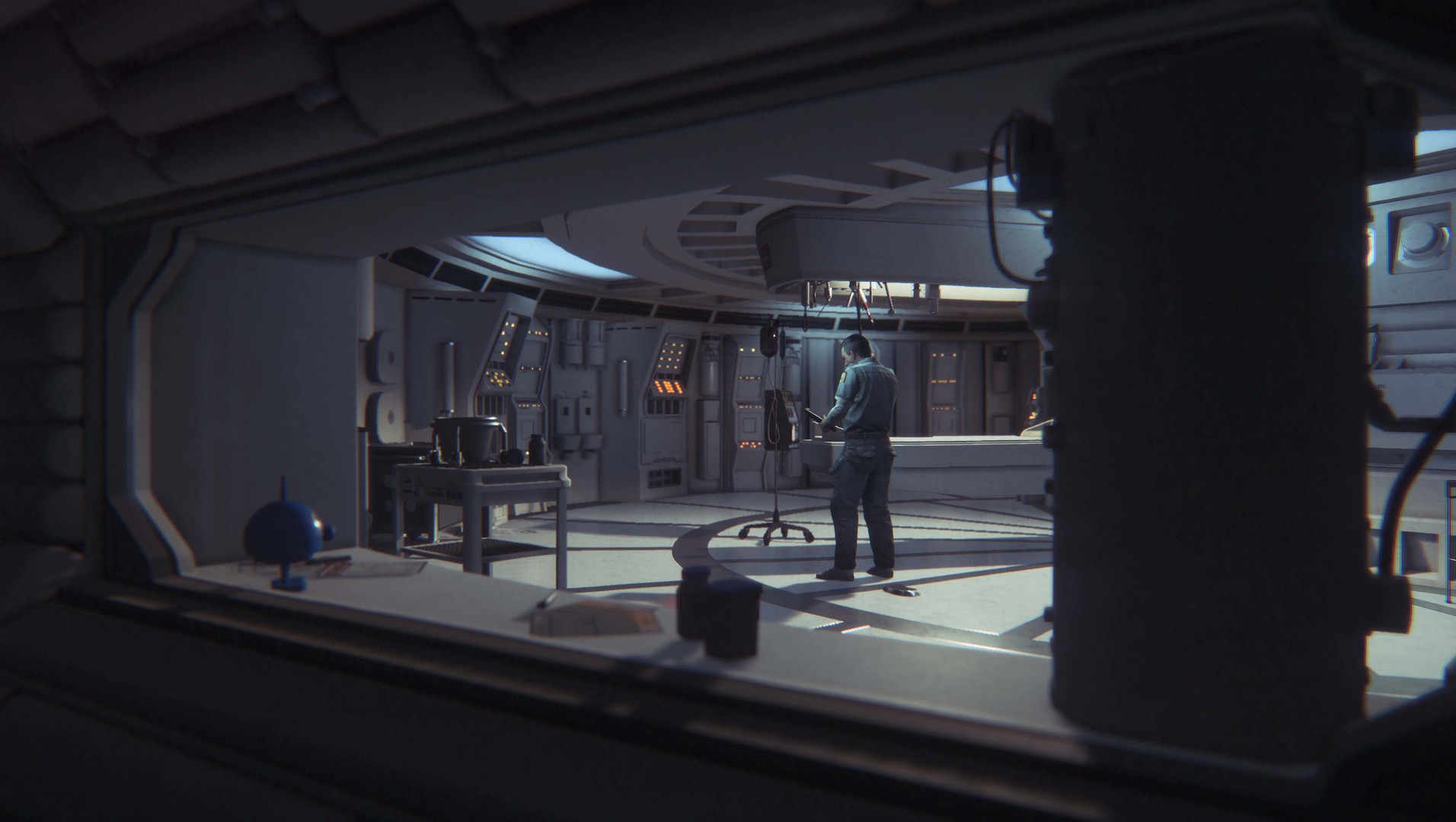
Scavenged components let Amanda create improvised tools, provided she has found the relevant blueprint. The radial menu holds items and weapons, and selecting a craftable item opens a recipe where components are committed to its required slots. Some blueprints have upgraded versions. Crafting does not pause the action, so the inventory system asks the player to consider surroundings before assembling an item. Components are limited and can be carried into a recipe before it is completed, freeing inventory space. Crafted devices can help Amanda manage threats or create opportunities to move, while making noise can have consequences in the same space where she is trying to stay hidden.
Amanda’s equipment expands as she searches Sevastopol. The flashlight illuminates dark areas but consumes batteries and can give away her position. Other tools and weapons, including the access tuner, cutting torch, revolver, shotgun, flamethrower, bolt gun and stun baton, appear through the campaign and have different uses. A radial inventory keeps these items close at hand, while access tools can interact with barriers and systems that block a route. The player has to balance the immediate convenience of using a device against its supplies, noise and the risk of attracting attention.
Finding a route depends on gradually understanding Sevastopol’s layout. The map begins mostly blank in a new area and fills in as Amanda explores; terminals can add information about places she has yet to visit. It marks the current objective and identifies features such as save points, locked doors, item locations, rewire systems and access points. Saving requires reaching a wall-mounted save station and spending several seconds exposed while the action completes. Each used station is briefly unavailable afterward, so deciding when to detour to one becomes part of managing progress through dangerous corridors.
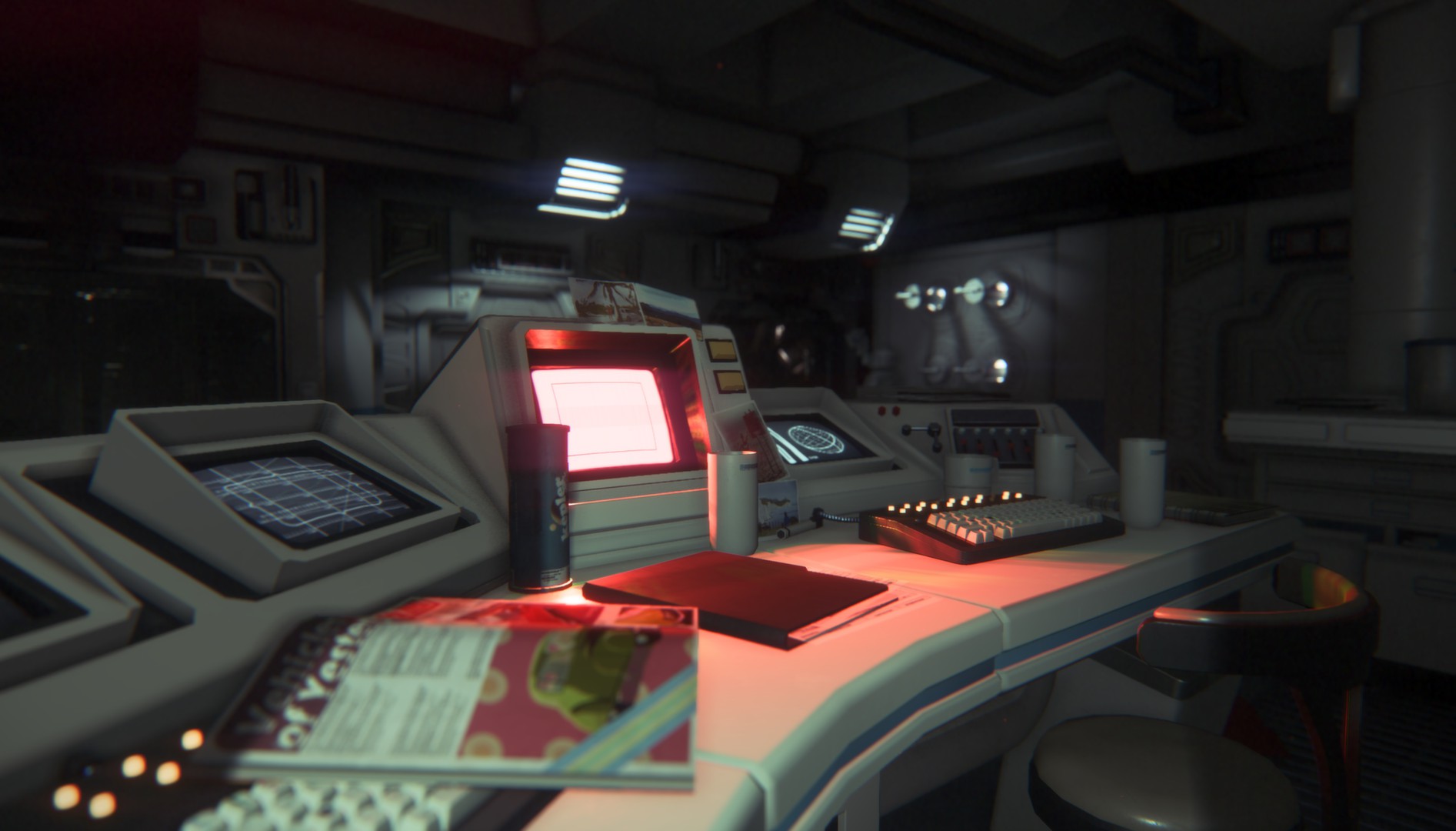
People aboard Sevastopol have their own plans for staying alive, and Amanda’s encounters with them add human danger and uneasy alliances to the search. The recovery team includes Weyland-Yutani employees Samuels and Taylor, along with Captain Verlaine of the Torrens; Samuels recruited Amanda, while Verlaine pilots the ship. On Sevastopol, Marshal Waits has spent years trying to maintain order, while Axel, a veteran working at the station’s spaceport, is looking for a way to escape. Their different roles give the station’s emergency a human scale: corporate personnel, a local law officer and a worker each face the same breakdown from a different position.
Sevastopol’s Working Joe androids create another kind of encounter alongside the Alien and the station’s human survivors. The game includes weapons such as a revolver, shotgun, stun baton and flamethrower, but the central challenge remains getting through spaces where noise and confrontation can draw attention. That means a tool’s presence does not make every threat a target to clear; its value depends on the immediate obstacle and the route Amanda needs to take. The station’s failing systems and unsettling artificial inhabitants deepen the sense that she is moving through a place whose ordinary routines have become dangerous, even when the creature is out of sight.
- Developer
- The Creative Assembly
- Genre
- First-person survival horror