
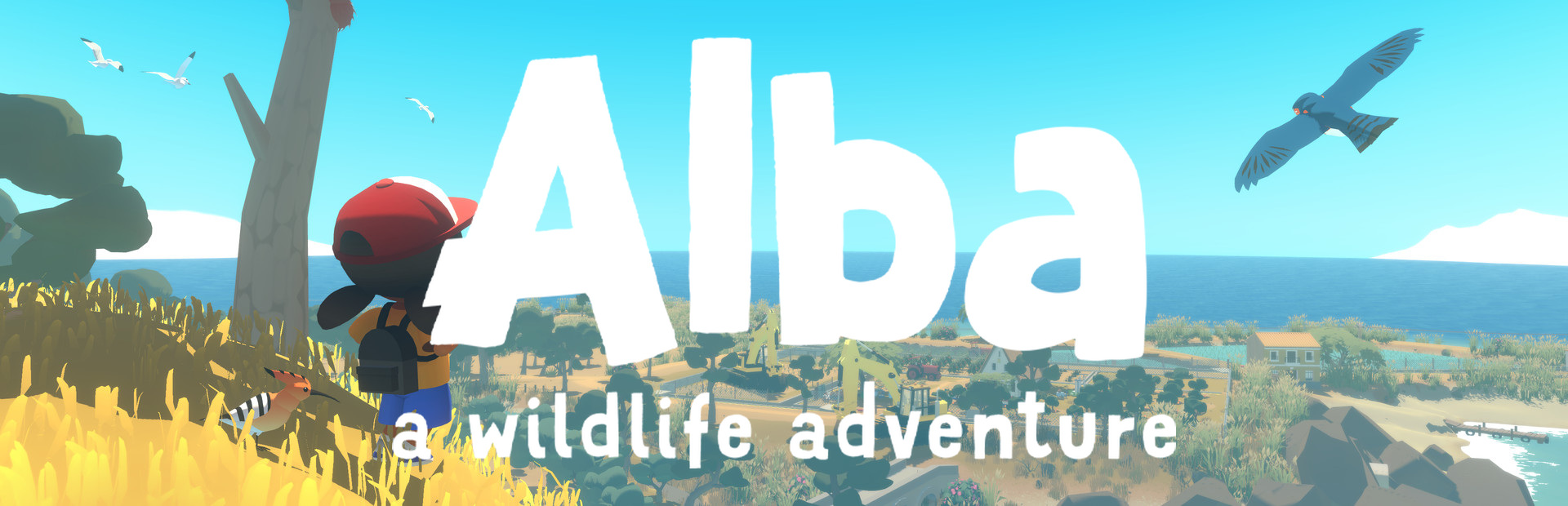
About Alba: A Wildlife Adventure
Alba visits her grandparents on the Mediterranean island of Pinar del Mar, where a wildlife rescue with her friend Ines turns a quiet summer into a campaign to protect the island. Explore its beaches, town, castle, and varied natural areas, photograph wildlife, help residents, and gather support for a local conservation group.
Alba: A Wildlife Adventure begins with a summer visit to the grandparents of its young protagonist, Alba, on the Mediterranean island of Pinar del Mar. Her plan to spend a peaceful holiday with her friend Ines changes when the pair see an animal in danger and act to rescue it. That first response grows into a wider effort to care for the place where they are staying. Alba and Ines establish the AIWRL, the Alba Wildlife Rescue League, and try to bring local people into the organisation. Alba's grandfather is also part of the island's wildlife life: he is especially interested in birds and helps connect the girls' campaign with the animals they encounter. The story makes conservation a community activity rather than a distant cause. The island is home to wildlife, but it also contains litter and human-made places that affect the natural surroundings. The children can respond to individual problems and build support for a larger goal, connecting a small rescue to the possibility of protecting the island more broadly. The tone remains grounded in a holiday among family and friends, so the environmental campaign unfolds through daily exploration and helpful encounters rather than a separate strategy layer or combat plot.
Pinar del Mar is a compact open island intended to be explored at the player's own pace. The route moves between Mediterranean beaches, the town, farmlands, wooded stretches, and an ancient castle that overlooks the settlement. These are not simply interchangeable backdrops: the changes in terrain create different places to look for wildlife and different contexts for meeting residents. Paths and slopes lead through hills, cliffs, terraces, ponds, rivers, and water outlets, while the coastline opens onto sandy areas and piers. The game encourages free roaming rather than imposing a timer, allowing the player to follow a local lead or wander into another part of the island. Alba's holiday setting also shapes how the spaces are read: paths link family and community locations with beaches and natural habitats, so a walk can shift from a conversation to observing an animal. The developer describes the island as small enough for the world to feel connected while still containing distinct areas and animal life. The result is an exploration loop built around noticing what is nearby and moving between human and natural spaces. Finding the next place is part of the activity, but the island's open pacing lets the player linger rather than treating every path as a race toward the next objective.
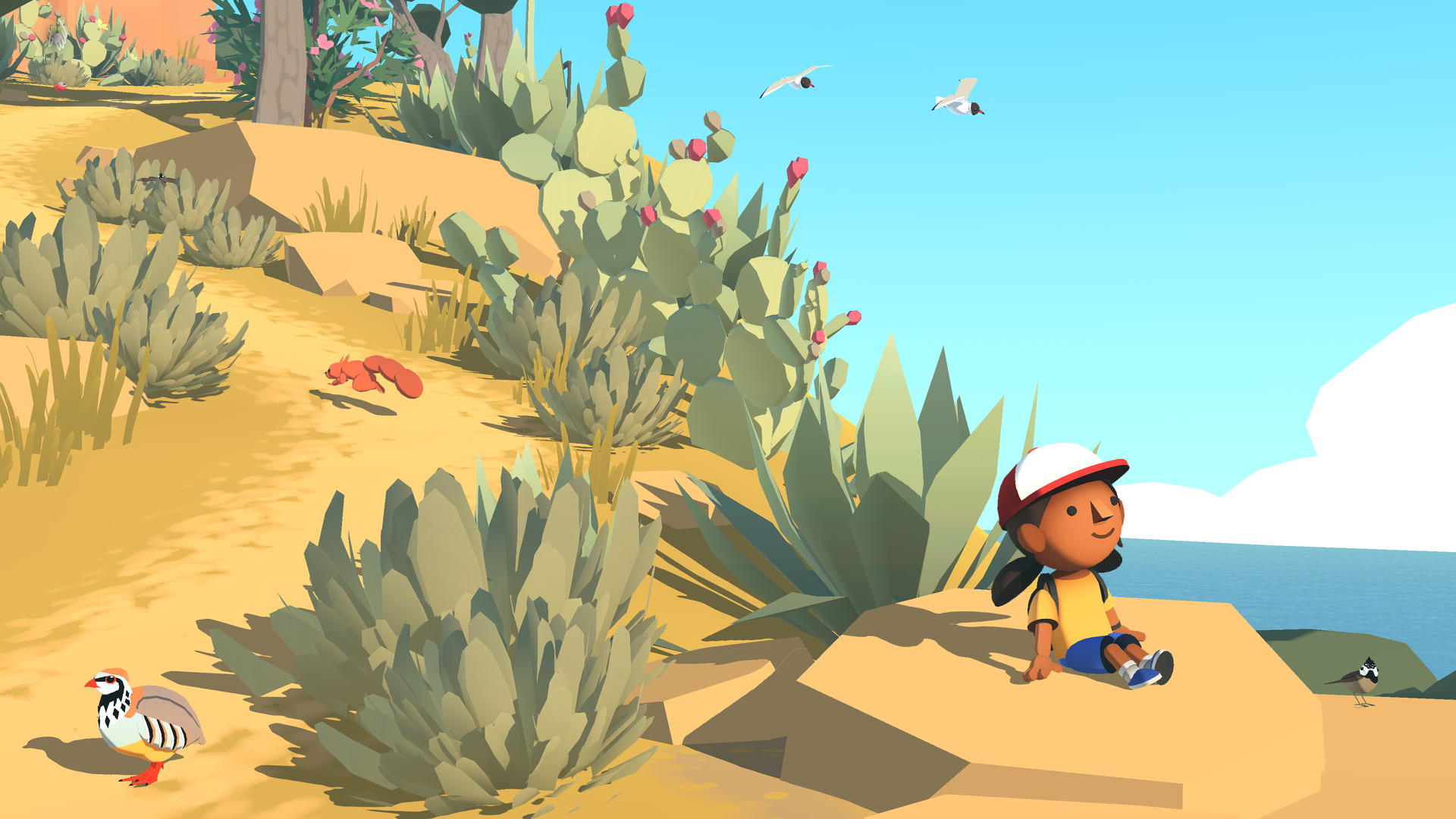
Wildlife observation gives Alba a reason to slow down and look carefully. The game draws on birdwatching and photography, and its animals are spread across the island's different natural areas. Alba can use her camera to record wildlife, turning a passing encounter into something she can document as she builds familiarity with the island's species. The wildlife is not limited to one showcase location: the different biomes help explain why the fauna changes as Alba moves from one area to another. A birdwatching trip informs the game's subject, and Alba's grandfather's interest in birds makes that way of looking part of the family setting as well. Photography sits alongside exploration rather than functioning as a combat tool or a fast reflex challenge. The player can move through a landscape, notice an animal, and decide to frame a picture or continue toward another task. The camera also supports attention to the environment itself; the landscapes are composed so that taking pictures of a place can be an activity, not only a record of a species. This creates a gentle observational rhythm: moving opens up new encounters, while stopping to watch or photograph helps the island feel like a habitat with varied inhabitants rather than a backdrop for errands.
The campaign for the AIWRL supplies the game's main progression. Alba and Ines need volunteers and support from people around town, and helping residents is how they gather backing for the petition at the centre of the effort. The developer describes this as signature collection: the player goes around the island, helps people, and gains their support for a larger conservation goal. This links small tasks to a visible collective purpose without turning the game into a resource-management simulation. Residents are not just markers on a checklist; each encounter gives Alba an opportunity to respond to someone in the community, while the resulting support contributes to the organisation she and Ines are building. The structure also gives exploration direction without requiring a fixed sequence of every activity. A player can follow a person or problem encountered along the way, then return to wildlife observation or continue through another area. As signatures accumulate, the campaign becomes a measure of how broadly the girls have connected with the island. The petition is therefore a social progression system: its advance depends on positive actions and engagement with residents, not combat victories, equipment upgrades, or numerical character levels. It turns the idea that individual acts can add up into an objective the player can see develop over the course of the summer.
The island's built environment gives the wildlife theme a visible human setting. Natural ground runs alongside town floors, concrete piers, breezeblock walls, stairways, and driveways; beaches, ponds, fields, and paths sit close to places people use every day. Litter is part of the island's starting condition, so the Mediterranean scenery is not presented as untouched wilderness. That contrast gives the conservation story a concrete context: an animal in danger and a landscape affected by people belong to the same place Alba is learning to navigate. The small island makes these environments feel connected rather than sealed into separate zones. A walk can pass from a settlement or pier toward a beach, a slope, or a wooded area, and the change in surroundings shifts attention from community life to wildlife and back again. The game's environmental concern therefore comes through its setting as well as its premise. Its world includes both the natural areas that support different fauna and the built surfaces that show how people occupy the coast. This detail grounds the adventure's conservation theme in the ordinary geography of a lived-in island.
The visual style gives the island a deliberately handcrafted, storybook quality while retaining recognizable materials and terrain. Alba and other characters keep simple geometric forms and solid colour, giving them a childlike look that suits the point of view of a young visitor. Environments use colour gradients, small texture details, chipped edges, and grouped plants and objects to distinguish places without abandoning that clean shape language. The palette draws on photographs taken in Spain and the work of Joaquín Sorolla, whose paintings informed the Mediterranean light and mood. Beaches, fields, paths, town surfaces, and buildings therefore have different colours and textures that help separate locations as Alba walks through them. The island's biomes are designed to make areas feel distinct and to support changes in the animals found there. Pine woodland, for instance, is associated with pine trees, cones, and bushes; other areas use different natural elements. Music by Lorena Alvarez adds another layer to the sense of place. Together, the art and sound support an exploration game where small details—an animal, a path, a patch of beach, or a view toward town—can draw attention without needing a dramatic encounter to mark every new location.
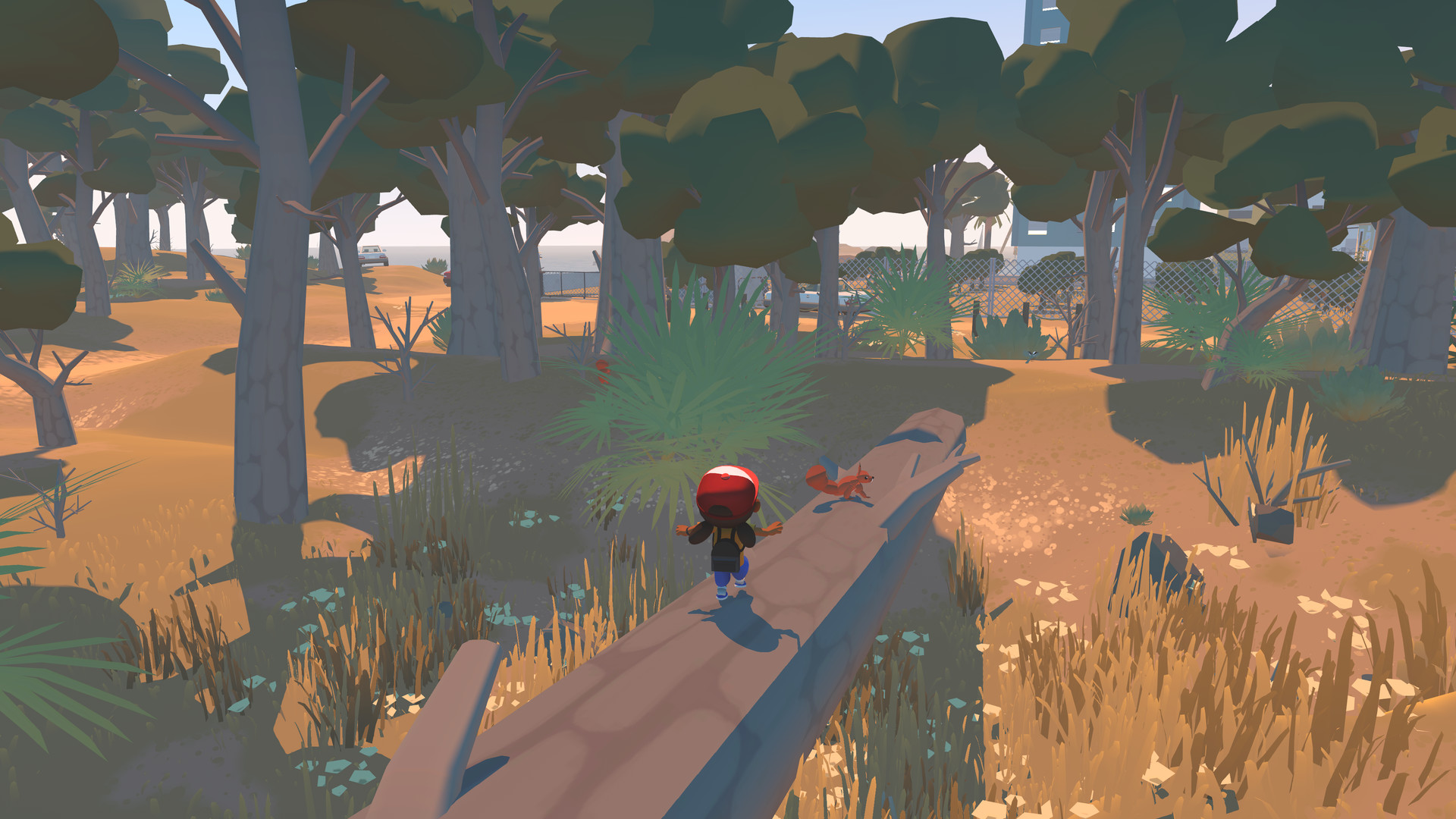
The camera and movement design shape how Alba's surroundings are read. In the original mobile design, the view uses portrait framing and follows Alba from behind while the player guides her with one thumb. The wide field of view keeps more of the space to either side visible without pulling the camera so far back that Alba becomes difficult to see. That choice makes orientation part of the relaxed exploration: the player can watch the route ahead while still noticing nearby landscape and wildlife. It also influenced the proportions of buildings. Their upper floors were compressed so that a structure seen close up would still sit comfortably beside Alba within the wide perspective. These choices connect the character's scale to the island rather than treating the camera as a detached survey view. The mobile layout informed the island design, while other platforms present the same places through their own controls. What carries across the adventure is the visual priority: keep Alba present in the frame and leave enough surrounding space for the player to notice where a path, animal, or landmark might lead.
- Developer
- ustwo games
- Genre
- Adventure, casual