
About Alan Wake 2
FBI profiler Saga Anderson investigates ritual murders around Bright Falls while writer Alan Wake tries to escape the Dark Place, a nightmare shaped by his own fiction. Their stories unfold across connected realities, combining survival-horror combat, investigation, exploration and the unsettling problem of how a story can change the world.
Alan Wake 2 follows two playable characters through a mystery that crosses between the Pacific Northwest and a nightmare version of New York. FBI profiler Saga Anderson arrives near Bright Falls with her partner Alex Casey to investigate a string of ritual murders. The case leads her toward Cauldron Lake and evidence from a horror story that appears to be taking shape around her. Alan Wake, meanwhile, is a writer trapped in the Dark Place, where he tries to write his way out by reshaping the reality around him. Saga approaches the impossible from the perspective of an investigator who looks for evidence and connections; Alan faces the danger as someone whose words can alter the scenes he moves through. Their paths are separate but connected, and the game moves between the two viewpoints as the mystery develops.
Saga’s investigation plays out across forest trails, lakeside sites and small-town locations around Bright Falls and Watery. She examines crime scenes, collects clues and speaks with witnesses, while her Mind Place gives her a quiet space to organise what she has found. The Case Board holds photographs, notes and evidence; placing clues in their relevant cases can lead to deductions, while profiling a person of interest lets Saga focus on what she knows about them and uncover additional thoughts or leads. This work turns observation into progress: an overlooked detail in the environment can fill a gap on the board, suggest a question to ask or clarify what she should investigate next. Conversations with characters such as Casey and the residents of Bright Falls also add context to the murders and to the town’s uneasy history.
Alan’s chapters use a different investigation tool: the Writer’s Room and its Plot Board. As he explores the Dark Place, he finds clues and story elements that can be placed on the board as a plot point or scene arc. Changing the active idea rewrites parts of the surrounding location, shifting the scene and opening a route that was previously blocked. The board makes Alan’s attempt to control the story a hands-on puzzle: he studies what is present, considers a different version of events, then sees how that version changes the space. His Angel Lamp offers another way to reshape rooms, storing and releasing light to alter a location’s layout and reveal paths. Echoes provide further fragments to piece together, linking images and audio into possible story directions without making every clue immediately clear.
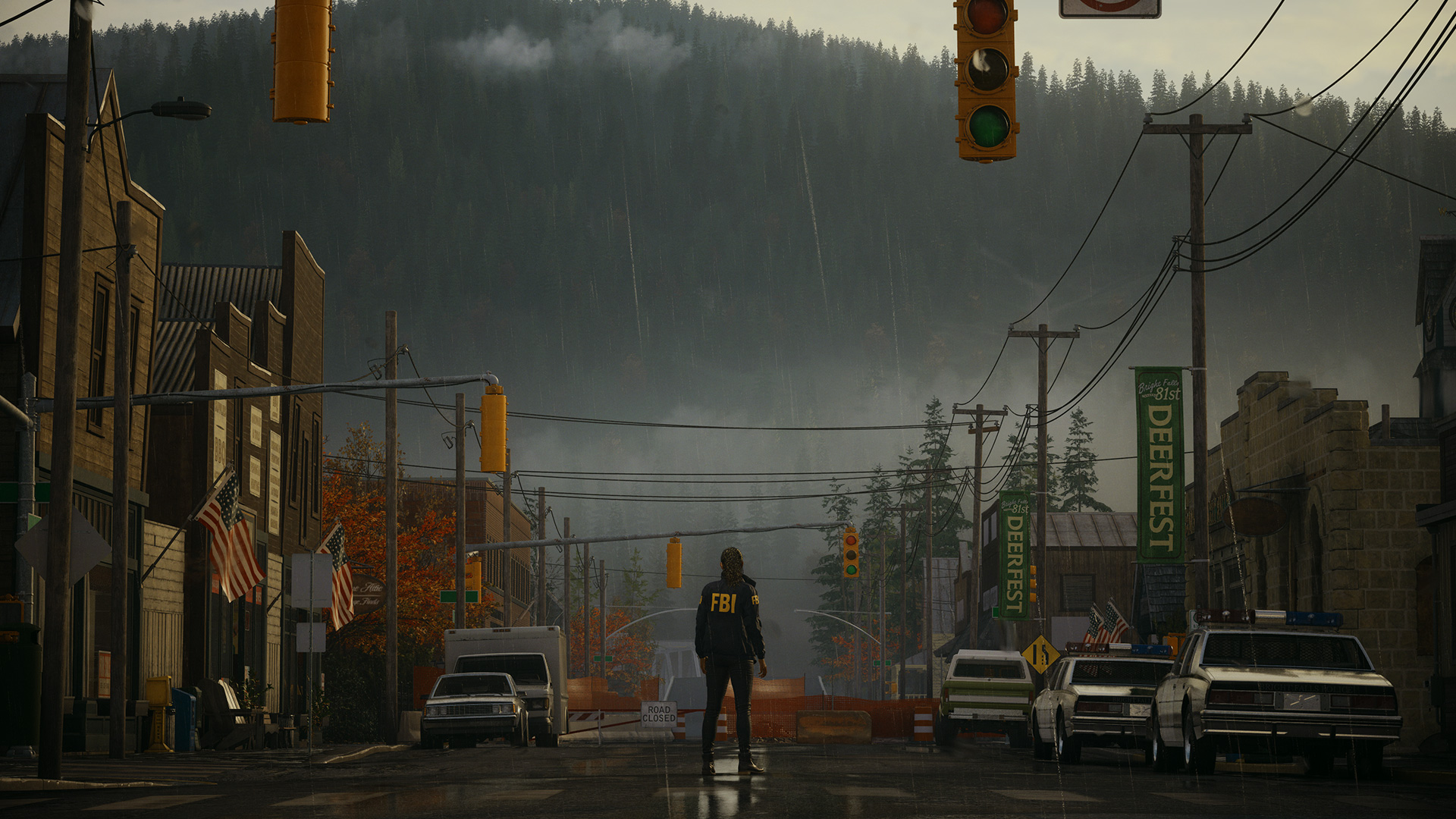
Both characters face Taken and other hostile forces, but their encounters depend on the flashlight as much as their guns. A normal beam helps expose threats; a limited-charge boost strips the darkness protecting many enemies and can stun them long enough to target a revealed weak point. That boost also clears some darkness blocking routes, so using it in a fight competes with keeping a path forward open. Saga and Alan can dodge, aim and fire, but ammunition and healing supplies are limited, and careless shooting can leave little for the next encounter. Flares and other tools create space when enemies close in, while batteries replenish the flashlight’s boost charges. The result is a survival-horror rhythm of checking the room, deciding whether to confront or avoid a shadowy threat, and saving the right resource for the moment when light can change the balance.
Inventory management gives those choices a longer reach than one firefight. Each character has limited space, and larger weapons or gear can occupy several slots, so ammunition, healing items and tools compete for room. Break Rooms provide save points and shoebox storage for equipment that is not needed immediately; quick slots make selected weapons and healing items easier to reach under pressure. Saga can find lunchboxes containing materials used to improve her weapons, while Alan collects Words of Power that grant passive benefits. Container contents vary, and difficulty affects item drops, so a search through a side room may help replenish supplies but does not promise a specific item. Deciding what to carry and what to store shapes how prepared each character is for the next stretch.
Exploration is built around returning to places with new information or access. Saga’s routes connect Cauldron Lake, Bright Falls and Watery, with barriers, locked stashes and environmental puzzles interrupting the main investigation. Some areas change after story events, making earlier paths worth checking again. Alan’s side of the journey uses the Dark Place’s shifting streets, interiors and dreamlike spaces, where an echo, a clue or the right Plot Board change can expose a new route. The two toolsets give each location a different kind of question: Saga asks what happened here and which evidence supports it; Alan asks which version of this scene can carry him onward. Maps, case notes and found documents help track open leads, but exploration still depends on inspecting rooms and recognising what has changed.
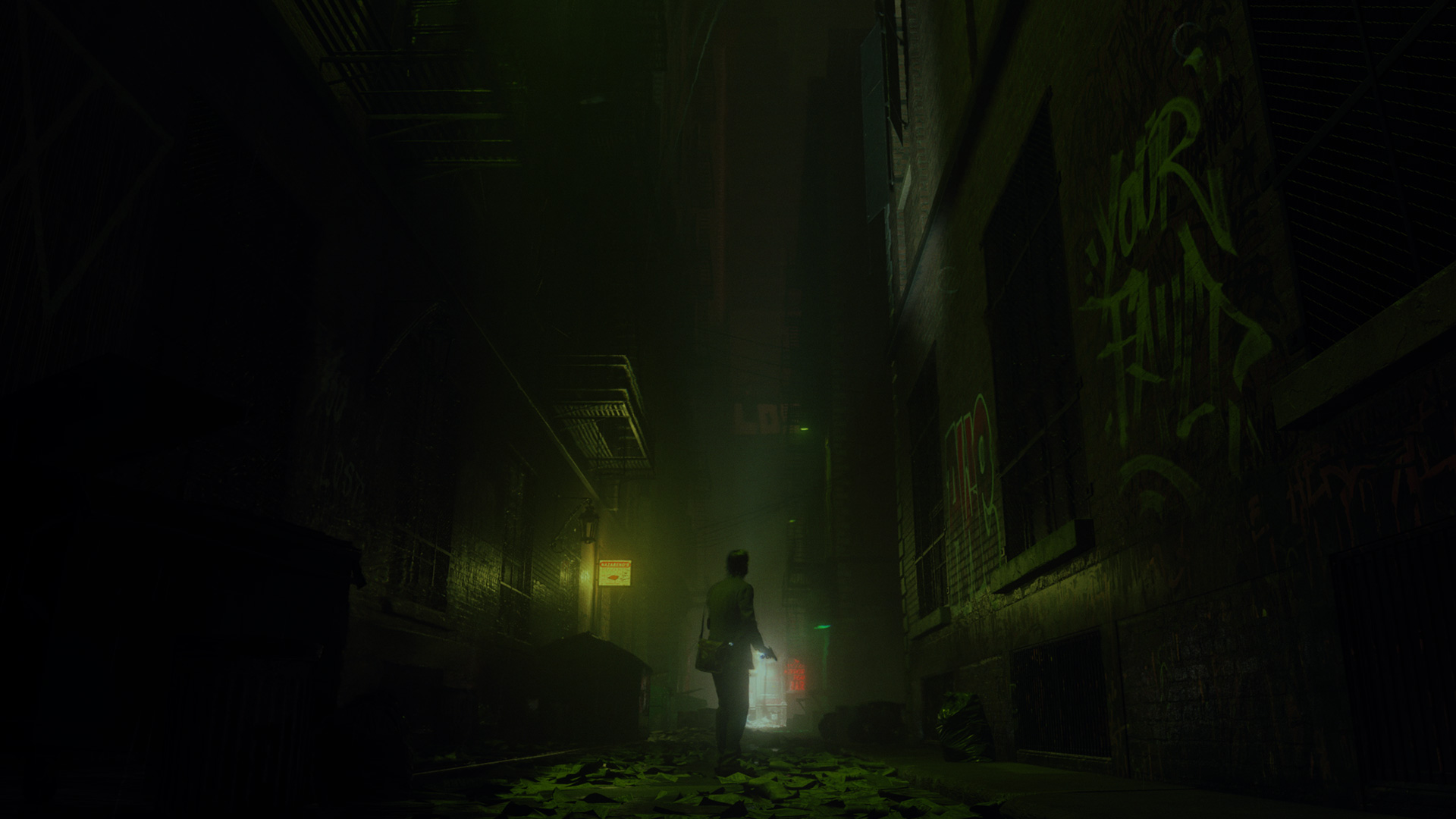
The base campaign centres on Saga and Alan’s intertwined stories and their attempts to confront the forces closing in on them. It is a single-player survival-horror game with adjustable Story, Normal and Hard difficulty settings; Story mode reduces combat pressure and keeps the focus on mystery solving and exploration. Alan Wake 2 is also structured as a stand-alone entry, with Saga providing a new perspective on the supernatural events even as returning characters and details connect it to earlier Remedy stories. After completing the campaign, The Final Draft offers a New Game+ replay with a new difficulty level, additional collectibles and a new ending.
- Developer
- Remedy Entertainment
- Genre
- Third-person survival horror