

About AI: The Somnium Files
In near-future Tokyo, detective Kaname Date and his AI partner Aiba investigate a series of murders by searching physical crime scenes and entering suspects’ dreams. ABIS’s Psync technology turns interrogation into surreal, timed puzzles, and the decisions made inside those Somniums open different routes through the case.
A rainy night at an abandoned amusement park sets Kaname Date on a case that reaches beyond an ordinary crime scene. Date is a detective in ABIS, a special investigation unit within Tokyo’s Metropolitan Police Department, and the game places him in the middle of a string of murders marked by the removal of each victim’s left eye. The opening discovery brings Date into contact with Mizuki, a young girl connected to the victim, while the wider inquiry draws in people from very different corners of the city. An aspiring internet idol, her devoted fan, a politician, a local yakuza family and ABIS staff each become part of the investigation. Their accounts, habits and relationships give Date more to work with than physical clues alone, while the near-future setting supplies a technology that can turn an interview into a journey through a suspect’s subconscious.
Date’s partner is Aiba, an artificial intelligence installed in his left eye socket. She can speak with him directly, comment on the people around them and help him read a scene. Their exchanges form a running two-person conversation: Date asks questions and weighs what he sees; Aiba supplies observations, dry remarks and technical support. Boss, Date’s superior at ABIS, and Pewter, the ABIS engineer responsible for maintaining the Psync machine and preparing Psyncs, connect field work to the unit’s laboratory. Mizuki’s guarded presence, Iris’s energetic public persona and Ota’s intense fandom give the case a cast whose public roles do not always explain what they know. The story lets these relationships surface through dialogue as Date returns to people and places. It mixes a police mystery with science-fiction ideas, unsettling dream imagery and bursts of humour, shifting tone without losing the central question of how the crimes are connected.
Investigation scenes use a first-person view and a cursor rather than free movement through the environment. Date can inspect highlighted objects, choose conversation topics and question the people present; descriptions and follow-up exchanges often pair his deductions with Aiba’s reaction. Locations range from crime scenes to places where witnesses and suspects can be found. Once the current location has yielded what is needed to proceed, a city map lets Date select another venue. This makes the order of some visits feel like an investigative choice, while the case still guides him through the locations necessary for the story. Available dialogue usually has to be exhausted before the next step opens, and objects can offer character details as well as evidence. The interface keeps the focus on noticing, asking and comparing information instead of navigation challenges. Aiba’s visual tools add another way to inspect a scene: zooming in can reveal distant details, while special vision modes help Date examine what ordinary sight misses.
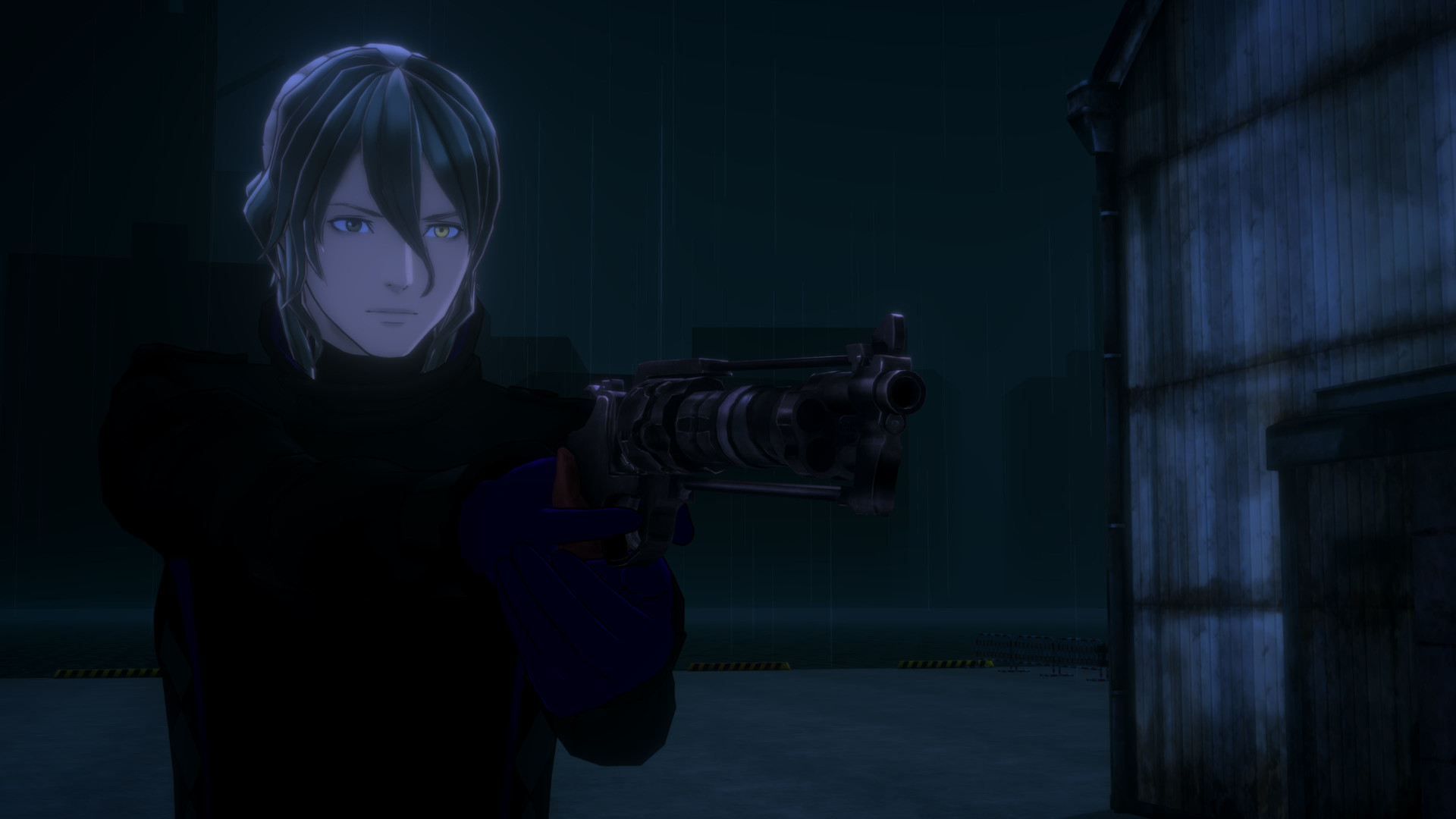
Date’s physical investigations feed into interviews and the game’s evidence-based interrogation scenes. He can present an item collected in the field to the person he is questioning, then review its description before choosing which clue fits the exchange. This makes a clue do more than sit in a case file: a detail found at one location can inform a later question and give Date a way to respond to what someone says. The questioning remains part of the dialogue and investigation loop, with each conversation adding context about the people around the case. Some interrogations also lead to Psync, taking the inquiry from spoken answers into the subject’s Somnium, where Aiba can search for memories inaccessible to ordinary questioning. That change of method also changes the player’s task: ordinary scenes ask what a witness knows, while the dream sequences ask which memory lock can be opened within the available time. The game also includes occasional action scenes built around timed button prompts. Aiba helps Date respond during these moments, which ask for quick inputs instead of sustained fighting or a separate combat progression system. They are short action interruptions in a case that otherwise advances through looking at evidence, asking about it and deciding when the investigation needs a different method.
When ABIS connects Date and a subject through the Psync machine, control shifts to Aiba’s human-shaped avatar inside that person’s Somnium, or dream world. Here she can walk through the space and interact directly with objects, in contrast to Date’s cursor-based examination of real locations. The dream may bend familiar objects into strange scenes, and the goal is to break through memory locks by choosing actions that bring a subject’s hidden memories into focus. Each Somnium gives a six-minute limit; moving and interacting spend time, with more demanding actions usually costing more. TIMIE items can reduce the cost of an action, while some choices impose an added time penalty. These resources turn each attempt into a small planning problem: inspect the available objects, decide which interaction is worth its cost and keep enough time to reach the next lock. If the clock expires before the required locks are solved, Date is forced out and the sequence must be tried again, with checkpoints available after progress has been made. Aiba can hold up to three TIMIEs at once, so a useful bonus may have to be spent before another is collected. The value depends on both the action and the remaining clock: spending a saved reduction on a low-cost interaction can leave a costly action exposed, while taking a penalty can make a previously safe route too expensive.
Somnium decisions also shape how the investigation unfolds. Some sequences offer more than one way through their memory locks, and taking a different path can open a distinct route with different events and a separate conclusion. A flowchart records the case’s branches and lets the player return to earlier points to pursue an alternate outcome. Replaying a Somnium is therefore part of the story structure as well as a way to solve its timed puzzle: a different set of actions can reveal a new direction for Date’s inquiry. Some routes pause at story locks until another section has supplied the needed progress, so the chart helps show where the investigation stands and where a return may be useful. The game presents the story across several connected routes rather than asking the player to make one irreversible choice at the start. Moving between them lets new character information change the meaning of earlier scenes while keeping major revelations tied to the route where they belong.
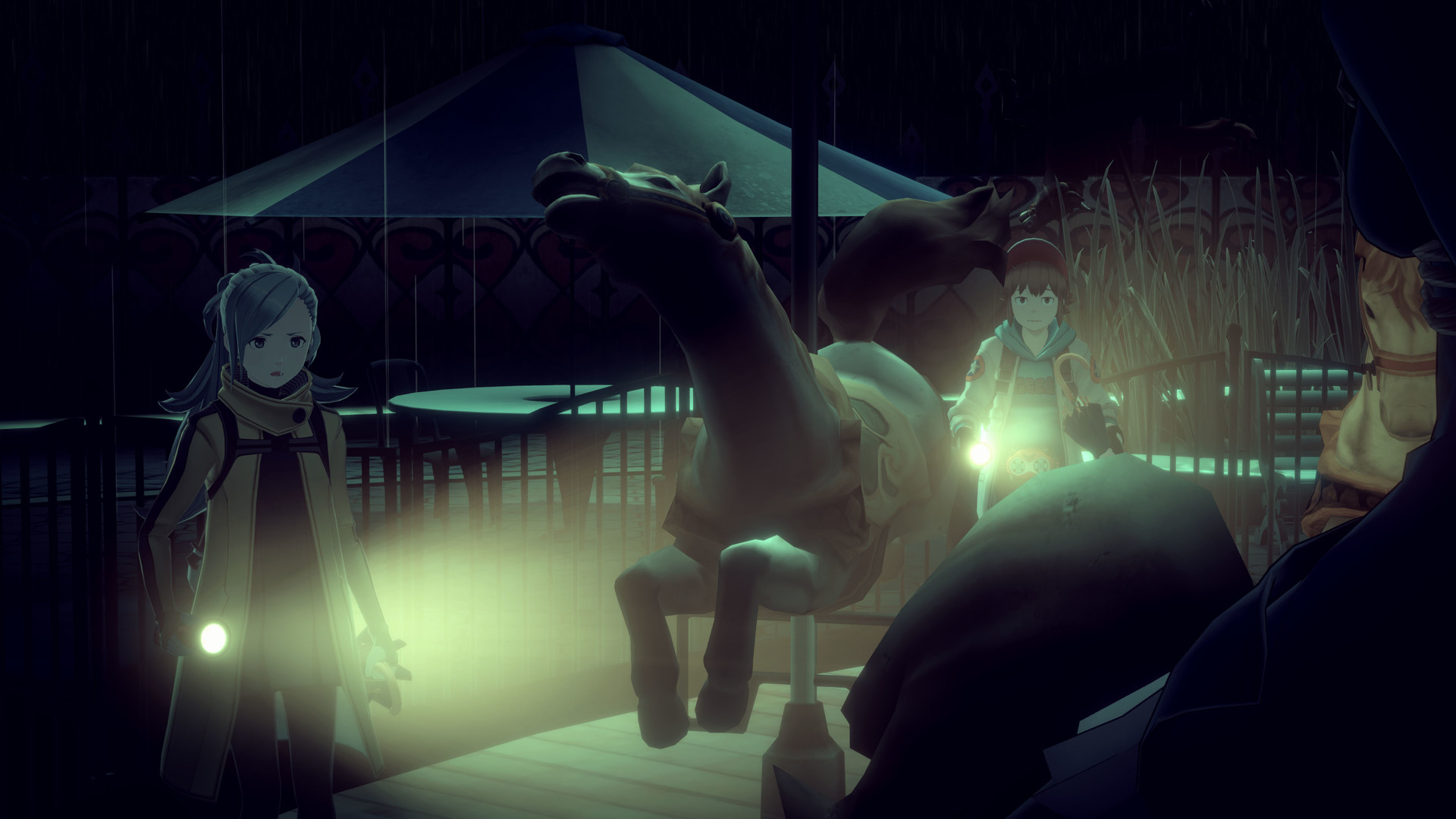
The game’s visual presentation separates grounded investigation spaces from the more distorted settings inside Somniums. Character designs use expressive, anime-influenced 3D models, and conversations rely on changes in pose and expression to give the ensemble distinct personalities. Somnium scenes can turn that cast and its surroundings into surreal images, while the ordinary city locations anchor the case in offices, homes and public places. English and Japanese voice options are listed for the game, and the in-game reference files collect information about characters, objects and technical terms as the investigation progresses. Design sketches are also tied to tasks in some Somniums, giving those dream sequences another concrete reward alongside story information. Spike Chunsoft lists the title as a single-player adventure across Nintendo Switch, PlayStation 4, Xbox One, Xbox Series X|S and Windows/Steam; its product page also lists Standard and Special Agent editions. The investigation and branching Somnium structure belong to the original game, separate from the later Nirvana Initiative and No Sleep for Kaname Date titles.
- Developer
- Spike Chunsoft Co., Ltd.
- Genre
- Adventure; detective mystery and visual-novel structure